[Expand product categories]

Linkers & Resins

Linkers & Resins for Peptide Synthesis: Essential Tools for Solid-Phase Peptide Assembly

Linkers and resins are critical components in solid-phase peptide synthesis (SPPS), providing the structural foundation for peptide chain assembly. These materials enable efficient stepwise synthesis, simplify purification, and support the production of high-quality peptides for research, pharmaceutical, and industrial applications. At Linkpeptide, we offer a comprehensive range of high-performance linkers and resins designed for reliable peptide synthesis workflows. Our products are optimized for stability, loading capacity, and compatibility with a wide variety of synthesis strategies, ensuring consistent and reproducible results.
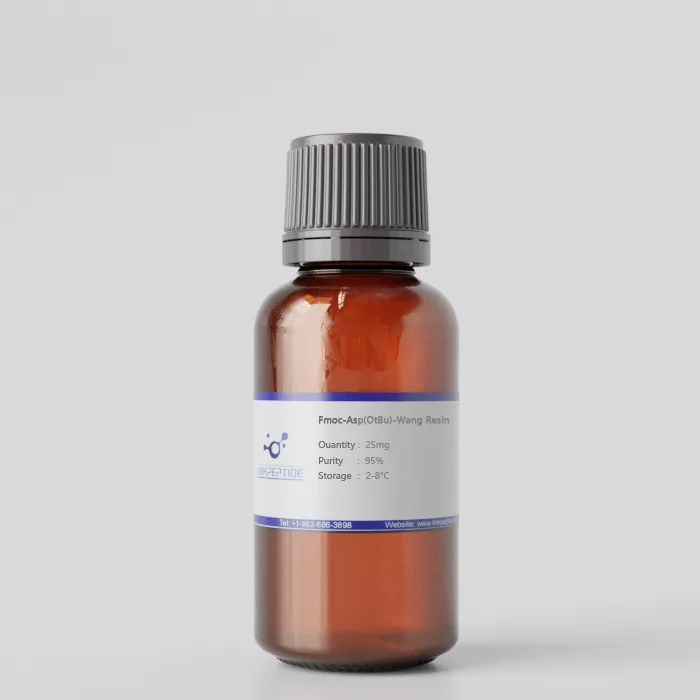
Default Ranking Price By Date

What Are Linkers & Resins?

In SPPS, peptide synthesis is carried out on an insoluble solid support known as a resin, while a linker is a chemical moiety that connects the growing peptide chain to the resin. This setup allows repeated cycles of coupling and deprotection while the peptide remains anchored to the solid phase. At the end of synthesis, the linker is cleaved under specific conditions to release the final peptide. Key characteristics include:
  • Insoluble support for easy separation and washing
  • Controlled attachment of peptide chains
  • Compatibility with different cleavage conditions
  • Flexibility for various peptide synthesis strategies

Key Types of Resins for Peptide Synthesis

Resins are typically polymer-based materials designed to support peptide assembly:

Polystyrene (PS) Resins

Polystyrene resins are among the most widely used solid supports in peptide synthesis. Key features:
  • High mechanical stability
  • Good swelling properties in organic solvents
  • Suitable for standard SPPS protocols
Applications:
  • Routine peptide synthesis
  • Fmoc-based SPPS
  • Short to medium-length peptides

PEG-Based Resins (e.g., TentaGel, ChemMatrix)

PEG-based resins incorporate polyethylene glycol, providing improved swelling and solvation. Key features:
  • Excellent swelling in both organic and aqueous solvents
  • Enhanced accessibility for reagents
  • Suitable for difficult or long peptide sequences
Applications:
  • Long or complex peptides
  • Hydrophilic peptide synthesis
  • High-efficiency coupling reactions

Low-Loading and High-Loading Resins

Resins are available in different loading capacities depending on synthesis needs. Low-loading resins:
  • Reduce steric hindrance
  • Improve synthesis of long peptides
High-loading resins:
  • Increase yield
  • Suitable for short peptides and scale-up

Key Types of Linkers

Linkers determine how the peptide is attached to the resin and how it is released:

Acid-Labile Linkers

These linkers are cleaved under acidic conditions, typically using TFA. Examples:
  • Wang linker
  • Rink Amide linker
Key features:
  • Widely used in Fmoc SPPS
  • Enable efficient cleavage and deprotection
  • Produce free acid or amide peptides
Applications:
  • General peptide synthesis
  • Therapeutic peptide production

Base-Labile Linkers

These linkers are cleaved under basic conditions, offering alternative cleavage strategies. Key features:
  • Useful for specific synthesis workflows
  • Provide orthogonal cleavage options
Applications:
  • Specialized peptide synthesis
  • Complex protection strategies

Photolabile Linkers

Photolabile linkers are cleaved using light, allowing highly controlled peptide release. Key features:
  • Mild cleavage conditions
  • Precise temporal control
  • Reduced chemical degradation
Applications:
  • Sensitive peptide synthesis
  • Surface-bound peptide studies
  • Advanced research applications

Cleavable vs Non-Cleavable Linkers

  • Cleavable linkersrelease the peptide after synthesis
  • Non-cleavable linkers retain the peptide on the support for surface studies or immobilized assays

Role of Linkers & Resins in SPPS

Linkers and resins are central to each stage of peptide synthesis: Step 1: Initial Attachment The first amino acid is attached to the resin via the linker. Step 2: Chain Elongation Peptide chains are built step-by-step while anchored to the resin. Step 3: Washing and Purification Excess reagents are removed easily by washing due to the solid support. Step 4: Cleavage The linker is cleaved to release the final peptide product.

Applications in Research and Industry

Linkers and resins are essential across multiple fields: Peptide Drug Development Support synthesis of therapeutic peptides and biologics. Biochemical Research Enable production of peptides for enzyme assays and structural studies. Combinatorial Chemistry Used in library synthesis for drug discovery. Diagnostic Development Support preparation of peptide-based diagnostic tools. Surface Immobilization Studies Non-cleavable linkers enable immobilized peptide assays.

Advantages of High-Quality Linkers & Resins

Using high-quality materials ensures:
  • Efficient peptide synthesis and high yields
  • Reduced side reactions and impurities
  • Improved accessibility for reagents
  • Consistent and reproducible results
  • Compatibility with automated synthesizers

Why Choose Linkpeptide Linkers & Resins

  • High purity and validated performance
  • Wide selection of resin types and linker chemistries
  • Reliable batch-to-batch consistency
  • Optimized for SPPS and advanced synthesis workflows
  • Custom solutions available for specialized applications

Custom Linker & Resin Solutions

At Linkpeptide, we provide tailored support for peptide synthesis:
  • Custom linker design for specific cleavage conditions
  • Selection of optimal resin type and loading capacity
  • Optimization for difficult peptide sequences
  • Scale-up solutions for industrial production

FAQ

What are resins used for in peptide synthesis?

Resins serve as solid supports for building peptide chains during synthesis.

What is a linker in peptide synthesis?

A linker connects the peptide to the resin and determines how it is released.

What is the most commonly used linker?

Wang and Rink Amide linkers are among the most commonly used.

How do you choose the right resin?

It depends on peptide length, sequence complexity, and synthesis conditions.

Does Linkpeptide offer custom linker and resin solutions?

Yes, we provide tailored options based on specific synthesis requirements.
Add InquiryUp to 12 can be added

No products in the cart.