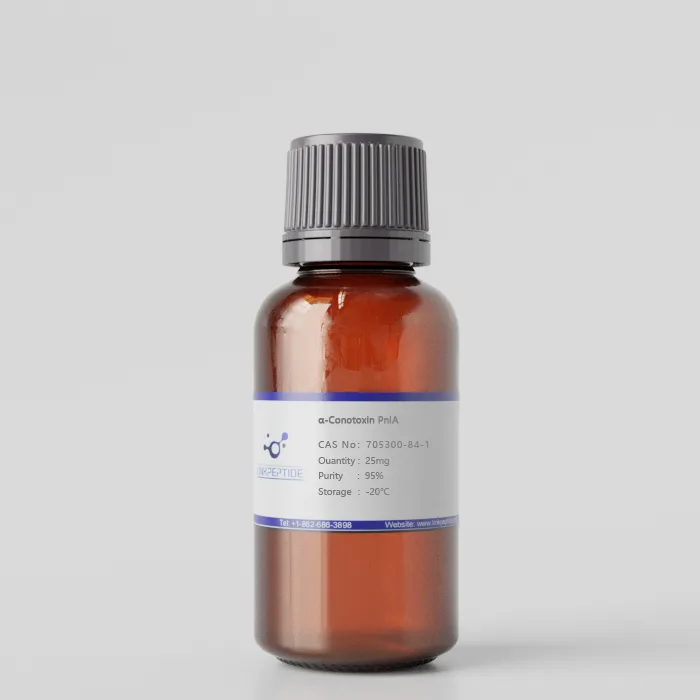
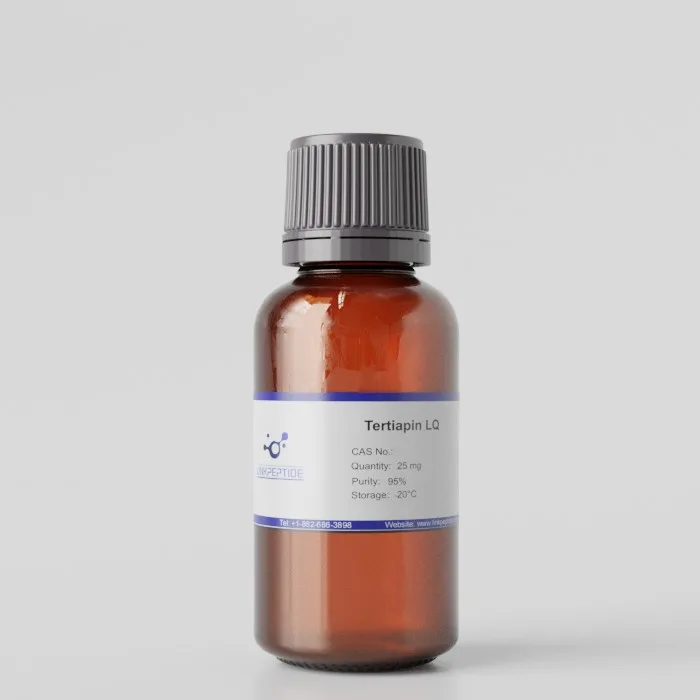
Product Name:α-Conotoxin PnIA
CAS No:705300-84-1
Purity:95%
Molar Mass:1622.82
Chemical Formula:C65H95N19O22S4
Storage:Store at -20 degrees Celsius
Sequence:GCCSLPPCAANNPDYC
Target:α3β2 nAChR
Application:
α-Conotoxin PnIA is a peptide toxin derived from the venom of the Conus pennaceus snail, known for its ability to selectively block α7 and α3β2 nicotinic acetylcholine receptors (nAChRs). These receptors are involved in critical neural processes, including synaptic transmission, cognitive function, and pain modulation. α-Conotoxin PnIA is used in neurobiological research to investigate the role of these receptor subtypes in various physiological and pathological conditions such as Alzheimer’s disease, schizophrenia, and nicotine addiction. Its specificity makes it a valuable tool for studying receptor function and for developing targeted therapies aimed at neurological and neurodegenerative disorders.
Current Research:
α-Conotoxin PnIA is a 16-amino acid peptide isolated from the venom of the marine snail Conus pennaceus. It functions as a potent antagonist of nicotinic acetylcholine receptors (nAChRs), particularly targeting neuronal subtypes. This specificity renders it a valuable tool for probing the physiological roles of nAChRs and exploring potential therapeutic applications.
Structural Characteristics
The peptide comprises a distinctive disulfide-bonded framework, forming two loops that are critical for its interaction with nAChRs. The primary sequence of α-Conotoxin PnIA is GCCSLPPCAANNPDYC, with cysteine residues forming disulfide bonds between Cys1-Cys3 and Cys2-Cys4. This configuration stabilizes its three-dimensional structure, facilitating high-affinity binding to receptor sites.
Receptor Specificity and Binding Affinity
α-Conotoxin PnIA exhibits selectivity for neuronal nAChR subtypes, including α7 and α3β2 receptors. However, its affinity varies among these subtypes. Modifications to its amino acid sequence have been employed to enhance specificity and potency. For instance, the [A10L, D14K] analog of PnIA demonstrates increased affinity for α7 nAChRs, providing insights into structure-activity relationships.
Mechanism of Action
By binding to the extracellular ligand-binding domain of nAChRs, α-Conotoxin PnIA competitively inhibits acetylcholine from activating the receptor. This blockade prevents ion channel opening, thereby modulating synaptic transmission and neuronal excitability.
Research Applications
The specificity of α-Conotoxin PnIA for certain nAChR subtypes makes it an invaluable tool in neuropharmacological research:
Receptor Characterization: Utilized to delineate the functional roles of nAChR subtypes in neuronal communication and plasticity.
Drug Development: Serves as a template for designing novel therapeutics aimed at neurological disorders involving nAChR dysfunction, such as Alzheimer's disease and nicotine addiction.
Structural Studies: Aids in elucidating the structural dynamics of receptor-ligand interactions, contributing to a deeper understanding of nAChR architecture.
Clinical Implications
Given the involvement of nAChRs in various neurological conditions, α-Conotoxin PnIA and its analogs hold potential for therapeutic development. Their ability to selectively modulate receptor activity offers avenues for targeted interventions in diseases like chronic pain, epilepsy, and neurodegenerative disorders.
Conclusion
α-Conotoxin PnIA is a potent and selective antagonist of neuronal nAChRs, providing significant utility in the study of cholinergic signaling and its implications in health and disease. Its application in research continues to advance our understanding of nAChR function and holds promise for the development of novel therapeutic strategies targeting neurological disorders.
Reference:
Get a Quote
 LinkPeptide