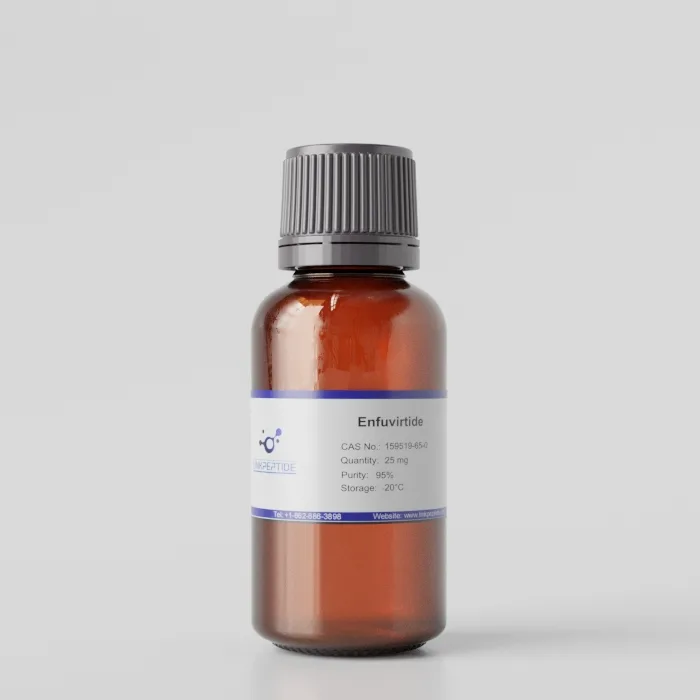
Product Name: Enfuvirtide
Form: Free base
CAS No: 159519-65-0
Molar Mass: 4491.88
Chemical Formula: C204H301N51O64
Synonyms: DP 178, Pentafuside, Fuzeon
Storage: Store at -20℃
Sequence: YTSLIHSLIE ESQNQQEKNE QELLELDKWA SLWNWF
Target: anti-HIV-1
Application:
Enfuvirtide (CAS: 159519-65-0) is a significant pharmaceutical agent in the treatment of HIV/AIDS. Functioning as a fusion inhibitor, enfuvirtide plays a crucial role in preventing the entry of the human immunodeficiency virus (HIV) into host cells. By targeting the viral envelope glycoprotein gp41, enfuvirtide disrupts the fusion process between the virus and the host cell membrane, inhibiting the initiation of viral replication. This targeted mechanism makes enfuvirtide particularly valuable in the management of HIV infections, especially in cases where resistance to other antiretroviral medications has developed. Enfuvirtide exemplifies a strategic intervention in the pharmaceutical landscape, contributing to the comprehensive approach to combating HIV/AIDS and improving patient outcomes.
Current Research:
Enfuvirtide is a fusion inhibitor used in the treatment of HIV-1 infection. It is indicated for patients who have experienced treatment failure with other antiretroviral therapies, particularly in those with multi-drug resistant HIV strains. Enfuvirtide works by interfering with the ability of the HIV virus to enter and infect human cells. It specifically targets the gp41 subunit of the HIV envelope protein, which is essential for the fusion of the virus with the host cell membrane. By inhibiting this step in the viral life cycle, enfuvirtide prevents the virus from entering the host's immune cells, thereby reducing viral replication and lowering the viral load in the body.
Mechanism of Action
Enfuvirtide binds to the gp41 subunit of the HIV envelope glycoprotein, a key player in the fusion of the viral membrane with the host cell membrane. By binding to this region, enfuvirtide prevents the conformational changes required for fusion, effectively blocking the virus from entering CD4+ T cells. This inhibition disrupts the early stages of HIV infection, preventing the virus from replicating within the host cell. Enfuvirtide does not affect the reverse transcription or integration steps of the HIV life cycle but focuses exclusively on the fusion process, making it a unique and valuable addition to antiretroviral therapy regimens.
Indications and Uses
Enfuvirtide is primarily used in combination with other antiretroviral agents for the treatment of HIV-1 infection in patients who have developed resistance to other drugs. It is typically reserved for those with advanced HIV or multi-drug resistant HIV, where other treatment options have proven ineffective. The drug is administered as a subcutaneous injection, which may be inconvenient for some patients. Enfuvirtide is not used as a first-line treatment but rather as part of a highly active antiretroviral therapy (HAART) regimen for individuals who require additional therapeutic options to control viral replication.
Efficacy and Clinical Benefits
Clinical studies have demonstrated that enfuvirtide effectively reduces HIV viral load and increases CD4+ T cell counts in patients with drug-resistant HIV. When added to a failing regimen, enfuvirtide has been shown to significantly improve viral suppression and immune function. Its unique mechanism of action provides a valuable alternative for patients with resistance to other antiretroviral drugs. Enfuvirtide, in combination with other agents, can reduce the progression of HIV infection and help maintain immune system function in patients who have limited treatment options due to resistance or intolerance to other therapies.
Safety and Tolerability
Enfuvirtide is generally well tolerated, but it can cause side effects, the most common being injection site reactions, such as pain, redness, and swelling. These reactions can be bothersome but typically resolve over time. Other potential side effects include diarrhea, nausea, fatigue, and insomnia. More serious but rare side effects include hypersensitivity reactions and an increased risk of bacterial infections due to immune system suppression. Because enfuvirtide is an injectable drug, patient adherence may be affected by the discomfort associated with frequent injections. Patients are often trained to self-administer the drug to help improve convenience.
Advantages and Limitations
The primary advantage of enfuvirtide is its unique mechanism of action, targeting the viral fusion process. This makes it an essential tool for patients with HIV strains resistant to other classes of antiretroviral drugs. It provides an option for treatment-experienced patients who have limited therapeutic choices. However, its administration by subcutaneous injection is a significant limitation, as it may be less convenient compared to oral therapies. Enfuvirtide is also not suitable for use as a standalone treatment but must be part of a combination regimen to be effective. Additionally, long-term use may be associated with increased risk of injection site reactions and other side effects.
Future Directions
Research is ongoing to evaluate the long-term safety and efficacy of enfuvirtide, particularly in combination with newer antiretroviral agents. There is also interest in exploring its use in other viral infections or as part of strategies for preventing HIV transmission in high-risk populations. Furthermore, new formulations or delivery methods, such as long-acting injectable versions, are being explored to improve patient convenience and adherence. As the landscape of HIV treatment continues to evolve, enfuvirtide may continue to serve as a crucial option for managing resistant HIV strains.
Reference:
Get a Quote
 LinkPeptide