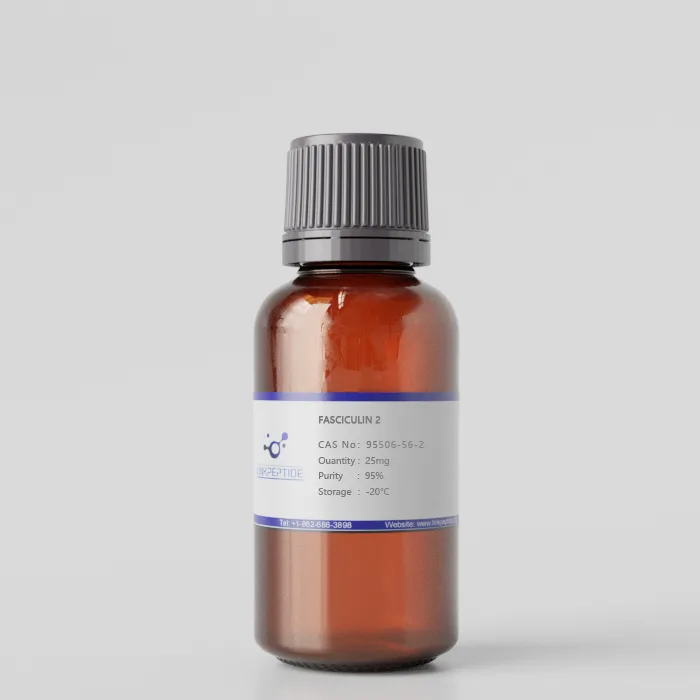
Product Name:FASCICULIN 2
Synonyms:Fasciculin-2, Fas-2, Fas2, FAS-II, Toxin TA1, Acetylcholinesterase toxin F-VII, fasciculin, fasciculin II, fasciculin 2
CAS No:95506-56-2
Purity:95%
Molar Mass:6749
Chemical Formula:C276H438N88O90S10
Storage:Store at -20 degrees Celsius
Sequence:TMCYSHTTTSRAILTNCGENSCYRKSRRHPPKMVLGRGCGCPPGDDNLEVKCCTSPDKCNY
Target:acetylcholinesterase
Application:
Fasciculin 2 is a potent neurotoxin derived from the venom of the green mamba snake (Dendroaspis angusticeps). It is known for its ability to inhibit acetylcholinesterase, an enzyme responsible for breaking down acetylcholine in the synaptic cleft. By blocking this enzyme, Fasciculin 2 leads to an accumulation of acetylcholine, resulting in prolonged muscle contractions and increased neuromuscular transmission. This action can cause fasciculations (muscle twitching) and, at higher concentrations, paralysis. Fasciculin 2 is widely used in research to study the role of acetylcholinesterase in neurotransmission, as well as the development of potential therapeutic agents for conditions like myasthenia gravis and Alzheimer's disease.
Current Research:
Fasciculin-2 is a 61-amino acid peptide toxin derived from the venom of the green mamba (Dendroaspis angusticeps). Belonging to the three-finger toxin (3FTx) family, it is a highly selective inhibitor of acetylcholinesterase (AChE), the enzyme responsible for hydrolyzing acetylcholine at synaptic junctions. Its potent and specific activity makes Fasciculin-2 an invaluable tool for studying cholinergic signaling in neuromuscular and central nervous system research. Mechanism of Action Fasciculin-2 binds with high affinity to AChE at its peripheral anionic site, sterically hindering the enzyme's ability to interact with acetylcholine. This inhibition leads to the accumulation of acetylcholine in the synaptic cleft, resulting in prolonged neurotransmitter activity. The elevated acetylcholine levels cause sustained muscle contraction and, in severe cases, neuromuscular paralysis. Applications in Research Neurophysiology Studies: Fasciculin-2 is widely used to study the role of AChE in synaptic transmission, providing insights into the dynamics of cholinergic signaling and its regulation in normal and pathological states. Pharmacological Testing: It serves as a model for developing AChE inhibitors aimed at treating conditions such as Alzheimer's disease, myasthenia gravis, and organophosphate poisoning. By mimicking cholinergic dysfunction, it also aids in evaluating potential antidotes. Muscle Physiology: In muscle studies, Fasciculin-2 helps investigate the effects of sustained neurotransmitter presence on muscle response and receptor desensitization. Structural Features The three-finger structural motif of Fasciculin-2, stabilized by multiple disulfide bridges, provides a compact and stable framework for its interaction with AChE. This unique structure contributes to its high specificity and potency. Conclusion Fasciculin-2 is a cornerstone molecule in neurobiology, offering precise insights into the role of acetylcholinesterase in cholinergic signaling. Its applications extend to therapeutic research, where it serves as a critical tool for understanding enzyme inhibitors and their potential clinical uses. The toxin continues to play a pivotal role in advancing our knowledge of neuromuscular and cholinergic system dynamics.
Reference:
Get a Quote
 LinkPeptide