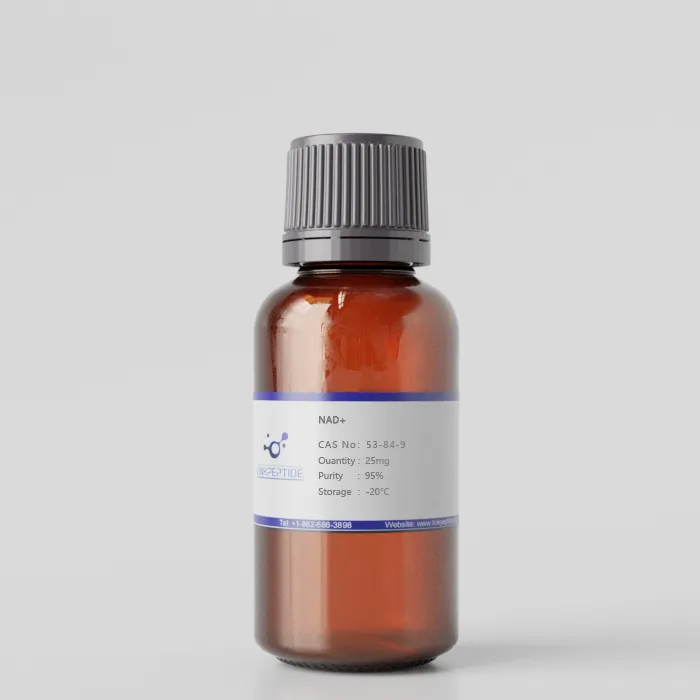
Product Name:NAD+
Form:Free base
CAS No:53-84-9
Molar Mass:663.42
Chemical Formula:C21H27N7O14P2
Synonyms:β-DPN; β-NAD; β-Nicotinamide Adenine Dinucleotide
Storage:-20°C
Target:Human Endogenous Metabolite
Application:
Nicotinamide adenine dinucleotide (NAD+) is a crucial coenzyme found in every living cell, involved in energy production, DNA repair, and maintaining cellular health. It exists in two forms—NAD+ (oxidized) and NADH (reduced)—and plays a key role in redox reactions, helping convert food into energy. NAD+ is essential for activating sirtuins, proteins that regulate various biological processes, including aging, metabolism, and inflammation. Levels of NAD+ naturally decline with age and certain health conditions, leading to interest in supplementation to boost NAD+ levels and promote longevity, cognitive function, and overall vitality.
Current Research:
Recent research has focused on the potential of NAD+ as a therapeutic target for aging, metabolic diseases, and neurodegenerative conditions. One of the key mechanisms through which NAD+ functions is by activating sirtuins, which are involved in regulating inflammation, metabolism, and stress responses. Studies have shown that boosting NAD+ levels may improve mitochondrial function, promote longevity, and protect against diseases like Alzheimer’s and Parkinson's.
One major study published in Cell Metabolism examined the effects of NAD+ precursors, such as nicotinamide riboside (NR) and nicotinamide mononucleotide (NMN), on age-related diseases. Results showed that supplementation with these precursors improved mitochondrial function and enhanced muscle endurance in aging mice, indicating potential benefits for age-related muscle decline in humans (Finkel et al., 2023). In addition, NAD+ precursors have shown promise in improving insulin sensitivity and supporting metabolic health, which could have significant implications for treating type 2 diabetes.
Another study in Nature Communications explored the impact of NAD+ on neurodegenerative diseases. Researchers found that increasing NAD+ levels in models of Alzheimer’s disease improved cognitive function and reduced amyloid-beta plaque accumulation, a hallmark of the disease. The study suggests that NAD+ boosting therapies could delay or mitigate the onset of neurodegeneration (Zhao et al., 2024).
Clinical trials evaluating NAD+ precursors are ongoing, with promising results in age-related diseases, metabolic dysfunction, and neurological disorders. While further research is needed to establish the long-term safety and efficacy of NAD+ supplementation, current findings indicate that NAD+ plays a vital role in maintaining cellular health and may be an effective therapeutic target for combating aging and various chronic diseases.
References:
Get a Quote
 LinkPeptide