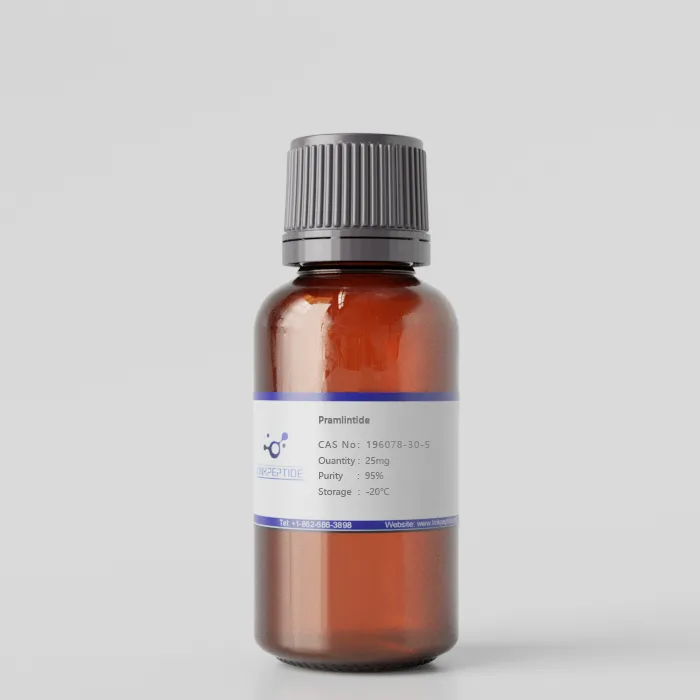
Product Name:Pramlintide
Form:Acetate salt
Purity:95%
Storage:-20oC
Cas No:196078-30-5
Molar Mass:3951.405
Chemical Formula:C171H267N51O53S2
IUPAC Name:(2S)-N-[(1S)-4-carbamimidamido-1-{[(1S)-1-{[(1S)-1-{[(1S)-1-{[(1S)-1-{[(1S)-1-{[(1S)-1-{[(1S)-1-{[(1S)-2-hydroxy-1-{[(1S)-2-hydroxy-1-{[(1S)-1-{[(1S)-1-{[(1S)-1-({2-[(2S)-2-{[(1S,2S)-1-{[(2S)-1-[(2S)-2-[(2S)-2-{[(1S,2R)-2-hydroxy-1-{[(1S)-1-{[(1S)-1-[({[(1S)-2-hydroxy-1-{[(1S)-1-{[(1S,2R)-2-hydroxy-1-{[(1S)-1-(C-hydroxycarbonimidoyl)-2-(4-hydroxyphenyl)ethyl]-C-hydroxycarbonimidoyl}propyl]-C-hydroxycarbonimidoyl}-2-(C-hydroxycarbonimidoyl)ethyl]-C-hydroxycarbonimidoyl}ethyl]-C-hydroxycarbonimidoyl}methyl)-C-hydroxycarbonimidoyl]-2-methylpropyl]-C-hydroxycarbonimidoyl}-2-(C-hydroxycarbonimidoyl)ethyl]-C-hydroxycarbonimidoyl}propyl]-C-hydroxycarbonimidoyl}pyrrolidine-1-carbonyl]pyrrolidin-1-yl]-4-methyl-1-oxopentan-2-yl]-C-hydroxycarbonimidoyl}-2-methylbutyl]-C-hydroxycarbonimidoyl}pyrrolidin-1-yl]-2-oxoethyl}-C-hydroxycarbonimidoyl)-2-phenylethyl]-C-hydroxycarbonimidoyl}-2-(C-hydroxycarbonimidoyl)ethyl]-C-hydroxycarbonimidoyl}-2-(C-hydroxycarbonimidoyl)ethyl]-C-hydroxycarbonimidoyl}ethyl]-C-hydroxycarbonimidoyl}ethyl]-C-hydroxycarbonimidoyl}-2-(1H-imidazol-5-yl)ethyl]-C-hydroxycarbonimidoyl}-2-methylpropyl]-C-hydroxycarbonimidoyl}-3-methylbutyl]-C-hydroxycarbonimidoyl}-2-phenylethyl]-C-hydroxycarbonimidoyl}-2-(C-hydroxycarbonimidoyl)ethyl]-C-hydroxycarbonimidoyl}ethyl]-C-hydroxycarbonimidoyl}-3-methylbutyl]-C-hydroxycarbonimidoyl}butyl]-2-{[(2S,3R)-2-{[(2S)-2-{[(2R)-2-{[(2S,3R)-2-{[(2S)-2-{[(2S,3R)-2-{[(2S)-2-{[(2R)-2-{[(2S)-2,6-diamino-1-hydroxyhexylidene]amino}-1-hydroxy-3-sulfanylpropylidene]amino}-1-hydroxy-3-(C-hydroxycarbonimidoyl)propylidene]amino}-1,3-dihydroxybutylidene]amino}-1-hydroxypropylidene]amino}-1,3-dihydroxybutylidene]amino}-1-hydroxy-3-sulfanylpropylidene]amino}-1-hydroxypropylidene]amino}-1,3-dihydroxybutylidene]amino}pentanediimidic acid
SMILES:[H][C@](C)(O)[C@]([H])(N=C(O)[C@]([H])(C)N=C(O)[C@@]([H])(N=C(O)[C@]([H])(CC(O)=N)N=C(O)[C@]([H])(CS)N=C(O)[C@@]([H])(N)CCCCN)[C@@]([H])(C)O)C(O)=N[C@@]([H])(CS)C(O)=N[C@@]([H])(C)C(O)=N[C@]([H])(C(O)=N[C@@]([H])(CCC(O)=N)C(O)=N[C@@]([H])(CCCNC(N)=N)C(O)=N[C@@]([H])(CC(C)C)C(O)=N[C@@]([H])(C)C(O)=N[C@@]([H])(CC(O)=N)C(O)=N[C@@]([H])(CC1=CC=CC=C1)C(O)=N[C@@]([H])(CC(C)C)C(O)=N[C@@]([H])(C(C)C)C(O)=N[C@@]([H])(CC1=CN=CN1)C(O)=N[C@@]([H])(CO)C(O)=N[C@@]([H])(CO)C(O)=N[C@@]([H])(CC(O)=N)C(O)=N[C@@]([H])(CC(O)=N)C(O)=N[C@@]([H])(CC1=CC=CC=C1)C(O)=NCC(=O)N1CCC[C@@]1([H])C(O)=N[C@]([H])(C(O)=N[C@@]([H])(CC(C)C)C(=O)N1CCC[C@@]1([H])C(=O)N1CCC[C@@]1([H])C(O)=N[C@]([H])(C(O)=N[C@@]([H])(CC(O)=N)C(O)=N[C@@]([H])(C(C)C)C(O)=NCC(O)=N[C@@]([H])(CO)C(O)=N[C@@]([H])(CC(O)=N)C(O)=N[C@]([H])(C(O)=N[C@@]([H])(CC1=CC=C(O)C=C1)C(O)=N)[C@@]([H])(C)O)[C@@]([H])(C)O)[C@@]([H])(C)CC)[C@@]([H])(C)O
InChIKey:NRKVKVQDUCJPIZ-MKAGXXMWSA-N
InChI:InChI=1S/C171H269N51O53S2/c1-21-81(12)130(163(268)207-110(56-78(6)7)169(274)222-53-33-42-118(222)170(275)221-52-32-41-117(221)160(265)219-135(89(20)230)167(272)206-109(66-125(180)238)151(256)212-128(79(8)9)161(266)186-68-126(239)192-111(70-223)154(259)203-107(64-123(178)236)152(257)218-134(88(19)229)166(271)195-98(136(181)241)57-92-43-45-94(231)46-44-92)214-159(264)116-40-31-51-220(116)127(240)69-187-141(246)101(58-90-34-24-22-25-35-90)199-148(253)105(62-121(176)234)201-149(254)106(63-122(177)235)202-155(260)112(71-224)209-156(261)113(72-225)208-146(251)103(60-93-67-184-75-188-93)205-162(267)129(80(10)11)213-150(255)100(55-77(4)5)198-145(250)102(59-91-36-26-23-27-37-91)200-147(252)104(61-120(175)233)196-137(242)82(13)189-144(249)99(54-76(2)3)197-142(247)96(39-30-50-185-171(182)183)193-143(248)97(47-48-119(174)232)194-165(270)132(86(17)227)215-138(243)83(14)190-157(262)114(73-276)211-168(273)133(87(18)228)216-139(244)84(15)191-164(269)131(85(16)226)217-153(258)108(65-124(179)237)204-158(263)115(74-277)210-140(245)95(173)38-28-29-49-172/h22-27,34-37,43-46,67,75-89,95-118,128-135,223-231,276-277H,21,28-33,38-42,47-66,68-74,172-173H2,1-20H3,(H2,174,232)(H2,175,233)(H2,176,234)(H2,177,235)(H2,178,236)(H2,179,237)(H2,180,238)(H2,181,241)(H,184,188)(H,186,266)(H,187,246)(H,189,249)(H,190,262)(H,191,269)(H,192,239)(H,193,248)(H,194,270)(H,195,271)(H,196,242)(H,197,247)(H,198,250)(H,199,253)(H,200,252)(H,201,254)(H,202,260)(H,203,259)(H,204,263)(H,205,267)(H,206,272)(H,207,268)(H,208,251)(H,209,261)(H,210,245)(H,211,273)(H,212,256)(H,213,255)(H,214,264)(H,215,243)(H,216,244)(H,217,258)(H,218,257)(H,219,265)(H4,182,183,185)/t81-,82-,83-,84-,85+,86+,87+,88+,89+,95-,96-,97-,98-,99-,100-,101-,102-,103-,104-,105-,106-,107-,108-,109-,110-,111-,112-,113-,114-,115-,116-,117-,118-,128-,129-,130-,131-,132-,133-,134-,135-/m0/s1
Sequence:KCNTATCATQRLANFLVHSSNNFGPILPPTNVGSNTY-(NH2)
Application:Pramlintide is a synthetic analog of amylin, a peptide hormone co-secreted with insulin by pancreatic beta cells. It plays a crucial role in glucose homeostasis by slowing gastric emptying, suppressing postprandial glucagon secretion, and promoting satiety. It is used as an adjunct therapy in type 1 and type 2 diabetes mellitus to improve postprandial blood glucose control. Unlike insulin, Pramlintide targets multiple metabolic pathways, reducing glucose fluctuations and enhancing weight management. Current research explores its potential in obesity, metabolic syndrome, and neurodegenerative diseases, making it a promising candidate for broader therapeutic applications beyond diabetes management.
Current Research:Pramlintide is a synthetic analog of amylin, an endogenous hormone secreted by pancreatic beta cells along with insulin. It plays a key role in glucose regulation by modulating gastric emptying, glucagon suppression, and appetite regulation. Originally approved for adjunctive therapy in type 1 and type 2 diabetes, research is now expanding its potential into obesity, metabolic syndrome, and neurodegenerative disorders. Diabetes Management and Glycemic Control Pramlintide is approved for use in type 1 and insulin-dependent type 2 diabetes as an adjunct to insulin therapy. Postprandial glucose control: It helps reduce post-meal glucose spikes by delaying gastric emptying and suppressing glucagon release, leading to more stable glucose levels. Insulin dose reduction: Studies indicate that patients using Pramlintide require lower insulin doses, reducing the risk of hypoglycemia and weight gain associated with insulin therapy. Combination therapies: Ongoing research is evaluating Pramlintide in combination with GLP-1 receptor agonists (e.g., liraglutide, semaglutide) to enhance synergistic metabolic effects in diabetes management. Obesity and Weight Management Pramlintide has shown significant potential in weight reduction, making it a candidate for obesity treatment. Appetite suppression: By acting on the hypothalamus, Pramlintide increases satiety and reduces caloric intake, leading to sustained weight loss. Combination with leptin therapy: Studies indicate that Pramlintide enhances leptin sensitivity, making it a promising adjunct therapy for obesity. Pramlintide/metreleptin co-therapy: A Pramlintide-leptin combination has demonstrated greater weight loss effects than either hormone alone, potentially improving long-term obesity management. Neurodegenerative Diseases and Cognitive Health Recent research explores Pramlintide??s role in neuroprotection due to its insulin-like effects in the brain. Alzheimer??s disease (AD): Studies suggest that amylin analogs may reduce amyloid plaque accumulation and enhance neuronal function, potentially slowing cognitive decline. Parkinson??s disease (PD): Emerging research indicates that Pramlintide may protect dopaminergic neurons, reducing neuroinflammation and oxidative stress. Cognitive function in diabetes: Since diabetes is a risk factor for dementia, Pramlintide??s ability to improve glucose metabolism in the brain is being explored as a strategy to prevent cognitive decline in diabetic patients. Metabolic Syndrome and Cardiovascular Research Pramlintide is also being studied for its role in improving metabolic syndrome and cardiovascular health: Lipid metabolism improvement: Studies suggest that Pramlintide can reduce triglycerides and improve lipid profiles, lowering cardiovascular risk. Blood pressure regulation: Research indicates potential effects on blood pressure reduction through metabolic regulation and appetite control. NAFLD/NASH research: Pramlintide is being evaluated for its impact on non-alcoholic fatty liver disease (NAFLD) and non-alcoholic steatohepatitis (NASH), given its ability to modulate insulin resistance and lipid metabolism. Emerging Research Areas Polycystic ovary syndrome (PCOS): Given its effects on glucose metabolism and weight regulation, Pramlintide is being studied as a potential therapy for insulin-resistant PCOS patients. Gut-brain axis regulation: Research suggests that Pramlintide may influence gut microbiota, impacting metabolic and neurological health. Anorexia and cachexia treatment: Due to its role in energy balance regulation, Pramlintide is being investigated for potential appetite-modulating effects in conditions such as cancer-related cachexia and eating disorders. With its growing range of applications, Pramlintide is emerging as a key metabolic regulator, offering new therapeutic avenues in diabetes, obesity, neurodegenerative diseases, and metabolic disorders.
Get a Quote
 LinkPeptide