 LinkPeptide
Amino Acid Metabolism: Central Bioenergetic and Signaling Hubs for Modern Biomedical Research
Amino acids are no longer viewed solely as protein building blocks; they are now recognized as central regulators of cellular metabolism, energy production, epigenetic control, and signaling networks. This article reviews amino acid metabolism with emphasis on biosynthesis, degradation, and functional integration with the TCA cycle, urea cycle, and neurotransmitter pathways. Based on recent advances in metabolic biology, this review highlights how amino acids influence disease mechanisms and therapeutic development. Understanding these pathways provides essential insights for researchers and pharmaceutical scientists working in metabolic disease, oncology, and drug discovery.
Introduction: Amino Acids as Metabolic Information Carriers
Amino acids represent one of the most functionally versatile molecular classes in biology. While traditionally considered the fundamental units of protein synthesis, contemporary metabolic research demonstrates that amino acids are deeply integrated into energy production, redox balance, nitrogen handling, and cellular signaling networks.
In mammalian systems, 20 amino acids participate in protein synthesis, with dietary and endogenous sources contributing to cellular pools. As outlined in Amino Acid Metabolism by Chandel, amino acids are derived either from diet, protein degradation, or de novo synthesis from glycolytic and tricarboxylic acid (TCA) cycle intermediates . This metabolic flexibility positions amino acids as central nodes connecting nutrient availability with cellular function.
For researchers and pharmaceutical developers, amino acid metabolism is not only a biochemical framework but also a therapeutic landscape influencing cancer metabolism, immune regulation, and neurological disorders.
Biosynthesis of Nonessential Amino Acids
Nonessential amino acids are synthesized primarily from metabolic intermediates of glycolysis and the TCA cycle. A key example is the conversion of 3-phosphoglycerate into serine, which subsequently contributes to glycine and cysteine production.
This pathway integrates carbon metabolism with one-carbon metabolism, linking amino acids to nucleotide synthesis and methylation reactions. Similarly, glutamate serves as a central nitrogen donor, enabling the formation of alanine, aspartate, and proline through transamination reactions.
According to Chandel’s metabolic framework, glutamate functions as a “nitrogen hub,” facilitating amino group transfer across multiple biosynthetic pathways . This makes glutamate metabolism essential for both biosynthesis and detoxification processes.
Amino Acid Degradation and the Urea Cycle
Amino acid catabolism generates two key outputs:
- A nitrogen waste product (NH4+)
- A carbon skeleton entering metabolic pathways
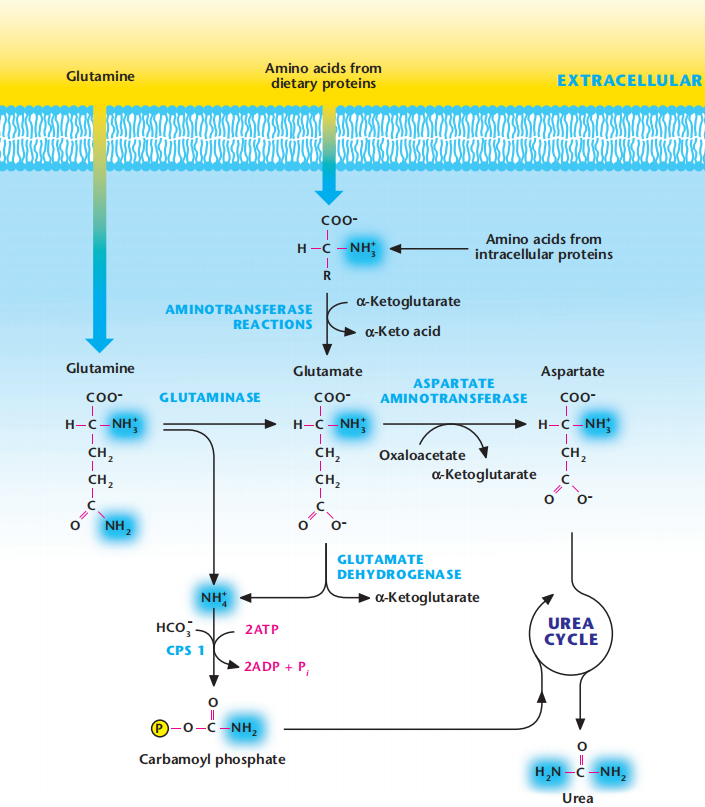
Nitrogen must be safely removed due to its toxicity. In mammals, this occurs through the urea cycle, primarily in the liver. The urea cycle converts ammonia into urea for excretion, linking nitrogen metabolism with mitochondrial and cytosolic reactions.
A critical feature of this system is the metabolic coupling between the urea cycle and the TCA cycle. Fumarate produced in the urea cycle is converted into malate and oxaloacetate, enabling continuous metabolic recycling and ATP generation.
This integration ensures that amino acid breakdown contributes not only to waste removal but also to energy homeostasis.
TCA Cycle Integration: Amino Acids as Energy Substrates
Amino acids feed into the TCA cycle at multiple points:
- Glutamate → α-ketoglutarate
- Aspartate → oxaloacetate
- Alanine → pyruvate
- Leucine and lysine → acetyl-CoA derivatives
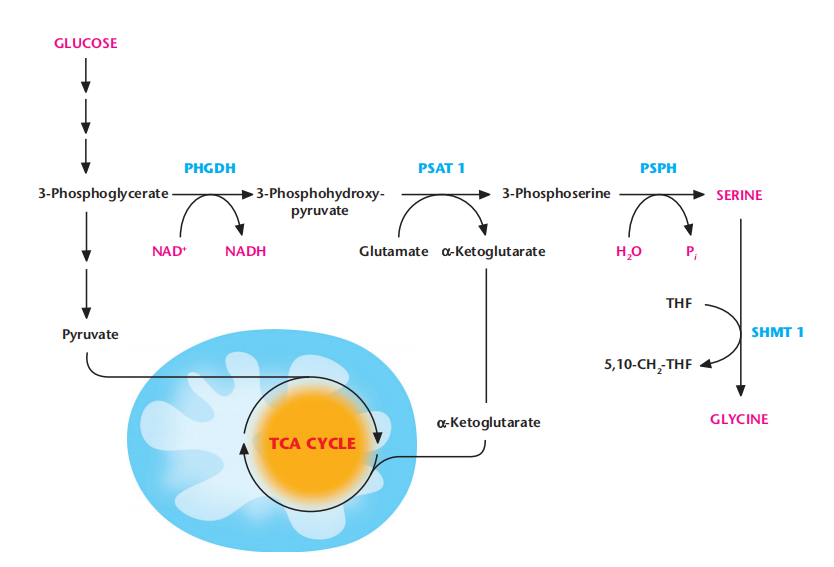
This metabolic flexibility allows amino acids to function as alternative energy substrates, especially under nutrient stress or high-energy demand conditions.
Chandel emphasizes that amino acid-derived carbon skeletons are critical contributors to ATP production, particularly during starvation or high-protein catabolic states .
For pharmaceutical research, this is particularly relevant in cancer metabolism, where tumor cells often rely on glutamine and other amino acids to sustain rapid proliferation.
Amino Acids in Neurotransmission and Signaling
Beyond metabolism, amino acids serve as neurotransmitters and signaling precursors:
- Glutamate: primary excitatory neurotransmitter
- Glycine: inhibitory neurotransmitter in spinal cord
- GABA: derived from glutamate via decarboxylation
Additionally, tryptophan and tyrosine are precursors for serotonin and catecholamines, respectively. These metabolites regulate mood, cognition, and stress responses.
Tyrosine metabolism also generates dopamine, norepinephrine, and epinephrine—key mediators of the sympathetic nervous system.
These pathways highlight the biochemical intersection between metabolism and neurobiology.
Epigenetic Regulation Through Amino Acid Metabolism
A major advancement in metabolic biology is the recognition that amino acids directly regulate epigenetic modifications.
Methionine, through S-adenosylmethionine (SAM), provides methyl groups for DNA and histone methylation. This connects nutrient availability with gene expression regulation.
Similarly, one-carbon metabolism derived from serine and glycine contributes to nucleotide synthesis and methylation cycles. These processes are essential for cell proliferation and differentiation.
Thus, amino acid metabolism functions as a regulatory interface between metabolism and gene expression.
Clinical and Pharmaceutical Relevance
Amino acid metabolism has direct implications for multiple disease areas:
Cancer Metabolism
Tumor cells exhibit increased dependence on glutamine and serine metabolism for growth, redox balance, and nucleotide synthesis.
Neurological Disorders
Imbalances in glutamate and GABA signaling are linked to epilepsy, depression, and neurodegeneration.
Metabolic Disease
Altered amino acid catabolism contributes to insulin resistance and mitochondrial dysfunction.
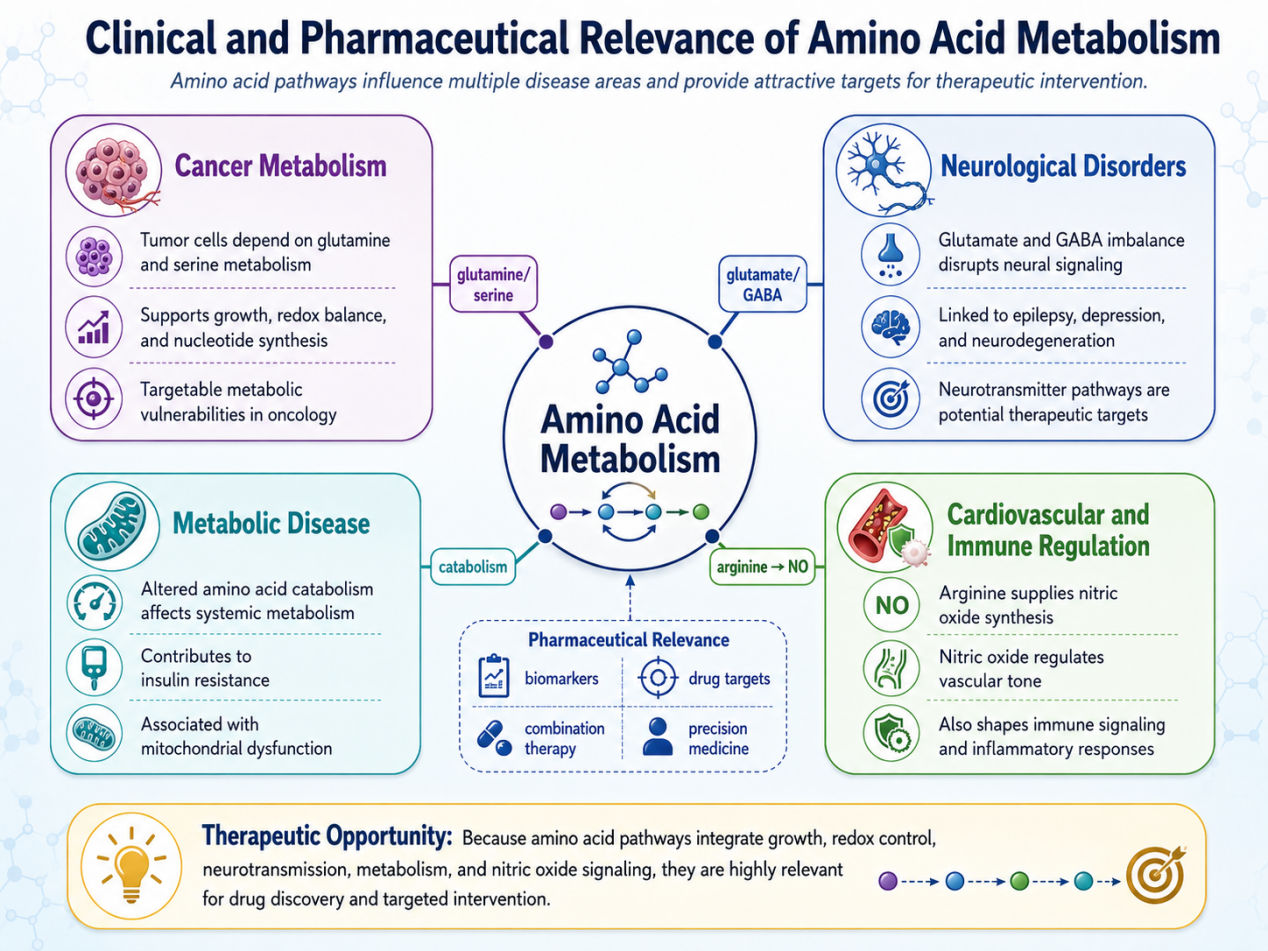
Cardiovascular and Immune Regulation
Nitric oxide synthesis from arginine regulates vascular tone and immune signaling.
These insights make amino acid pathways attractive targets for therapeutic intervention.
Research Applications and Biotech Utility
For biotechnology and pharmaceutical research companies such as Linkpeptide, amino acids and their derivatives are essential components in:
- Cell culture optimization
- Metabolic flux studies
- Enzyme activity assays
- Drug screening systems
- Peptide synthesis and modification
High-purity amino acids are particularly important for reproducibility in metabolic and proteomic studies. Additionally, isotope-labeled amino acids are widely used in fluxomics and quantitative proteomics.
Understanding amino acid metabolism allows researchers to design better experimental systems and improve drug development pipelines targeting metabolic vulnerabilities.
Systems Integration: A Unified Metabolic Network
Amino acid metabolism is not isolated. It integrates with:
- Glycolysis (carbon input)
- TCA cycle (energy production)
- Urea cycle (nitrogen disposal)
- One-carbon metabolism (epigenetics)
- Neurotransmitter synthesis (signaling)
This interconnected network enables cells to adapt dynamically to nutrient availability, stress, and developmental cues.
As highlighted in the reference review, amino acids act as both substrates and signaling molecules, making them central regulators of cellular physiology .
Conclusion
Amino acid metabolism represents a highly integrated biochemical network connecting energy production, nitrogen balance, epigenetic regulation, and intercellular signaling. Modern research has expanded the role of amino acids far beyond protein synthesis, positioning them as key regulators of cellular adaptation and disease progression.
For researchers and pharmaceutical scientists, targeting amino acid metabolism offers significant opportunities for therapeutic innovation, particularly in oncology, neurology, and metabolic disease.
FAQ
Q1: Why are amino acids important beyond protein synthesis?
Amino acids regulate energy metabolism, neurotransmission, epigenetics, and nitrogen balance in addition to forming proteins.
Q2: Which amino acid is most important in cancer metabolism?
Glutamine is often considered a key nutrient for tumor growth due to its role in energy production and biosynthesis.
Q3: How are amino acids linked to energy production?
Amino acids feed into glycolysis and the TCA cycle as carbon skeletons, supporting ATP generation.
Q4: What is the role of methionine in epigenetics?
Methionine produces SAM, which provides methyl groups for DNA and histone methylation.
Q5: Why is amino acid metabolism important for drug development?
It reveals metabolic vulnerabilities in diseases, enabling targeted therapy design and biomarker discovery.
Reference
Chandel, N. S. (2021). Amino acid metabolism. Cold Spring Harbor Perspectives in Biology, 13(a040584).
https://doi.org/10.1101/cshperspect.a040584
Hess, D. T., & Stamler, J. S. (2012). Regulation by S-nitrosylation of protein post-translational modification. Journal of Biological Chemistry, 287(7), 4411-4418.
https://doi.org/10.1074/jbc.R111.285742
Wu, G. (2009). Amino acids: metabolism, functions, and nutrition. Amino acids, 37(1), 1-17.
https://doi.org/10.1007/s00726-009-0269-0
Lea, P. J., & Miflin, B. J. (1977). Amino acid metabolism. Ann Rev Plant Physiol, 28, 299-329.