 LinkPeptide
Overcoming the Delivery Barriers of Peptide Therapeutics: Challenges and Emerging Formulation Strategies
Abstract
Peptide therapeutics have become one of the most important and rapidly expanding classes of modern biopharmaceuticals. Their high target specificity, strong biological activity, and relatively low toxicity make them attractive candidates for treating metabolic, oncologic, infectious, and cardiovascular diseases. However, their clinical success is fundamentally constrained by significant pharmacokinetic limitations, including enzymatic instability, rapid systemic clearance, and poor oral absorption. These challenges have historically restricted peptides to injectable formulations. Recent advances in drug delivery science, including nanoparticles, polymer systems, PEGylation, depot formulations, and alternative administration routes, are transforming peptide therapeutics into more stable, long-acting, and patient-friendly medicines. This article provides a comprehensive review of these barriers and highlights emerging strategies designed to overcome them.
Introduction: The Central Role of Delivery in Peptide Therapeutics
Peptides occupy a unique position in the pharmaceutical landscape, bridging the gap between small-molecule drugs and large biologics such as monoclonal antibodies. Structurally, peptides consist of short amino acid sequences capable of binding to highly specific biological targets, including receptors, enzymes, and signaling proteins. This specificity translates into potent biological activity with reduced off-target toxicity.
Despite these advantages, peptide drugs face a critical bottleneck: delivery efficiency. Unlike small molecules, peptides are structurally fragile and metabolically unstable in physiological environments. As a result, even highly potent peptides may fail clinically if they cannot reach their target tissues in sufficient concentrations and maintain structural integrity long enough to exert their pharmacological effect.
Therefore, delivery technology is not a secondary consideration in peptide drug development—it is a determining factor in therapeutic success.
Core Pharmacokinetic Limitations of Peptide Drugs
Enzymatic Degradation in Biological Systems
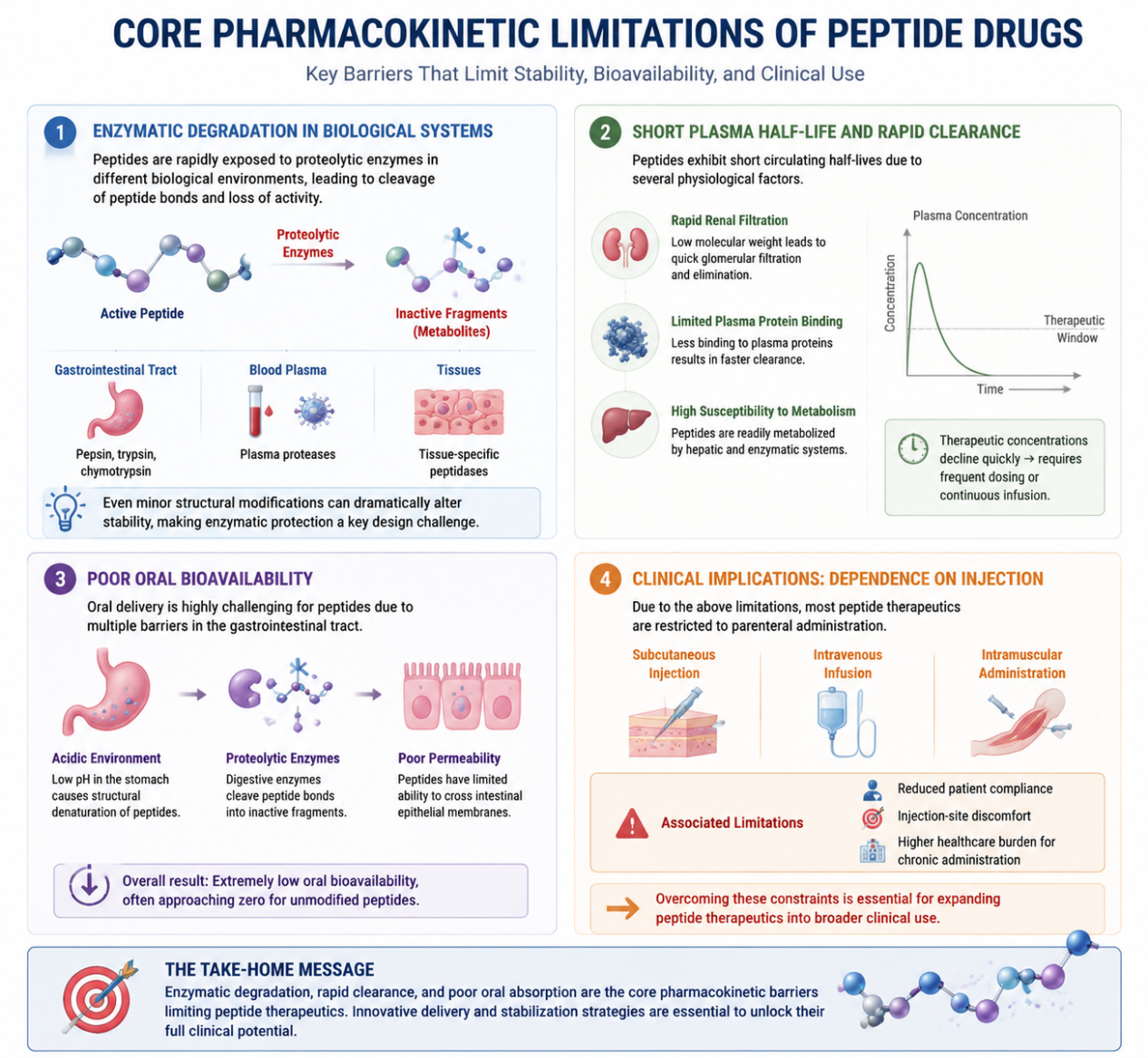
One of the most significant barriers to peptide therapeutics is rapid enzymatic degradation. In vivo, peptides are continuously exposed to proteolytic enzymes located in:
- The gastrointestinal tract (pepsin, trypsin, chymotrypsin)
- Blood plasma proteases
- Tissue-specific peptidases
These enzymes rapidly cleave peptide bonds, leading to fragmentation into inactive metabolites. Even minor structural modifications can dramatically alter stability, making enzymatic protection a key design challenge.
Short Plasma Half-Life and Rapid Clearance
Peptides typically exhibit short circulating half-lives due to:
- Low molecular weight leading to rapid renal filtration
- Limited binding to plasma proteins
- High susceptibility to hepatic and enzymatic metabolism
As a result, therapeutic concentrations decline quickly after administration. This necessitates frequent dosing or continuous infusion, both of which are undesirable in long-term therapy.
Poor Oral Bioavailability
Oral administration is the most convenient and preferred route for drug delivery; however, peptides face multiple barriers in the gastrointestinal tract:
- Acidic gastric environment causes structural denaturation
- Proteolytic enzymes degrade peptide bonds
- Poor epithelial permeability limits absorption across intestinal membranes
Consequently, oral bioavailability of unmodified peptides is often extremely low, sometimes approaching zero in practical terms.
Clinical Implications: Dependence on Injection
Due to these limitations, most peptide therapeutics are currently restricted to:
- Subcutaneous injection
- Intravenous infusion
- Intramuscular administration
While effective, these routes introduce limitations such as:
- Reduced patient compliance
- Injection-site discomfort
- Higher healthcare burden for chronic administration
Overcoming these constraints is essential for expanding peptide therapeutics into broader clinical use.
Nanoparticles and Liposomal Delivery Systems
Nanotechnology-based delivery platforms represent one of the most promising approaches to peptide stabilization.
Mechanism of Action
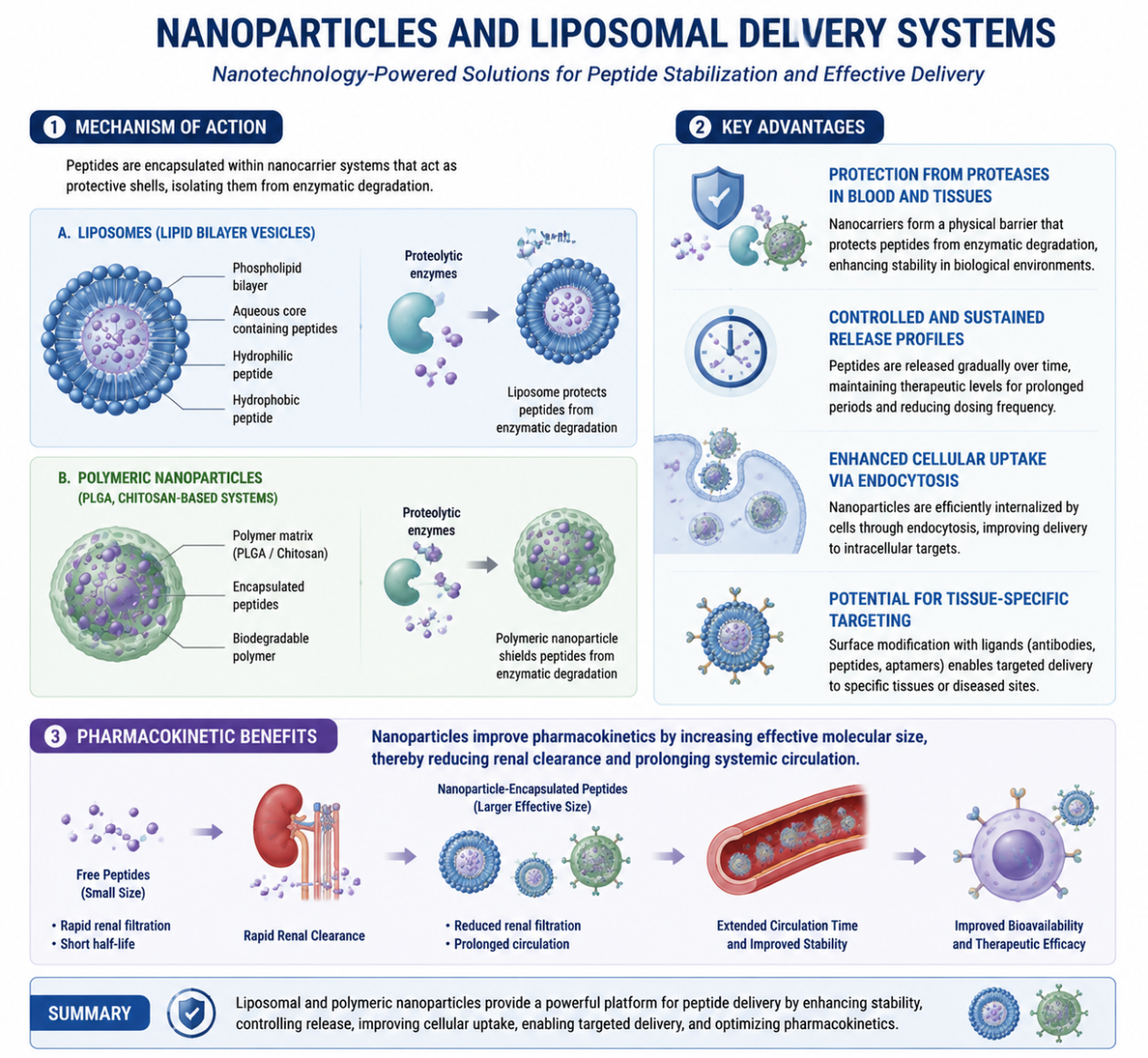
Peptides are encapsulated within:
- Liposomes (lipid bilayer vesicles)
- Polymeric nanoparticles (PLGA, chitosan-based systems)
These carriers act as protective shells, isolating peptides from enzymatic degradation.
Key Advantages
- Protection from proteases in blood and tissues
- Controlled and sustained release profiles
- Enhanced cellular uptake via endocytosis
- Potential for tissue-specific targeting through surface modification
Nanoparticles also improve pharmacokinetics by increasing effective molecular size, thereby reducing renal clearance.
Polymer-Based and Hydrogel Systems
Polymeric systems and hydrogels provide a structurally flexible platform for sustained peptide delivery.
Polymer Matrices
Biodegradable polymers such as PLGA allow:
- Controlled degradation over time
- Gradual peptide release
- Tunable pharmacokinetic profiles
Hydrogel Systems
Hydrogels offer a water-rich, biocompatible environment that can:
- Retain peptides locally at injection sites
- Release drugs in a diffusion-controlled manner
- Reduce peak-trough fluctuations in plasma concentration
These systems are particularly valuable for chronic disease management where steady drug exposure is required.
PEGylation and Chemical Conjugation Strategies
PEGylation involves the covalent attachment of polyethylene glycol (PEG) chains to peptide molecules.
Functional Mechanisms
PEGylation enhances peptide stability through:
- Increased hydrodynamic radius (reducing renal clearance)
- Steric shielding from proteolytic enzymes
- Reduced immunogenic recognition
Clinical Benefits
- Extended plasma half-life
- Reduced dosing frequency
- Improved therapeutic index
PEGylation remains one of the most widely used and clinically validated peptide modification strategies.
Depot Formulations: Long-Acting Drug Reservoirs
Depot formulations create localized drug reservoirs that release peptides gradually over time.
Mechanism
Peptides are embedded within:
- Biodegradable microspheres
- Lipid-based depots
- Gel matrices
Advantages
- Sustained drug release over days to months
- Reduced injection frequency (weekly or monthly dosing)
- Improved patient adherence in chronic therapies
This approach is widely used in hormone therapies and metabolic disease treatments.
Alternative and Non-Invasive Delivery Routes
To overcome injection dependency, multiple non-invasive routes are under active development.
Intranasal Delivery
- Direct absorption through nasal mucosa
- Potential access to central nervous system (CNS)
- Rapid onset of action
Transdermal Delivery
- Controlled permeation through skin barriers
- Avoids gastrointestinal degradation
- Suitable for sustained release systems
Pulmonary (Inhalation) Delivery
- Large alveolar surface area
- High vascularization enables rapid absorption
- Potential for systemic delivery without injections
These approaches aim to improve patient convenience while maintaining pharmacological efficacy.
Central Design Challenge: Stability vs. Bioavailability
Despite technological advances, peptide delivery remains fundamentally constrained by a key design trade-off:
- Increasing stability often reduces release efficiency
- Enhancing permeability may compromise structural integrity
- Extending circulation time may affect tissue targeting
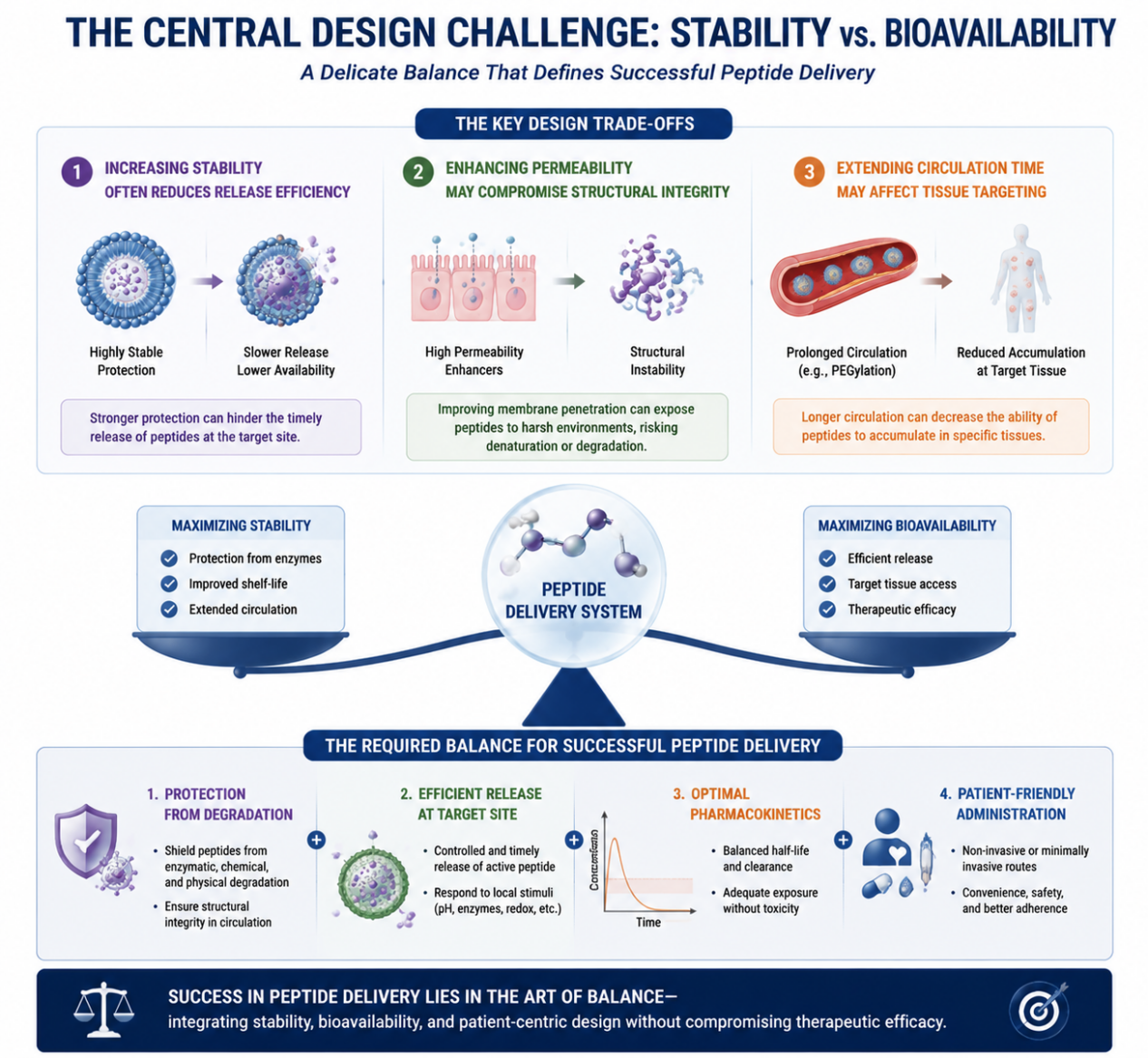
Therefore, successful peptide delivery systems must carefully balance:
- Protection from degradation
- Efficient release at target site
- Optimal pharmacokinetics
- Patient-friendly administration
This balance defines the success of modern formulation science.
Future Perspectives in Peptide Drug Delivery
The future of peptide therapeutics is moving toward highly integrated and intelligent delivery systems, including:
- Stimuli-responsive nanoparticles (pH, enzyme, redox-triggered)
- AI-guided formulation optimization
- Self-assembling peptide systems
- Hybrid biologic–nanomaterial platforms
- Oral peptide technologies with absorption enhancers
These innovations aim to transform peptides from injectable-only therapies into versatile, multi-route pharmaceuticals suitable for global healthcare needs.
Conclusion
Peptide therapeutics represent a powerful and rapidly expanding class of drugs, but their clinical potential is fundamentally dependent on overcoming delivery challenges. Enzymatic instability, rapid clearance, and poor oral absorption have historically limited their use to injectable formulations. However, advances in nanotechnology, polymer science, chemical modification, and alternative delivery routes are rapidly transforming the field.
As delivery technologies continue to evolve, peptide therapeutics are expected to transition from niche injectable agents into widely accessible, patient-friendly medicines with broad therapeutic applicability across multiple disease areas.
Reference
Balamkundu, S., & Liu, C. F. (2023). Lysosomal-cleavable peptide linkers in antibody–drug conjugates. Biomedicines, 11(11), 3080.
https://doi.org/10.3390/biomedicines11113080
Beck, A., Goetsch, L., Dumontet, C., & Corvaïa, N. (2017). Strategies and challenges for the next generation of antibody–drug conjugates. Nature reviews Drug discovery, 16(5), 315-337.
https://doi.org/10.1038/nrd.2016.268
Salomon, P. L., Reid, E. E., Archer, K. E., Harris, L., Maloney, E. K., Wilhelm, A. J., … & Singh, R. (2019). Optimizing lysosomal activation of antibody–drug conjugates (ADCs) by incorporation of novel cleavable dipeptide linkers. Molecular Pharmaceutics, 16(12), 4817-4825.
https://doi.org/10.1021/acs.molpharmaceut.9b00696
Bargh, J. D., Isidro-Llobet, A., Parker, J. S., & Spring, D. R. (2019). Cleavable linkers in antibody–drug conjugates. Chemical Society Reviews, 48(16), 4361-4374.