 LinkPeptide
Therapeutic Peptides: Science, Progress, and the Future of Precision Medicine
Therapeutic peptides have emerged as one of the most dynamic and rapidly expanding classes of modern medicines. Positioned at the intersection of small-molecule drugs and large biologics, peptides offer a unique combination of high target specificity, strong biological activity, and improved safety profiles. Over the past several decades, their development has accelerated dramatically, moving from early hormone-based therapies to a broad portfolio of clinically validated treatments across metabolic, oncologic, infectious, and neurological diseases. Today, peptide therapeutics are no longer niche compounds. They represent a mainstream pharmaceutical strategy shaping the future of precision medicine.
A Historical Journey: Milestones in Peptide Therapeutics
The evolution of peptide-based drugs spans more than seven decades of scientific progress. Each milestone reflects a leap in biotechnology, synthesis methods, or clinical understanding.
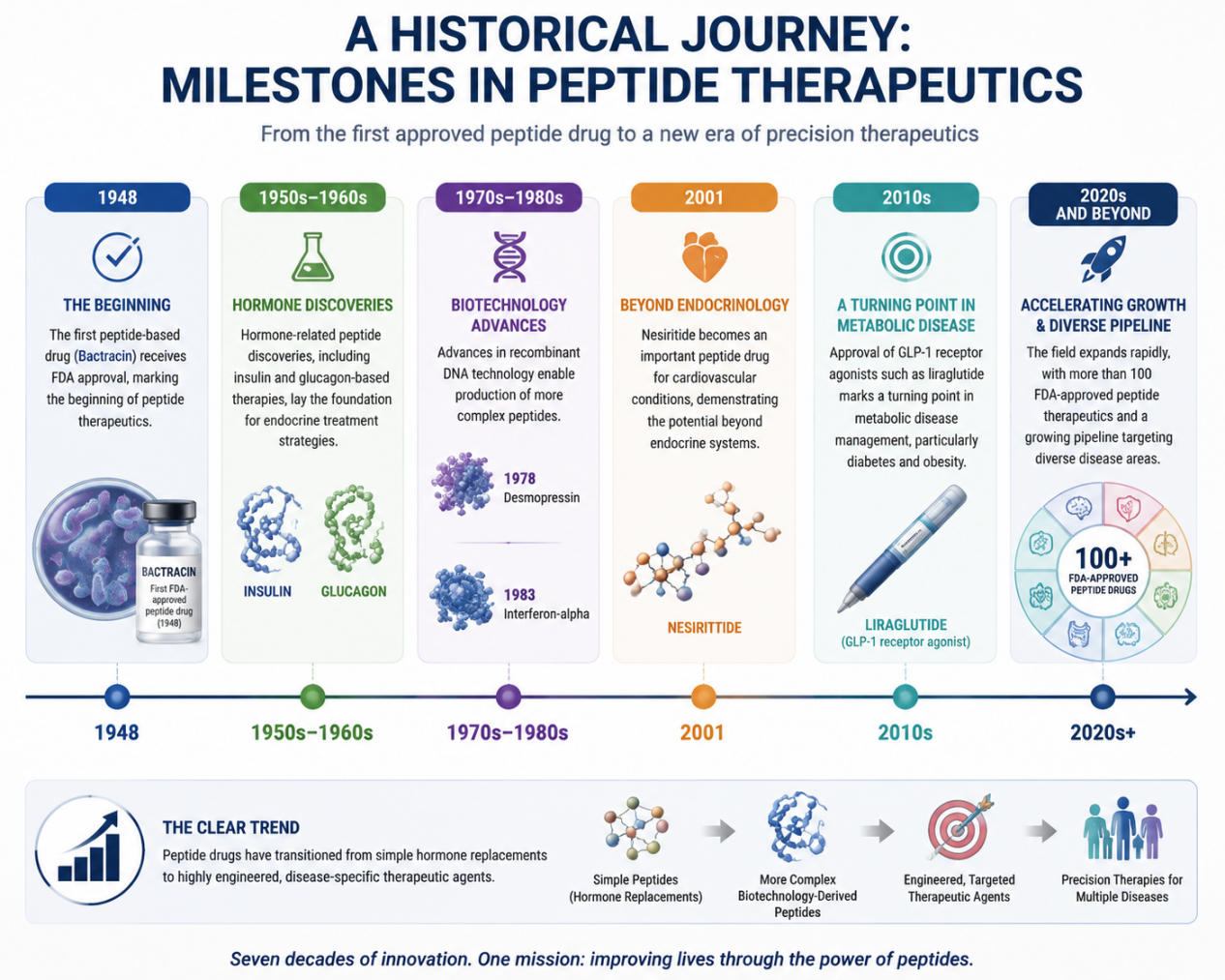
- 1948: The first peptide-based drug (Bactracin) receives FDA approval, marking the beginning of peptide therapeutics.
- 1950s–1960s: Hormone-related peptide discoveries, including insulin and glucagon-based therapies, lay the foundation for endocrine treatment strategies.
- 1970s–1980s: Advances in recombinant DNA technology enable production of more complex peptides, such as desmopressin (1978) and interferon-alpha (1983).
- 2001: Nesiritide becomes an important peptide drug for cardiovascular conditions, demonstrating the potential beyond endocrine systems.
- 2010s: The approval of GLP-1 receptor agonists such as liraglutide marks a turning point in metabolic disease management, particularly diabetes and obesity.
- 2020s and beyond: The field expands rapidly, with more than 100 FDA-approved peptide therapeutics and a growing pipeline targeting diverse disease areas.
This timeline highlights a clear trend: peptide drugs have transitioned from simple hormone replacements to highly engineered, disease-specific therapeutic agents.
The Rising Importance of Peptides in Modern Medicine
The growth of peptide therapeutics has been exponential in recent years. Regulatory approvals have increased significantly, reflecting both technological progress and clinical demand.
- Around 75 peptide-based therapeutics were in use in earlier stages of development and approval expansion.
- By 2020, this number had grown to approximately 200 peptide drugs across global markets.
- Since 2010 alone, there have been over 100 new peptide approvals, underscoring accelerating innovation.
Most peptide drugs are administered via parenteral routes, primarily intravenous (IV) or subcutaneous (SC) injection. However, subcutaneous delivery has become increasingly preferred due to improved patient compliance and evolving formulation technologies.
This upward trajectory demonstrates that peptides are not only scientifically promising but also commercially viable and clinically indispensable.
Therapeutic Applications Across Disease Areas
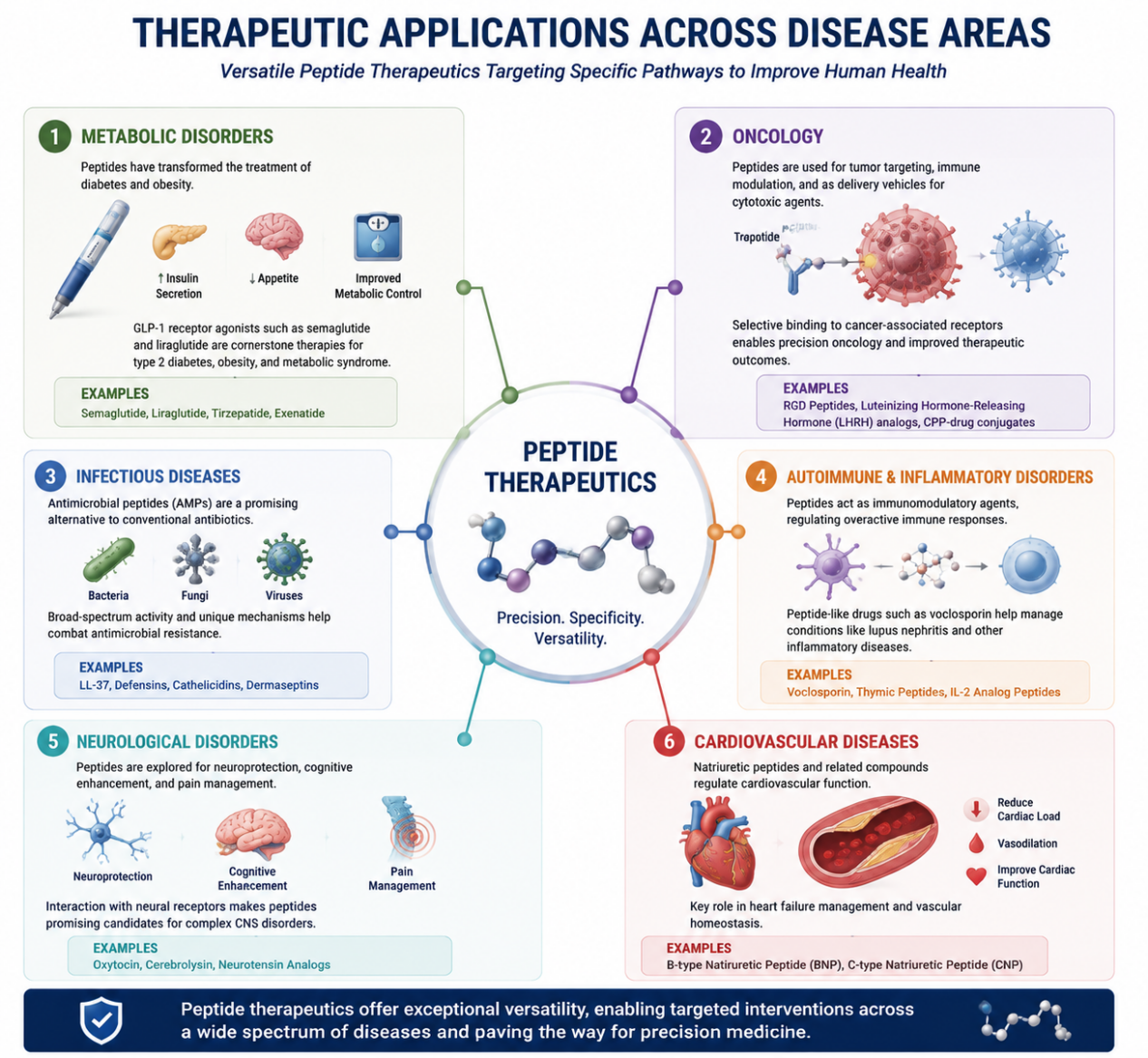
One of the strongest advantages of peptide therapeutics is their versatility. They can be engineered to target highly specific biological pathways, making them suitable for a wide range of conditions.
1. Metabolic Disorders
Peptides have revolutionized the treatment of diabetes and obesity. GLP-1 receptor agonists such as semaglutide and liraglutide enhance insulin secretion, regulate appetite, and improve metabolic control. These therapies now represent cornerstone treatments for metabolic syndrome and type 2 diabetes.
2. Oncology
In cancer research, peptides are used for tumor targeting, immune modulation, and as delivery vehicles for cytotoxic agents. Their ability to selectively bind cancer-associated receptors makes them valuable tools in precision oncology.
3. Infectious Diseases
Antimicrobial peptides (AMPs) provide a promising alternative to traditional antibiotics. They exhibit broad-spectrum activity against bacteria, fungi, and viruses, and are particularly valuable in addressing antimicrobial resistance.
4. Autoimmune and Inflammatory Disorders
Peptides such as immunomodulatory agents help regulate overactive immune responses. Drugs like voclosporin demonstrate how peptide-like structures can manage diseases such as lupus nephritis and other inflammatory conditions.
5. Neurological Disorders
Peptides are increasingly explored for neuroprotection, cognitive enhancement, and pain management. Their ability to interact with neural receptors makes them suitable candidates for complex CNS disorders.
6. Cardiovascular Diseases
Natriuretic peptides and related compounds are used in heart failure and vascular regulation, offering targeted physiological control of cardiovascular function.
Why Peptides? Key Advantages Over Other Drug Classes
Therapeutic peptides occupy a unique position between small molecules and biologics, combining benefits from both categories.
Compared to Small Molecules:
- Higher target specificity reduces off-target toxicity
- Strong receptor binding improves efficacy
- Lower risk of systemic side effects
Compared to Large Biologics (mAbs, proteins):
- Smaller molecular size enables deeper tissue penetration
- Easier and more cost-effective manufacturing
- Lower immunogenicity in many cases
- More flexible chemical modification and optimization
Overall, peptides offer a balance of potency, safety, and manufacturability that is difficult to achieve with other drug classes.
The Delivery Challenge and Emerging Solutions
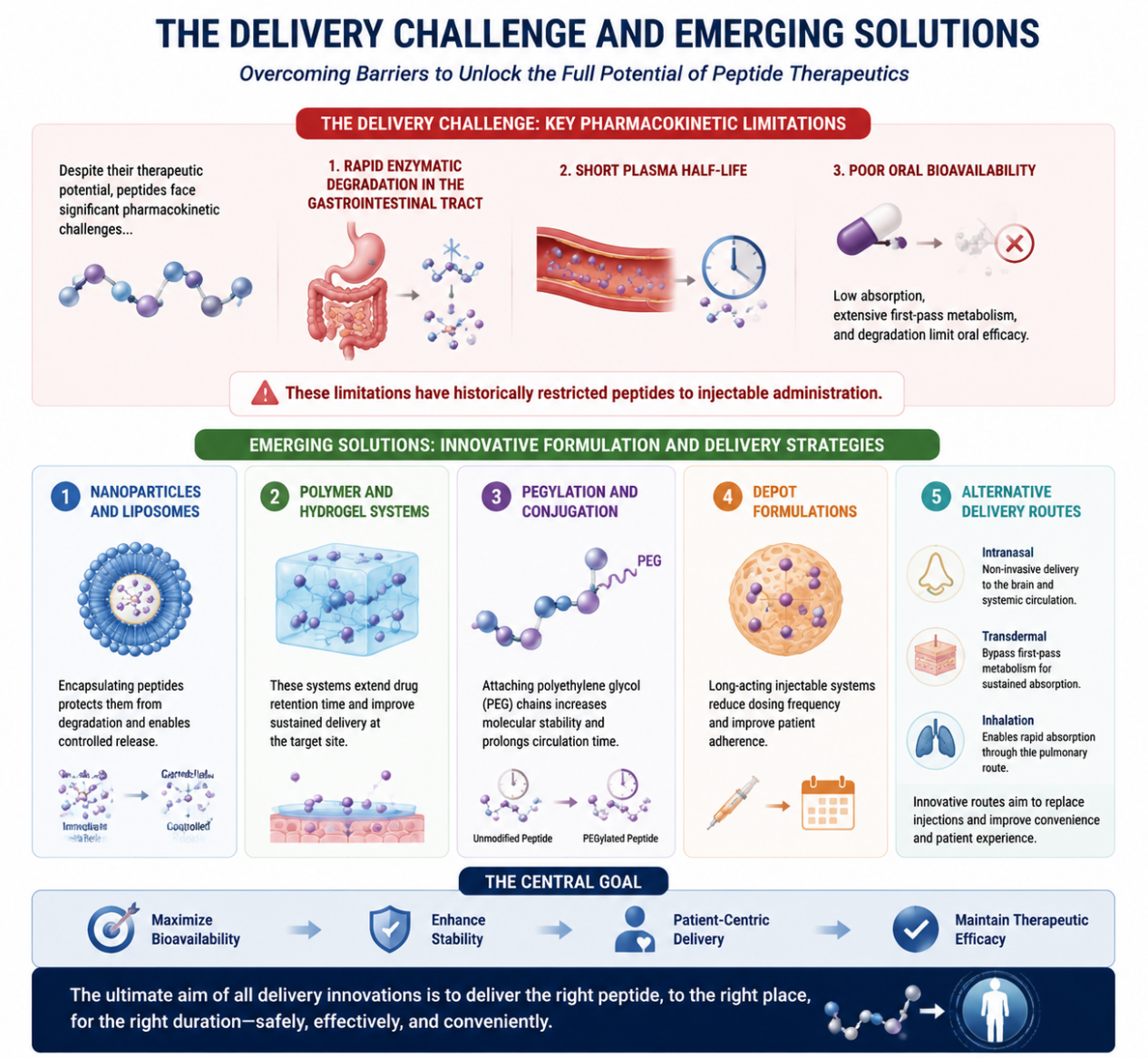
Despite their advantages, peptide therapeutics face significant pharmacokinetic limitations.
Key challenges include:
- Rapid enzymatic degradation in the gastrointestinal tract
- Short plasma half-life
- Poor oral bioavailability
These limitations have historically restricted peptides to injectable administration.
However, significant advances in formulation science are overcoming these barriers:
Nanoparticles and Liposomes
Encapsulating peptides protects them from degradation and enables controlled release.
Polymer and Hydrogel Systems
These systems extend drug retention time and improve sustained delivery at the target site.
PEGylation and Conjugation
Attaching polyethylene glycol (PEG) chains increases molecular stability and prolongs circulation time.
Depot Formulations
Long-acting injectable systems reduce dosing frequency and improve patient adherence.
Alternative Delivery Routes
Innovative methods such as intranasal, transdermal, and inhalation delivery are being explored to replace injections and improve convenience.
The central goal across all these technologies is to maximize bioavailability, stability, and patient-centric delivery without compromising therapeutic efficacy.
The Future of Peptide Therapeutics
The future of peptide drugs is strongly aligned with precision medicine and advanced drug engineering.
Key trends include:
- Rational peptide design using AI and computational modeling
- Multifunctional peptides targeting multiple pathways simultaneously
- Integration with nanomedicine and smart delivery systems
- Expansion into chronic and complex diseases previously considered difficult to treat
- Development of oral and non-invasive peptide formulations
As scientific understanding deepens and delivery technologies improve, peptides are expected to move beyond injectable therapies into more patient-friendly formats, significantly expanding their clinical adoption.
Conclusion
Therapeutic peptides have evolved from early hormone-based discoveries into a sophisticated and rapidly growing drug class central to modern biomedical innovation. Their ability to combine specificity, safety, and adaptability positions them uniquely in the pharmaceutical landscape.
With continued advances in synthesis, delivery systems, and molecular engineering, peptides are poised to redefine treatment strategies across multiple disease areas and play a critical role in the next generation of precision medicine.
Reference
Rosson, E., Lux, F., David, L., Godfrin, Y., Tillement, O., & Thomas, E. (2025). Focus on therapeutic peptides and their delivery. International Journal of Pharmaceutics, 675, 125555.
https://doi.org/10.1016/j.ijpharm.2025.125555
Lau, J. L., & Dunn, M. K. (2018). Therapeutic peptides: Historical perspectives, current development trends, and future directions. Bioorganic & medicinal chemistry, 26(10), 2700-2707.
https://doi.org/10.1016/j.bmc.2017.06.052
AlShaer, D., Al Musaimi, O., Albericio, F., & de la Torre, B. G. (2026). 2025 FDA TIDES (Peptides and Oligonucleotides) Harvest. Pharmaceuticals, 19(2), 244.
https://doi.org/10.3390/ph19020244
Ghosh, D., Peng, X., Leal, J., & Mohanty, R. P. (2018). Peptides as drug delivery vehicles across biological barriers. Journal of pharmaceutical investigation, 48(1), 89-111.