 LinkPeptide
Red Meat as a Dynamic Amino Acid System: From Nutrient Source to Metabolic Regulator
Red meat has traditionally been classified as a protein-rich dietary component; however, modern nutritional science increasingly recognizes it as a complex system of bioactive amino acids, lipids, and micronutrients that influence metabolic health, disease progression, and physiological adaptation. The narrative review by Barr et al. (2025) emphasizes that amino acids derived from red meat are not merely structural nutrients but active metabolic regulators involved in immunity, energy metabolism, aging, and disease susceptibility. This blog synthesizes current evidence on the biochemical composition of red meat, its amino acid functionality, and its implications for human health across physiological and pathological states.
Introduction: Beyond Protein Quantity
Red meat, typically defined as mammalian skeletal muscle (e.g., beef, pork, lamb), remains one of the most nutritionally dense dietary protein sources globally . While historically evaluated based on crude protein content, this approach is increasingly considered insufficient for capturing its biological relevance.
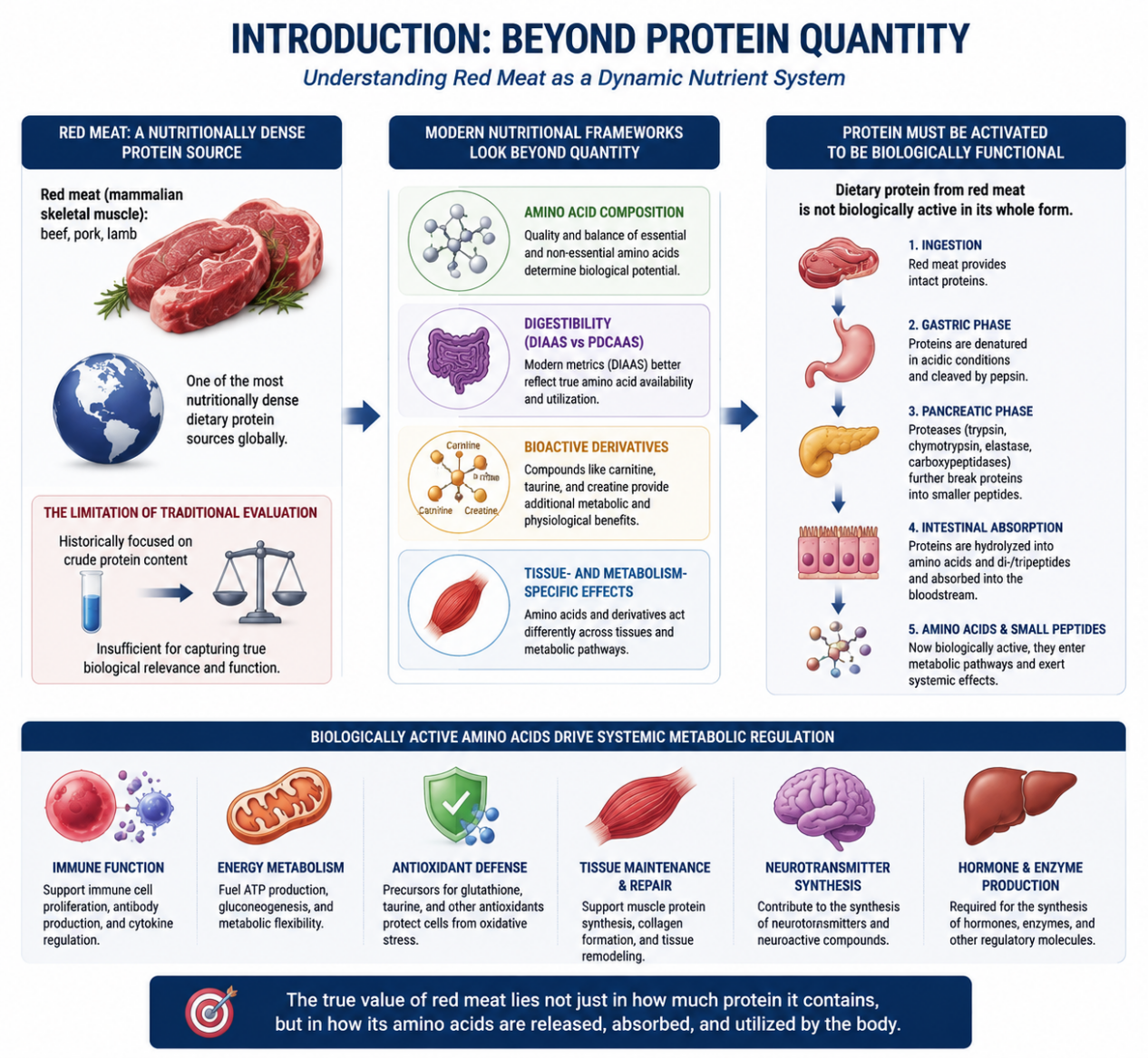
Modern nutritional frameworks emphasize:
- Amino acid composition
- Digestibility (DIAAS vs PDCAAS)
- Bioactive derivatives (e.g., carnitine, taurine, creatine)
- Tissue- and metabolism-specific effects
The review highlights that protein is not biologically active until enzymatically degraded into amino acids and small peptides, which then participate in systemic metabolic regulation .
Red Meat as a Complete Amino Acid System
Red meat provides all essential amino acids (EAAs) and a broad spectrum of non-essential amino acids (NEAAs), making it a “complete protein source” .
Digestive Conversion into Functional Units
Protein digestion occurs through a multi-step enzymatic cascade:
- Gastric denaturation under low pH
- Pepsin-mediated cleavage
- Pancreatic protease hydrolysis
- Intestinal absorption as free amino acids and di/tripeptides
This process determines the bioavailability of amino acids for systemic metabolism rather than simple caloric intake.
Variability in Amino Acid Profiles
A key finding is that amino acid composition is not uniform:
- Species differences (beef vs pork)
- Muscle cut variation
- Processing and cooking effects
- Animal age and sex
Even within a single species, amino acid distributions can vary significantly, affecting metabolic outcomes .
Functional Roles of Amino Acids in Red Meat
Energy and Metabolic Regulation
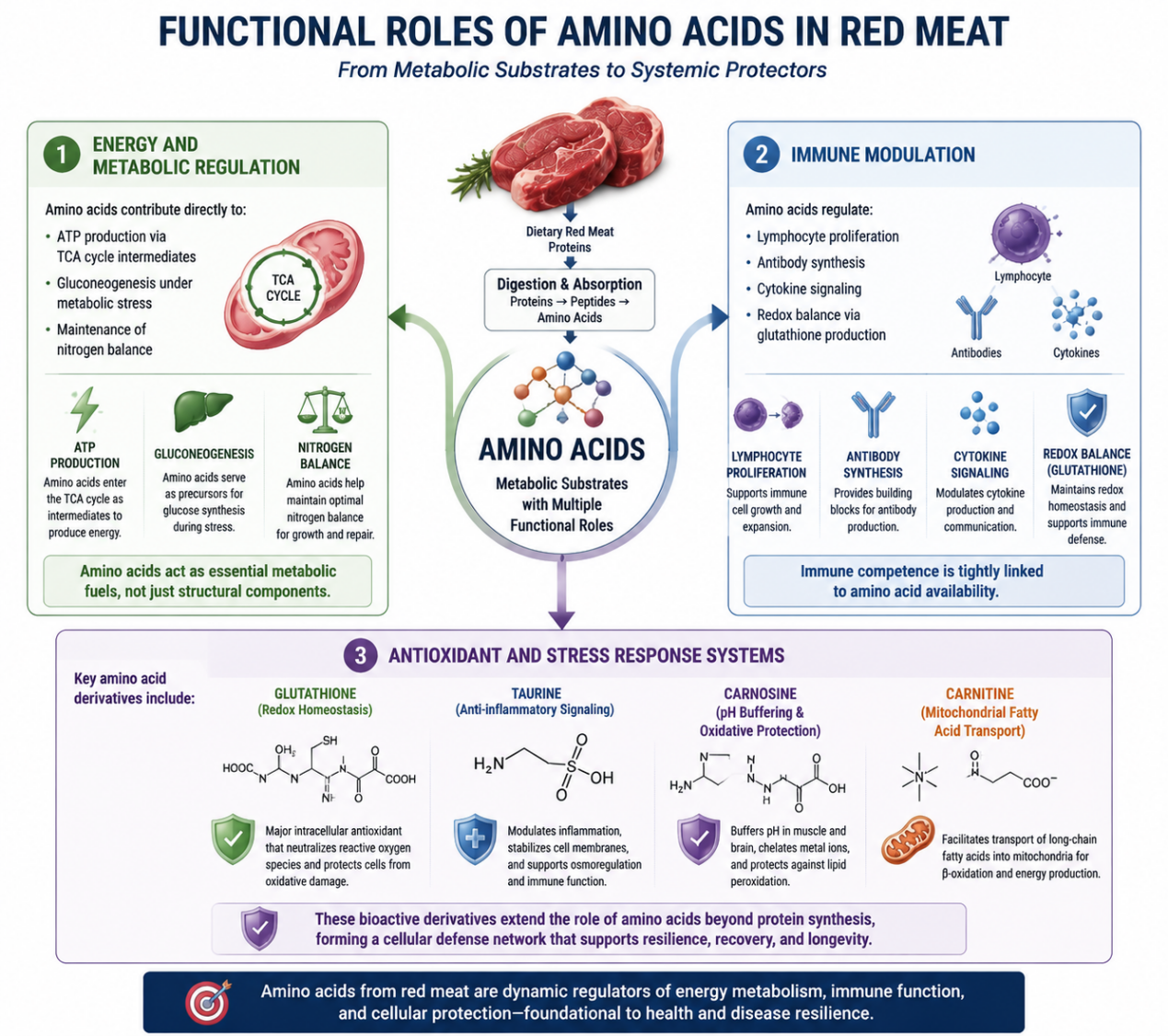
Amino acids contribute directly to:
- ATP production via TCA cycle intermediates
- Gluconeogenesis under metabolic stress
- Maintenance of nitrogen balance
This positions dietary amino acids as metabolic substrates rather than passive nutrients.
Immune Modulation
Amino acids regulate:
- Lymphocyte proliferation
- Antibody synthesis
- Cytokine signaling
- Redox balance via glutathione production
Thus, immunity is tightly linked to amino acid availability.
Antioxidant and Stress Response Systems
Key amino acid derivatives include:
- Glutathione (redox homeostasis)
- Taurine (anti-inflammatory signaling)
- Carnosine (pH buffering and oxidative protection)
- Carnitine (mitochondrial fatty acid transport)
These compounds extend amino acid function beyond protein synthesis into cellular protection systems.
Amino Acids and Chronic Disease Mechanisms
Cardiometabolic Disease
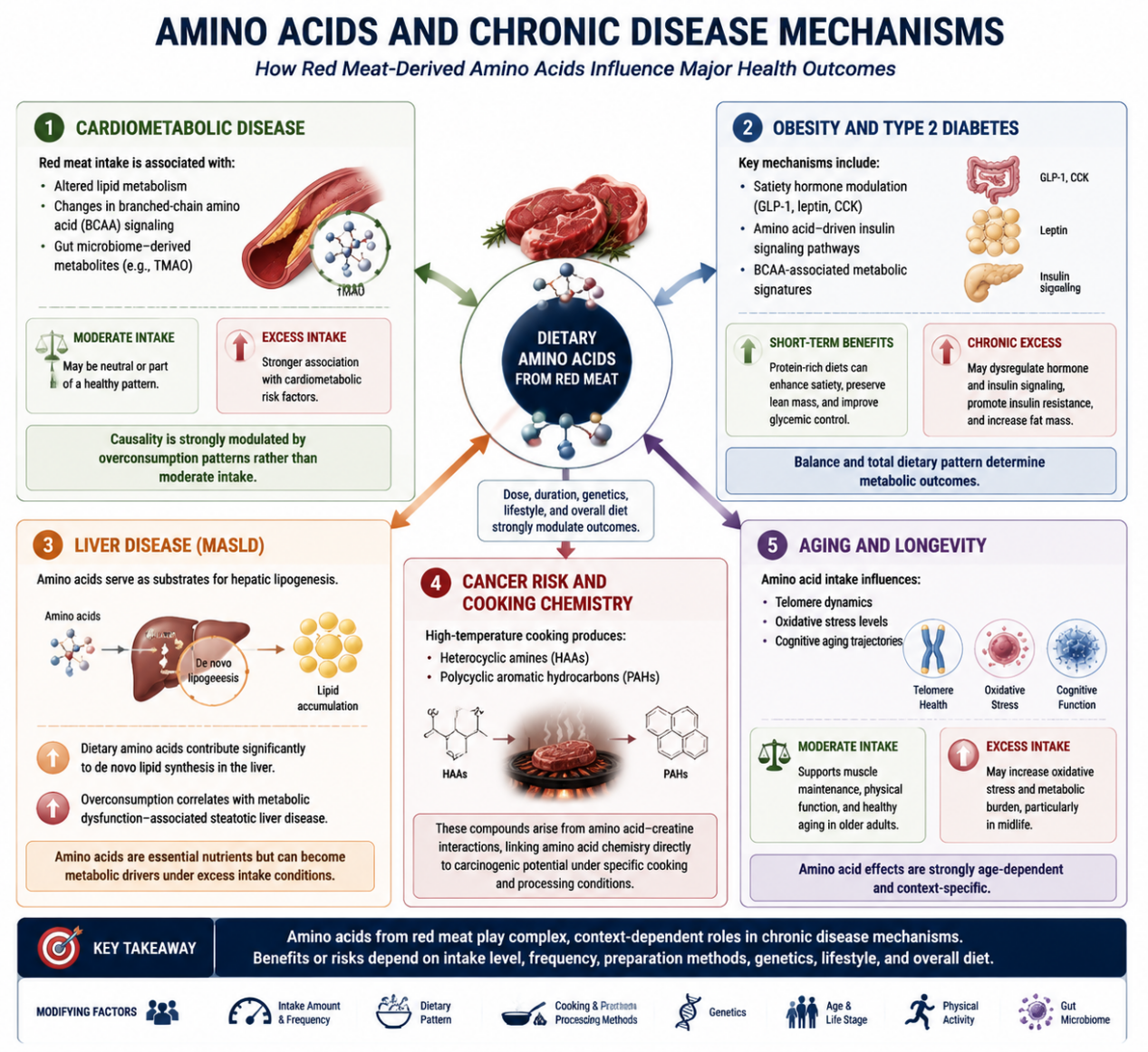
Red meat intake is associated with:
- Altered lipid metabolism
- Changes in branched-chain amino acid (BCAA) signaling
- Gut microbiome-derived metabolites (e.g., TMAO)
However, causality is strongly modulated by overconsumption patterns rather than moderate intake.
Obesity and Type 2 Diabetes
Key mechanisms include:
- Satiety hormone modulation (GLP-1, leptin, CCK)
- Amino acid-driven insulin signaling pathways
- BCAA-associated metabolic signatures
Protein-rich diets may enhance satiety, but chronic excess intake can dysregulate metabolic signaling.
Liver Disease (MASLD)
Amino acids serve as substrates for hepatic lipogenesis. Recent findings show:
- Dietary amino acids contribute significantly to de novo lipid synthesis in the liver
- Overconsumption correlates with metabolic dysfunction-associated steatotic liver disease
This highlights amino acids as both essential nutrients and potential metabolic drivers under excess intake conditions.
Cancer Risk and Cooking Chemistry
High-temperature cooking produces:
- Heterocyclic amines (HAAs)
- Polycyclic aromatic hydrocarbons (PAHs)
These compounds arise from amino acid–creatine interactions, linking amino acid chemistry directly to carcinogenic potential under specific processing conditions.
Aging and Longevity
Amino acid intake influences:
- Telomere dynamics
- Oxidative stress levels
- Cognitive aging trajectories
Notably:
- Moderate protein intake supports muscle maintenance in older adults
- Excess intake may accelerate metabolic stress in midlife populations
Thus, amino acid effects are strongly age-dependent.
Red Meat, Gut Microbiome, and Systemic Signaling
The gut microbiome plays a central role in amino acid metabolism:
- Converts dietary amino acids into bioactive metabolites
- Modulates host immune and metabolic responses
- Influences systemic inflammatory tone
However, high digestibility of red meat amino acids may reduce substrate availability for colonic microbial fermentation, altering microbial ecology.
Red Meat as a Precision Nutritional System
A central conclusion of the review is that red meat should not be viewed as a static protein source but as a precision nutrient system, where outcomes depend on:
- Dose (quantity of intake)
- Source (species and cut)
- Processing method
- Individual physiology (sex, age, metabolic status)
This shifts nutritional science toward a systems-level interpretation of dietary protein.
Limitations of Conventional Protein Metrics
Traditional protein evaluation systems (PDCAAS, and even DIAAS) have limitations:
- Focus primarily on essential amino acids
- Do not account for non-essential or bioactive amino acids
- Do not reflect metabolic signaling roles
Thus, protein quality cannot be fully understood through digestibility alone.
Future Directions
The review highlights several emerging research priorities:
- Amino acid-specific disease targeting strategies
- Optimization of red meat processing to preserve beneficial amino acids
- Integration of metabolomics and microbiome profiling
- Personalized nutrition based on amino acid metabolism
- Functional modification of meat proteins through processing technologies
These approaches reflect a shift toward metabolic precision nutrition.
Conclusion
Red meat is not merely a dietary protein source but a complex amino acid delivery system with broad physiological implications. Its amino acid composition influences metabolism, immunity, aging, and disease risk in a context-dependent manner. While overconsumption is associated with metabolic disorders, controlled intake within a balanced diet supports essential physiological functions. The emerging consensus is clear: nutritional evaluation of red meat must move beyond protein quantity toward amino acid functionality and metabolic integration.
Reference
Barr, B., Levitt, D. E., & Gollahon, L. (2025). Red meat amino acids for beginners: a narrative review. Nutrients, 17(6), 939.
https://doi.org/10.3390/nu17060939
Keeton, J. T., & Dikeman, M. E. (2017). ‘Red’and ‘white’meats—terms that lead to confusion. Animal Frontiers, 7(4), 29-33.
https://doi.org/10.2527/af.2017.0440
Perna, M., & Hewlings, S. (2022). Saturated fatty acid chain length and risk of cardiovascular disease: a systematic review. Nutrients, 15(1), 30.
https://doi.org/10.3390/nu15010030
Ferrari, L., Panaite, S. A., Bertazzo, A., & Visioli, F. (2022). Animal-and plant-based protein sources: a scoping review of human health outcomes and environmental impact. Nutrients, 14(23), 5115.