 LinkPeptide
Beyond Protein Synthesis: How Amino Acids Shape Immune Function and Disease Resistance
Introduction
For many years, amino acids were viewed primarily as the building blocks of proteins. Their role in supporting muscle growth, tissue repair, and enzyme production was well established. However, modern nutritional immunology has revealed a much broader picture. Amino acids are now recognized as powerful regulators of immune function, influencing everything from antioxidant defense and inflammation control to antibody production and pathogen elimination.
This growing understanding has transformed how scientists view nutrition and immunity. Rather than serving only as structural components, amino acids participate directly in the cellular and molecular pathways that determine how effectively the body responds to infection, inflammation, and physiological stress.
The importance of amino acids in immune health has become particularly relevant in recent years. Global outbreaks of infectious diseases, including SARS, COVID-19, and other viral illnesses, have highlighted the need for nutritional strategies that support immune resilience. Research increasingly demonstrates that specific amino acids can influence both innate and adaptive immune responses, making them valuable tools in maintaining health and combating disease.
The Immune System Depends on Amino Acids
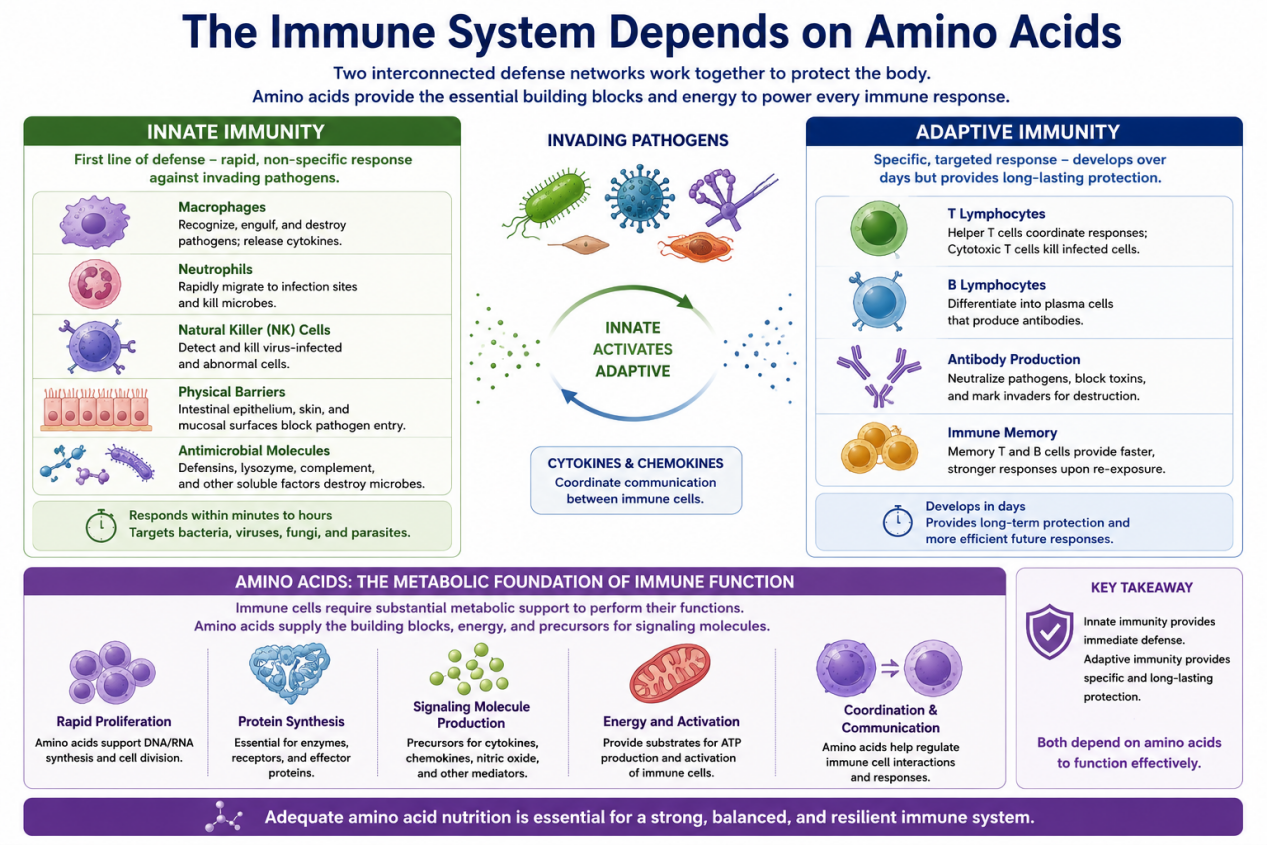
The immune system consists of two interconnected defense networks:
Innate Immunity
Innate immunity provides the body’s first line of defense against invading pathogens. Components include:
- Macrophages
- Neutrophils
- Natural killer cells
- Physical barriers such as the intestinal epithelium
- Antimicrobial molecules
These mechanisms respond rapidly to bacterial, viral, fungal, and parasitic infections.
Adaptive Immunity
Adaptive immunity develops more specialized responses through:
- T lymphocytes
- B lymphocytes
- Antibody production
- Immune memory
Adaptive immunity provides long-term protection and enables more efficient responses to future infections.
Both immune systems require substantial metabolic support. Immune cells undergo rapid proliferation, protein synthesis, signaling molecule production, and energy-consuming activation processes. Amino acids serve as essential substrates for these functions and help coordinate communication between immune cells.
Amino Acids Are More Than Building Blocks
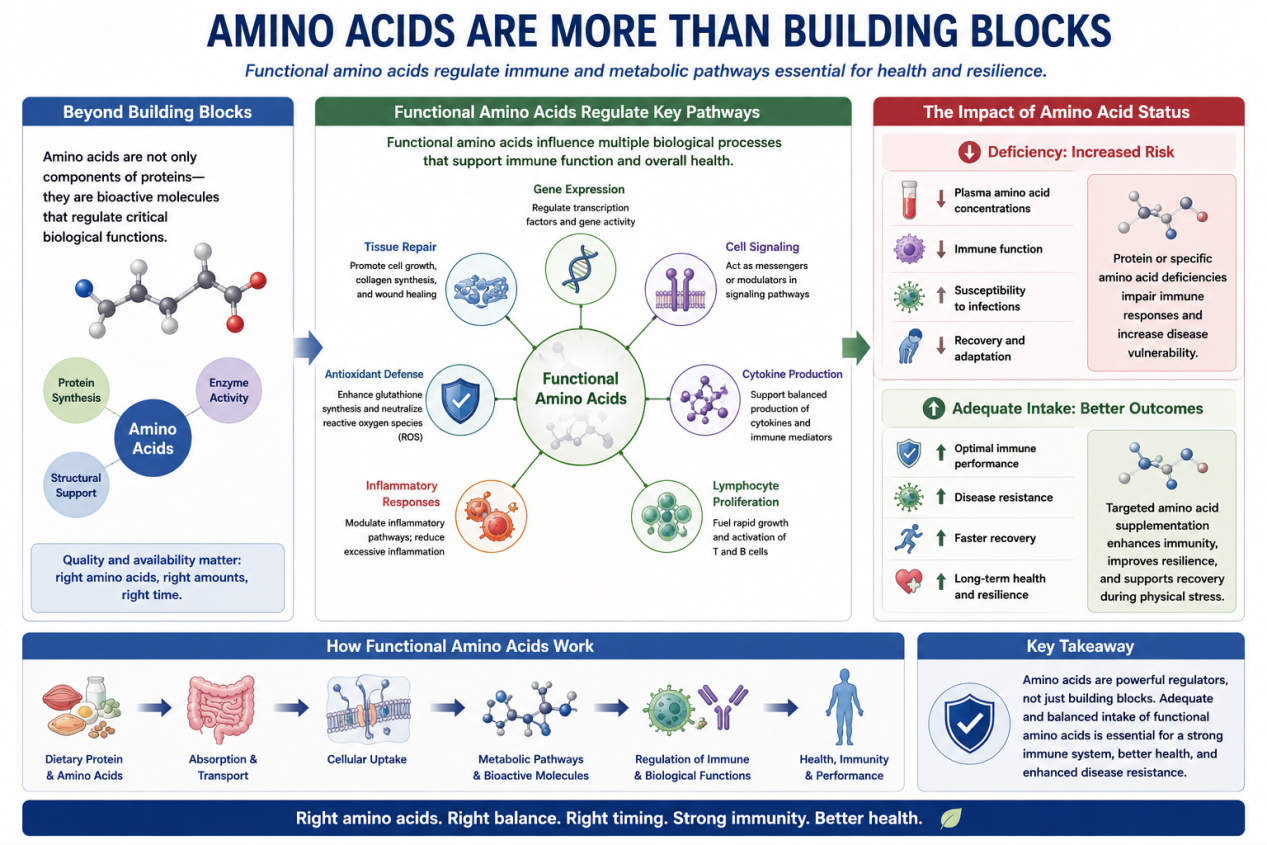
One of the most important concepts in modern amino acid biology is the idea of functional amino acids.
Functional amino acids regulate key metabolic pathways that influence:
- Gene expression
- Cell signaling
- Antioxidant defense
- Cytokine production
- Lymphocyte proliferation
- Inflammatory responses
- Tissue repair
Research has shown that deficiencies in dietary protein or specific amino acids reduce plasma amino acid concentrations, impair immune responses, and increase susceptibility to infection.
Conversely, targeted amino acid supplementation can enhance immune performance, improve disease resistance, and support recovery during physiological stress.
Arginine: A Central Regulator of Immunity
Among all functional amino acids, arginine is one of the most extensively studied in immunology.
Arginine serves as the precursor for nitric oxide (NO), a critical signaling molecule produced by immune cells through nitric oxide synthase enzymes.
Nitric oxide performs several immune functions:
- Direct antimicrobial activity
- Regulation of macrophage function
- Control of inflammatory responses
- Modulation of T-cell activity
- Enhancement of pathogen killing
Studies have shown that nitric oxide can inhibit viral replication and contribute to host defense against a variety of infectious agents.
- Arginine supplementation has also been associated with:
- Improved vaccine responses
- Enhanced antibody production
- Better intestinal immunity
- Increased survival during infection challenges
These findings have made arginine a major focus of nutritional immunology research.
Glutamine: Fuel for Immune Cells
Glutamine is often described as the preferred fuel source for rapidly dividing immune cells.
Lymphocytes, macrophages, and intestinal epithelial cells consume glutamine at exceptionally high rates. During periods of infection, trauma, surgery, or physiological stress, glutamine demand may exceed endogenous production.
Glutamine supports:
- Lymphocyte proliferation
- Cytokine production
- Macrophage activation
- Intestinal barrier integrity
- Cellular energy metabolism
The gastrointestinal tract represents one of the body’s largest immune organs. Because glutamine serves as a primary energy source for intestinal cells, adequate glutamine availability helps maintain mucosal immunity and reduce pathogen translocation.
Research has demonstrated that glutamine supplementation may enhance immune function while reducing inflammation and improving recovery under stressful conditions.
Glutathione: The Master Antioxidant
One of the most important immune-related molecules derived from amino acids is glutathione.
Glutathione is synthesized from three amino acids:
- Glutamate
- Cysteine
- Glycine
Often referred to as the body’s master antioxidant, glutathione plays a central role in maintaining cellular redox balance.
Its immune-related functions include:
- Neutralizing reactive oxygen species
- Protecting immune cells from oxidative damage
- Supporting lymphocyte activation
- Regulating inflammatory signaling pathways
- Enhancing antiviral defense mechanisms
Adequate glutathione levels are essential because excessive oxidative stress can impair immune function and contribute to tissue damage during infection.
Research has suggested that improving glutathione synthesis through nutritional support may enhance resistance to viral diseases and inflammatory conditions.
Glycine: A Small Amino Acid with Big Immunological Effects
Although glycine is often classified as a non-essential amino acid, its physiological importance should not be underestimated.
Glycine contributes to:
- Glutathione synthesis
- Anti-inflammatory signaling
- Cellular protection
- Tissue repair
Studies indicate that glycine can suppress excessive inflammatory responses and reduce tissue injury associated with immune activation.
This anti-inflammatory effect may be particularly important in conditions characterized by excessive cytokine production and immune-mediated tissue damage.
Tryptophan and Immune Regulation
Tryptophan participates in several important immunological pathways.
Immune cells metabolize tryptophan through enzymes such as indoleamine 2,3-dioxygenase (IDO), producing metabolites that influence:
- T-cell activation
- Immune tolerance
- Inflammatory regulation
- Host-pathogen interactions
Tryptophan metabolism also shapes communication between the immune system and the gut microbiome.
Emerging evidence suggests that tryptophan-derived metabolites contribute significantly to intestinal immunity and mucosal homeostasis.
Branched-Chain Amino Acids and Immune Function
Branched-chain amino acids (BCAAs)—leucine, isoleucine, and valine—are widely recognized for their role in muscle protein synthesis.
However, BCAAs also contribute to immune function by supporting:
- Lymphocyte proliferation
- Antibody production
- Immune cell energy metabolism
- Recovery from physiological stress
Because immune cells undergo rapid expansion during activation, BCAAs can provide important metabolic substrates that help sustain immune responses.
Research has shown that balanced BCAA nutrition may improve immune competence in both humans and animals.
Amino Acids and Antibody Production
Antibodies are among the most important weapons of adaptive immunity.
B lymphocytes require substantial amounts of amino acids to:
- Proliferate
- Differentiate into plasma cells
- Produce immunoglobulins
Several functional amino acids have been shown to enhance antibody responses following vaccination or infection.
Arginine, glutamine, glycine, and proline have all demonstrated immunostimulatory effects in experimental studies.
These findings suggest that amino acid nutrition can directly influence vaccine responsiveness and immune protection.
The Gut Microbiome Connection
An increasingly important area of research involves interactions between amino acids and the intestinal microbiota.
The gastrointestinal tract contains trillions of microorganisms that influence:
- Nutrient metabolism
- Immune development
- Barrier function
- Inflammatory responses
Many gut bacteria actively metabolize amino acids, generating bioactive compounds that affect both local and systemic immunity.
Recent studies have demonstrated that amino acids such as arginine, glutamine, and tryptophan can modify microbial composition and activity, thereby influencing host immune function.
This emerging field highlights the complex relationship between nutrition, microbial ecology, and immunity.
Amino Acids During Viral Infections
Interest in amino acid immunology increased significantly during the COVID-19 pandemic.
Researchers observed altered amino acid profiles in patients with severe viral infections, including reductions in circulating levels of arginine, glutamine, and glycine.
Several clinical investigations explored whether restoring amino acid availability could support immune recovery.
Studies reported that:
- Arginine supplementation improved respiratory outcomes and reduced hospitalization duration.
- Glutamine supplementation supported immune function and shortened recovery time.
- Glutathione and its precursors helped improve antioxidant defenses and reduce oxidative stress.
Although amino acids are not antiviral drugs, these findings reinforce their importance as supportive nutritional tools during immune challenges.
Functional Amino Acids in Animal Health
The importance of amino acids extends beyond human health.
In livestock, poultry, aquaculture species, and companion animals, functional amino acids influence:
- Disease resistance
- Vaccine response
- Growth performance
- Intestinal integrity
- Survival rates
Research has shown that strategic amino acid supplementation can improve both immunity and production efficiency.
For example:
- Arginine enhances immune responses in piglets.
- Glutamine supports intestinal immunity in poultry and mammals.
- Glycine helps regulate inflammation.
- Tryptophan influences gut microbial balance and immune homeostasis.
These discoveries have transformed modern approaches to animal nutrition.
A Unified Mechanism: How Amino Acids Support Immunity
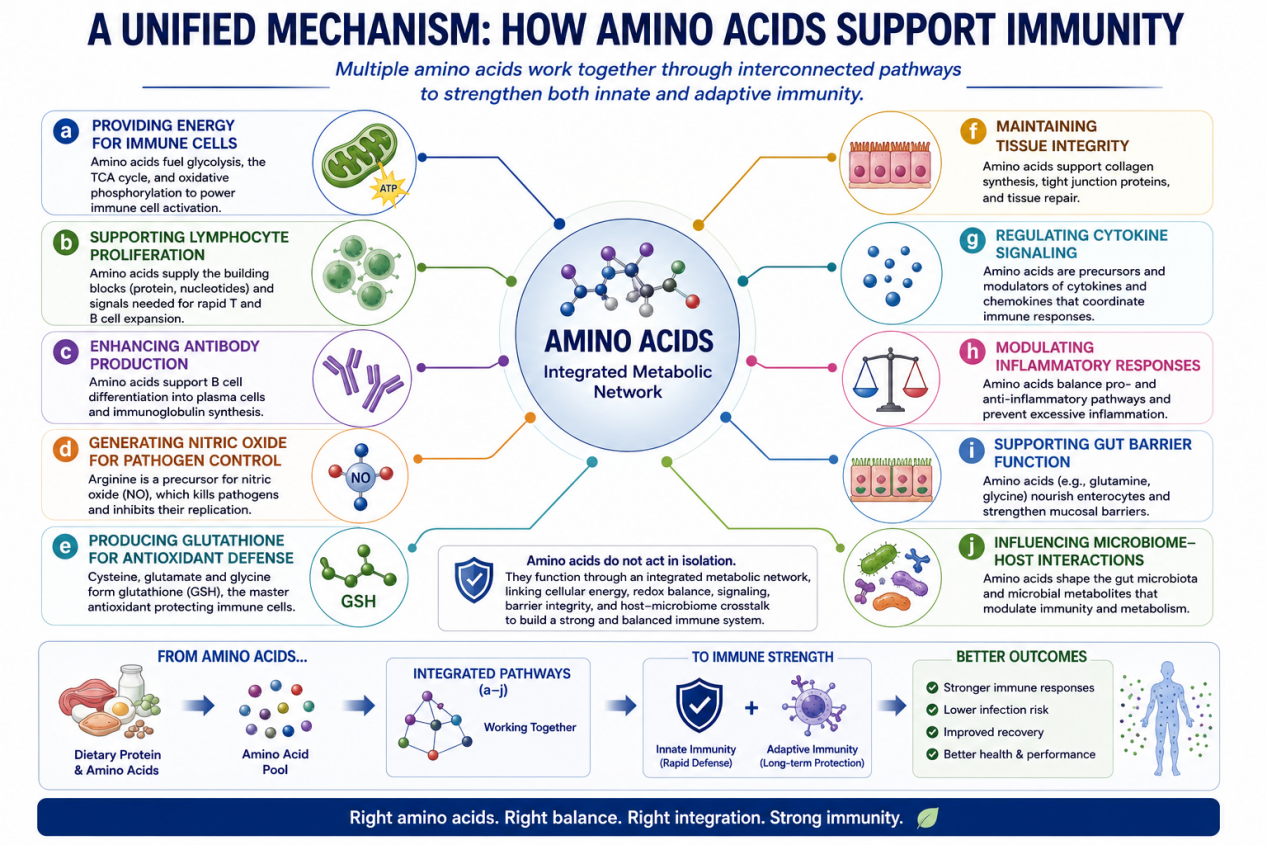
One of the most influential concepts proposed by amino acid researchers is that multiple amino acids work together through interconnected pathways.
Amino acids contribute to immunity by:
- Providing energy for immune cells.
- Supporting lymphocyte proliferation.
- Enhancing antibody production.
- Generating nitric oxide for pathogen control.
- Producing glutathione for antioxidant defense.
- Maintaining tissue integrity.
- Regulating cytokine signaling.
- Modulating inflammatory responses.
- Supporting gut barrier function.
- Influencing microbiome-host interactions.
Rather than acting independently, amino acids form an integrated metabolic network that supports both innate and adaptive immunity.
Future Perspectives in Nutritional Immunology
The field of nutritional immunology continues to evolve rapidly.
Future research is expected to focus on:
- Precision amino acid nutrition
- Personalized immune-support strategies
- Amino acid-microbiome interactions
- Immunometabolism
- Functional peptide development
- Nutritional interventions for infectious diseases
Advanced technologies such as metabolomics, transcriptomics, proteomics, and systems biology are helping researchers uncover increasingly sophisticated roles for amino acids in immune regulation.
These discoveries will likely drive new approaches for improving both human and animal health.
How LinkPeptide Supports Amino Acid and Immunology Research
As research into amino acid-mediated immunity expands, access to high-quality amino acids, peptides, and customized peptide synthesis services becomes increasingly important.
LinkPeptide supports scientists working in:
- Immunology research
- Nutritional science
- Metabolism studies
- Host-pathogen interactions
- Functional peptide development
- Inflammation research
- Cell signaling investigations
Our capabilities include custom peptide synthesis, modified amino acids, labeled peptides, bioactive peptides, and specialized peptide design services that help advance next-generation biomedical research.
Conclusion
The traditional view of amino acids as simple protein building blocks no longer captures their full biological significance. Modern research has established that amino acids are powerful regulators of immune function, influencing antioxidant defense, inflammation, antibody production, cellular metabolism, and pathogen resistance.
Functional amino acids such as arginine, glutamine, glycine, cysteine, tryptophan, and branched-chain amino acids form an interconnected network that supports both innate and adaptive immunity. As our understanding of nutritional immunology continues to deepen, amino acid-based strategies may become increasingly important tools for promoting health, improving disease resistance, and supporting recovery from infectious and inflammatory challenges.
For researchers and healthcare scientists alike, amino acids represent one of the most promising bridges between nutrition and immune function.
Reference
Li, P., & Wu, G. (2022). Important roles of amino acids in immune responses. British Journal of Nutrition, 127(3), 398-402.
https://doi.org/10.1017/S0007114521004566
Mathers, J. C. (2022). Nutrition and COVID-19. British Journal of Nutrition, 127(10), 1441-1442.
https://doi.org/10.1017/S0007114521003305
Calder, P. C. (2006). Branched-chain amino acids and immunity. The Journal of nutrition, 136(1), 288S-293S.
https://doi.org/10.1093/jn/136.1.288S
Rees, C. A., Rostad, C. A., Mantus, G., Anderson, E. J., Chahroudi, A., Jaggi, P., … & Morris, C. R. (2021). Altered amino acid profile in patients with SARS-CoV-2 infection. Proceedings of the National Academy of Sciences, 118(25), e2101708118.