 LinkPeptide
Left vs. Right Brain: How Neuropeptides Shape Asymmetric Neural Circuits
Left vs. Right Brain: How Neuropeptides Shape Asymmetric Neural Circuits
For decades, neuroscientists have recognized that the left and right hemispheres of the brain perform specialized functions. Language is generally associated with the left hemisphere, while emotional processing and spatial awareness often rely more heavily on the right. However, one fundamental question has remained unanswered:
How are these lateralized neural functions regulated at the molecular level?
A recent review published in Trends in Neurosciences proposes an exciting answer: neuropeptides. Rather than acting merely as neurotransmitters or hormones, neuropeptides may serve as side-specific regulators that coordinate communication between left and right neural circuits. This emerging concept provides new perspectives on pain perception, sensory processing, feeding behavior, endocrine regulation, and neurological disease.
What Are Neuropeptides?
Neuropeptides are short chains of amino acids released by neurons to regulate communication within the nervous system. Unlike classical neurotransmitters that act rapidly across synapses, neuropeptides typically function over longer distances and longer time scales.
They can act as:
- Neuromodulators
- Neurotransmitters
- Paracrine signaling molecules
- Neurohormones released into circulation
Because they influence neuronal excitability, synaptic plasticity, and gene expression, neuropeptides help fine-tune neural network activity instead of simply transmitting electrical signals. The review describes them as forming a complementary “wireless” communication layer that operates alongside the traditional synaptic (“wired”) connectome.
Brain Lateralization Extends Beyond Anatomy
Brain asymmetry has traditionally been explained by structural differences between hemispheres. However, increasing evidence suggests that molecular signaling itself may also be asymmetric.
The review proposes that certain neuropeptides preferentially regulate either left- or right-sided neural circuits, allowing two anatomically similar regions to produce different physiological outputs.
Rather than acting uniformly throughout the brain, neuropeptide systems may selectively enhance, suppress, or balance neural activity depending on hemisphere-specific receptor expression and circuit organization.
Right-Sided Neuropeptide Signaling Amplifies Pain
One of the strongest examples of lateralized neuropeptide function involves the central amygdala, a critical brain region for pain processing.
Several neuropeptides—including:
- Dynorphin
- Calcitonin Gene-Related Peptide (CGRP)
- Pituitary Adenylate Cyclase-Activating Polypeptide (PACAP)
- Substance P
show remarkably different activities between the left and right hemispheres.
Experimental studies summarized in the review demonstrate that activation of dynorphin–κ-opioid receptor signaling within the right central amygdala enhances pain responses, whereas similar activation in the left hemisphere produces little or no effect. Likewise, CGRP and PACAP signaling in the right amygdala increases pain sensitivity, while CGRP activation in the left amygdala can reduce bladder pain in mouse models.
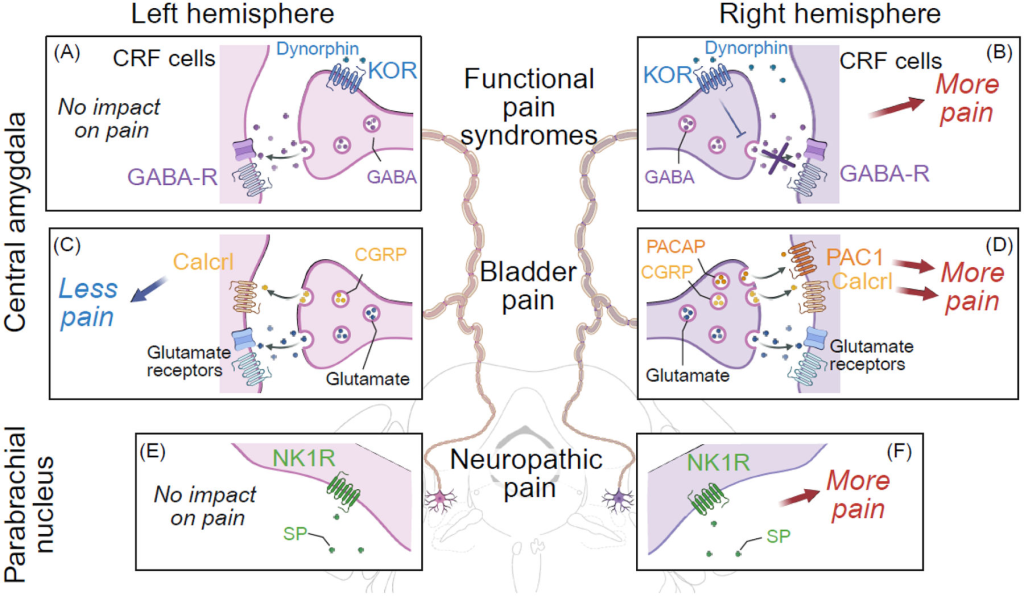
The accompanying schematic illustrates this striking asymmetry, showing enhanced pain-promoting signaling predominantly in the right parabrachial-amygdala circuit.
Oxytocin Shapes Left-Sided Auditory Processing
Oxytocin is widely recognized for regulating social bonding and maternal behavior, but it also contributes to hemisphere-specific sensory processing.
The review highlights studies showing that female mice express higher oxytocin receptor levels in the left auditory cortex than in the right. This asymmetry enables more efficient recognition of pup distress calls.
Oxytocin enhances neuronal plasticity by transiently reducing inhibitory signaling, strengthening excitatory responses, and promoting long-term synaptic changes. These mechanisms improve the detection of socially relevant vocalizations and facilitate maternal caregiving behaviors.
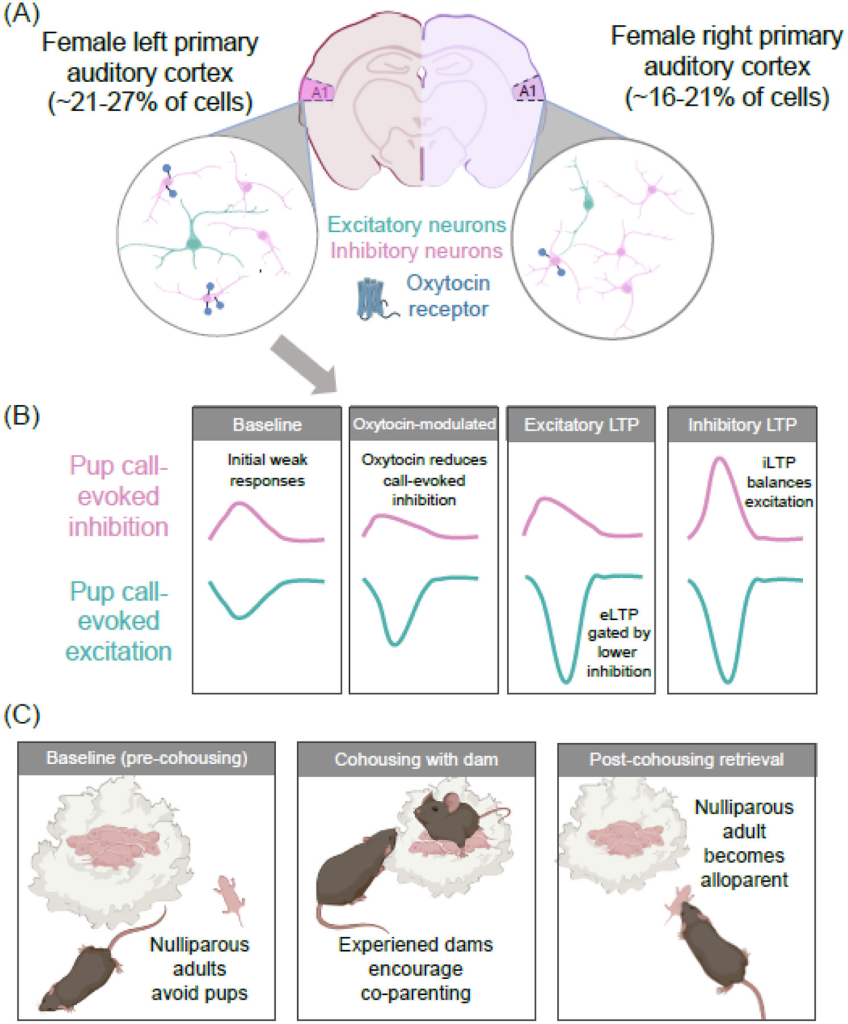
This figure illustrates how oxytocin-dependent plasticity transforms initially weak sensory responses into robust neural activity supporting maternal behavior.
The Right Vagus Nerve Plays a Distinct Role in Reward Signaling
Brain asymmetry is not limited to cortical circuits.
The vagus nerve—the major communication pathway between internal organs and the brain—also exhibits functional lateralization.
Recent studies summarized in the review demonstrate that neurons in the right nodose ganglion express higher levels of receptors for several digestive peptides, including:
- Cholecystokinin (CCK)
- GLP-1
- Secretin
- Peptide YY
These receptors enable the right vagal pathway to more effectively transmit nutrient and reward-related information from the gastrointestinal tract to the brain.
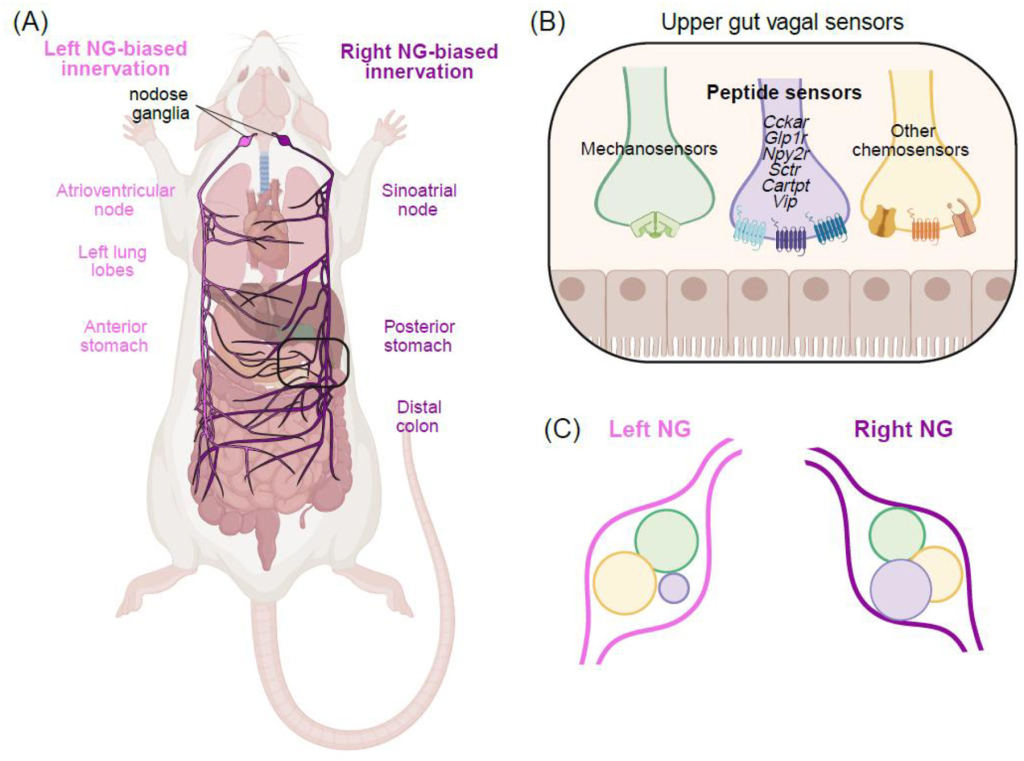
The review further describes how this pathway connects to dopamine-producing brain regions involved in reward processing, suggesting that neuropeptide signaling contributes to asymmetric regulation of feeding behavior. This figure provides a visual overview of these left-right differences in vagal innervation and peptide receptor distribution.
A Newly Proposed Topographic Neuroendocrine System
Perhaps the most intriguing concept introduced by the review is the proposed Topographic Neuroendocrine System (T-NES).
Traditionally, scientists believed that unilateral brain injuries produce opposite-sided motor deficits primarily through crossed neural pathways.
However, evidence discussed in the review suggests that circulating neurohormones—including arginine vasopressin and β-endorphin—may also transmit hemisphere-specific information through the bloodstream.
Experimental studies in rodent models showed that serum from animals with unilateral brain injury could reproduce side-specific motor effects when transferred to healthy animals, even after spinal cord transection. This finding supports the existence of a hormone-mediated signaling system that complements classical neural pathways.
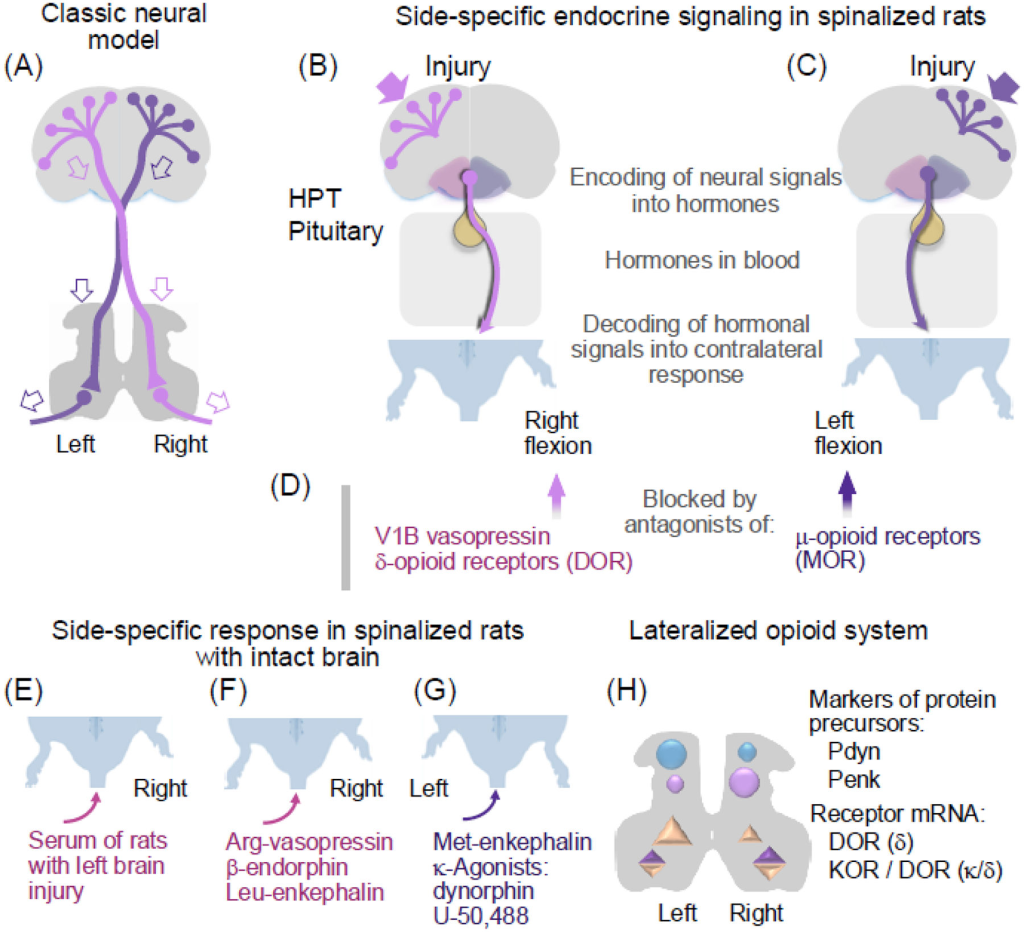
This figure outlines this proposed mechanism, illustrating how hypothalamic-pituitary neurohormones may encode hemisphere-specific information and produce contralateral physiological responses.
Multiple Models May Explain Lateralized Neuropeptide Signaling
Because this field is still emerging, the review proposes several theoretical models explaining how neuropeptides might generate functional asymmetry.
These include:
- unequal numbers of neuropeptide-producing neurons between hemispheres,
- asymmetric receptor expression,
- structurally symmetric circuits regulated differently by neuropeptides, and
- neuropeptide systems active only on one side of the brain.
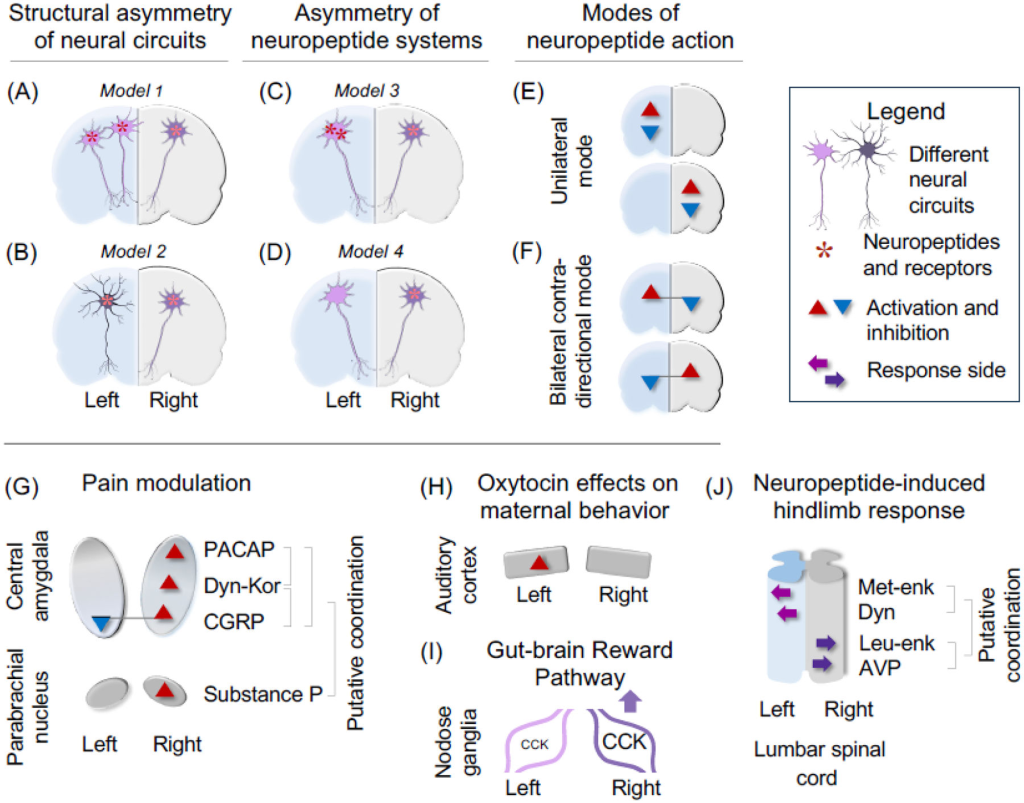
Figure integrates these concepts into a framework for understanding how molecular signaling could produce hemisphere-specific physiological and behavioral outcomes.
Therapeutic Opportunities
Understanding lateralized neuropeptide signaling could reshape multiple areas of neuroscience research.
Potential applications include:
- chronic pain therapeutics targeting hemisphere-specific pathways,
- improved migraine treatments involving CGRP signaling,
- therapies for maternal behavior and social cognition disorders through oxytocin modulation,
- metabolic disease interventions targeting vagal peptide receptors,
- neurorehabilitation strategies following stroke or traumatic brain injury,
- treatments for motor asymmetry and hemiplegia.
Rather than globally activating or blocking neuropeptide pathways, future therapies may selectively target the hemisphere where pathological signaling occurs.
Future Research Directions
Despite substantial progress, many questions remain unanswered.
Researchers still need to determine:
- how widespread lateralized neuropeptide signaling is across the nervous system,
- how these asymmetric networks develop,
- whether neuropeptide systems maintain physiological balance between hemispheres,
- how injury alters hemisphere-specific signaling,
- and whether targeted modulation can restore normal function in neurological disease.
The review identifies these unanswered questions as major priorities for future neuroscience research.
Conclusion
Neuropeptides are emerging as central regulators of left-right neural communication rather than simple neurotransmitters. Evidence from pain pathways, auditory processing, vagal sensory circuits, and neuroendocrine signaling suggests that these molecules contribute to the functional specialization of the brain’s two hemispheres. While many mechanistic details remain to be clarified, the concept of lateralized neuropeptide signaling provides a compelling framework for understanding brain asymmetry and may inspire new therapeutic strategies for pain, neurological injury, metabolic disorders, and neuropsychiatric disease.