 LinkPeptide
Rusfertide: A Hepcidin Mimetic Revolutionizing the Management of Erythrocytosis in Polycythemia Vera
Blog 189
Abstract
Polycythemia Vera (PV) is a chronic myeloproliferative neoplasm marked by excessive erythrocytosis, leading to an elevated risk of thromboembolic events. Conventional treatments, including phlebotomy and cytoreductive therapies, are often insufficient to maintain hematocrit levels below 45%. Rusfertide, a novel hepcidin mimetic, offers a promising approach by mimicking the iron-regulating hormone hepcidin, thereby limiting iron availability for erythropoiesis. Clinical trials, particularly the phase 2 REVIVE study, have demonstrated that Rusfertide effectively controls erythrocytosis, reduces the need for phlebotomies, and improves patient-reported symptoms, such as pruritus and fatigue. The safety profile has been largely acceptable, though the trial experienced a temporary clinical hold due to concerns about potential tumorigenicity. As an innovative treatment, Rusfertide shows great potential in managing erythrocytosis and improving the quality of life for PV patients, with ongoing studies to further assess its long-term efficacy and safety.
Introduction to Polycythemia Vera and the Role of Rusfertide
Polycythemia Vera (PV) is a chronic myeloproliferative neoplasm characterized by excessive production of red blood cells, which leads to erythrocytosis. This overproduction is typically driven by mutations in the JAK2 gene, resulting in unchecked hematopoiesis and elevated hematocrit levels[1]. The increased red cell mass in PV patients leads to a higher risk of thromboembolic events, which are the leading cause of morbidity and mortality in these individuals. Managing erythrocytosis is, therefore, critical to reducing these risks, and current treatments aim to keep hematocrit levels below 45%[2]. Standard treatment options include phlebotomy and cytoreductive therapies such as hydroxyurea and ruxolitinib, though many patients experience difficulties maintaining adequate hematocrit control with these therapies.
Rusfertide, a novel therapeutic approach, has emerged as a promising solution for managing erythrocytosis in PV. As a hepcidin mimetic, Rusfertide mimics the function of the natural hormone hepcidin, which regulates iron homeostasis by inhibiting iron export from cells. In PV, controlling iron availability is critical because limiting iron restricts erythropoiesis, reducing red blood cell production and effectively controlling hematocrit levels[3]. Clinical trials have shown that Rusfertide can reduce the frequency of phlebotomies and improve overall hematocrit control, positioning it as a breakthrough in the management of PV. With ongoing studies, Rusfertide may become an essential tool in reducing thromboembolic complications and improving quality of life for PV patients.
Hepcidin Mimicry: The Unique Mechanism of Action of Rusfertide
Rusfertide’s therapeutic potential in Polycythemia Vera (PV) lies in its ability to mimic the action of hepcidin, the master regulator of iron homeostasis. Hepcidin, a peptide hormone produced by the liver, controls the export of iron from cells, particularly from enterocytes in the gut and macrophages. It achieves this by binding to ferroportin, the only known iron exporter, leading to its internalization and degradation, thus reducing iron levels in circulation. In patients with PV, where erythropoiesis is abnormally elevated, restricting iron availability becomes a critical strategy to reduce the excessive production of red blood cells.
By mimicking hepcidin’s function, Rusfertide lowers serum iron levels and transferrin saturation, effectively inducing a state of functional iron deficiency. This decrease in available iron directly limits erythropoiesis, allowing for more precise control of hematocrit levels[4]. In clinical trials, Rusfertide has demonstrated a substantial reduction in the frequency of phlebotomies required to maintain appropriate hematocrit levels, which is a significant benefit for patients who rely on frequent blood draws to manage their condition.
Moreover, Rusfertide’s action on iron regulation addresses a major challenge in the current treatment landscape, where conventional therapies often fail to maintain consistent control over hematocrit levels. By leveraging the body’s natural iron regulatory pathways, Rusfertide offers a novel mechanism to manage erythrocytosis more effectively and reduce the risk of thromboembolic events, which are closely linked to high hematocrit levels in PV[5]. As ongoing trials further explore its efficacy, Rusfertide is poised to become a key treatment in PV management.
Clinical Efficacy of Rusfertide: Insights from the REVIVE Trial
The efficacy of Rusfertide in managing Polycythemia Vera (PV) has been primarily demonstrated in the phase 2 REVIVE clinical trial. This trial was designed to evaluate the safety and effectiveness of Rusfertide in patients with phlebotomy-dependent PV. The study consisted of two parts: a 28-week open-label dose-finding period, followed by a 12-week double-blind randomized withdrawal phase. In the first part of the trial, patients received weekly subcutaneous injections of Rusfertide, with dosages adjusted to maintain hematocrit levels below 45%. Results showed a dramatic reduction in the number of phlebotomies required per year—from an average of 8.7 before treatment to 0.6 during the treatment period.
In the second phase of the study, patients were randomly assigned to either continue Rusfertide treatment or receive a placebo. At the end of this phase, 60% of patients in the Rusfertide group achieved hematocrit control without requiring additional phlebotomies, compared to only 17% in the placebo group. These results were statistically significant, with P-values demonstrating that Rusfertide is highly effective in controlling erythrocytosis compared to standard therapies.
Furthermore, patients treated with Rusfertide reported significant improvements in disease-related symptoms. Using the Myeloproliferative Neoplasm Symptom Assessment Form (MPN-SAF), patients noted reductions in symptoms such as pruritus, fatigue, and night sweats, which are common in PV. This improvement in symptom management is an important aspect of Rusfertide’s overall therapeutic benefit, as it enhances the quality of life for patients undergoing long-term treatment[6].
Safety and Tolerability: Assessing Rusfertide’s Adverse Events
The safety profile of Rusfertide has been carefully evaluated in the REVIVE trial, where it demonstrated an overall acceptable tolerability. The most common adverse events reported were mild to moderate injection-site reactions, including erythema and discomfort, which typically decreased in frequency with continued treatment. These reactions were mostly grade 1 or 2, with no grade 4 or 5 events related to the injections. Fatigue, pruritus, and nausea were also reported, though they were generally mild and did not lead to discontinuation of the therapy.
One of the key concerns during the trial was a potential tumorigenicity signal that emerged during preclinical studies involving a rasH2 transgenic mouse model. This raised concerns regarding the long-term safety of Rusfertide, leading to a temporary clinical hold. However, after a thorough review and updates to trial documentation, the clinical hold was lifted, and treatment resumed. Despite this early concern, no significant cancer-related adverse events directly attributable to Rusfertide were observed in the trial population.
Grade 3 adverse events were reported in about 13% of patients, including myocardial infarction, squamous-cell carcinoma, and acute myeloid leukemia[7]. However, these events were often associated with patients’ underlying risk factors, such as age and prior exposure to cytoreductive therapies like hydroxyurea. No new thromboembolic events occurred during Rusfertide treatment, a promising indicator given the high risk of such events in PV patients.
As ongoing studies and long-term follow-up continue, the comprehensive safety profile of Rusfertide will become clearer, but current evidence supports its viability as a well-tolerated treatment option for controlling erythrocytosis.
Future Directions: Rusfertide’s Potential in Long-term Management of Polycythemia Vera
As Rusfertide progresses through clinical development, its role in the long-term management of Polycythemia Vera (PV) is becoming increasingly clear. One of the major advantages of Rusfertide is its novel mechanism of action, targeting iron regulation to control erythropoiesis. This distinct approach not only reduces the need for frequent phlebotomies but also offers a more consistent means of managing hematocrit levels in PV patients.
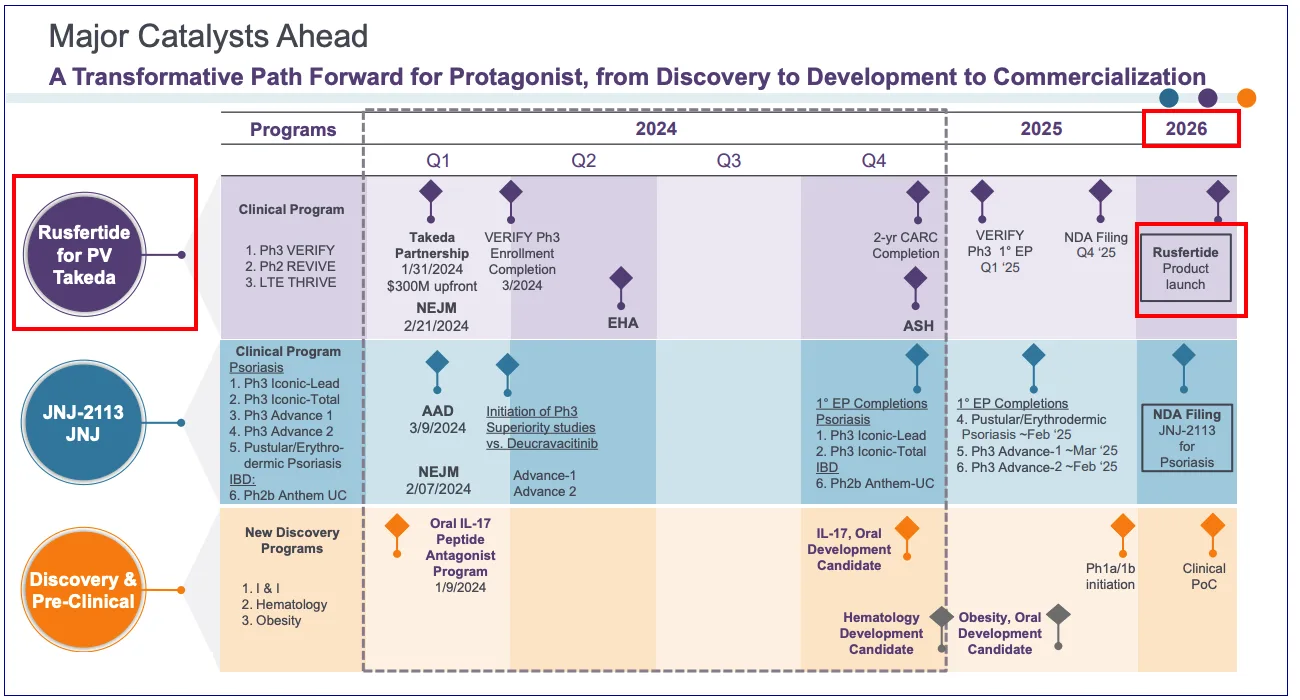
Looking forward, the ongoing phase 3 VERIFY trial aims to further confirm the long-term efficacy and safety of Rusfertide in a broader population. This trial will provide crucial insights into the potential of Rusfertide to reduce thromboembolic events, a primary concern for PV patients. Additionally, the potential for Rusfertide to be combined with existing cytoreductive therapies may pave the way for even more effective treatment regimens.
However, questions remain regarding the long-term safety, particularly the risk of tumorigenicity, which will require careful monitoring in future studies. If the positive results from early trials are replicated, Rusfertide could become a cornerstone in the management of PV, improving both survival rates and quality of life for patients.
Reference
- Kralovics, R., Passamonti, F., Buser, A. S., Teo, S. S., Tiedt, R., Passweg, J. R., … & Skoda, R. C. (2005). A gain-of-function mutation of JAK2 in myeloproliferative disorders. New England Journal of Medicine, 352(17), 1779–1790. DOI
- Marchioli, R., Finazzi, G., Specchia, G., Cacciola, R., Cavazzina, R., Cilloni, D., … & Barbui, T. (2013). Cardiovascular events and intensity of treatment in polycythemia vera. New England Journal of Medicine, 368(1), 22–33. DOI
- Ganz, T. (2005). Hepcidin—a regulator of intestinal iron absorption and iron recycling by macrophages. Best practice & research Clinical haematology, 18(2), 171–182. DOI
- Casu, C., Oikonomidou, P. R., Chen, H., Nandi, V., Ginzburg, Y., Prasad, P., … & Rivella, S. (2016). Minihepcidin peptides as disease modifiers in mice affected by β-thalassemia and polycythemia vera. Blood, The Journal of the American Society of Hematology, 128(2), 265–276. DOI
- Kremyanskaya, M., Kuykendall, A. T., Pemmaraju, N., Ritchie, E. K., Gotlib, J., Gerds, A., … & Hoffman, R. (2024). Rusfertide, a hepcidin mimetic, for control of erythrocytosis in polycythemia vera. New England Journal of Medicine, 390(8), 723–735. DOI
- Emanuel, R. M., Dueck, A. C., Geyer, H. L., Kiladjian, J. J., Slot, S., Zweegman, S., … & Mesa, R. A. (2012). Myeloproliferative neoplasm (MPN) symptom assessment form total symptom score: prospective international assessment of an abbreviated symptom burden scoring system among patients with MPNs. Journal of Clinical Oncology, 30(33), 4098–4103. DOI
- Shah, S. (2022). Common terminology criteria for adverse events. National Cancer Institute: USA, 784, 785. DOI