 LinkPeptide
Targeted Peptide Drugs for Metabolic Diseases
Metabolic diseases are becoming more complex, more common, and increasingly interconnected. Obesity, insulin resistance, dyslipidemia, and liver fat accumulation often overlap, so treatment strategies need to be more precise and adaptable.
This is one reason peptide drugs are attracting so much attention. Compared with many traditional approaches, targeted peptide therapies can interact with specific receptors and signaling pathways involved in appetite control, glucose handling, liver metabolism, and lipid regulation. That makes them highly relevant in modern treatment research for metabolic disorders such as obesity and metabolic dysfunction-associated steatotic liver disease. Recent clinical and scientific developments have accelerated interest in peptide-based therapies for these conditions.
Why Metabolic Disorders Need More Targeted Therapies
Many metabolic disorders involve multiple pathways simultaneously. A patient may have obesity, altered insulin signaling, elevated triglycerides, chronic inflammation, and fatty liver in the same disease picture. As a result, single-pathway treatment approaches may not always be sufficient.
Targeted peptide therapies are promising because they can be designed to act on defined receptors and biologic signals that influence hunger, glucose metabolism, energy balance, and liver fat handling. This receptor-based precision is one reason peptide therapeutics have become so important in cardiometabolic and obesity research.
What Makes Peptide Drugs Important in Metabolic Disease?
Peptide drugs are especially attractive in metabolic medicine because many natural metabolic hormones are peptides or peptide-like signaling molecules. Therapeutic development can build on those biological mechanisms.
Potential advantages include:
- High biologic relevance
- Strong receptor targeting potential
- Ability to influence multiple metabolic pathways
- Useful effects on appetite, glucose control, and body weight
- Growing clinical relevance of obesity and liver-related metabolic disease
This helps explain why peptide-based classes, such as GLP-1 receptor agonists and multi-agonist approaches, have become central in modern discussions of metabolic treatment. GLP-1-based medicines have transformed obesity care, and semaglutide was approved by the FDA in August 2025 for adults with MASH and moderate-to-advanced fibrosis, expanding the role of peptide-based therapy in the management of steatotic liver disease.
Metabolic Dysfunction-Associated Steatotic Liver Disease and Peptide Therapy
The term MASLD now refers to metabolic dysfunction-associated steatotic liver disease, the updated nomenclature adopted to reflect the condition’s metabolic drivers better. MASLD is defined within the broader framework of steatotic liver disease and may progress to MASH and fibrosis.
This matters because liver disease is now one of the most important fronts in metabolic therapy research.
Why Peptides Matter in MASLD
Researchers are increasingly interested in metabolic dysfunction-associated steatotic liver disease treatment peptides because peptide-based therapies may help address several linked drivers at once, including:
- Excess body weight
- Insulin resistance
- Abnormal hepatic lipid handling
- Inflammation
- Progressive steatosis and fibrosis risk
Recent liver and obesity literature has highlighted the therapeutic value of GLP-1-related therapies in steatotic liver disease, and official guidance updates in 2025 specifically addressed semaglutide use in MASH.
Obesity Treatment Using Peptide Hormones
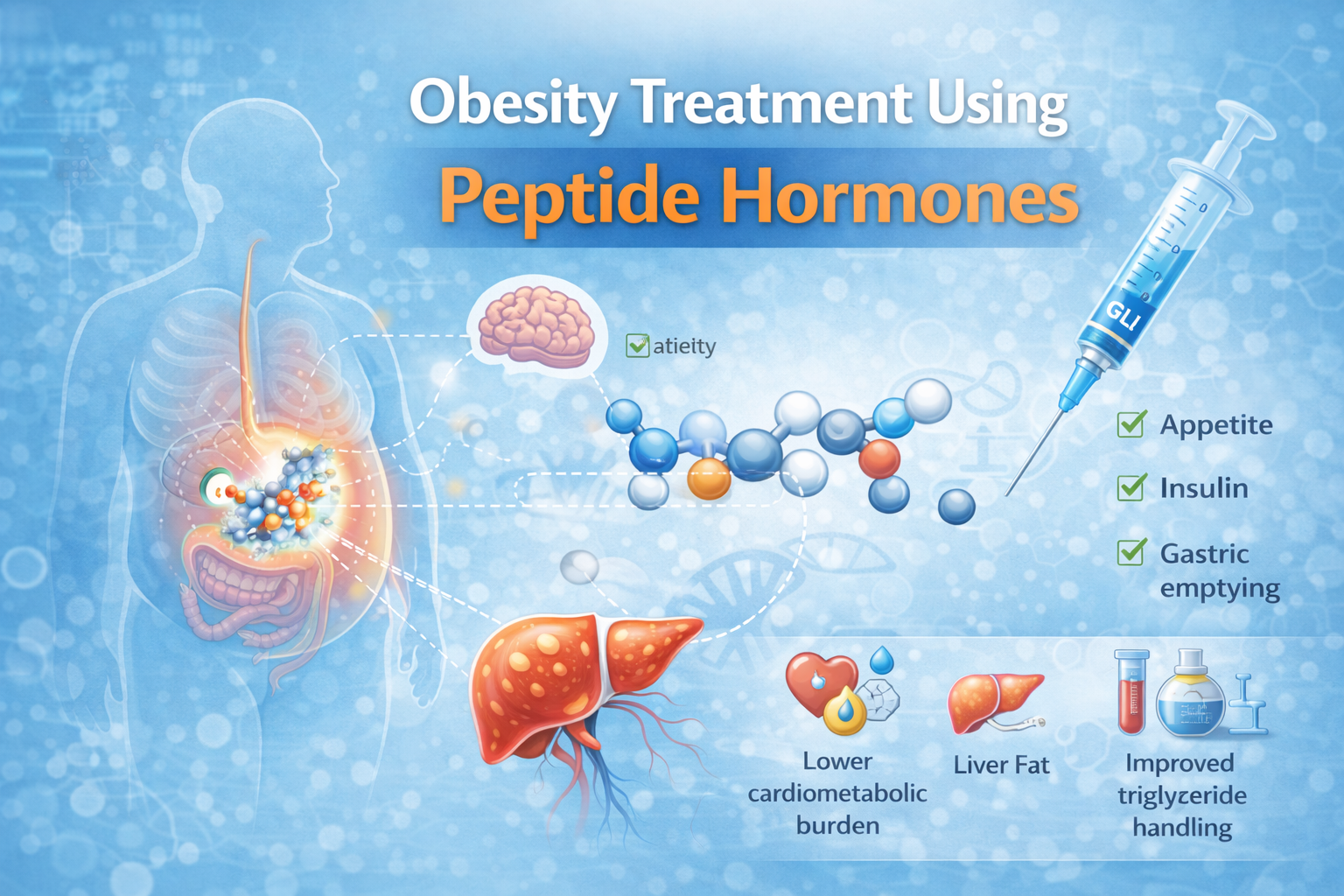
One of the strongest current examples of obesity treatment using peptide hormones is the use of GLP-1 receptor agonists and related incretin-based therapies.
These therapies are important because they do more than indirectly reduce calories. They act through biologically meaningful pathways involved in appetite, satiety, gastric emptying, insulin secretion, and weight regulation. Reviews and public-health guidance continue to describe GLP-1 therapies as a major advance in obesity treatment.
Why This Matters for Metabolic Disease
Weight reduction can influence multiple downstream outcomes in metabolic disease, including:
- Bower cardiometabolic burden
- Retter insulin sensitivity
- Leduced liver fat
- Improved triglyceride handling
- Better overall metabolic risk profile
That is why peptide hormone-based obesity therapies are now being discussed not only as weight-loss tools, but also as broader metabolic interventions.
Lipid Regulation Therapies Using Peptide Drugs
Another promising area is lipid regulation therapies using peptide drugs. Lipid imbalance is central to many metabolic diseases, especially obesity, dyslipidemia, and MASLD.
Targeted peptide therapies may help improve lipid regulation by affecting:
- Hepatic fat accumulation
- Lipoprotein metabolism
- Appetite-driven energy intake
- Hormonal regulation of nutrient handling
- Cross-talk between adipose tissue, liver, and pancreas
This is especially important because excess hepatic lipid is a major driver of disease progression in steatotic liver disease, while dyslipidemia increases broader cardiometabolic risk. Recent research continues to explore peptide and biomacromolecule therapies as part of modern metabolic treatment strategies.
Why Receptor Targeting Is So Important
Receptor targeting is one of the strongest reasons peptide therapies are useful in metabolic disorders.
Instead of affecting the body broadly and less selectively, peptide drugs can be designed to engage specific receptors that regulate energy balance and metabolic signaling. That targeted interaction may improve treatment precision and support more meaningful biologic effects.
Examples of receptor-focused metabolic strategies include:
- GLP-1 receptor targeting
- Dual or multi-agonist receptor targeting
- Hormone-mimetic peptide signaling approaches
- Tissue-responsive metabolic peptide design
This receptor-level specificity is one of the biggest advantages of peptide therapeutics in next-generation metabolic medicine.
How Peptide Drugs Fit Into Precision Metabolic Therapy
The future of metabolic treatment is moving toward more personalized and mechanism-based care. Targeted peptide therapies fit this trend well because they can potentially be matched to dominant disease drivers such as obesity, appetite dysregulation, insulin resistance, or liver fat accumulation.
For example:
- A patient with obesity-driven metabolic dysfunction may benefit from therapies centered on appetite and weight pathways.
- A patient with progressive MASLD may need therapies that also influence liver fat and fibrosis-related biology.
- A patient with broader cardiometabolic risk may benefit from treatment strategies that simultaneously improve multiple metabolic markers.
This is why peptide-based therapy is often discussed as part of precision metabolic medicine rather than as a single-purpose drug class.
Research Opportunities in Targeted Peptide Drug Development
The field is still growing, which creates major research opportunities.
Areas of active interest include:
- New peptide hormone analogs
- Multi-receptor targeting strategies
- Better tissue selectivity
- Improved half-life and dosing convenience
- Peptide conjugates for targeted delivery
- Peptide-guided therapy for liver and lipid disorders
These opportunities make peptide science highly relevant for researchers interested in obesity, MASLD, dyslipidemia, and broader metabolic disease biology.
Challenges That Innovation Is Helping to Solve
Like all advanced therapeutics, peptide drugs come with development challenges. Researchers continue to work on improving:
- Stability and half-life
- Dosing convenience
- Tissue selectivity
- Long-term tolerability
- Better matching of therapy to patient phenotype
The encouraging part is that innovation in peptide engineering, analytics, and receptor biology is steadily improving what these therapies can do. That gives the field a positive long-term outlook.
What This Means for Researchers and Developers
For scientists and biotech teams, targeted peptide drugs represent a valuable bridge between biologic insight and practical therapy development. They combine the specificity of receptor-level signaling with growing translational success in obesity and liver-related metabolic disease.
That is why interest in peptide drugs, receptor targeting, lipid regulation, and peptide-guided treatment design continues to rise. For teams exploring metabolic therapy innovation, this is a highly active and promising research direction.
Conclusion
Targeted peptide drugs are becoming increasingly important in the treatment and study of metabolic disorders. Their ability to support receptor targeting, influence lipid regulation, and align with biologically meaningful metabolic pathways makes them especially relevant in areas such as obesity treatment using peptide hormones and in the treatment of metabolic dysfunction-associated steatotic liver disease using peptides.
Recent official and clinical developments have made this field even more important. MASLD is now the accepted metabolic terminology for this liver disease framework, and peptide-based therapies such as semaglutide have expanded from obesity treatment into MASH care.
FAQ
What are targeted peptide drugs for metabolic diseases?
Targeted peptide drugs are peptide-based therapies designed to interact with specific receptors or metabolic pathways involved in conditions such as obesity, dyslipidemia, and steatotic liver disease.
How do peptide drugs help in metabolic disorders?
They may help by improving appetite regulation, glucose control, body weight, liver fat handling, and other biological processes linked to metabolic dysfunction.
What is MASLD?
MASLD stands for metabolic dysfunction-associated steatotic liver disease, the updated term used for steatotic liver disease associated with cardiometabolic risk factors.
Are peptide hormones used for obesity treatment?
Yes. Peptide hormone-based therapies, especially GLP-1-related medicines, are now an important part of obesity treatment and metabolic disease management.
Why is receptor targeting important in peptide therapy?
Receptor targeting is important because it enables peptide drugs to act through specific biological pathways, potentially improving precision and therapeutic relevance.
Can peptide drugs support lipid regulation therapies?
Yes. Peptide-based therapies are increasingly studied for their ability to influence lipid metabolism, liver fat accumulation, and broader cardiometabolic risk pathways.