[Expand product categories]

Reagents for Peptide Synthesis

Reagents for Peptide Synthesis: High-Performance Solutions for Efficient Peptide Assembly


Reagents for peptide synthesis are essential components in the construction of peptides and proteins, enabling precise and efficient formation of peptide bonds. These reagents play critical roles in activation, coupling, deprotection, and purification processes, ensuring high yield, purity, and reproducibility in peptide production. At Linkpeptide, we offer a comprehensive range of high-quality peptide synthesis reagents designed for use in both research and industrial applications. Our portfolio supports solid-phase peptide synthesis (SPPS) and solution-phase synthesis, providing reliable performance for academic, pharmaceutical, and biotechnology workflows.

Default Ranking Price By Date
TBTU

TBTU

Add Inquiry
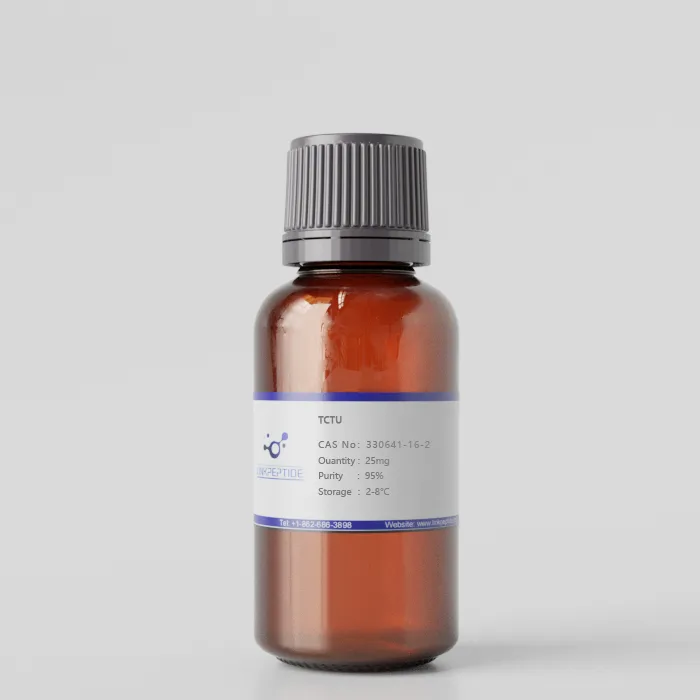
TCTU

TCTU

Add Inquiry
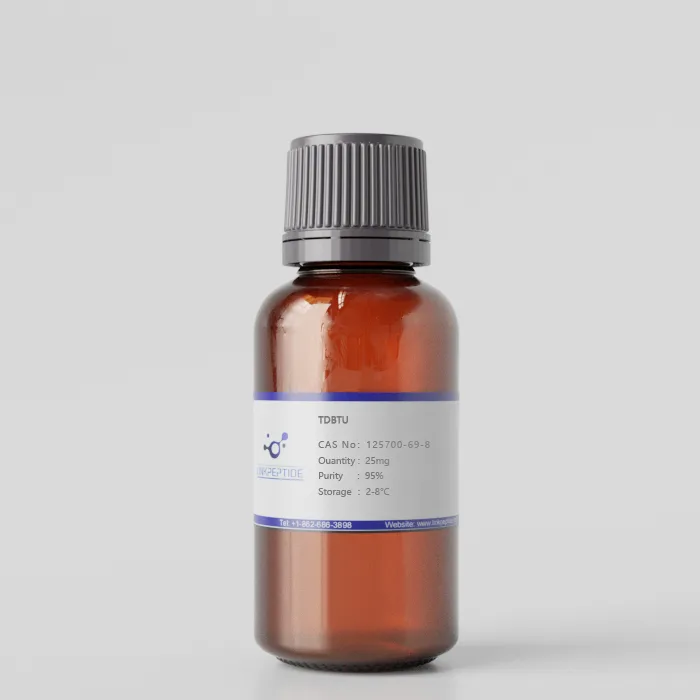
TDBTU

TDBTU

Add Inquiry
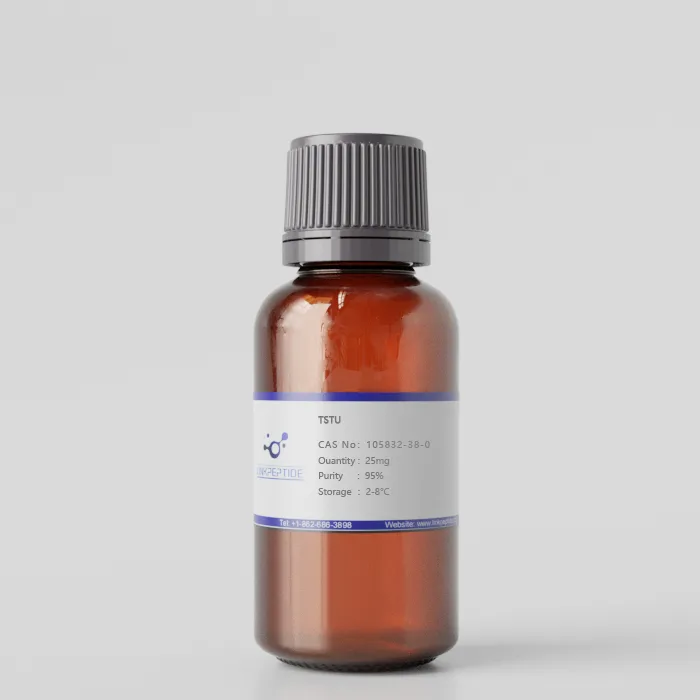
TSTU

TSTU

Add Inquiry

What Are Peptide Synthesis Reagents?

Peptide synthesis reagents are specialized chemicals used to facilitate the stepwise assembly of amino acids into peptide chains. These reagents enable key reactions such as peptide bond formation, protection/deprotection of functional groups, and cleavage of peptides from solid supports. In modern peptide synthesis—particularly SPPS—reagents are carefully selected to optimize reaction efficiency, minimize side reactions, and maintain peptide integrity. Key characteristics include:
  • High reactivity and selectivity
  • Compatibility with automated synthesis systems
  • Stability under synthesis conditions
  • Ability to minimize racemization and side reactions

Key Types of Reagents for Peptide Synthesis

This category includes several essential classes of reagents used throughout peptide synthesis workflows:

Coupling Reagents

Coupling reagents are used to activate amino acids and facilitate the formation of peptide bonds between amino acid residues. Common examples:
  • HBTU, HATU, TBTU
  • DIC (Diisopropylcarbodiimide)
  • EDC (1-Ethyl-3-(3-dimethylaminopropyl)carbodiimide)
Key functions:
  • Activate carboxyl groups for amide bond formation
  • Improve coupling efficiency
  • Reduce side reactions such as racemization
Applications:
  • Solid-phase peptide synthesis (SPPS)
  • Automated peptide synthesis
  • Complex peptide assembly

Deprotection Reagents

Deprotection reagents are used to remove protecting groups from amino acids during peptide synthesis, exposing reactive sites for subsequent coupling. Common examples:
  • Piperidine (for Fmoc removal)
  • TFA (Trifluoroacetic acid) for Boc removal
Key functions:
  • Remove N-terminal or side-chain protecting groups
  • Enable stepwise chain elongation
  • Maintain peptide sequence integrity
Applications:
  • Fmoc-based SPPS
  • Boc-based peptide synthesis
  • Cyclic and modified peptide synthesis

Cleavage Reagents

Cleavage reagents are used to release the synthesized peptide from the solid support and remove side-chain protecting groups. Common examples:
  • TFA-based cleavage cocktails
  • Scavengers (e.g., water, TIS, EDT)
Key functions:
  • Cleave peptide from resin
  • Remove protecting groups
  • Prevent side reactions during cleavage
Applications:
  • Final peptide recovery
  • Post-synthesis processing
  • Purification workflows

Additives and Activators

Additives are used alongside coupling reagents to improve reaction efficiency and reduce unwanted side reactions. Common examples:
  • HOBt (Hydroxybenzotriazole)
  • HOAt (1-Hydroxy-7-azabenzotriazole)
  • Oxyma Pure
Key functions:
  • Suppress racemization
  • Enhance coupling efficiency
  • Improve reaction kinetics
Applications:
  • High-efficiency peptide synthesis
  • Difficult sequence assembly
  • Optimization of synthesis protocols

Solvents for Peptide Synthesis

Solvents play a crucial role in ensuring proper reaction conditions and solubility of reagents and intermediates. Common solvents:
  • DMF (Dimethylformamide)
  • DCM (Dichloromethane)
  • NMP (N-Methyl-2-pyrrolidone)
Key functions:
  • Dissolve reagents and amino acids
  • Facilitate efficient mixing and reaction
  • Maintain stability of intermediates

Role of Reagents in Solid-Phase Peptide Synthesis (SPPS)

Peptide synthesis reagents are integral to each step of SPPS: Step 1: Deprotection Removal of protecting groups (e.g., Fmoc) to expose the amino group. Step 2: Activation and Coupling Coupling reagents activate the incoming amino acid for peptide bond formation. Step 3: Washing and Repetition Excess reagents are removed, and the cycle is repeated for chain elongation. Step 4: Cleavage and Final Deprotection The completed peptide is cleaved from the resin and fully deprotected.

Applications in Research and Industry

Peptide synthesis reagents are widely used in: Peptide Drug Development Support synthesis of therapeutic peptides and biologics. Biochemical Research Enable production of peptides for enzyme studies, signaling research, and structural biology. Diagnostic Development Used in the preparation of peptide-based diagnostic tools and assays. Cosmetic Peptide Production Support synthesis of peptides used in skincare and cosmetic formulations. Industrial Peptide Manufacturing Enable scalable production of peptides for commercial applications.

Advantages of High-Quality Peptide Synthesis Reagents

Using high-quality reagents ensures:
  • High coupling efficiency and yield
  • Reduced side reactions and impurities
  • Improved reproducibility
  • Compatibility with automated synthesis systems
  • Scalability for large-scale production

Why Choose Linkpeptide Reagents for Peptide Synthesis

  • High purity reagents validated for peptide synthesis
  • Reliable batch-to-batch consistency
  • Broad portfolio covering all synthesis steps
  • Optimized for SPPS and advanced peptide workflows
  • Custom sourcing and technical support available

Custom Peptide Synthesis Support

At Linkpeptide, we provide end-to-end support for peptide synthesis:
  • Selection of optimal reagents for specific sequences
  • Optimization of synthesis protocols
  • Troubleshooting for difficult peptides
  • Scale-up solutions for research and production

FAQ

What are peptide synthesis reagents used for?

They are used to facilitate peptide bond formation, deprotection, and cleavage during peptide synthesis. What is the most common coupling reagent? HBTU and HATU are among the most commonly used coupling reagents in SPPS. Why are deprotection reagents important? They remove protecting groups, allowing sequential addition of amino acids. What solvents are used in peptide synthesis? Common solvents include DMF, DCM, and NMP. Does Linkpeptide offer complete synthesis solutions? Yes, we provide reagents, amino acids, and custom synthesis services.
Add InquiryUp to 12 can be added

No products in the cart.