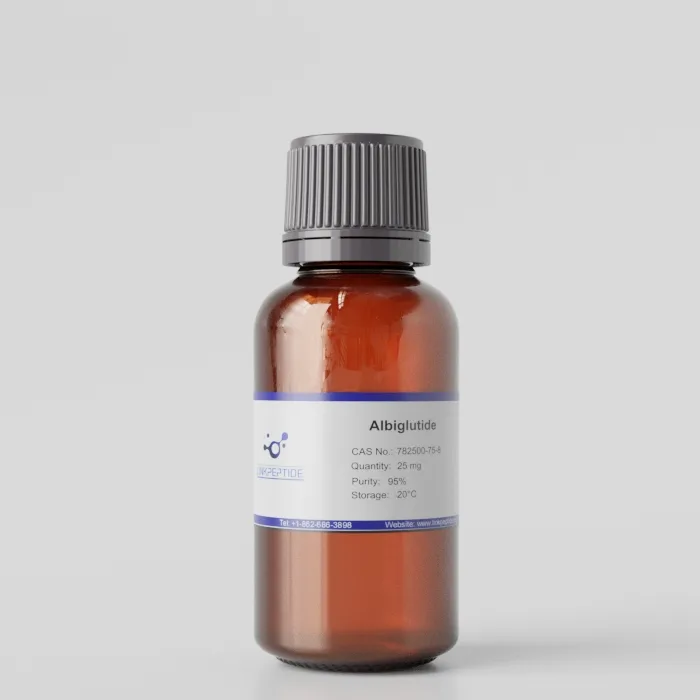
Product Name: Albiglutide
Form: TFA salt
CAS No: 782500-75-8
Molar Mass: 3283.6
Chemical Formula: C148H224N40O45
Synonyms: Albiglutide, Albugon, GSK 716155
Storage: Store at -20℃
Sequence:
HGEGTFTSDV SSYLEGQAAK EFIAWLVKGR HGEGTFTSDV SSYLEGQAAKEFIAWLVKGR DAHKSEVAHR FKDLGEENFK ALVLIAFAQY LQQCPFEDHVKLVNEVTEFA KTCVADESAE NCDKSLHTLF GDKLCTVATL RETYGEMADCCAKQEPERNE CFLQHKDDNP NLPRLVRPEV DVMCTAFHDN EETFLKKYLYEIARRHPYFY APELLFFAKR YKAAFTECCQ AADKAACLLP KLDELRDEGKASSAKQRLKC ASLQKFGERA FKAWAVARLS QRFPKAEFAE VSKLVTDLTKVHTECCHGDL LECADDRADL AKYICENQDS ISSKLKECCE KPLLEKSHCIAEVENDEMPA DLPSLAADFV ESKDVCKNYA EAKDVFLGMF LYEYARRHPDYSVVLLLRLA KTYETTLEKC CAAADPHECY AKVFDEFKPL VEEPQNLIKQNCELFEQLGE YKFQNALLVR YTKKVPQVST PTLVEVSRNL GKVGSKCCKHPEAKRMPCAE DYLSVVLNQL CVLHEKTPVS DRVTKCCTES LVNRRPCFSALEVDETYVPK EFNAETFTFH ADICTLSEKE RQIKKQTALV ELVKHKPKATKEQLKAVMDD FAAFVEKCCK ADDKETCFAE EGKKLVAASQ AALGL
Target: GLP-1 RA
Application:
Albiglutide(CAS: 782500-75-8) is a prominent pharmaceutical agent at the forefront of diabetes management. As a glucagon-like peptide-1 receptor agonist, Albiglutide exerts its therapeutic influence by enhancing insulin secretion in response to elevated blood glucose levels. This targeted mechanism positions Albiglutide as a crucial player in the treatment of type 2 diabetes, where precise glycemic control is paramount. Its clinical significance lies in its ability to improve glucose homeostasis, providing a valuable tool for healthcare professionals seeking effective solutions for diabetes patients. ,The pharmaceutical profile of Albiglutide extends to its role as a well-tolerated and long-acting therapeutic option. With its sustained-release formulation, Albiglutide offers the advantage of less frequent dosing, enhancing patient compliance and simplifying treatment regimens. The compound's efficacy, coupled with its favorable pharmacokinetic profile, underscores its importance in the pharmaceutical landscape. As research and development continue to explore innovative solutions for diabetes care, Albiglutide stands as a testament to the ongoing pursuit of more effective and patient-friendly pharmaceutical interventions in the realm of metabolic disorders.
Current Research:
Albiglutide is a long-acting GLP-1 receptor agonist used to improve glycemic control in patients with type 2 diabetes. This synthetic peptide mimics the effects of the natural GLP-1 hormone, promoting insulin secretion, inhibiting glucagon release, and slowing gastric emptying. Unlike some other GLP-1 receptor agonists, albiglutide has a unique design that combines two GLP-1 receptor agonist molecules with a human albumin sequence, giving it a prolonged half-life and enabling once-weekly dosing. This long-acting formulation makes albiglutide a convenient option for patients who prefer less frequent injections while still achieving effective blood sugar management.
Mechanism of Action
Albiglutide acts by binding to GLP-1 receptors on pancreatic beta cells, enhancing glucose-dependent insulin secretion, which helps reduce blood sugar levels, particularly after meals. It also inhibits glucagon release from pancreatic alpha cells, further lowering glucose levels by reducing hepatic glucose production. The drug’s ability to slow gastric emptying contributes to satiety and reduced appetite, which can help with weight management. These combined actions lead to better overall glycemic control, with a focus on reducing both fasting and postprandial blood glucose levels.
Blood Glucose Control
Albiglutide’s once-weekly injection schedule provides sustained glycemic control, making it an attractive option for patients who struggle with the daily burden of diabetes medication. The long-acting formulation allows for steady blood glucose regulation, particularly in patients who have difficulty managing postprandial glucose spikes. By providing continuous GLP-1 receptor activation over the course of the week, albiglutide offers consistent control, reducing the need for frequent dose adjustments and helping to maintain stable blood glucose levels with minimal variability.
Weight Management
One of the key benefits of albiglutide, like other GLP-1 receptor agonists, is its ability to support weight loss. The peptide works by promoting feelings of fullness and reducing appetite, leading to a decrease in calorie intake. While the weight loss effects of albiglutide are generally modest compared to other GLP-1 receptor agonists like liraglutide or semaglutide, its once-weekly dosing provides a convenient way to achieve gradual and sustained weight reduction over time. This can be particularly beneficial for patients who are overweight or obese, as weight management is a key component of overall diabetes care.
Cardiovascular Impact
Albiglutide’s cardiovascular benefits are less well-established compared to other GLP-1 receptor agonists, but it has shown some promise in improving cardiovascular risk factors, such as blood pressure and lipid profiles. While its primary focus is on blood glucose control, the ability to improve these risk factors is an important consideration for patients with type 2 diabetes, who are at a heightened risk of cardiovascular disease. Its cardiovascular effects are likely due to its positive impact on weight, blood sugar, and overall metabolic health.
Safety and Tolerability
Albiglutide is generally well tolerated by patients, with the most common side effects being mild gastrointestinal issues such as nausea, vomiting, and diarrhea. These symptoms are typically transient and tend to diminish with continued use. As a long-acting drug, albiglutide is associated with fewer injection site reactions than shorter-acting GLP-1 receptor agonists. However, as with other drugs in its class, albiglutide should be used cautiously in patients with a history of pancreatitis, thyroid disease, or certain types of cancer. Its once-weekly dosing regimen can be a significant advantage in terms of patient adherence to treatment.
Combination Therapy
Albiglutide is often used in combination with other diabetes medications, such as metformin or SGLT2 inhibitors, to achieve comprehensive blood glucose control. Its ability to target multiple mechanisms—insulin secretion, glucagon inhibition, and gastric emptying—makes it an ideal partner in combination regimens, particularly for patients who require additional therapies to manage their diabetes. The drug’s once-weekly injection schedule allows it to be seamlessly integrated into existing treatment plans without the burden of daily dosing.
Get a Quote

 LinkPeptide