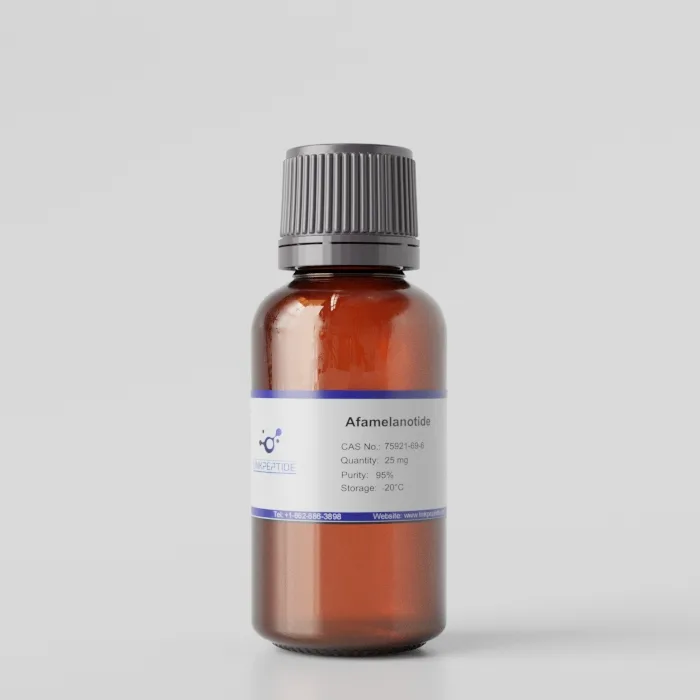
Product Name: Afamelanotide
Form: Free base
CAS No: 75921-69-6
Molar Mass: 1646.85
Chemical Formula: C78H111N21O19
Synonyms: CUV 1647, MBJ 05, Melanotan I
Storage: Store at -20℃
Sequence: SYSXEHFRWG KPV
Target: MC1R
Application:
Afamelanotide (CAS: 75921-69-6) is a pharmaceutical compound notable for its applications in photoprotection and the management of certain skin conditions. As a synthetic analog of alpha-melanocyte-stimulating hormone (α-MSH), afamelanotide primarily acts by stimulating melanocytes, the pigment-producing cells in the skin. By promoting melanin production, afamelanotide enhances the skin's natural defense against ultraviolet (UV) radiation. This targeted action makes it a valuable intervention in conditions such as erythropoietic protoporphyria (EPP), where individuals experience photosensitivity. Afamelanotide's mechanism positions it as an innovative tool in the pharmaceutical armamentarium, offering a specific approach to mitigating the impact of sunlight exposure and improving the quality of life for individuals with certain photodermatoses.
Current Research:
Afamelanotide is a synthetic analog of alpha-melanocyte-stimulating hormone (α-MSH), primarily used in the treatment of erythropoietic protoporphyria (EPP), a rare genetic disorder characterized by sensitivity to sunlight and painful skin reactions. It works by stimulating the production of melanin, the pigment responsible for skin protection against UV radiation. In EPP, patients lack the ability to properly metabolize porphyrins, leading to heightened sensitivity to light. Afamelanotide helps reduce the incidence and severity of phototoxic reactions by increasing skin pigmentation, thereby providing patients with a form of protection from ultraviolet light exposure.
Mechanism of Action
Afamelanotide mimics the action of α-MSH, which activates melanocortin receptors (MC1R) on melanocytes in the skin. By binding to these receptors, afamelanotide stimulates the production of melanin, a pigment that provides natural protection from UV radiation. This increased melanin production helps to protect the skin from the harmful effects of sunlight, reducing the risk of phototoxic reactions in patients with conditions like EPP. Afamelanotide’s ability to enhance melanin synthesis allows patients with EPP to tolerate light exposure more comfortably, significantly improving their quality of life.
Indications and Uses
Afamelanotide is approved for the treatment of erythropoietic protoporphyria (EPP), specifically in patients who experience frequent and severe phototoxic reactions. The drug is typically administered as a subcutaneous implant, which provides a slow, sustained release of the active ingredient. This long-acting formulation is advantageous for patients who require ongoing management of their symptoms, as it reduces the need for frequent dosing. While afamelanotide is effective in improving light tolerance, it does not cure EPP or address the underlying porphyrin accumulation. It is used as part of a broader management plan to minimize phototoxic reactions and improve patients’ ability to engage in normal activities.
Efficacy and Clinical Benefits
Clinical trials have demonstrated that afamelanotide significantly reduces the frequency and severity of phototoxic reactions in patients with EPP. Patients who receive treatment with afamelanotide show improved tolerance to sunlight, allowing them to engage in outdoor activities without experiencing debilitating skin pain or damage. The drug’s ability to increase skin pigmentation offers a long-term solution for managing EPP symptoms, providing a level of protection that other treatments, such as avoidance of sunlight or the use of sunscreen, cannot achieve. In some cases, patients experience sustained benefits from a single dose, further enhancing the convenience of treatment.
Safety and Tolerability
Afamelanotide is generally well tolerated, though it can cause side effects. The most common adverse reactions include site reactions at the injection site, such as pain, redness, and swelling. Other less common side effects include headache, nausea, and gastrointestinal discomfort. Although rare, some patients may experience increased pigmentation of the skin or changes in skin texture. These effects are typically reversible upon discontinuation of treatment. Afamelanotide should be used with caution in patients with a history of melanoma or other skin cancers, as it stimulates melanin production, which could theoretically affect the development of certain types of skin cancers.
Advantages and Limitations
The main advantage of afamelanotide is its ability to provide effective relief from the symptoms of EPP, particularly by increasing light tolerance. It offers a novel therapeutic approach for a condition with limited treatment options. The subcutaneous implant formulation provides a convenient, sustained-release option that minimizes the need for frequent administration. However, afamelanotide is not a cure for EPP and does not address the underlying genetic cause of the disease. Furthermore, its use is limited to patients with EPP, and its safety profile in other conditions has not been fully established. Regular monitoring is required to ensure proper safety and assess the long-term effects of treatment.
Future Directions
Research into afamelanotide is ongoing, with studies focusing on its potential use in other dermatological conditions involving abnormal light sensitivity, such as polymorphic light eruption (PLE) or xeroderma pigmentosum. There is also interest in exploring afamelanotide’s role in improving skin health and preventing sun-induced skin damage in individuals at high risk for skin cancer. Investigating the long-term effects of afamelanotide treatment, particularly regarding its impact on skin cancer risk, remains a priority for future studies. Additionally, new formulations or methods of delivery, such as oral administration, are being explored to further enhance patient convenience.
Reference:
Get a Quote
 LinkPeptide