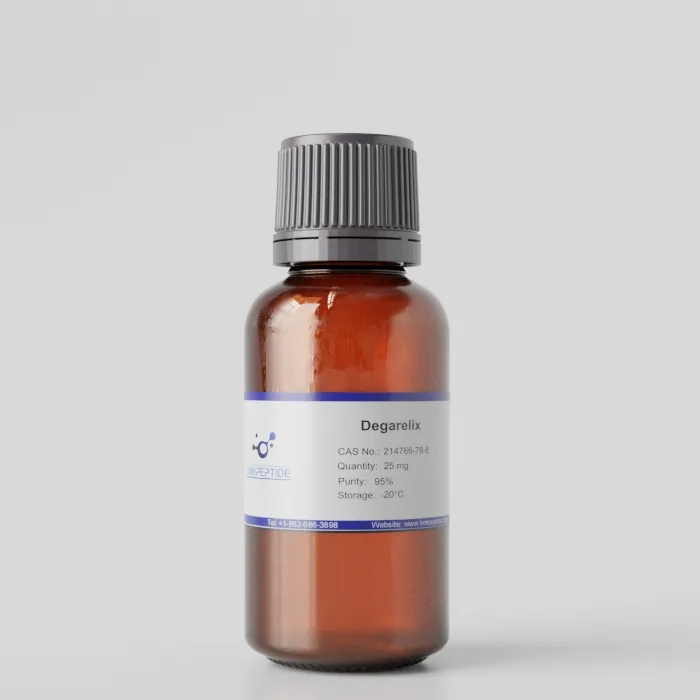
Product Name: Degarelix
Form: Free base
CAS No: 214766-78-6
Molar Mass: 1632.26
Chemical Formula: C82H103ClN18O16
Synonyms: Firmagon
Storage: Store at -20℃
Sequence: XFASFFLKPA
Target: GnRHR
Application:
Degarelix (CAS: 214766-78-6) is a potent pharmaceutical agent designed for the management of advanced prostate cancer. Functioning as a gonadotropin-releasing hormone (GnRH) receptor antagonist, degarelix effectively suppresses the production of testosterone, a hormone that fuels the growth of prostate cancer cells. By rapidly and profoundly reducing serum testosterone levels, degarelix provides a swift and sustained hormonal blockade, offering a valuable alternative to traditional GnRH agonists. This targeted suppression of testosterone production helps alleviate symptoms and slow the progression of prostate cancer. Degarelix's mechanism of action makes it particularly beneficial in situations where a rapid reduction in testosterone is crucial, highlighting its significance in the pharmaceutical landscape for the treatment of advanced prostate cancer.
Current Research:
Degarelix is a gonadotropin-releasing hormone (GnRH) antagonist used in the treatment of prostate cancer. It works by inhibiting the action of GnRH, which in turn reduces the secretion of luteinizing hormone (LH) and follicle-stimulating hormone (FSH) from the pituitary gland. This leads to a rapid decrease in testosterone levels, which is critical in treating prostate cancer, as the growth of prostate cancer cells is often fueled by androgens like testosterone. Unlike GnRH agonists, which initially increase androgen levels before reducing them, degarelix provides an immediate and sustained reduction in testosterone, offering an advantage in certain clinical settings.
Mechanism of Action
Degarelix works by binding to the GnRH receptor in the pituitary gland, preventing the normal GnRH-induced release of LH and FSH. This inhibition results in a suppression of testosterone production from the testes. The rapid reduction in testosterone levels (reaching castrate levels within days) is crucial in controlling prostate cancer, which is often androgen-dependent. By directly inhibiting the GnRH receptor, degarelix offers a more immediate approach to reducing testosterone compared to GnRH agonists, which cause an initial surge in hormone levels before suppression.
Indications and Uses
Degarelix is primarily used for the management of advanced prostate cancer, particularly in patients who are candidates for androgen deprivation therapy (ADT). It is often prescribed for patients with prostate cancer that has spread beyond the prostate gland (metastatic prostate cancer). The primary therapeutic goal is to reduce testosterone levels to "castrate" levels, which helps slow the growth and progression of the cancer. Degarelix is administered as an initial loading dose followed by maintenance doses, typically given via subcutaneous injection every month, providing an effective and manageable long-term treatment option.
Efficacy and Clinical Benefits
Degarelix has shown significant efficacy in reducing testosterone levels rapidly, offering clinical benefits in terms of symptom control and disease progression in patients with prostate cancer. Its ability to maintain low testosterone levels effectively reduces the androgenic stimulation of prostate cancer cells, which can help slow tumor growth and alleviate symptoms. Clinical studies have demonstrated that degarelix is as effective as GnRH agonists in controlling prostate cancer but offers the added benefit of avoiding the initial testosterone surge seen with agonists. This can be particularly beneficial in patients with symptomatic metastatic disease, as it helps control symptoms more quickly.
Safety and Tolerability
Degarelix is generally well tolerated, although it can cause some side effects, especially at the injection site, such as pain, redness, and swelling. Other common side effects include hot flashes, fatigue, and an increased risk of bone thinning (osteoporosis) due to prolonged low testosterone levels. Because degarelix significantly reduces testosterone, long-term use can lead to sexual dysfunction, reduced libido, and muscle weakness. As with other androgen deprivation therapies, patients may also experience an increased risk of cardiovascular events and metabolic changes, including changes in lipid profiles and blood sugar levels. Regular monitoring for bone health and cardiovascular risk is recommended during treatment.
Advantages over GnRH Agonists
Degarelix offers several advantages over traditional GnRH agonists, such as leuprolide and goserelin. The most notable benefit is the immediate suppression of testosterone, which can be advantageous in managing patients with rapidly progressing prostate cancer. Unlike GnRH agonists, which can cause an initial flare in testosterone levels before suppression, degarelix avoids this surge, providing quicker symptom relief and reducing the risk of tumor flare-up. This rapid onset of action can be particularly beneficial for patients with advanced, symptomatic prostate cancer who require quick hormone suppression.
Future Directions
Degarelix is being explored in combination with other therapies, including chemotherapy and novel targeted therapies, to improve outcomes for patients with prostate cancer. Research is ongoing to better understand the long-term effects of testosterone suppression on other health outcomes, such as bone density, cardiovascular risk, and metabolic function. Additionally, there is interest in using degarelix for other androgen-dependent diseases, such as certain forms of breast cancer, where reducing androgen levels could offer therapeutic benefits.
Reference:
Get a Quote
 LinkPeptide