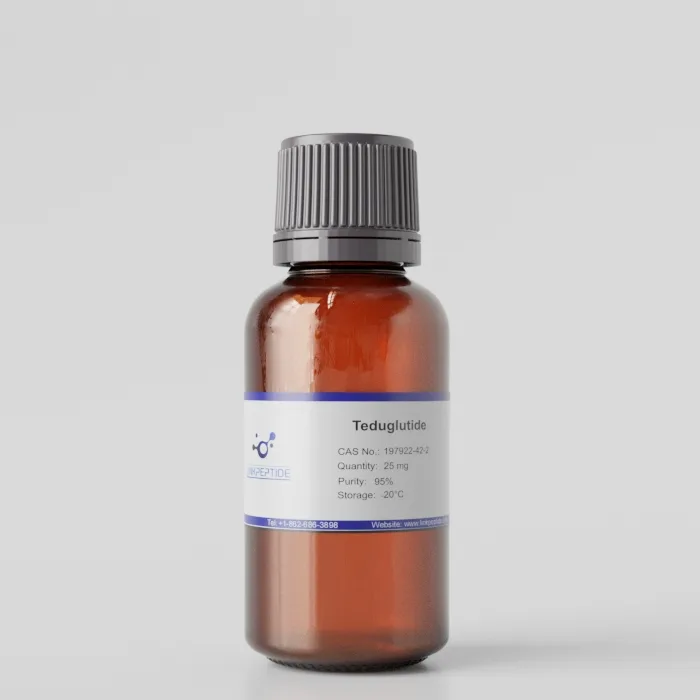
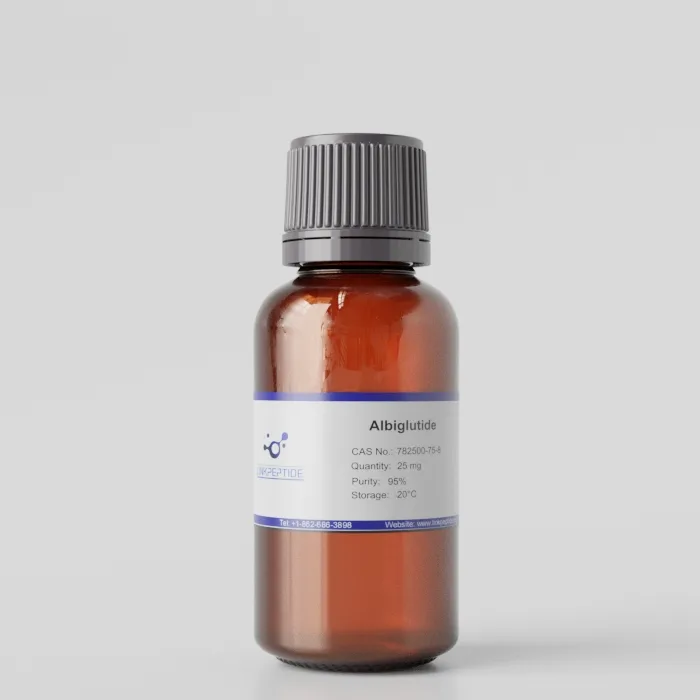
Product Name: Teduglutide
Form: Free base
CAS No: 197922-42-2
Molar Mass: 3752.13
Chemical Formula: C164H252N44O55S
Synonyms: ALX 0600, Revestive, Gattex
Storage: Store at -20℃
Sequence: HGDGSFSDEM NTILDNLAAR DFINWLIQTK ITD
Target: GLP-2
Application: Teduglutide (CAS: 197922-42-2) represents a significant advancement in pharmaceuticals, particularly in the field of gastrointestinal disorders. As a glucagon-like peptide-2 (GLP-2) analogue, teduglutide plays a crucial role in intestinal function and nutrient absorption. Its mechanism involves stimulating intestinal growth and enhancing nutrient absorption by promoting crypt cell proliferation and reducing apoptosis. Teduglutide is primarily employed for the treatment of short bowel syndrome (SBS), a condition characterized by significant intestinal resection leading to malabsorption. By addressing the underlying intestinal insufficiency, teduglutide contributes to the restoration of intestinal function and nutrient absorption, reducing dependence on parenteral nutrition. This targeted approach makes teduglutide a valuable pharmaceutical tool in improving the quality of life for individuals with SBS, exemplifying its role in addressing specific gastrointestinal challenges.
Current Research:
Teduglutide is a recombinant version of human glucagon-like peptide-2 (GLP-2), a hormone that plays a key role in intestinal growth and function. It is primarily used in the treatment of short bowel syndrome (SBS), a condition resulting from extensive surgical resection of the small intestine. Teduglutide’s action in increasing intestinal absorptive capacity helps reduce the dependence on parenteral nutrition (PN) in patients with SBS, improving their quality of life and nutritional status. The drug works by enhancing intestinal villus growth, improving nutrient absorption, and restoring fluid and electrolyte balance.
Mechanism of Action
Teduglutide acts by binding to the GLP-2 receptor, which is expressed in various parts of the gastrointestinal tract. Upon activation, it stimulates growth and repair of the small intestine by increasing the length and function of intestinal villi, enhancing mucosal integrity, and improving nutrient absorption. This results in better digestion and absorption of fluids, electrolytes, and nutrients, which is critical for patients with SBS who are unable to absorb adequate nutrition from food alone. By improving these functions, teduglutide reduces the need for parenteral nutrition, which is often used to provide sustenance to SBS patients.
Clinical Benefits
Teduglutide’s most significant clinical benefit is its ability to reduce the dependence on parenteral nutrition in patients with short bowel syndrome. By enhancing the absorptive capacity of the remaining intestinal tissue, it allows patients to achieve better nutritional status and improve gastrointestinal function, which may enable them to rely less on intravenous feeding. In clinical studies, teduglutide has shown to reduce the volume of parenteral nutrition required and increase the duration of time patients can go without needing PN. These improvements contribute to enhanced overall health and quality of life, reducing the long-term risks and complications associated with parenteral nutrition.
Indications and Uses
Teduglutide is primarily indicated for the treatment of short bowel syndrome in adults who are dependent on parenteral nutrition. SBS occurs when a large portion of the small intestine is surgically removed due to conditions such as Crohn’s disease, ischemia, or trauma, leading to malabsorption of nutrients. Teduglutide addresses this issue by promoting the growth of the remaining small intestine, improving its ability to absorb nutrients and fluids, which can significantly reduce or eliminate the need for parenteral nutrition. It is administered via subcutaneous injection, typically on a daily basis, to support long-term treatment.
Safety and Tolerability
Teduglutide is generally well tolerated, though common side effects include gastrointestinal symptoms such as abdominal pain, bloating, and diarrhea, which are typically mild and transient. These side effects are related to the enhanced digestive function and nutrient absorption triggered by the drug. More serious side effects, such as intestinal obstruction, gallbladder disease, and infections, are less common but require careful monitoring during treatment. Teduglutide should be used with caution in patients with a history of gastrointestinal complications, such as bowel obstructions or gastrointestinal cancers. Regular monitoring of fluid and electrolyte balance is recommended during therapy to avoid dehydration and imbalances.
Future Applications
While teduglutide is primarily used for short bowel syndrome, its potential applications may extend to other gastrointestinal disorders where intestinal growth and regeneration could be beneficial. Researchers are exploring the use of GLP-2 analogs in conditions like Crohn’s disease and ulcerative colitis, where mucosal healing and enhanced nutrient absorption could improve patient outcomes. Additionally, teduglutide’s effects on gut function and nutrient absorption may have broader implications in treating other forms of malnutrition and digestive disorders, though further clinical studies are needed to assess its utility in these areas.
Reference:
Irles-Rocamora, J. A. (2023). Review of real-life teduglutide experience. Nutricion Hospitalaria.
Get a Quote
 LinkPeptide