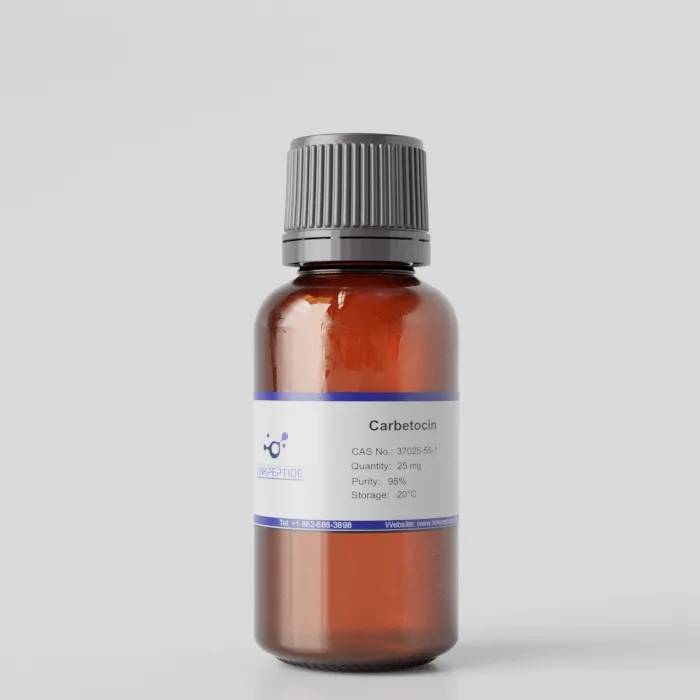
Product Name: Carbetocin
Form: Free base
CAS No: 37025-55-1
Molar Mass: 988.16
Chemical Formula: C45H69N11O12S
Synonyms: Depotocin, LV 101, Pabal
Storage: Store at -20℃
Sequence: XYIQNCPLG
Target: oxytocin receptor
Application:
Carbetocin (CAS: 37025-55-1) is a synthetic analog of oxytocin, a hormone involved in uterine contractions during labor and milk ejection during breastfeeding. It acts as a long-acting oxytocin agonist, binding to oxytocin receptors on uterine smooth muscle cells to stimulate contractions. Carbetocin is primarily used to prevent postpartum hemorrhage (excessive bleeding after childbirth) by promoting uterine contraction and tone after delivery. This helps to reduce the risk of uterine atony, a major cause of postpartum hemorrhage. In pharmaceutical chemistry, carbetocin's extended duration of action and efficacy in preventing postpartum hemorrhage make it a valuable addition to obstetric care, improving maternal outcomes and reducing the need for interventions such as manual removal of the placenta or surgical procedures. Its application highlights its significance in addressing critical maternal health concerns globally, particularly in settings with limited access to emergency obstetric care. Additionally, ongoing research explores carbetocin's potential in other obstetric and gynecological indications, further expanding its therapeutic utility in women's health.
Current Research:
Carbetocin is a synthetic analogue of oxytocin, a hormone that plays a key role in uterine contractions during labor and the postpartum period. It is used primarily in obstetric settings to prevent or treat uterine atony, a condition where the uterus fails to contract effectively after delivery, leading to postpartum hemorrhage (PPH). Carbetocin is administered intravenously or via injection and has a longer duration of action compared to oxytocin, making it an effective alternative for managing PPH in cesarean section deliveries or after vaginal birth.
Mechanism of Action
Carbetocin works by binding to oxytocin receptors on the smooth muscle of the uterus, triggering uterine contractions. This contraction is crucial in controlling postpartum bleeding by helping the uterus contract back to its normal size and minimizing blood loss. Carbetocin is similar to oxytocin but has a modified structure that provides a longer half-life, allowing for sustained uterine contraction and reducing the need for continuous infusion. Unlike oxytocin, which requires multiple doses or continuous infusion for sustained action, carbetocin typically requires only a single injection, providing more convenience for healthcare providers and better control for patients.
Indications and Uses
Carbetocin is primarily used to prevent or treat postpartum hemorrhage due to uterine atony, particularly following a cesarean section. It is administered as a single intravenous dose or as an intramuscular injection following the delivery of the baby. Carbetocin has also been studied for use in managing uterine atony after vaginal delivery. Its ability to prevent excessive bleeding makes it a crucial tool in ensuring maternal safety and reducing the risk of complications associated with hemorrhage, such as shock or organ failure. Carbetocin is also being explored for its potential use in other obstetric conditions where uterine contraction is beneficial.
Efficacy and Clinical Benefits
Clinical studies have demonstrated that carbetocin is highly effective in preventing postpartum hemorrhage when compared to traditional oxytocin therapy. In trials, carbetocin was shown to reduce the incidence of excessive bleeding after cesarean deliveries, with some studies indicating a lower need for additional interventions like blood transfusions or additional uterotonic drugs. Its prolonged effect compared to oxytocin is particularly advantageous in ensuring sustained uterine contraction. Furthermore, carbetocin has been found to be more convenient due to its single-dose administration, reducing the need for multiple doses or infusion pumps. It offers significant clinical benefits in reducing maternal morbidity related to PPH.
Safety and Tolerability
Carbetocin is generally well tolerated, with a safety profile similar to that of oxytocin. The most common side effects are mild and include nausea, vomiting, and transient hypertension. Serious side effects are rare but can include allergic reactions or arrhythmias. Because carbetocin has a long duration of action, it carries a risk of uterine hyperstimulation if not administered properly, particularly in patients who have other risk factors for uterine contraction abnormalities. Careful monitoring of maternal and fetal well-being is recommended during administration, especially for signs of excessive uterine contractions.
Advantages and Limitations
One of the main advantages of carbetocin is its longer duration of action compared to oxytocin, allowing for a single administration rather than continuous infusion. This simplifies the management of postpartum hemorrhage and can reduce the workload on healthcare providers. Additionally, carbetocin has shown to be as effective, if not more so, than oxytocin in preventing PPH, with fewer doses needed. However, carbetocin is not without limitations. It is more expensive than oxytocin and may not be available in all healthcare settings, particularly in resource-limited environments. Furthermore, its use is restricted to certain obstetric situations, and it is not recommended for women with certain medical conditions, such as those with a history of uterine rupture or cardiovascular problems.
Future Directions
Research is ongoing to explore additional uses of carbetocin in obstetrics, including its potential use in preventing PPH in women with high-risk pregnancies, such as those with multiple gestations or a history of previous hemorrhage. Studies are also investigating the drug’s efficacy in combination with other uterotonic agents to improve maternal outcomes further. Moreover, there is interest in exploring more cost-effective formulations of carbetocin, including intranasal or oral delivery methods, which could enhance patient convenience and global accessibility, especially in developing countries.
Reference:
Get a Quote


 LinkPeptide