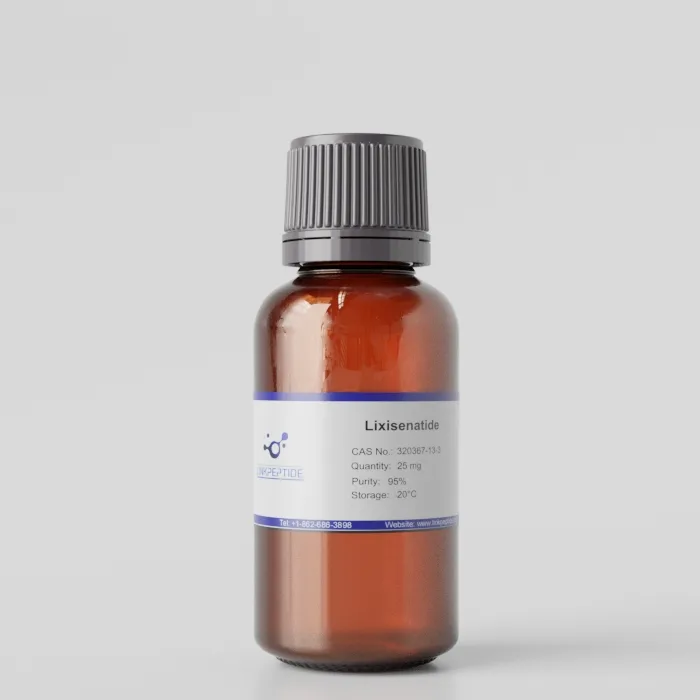
Product Name: Lixisenatide
Form: Free base
CAS No: 320367-13-3
Molar Mass: 4858.49
Chemical Formula: C215H347N61O65S
Synonyms: AVE-0010, Lyxumia, Adlyxin
Storage: Store at -20℃
Sequence: HGEGTFTSDL SKQMEEEAVR LFIEWLKNGG PSSGAPPSKK KKKK
Target: GLP-1 RA
Application:
Lixisenatide(CAS: 320367-13-3) is a glucagon-like peptide-1 receptor agonist employed in the field of pharmaceutical chemistry. Acting as an incretin mimetic, it enhances insulin secretion in response to elevated blood sugar levels. Specifically designed for treating type 2 diabetes, Lixisenatide promotes glucose-dependent insulin release and suppresses glucagon secretion. Its targeted action on pancreatic islets makes it a valuable asset in managing diabetes. Beyond its pharmaceutical utility, Lixisenatide exhibits promise in organic chemistry by serving as a molecular tool for investigating signal transduction pathways. Additionally, its potential applications extend to material chemistry, where it can contribute to the development of innovative drug delivery systems, showcasing its versatility across multiple domains.
Current Research:
Lixisenatide is a GLP-1 receptor agonist used to manage blood glucose levels in patients with type 2 diabetes. As a synthetic peptide, lixisenatide mimics the action of the natural GLP-1 hormone, enhancing insulin secretion and inhibiting glucagon release in a glucose-dependent manner. While it shares similarities with other GLP-1 receptor agonists like exenatide, lixisenatide is typically administered once daily and has a relatively short half-life compared to longer-acting agents such as dulaglutide. Its primary benefit is in providing postprandial glucose control, helping to reduce blood sugar spikes after meals.
Mechanism of Action
Lixisenatide functions by activating GLP-1 receptors, leading to an increase in insulin release in response to meals while also suppressing glucagon secretion. This dual effect helps regulate blood glucose levels, particularly after eating when blood sugar tends to rise. Additionally, lixisenatide slows gastric emptying, which promotes satiety and reduces food intake, aiding in weight loss. Its ability to improve postprandial glucose control makes it an attractive option for patients who have difficulty managing glucose fluctuations throughout the day.
Postprandial Glucose Control
Lixisenatide is particularly effective at controlling postprandial blood glucose spikes, which is critical in patients who experience significant rises in blood sugar after meals. By slowing gastric emptying and promoting insulin secretion during meals, lixisenatide helps mitigate these spikes, reducing the risk of hyperglycemia. This makes it a useful tool in the overall management of type 2 diabetes, especially when combined with other therapies that provide baseline glucose control.
Weight Loss and Obesity Management
Similar to other GLP-1 receptor agonists, lixisenatide contributes to weight loss by reducing appetite and promoting a sense of fullness. This effect can be especially beneficial for individuals with type 2 diabetes who are also overweight or obese. Weight loss is an important aspect of managing diabetes, as reducing body weight can improve insulin sensitivity and overall metabolic health. Lixisenatide provides a relatively mild but sustained weight reduction, making it a valuable option in diabetes care, particularly for patients looking to address obesity as part of their diabetes treatment plan.
Cardiovascular Effects
While lixisenatide has been primarily studied for its glucose-lowering effects, some studies suggest it may also offer benefits for cardiovascular health. Though its cardiovascular benefits are not as extensively documented as those of dulaglutide or liraglutide, lixisenatide has shown promise in improving lipid profiles and reducing blood pressure. Given the strong association between type 2 diabetes and cardiovascular disease, any potential cardiovascular benefits make lixisenatide a useful option for managing overall patient health, particularly in high-risk individuals.
Safety and Tolerability
Lixisenatide is generally well tolerated, with the most common side effects being gastrointestinal in nature, including nausea, vomiting, and diarrhea. These symptoms tend to decrease as the body adjusts to the medication. Serious side effects are rare, but as with other GLP-1 receptor agonists, lixisenatide should be used with caution in patients with a history of pancreatitis or thyroid problems. Injection site reactions are also possible, though they tend to be mild and transient. The once-daily administration is convenient for many patients compared to medications requiring more frequent dosing.
Combination Therapy
Lixisenatide is often used in combination with other diabetes medications, such as metformin, to provide enhanced glucose control. This combination therapy approach allows for a more comprehensive management of type 2 diabetes, targeting multiple aspects of the disease, including insulin secretion, glucose production, and appetite regulation. Lixisenatide’s ability to provide effective postprandial glucose control makes it particularly useful when combined with other drugs that target baseline glucose levels, like metformin or SGLT2 inhibitors.
Get a Quote
 LinkPeptide