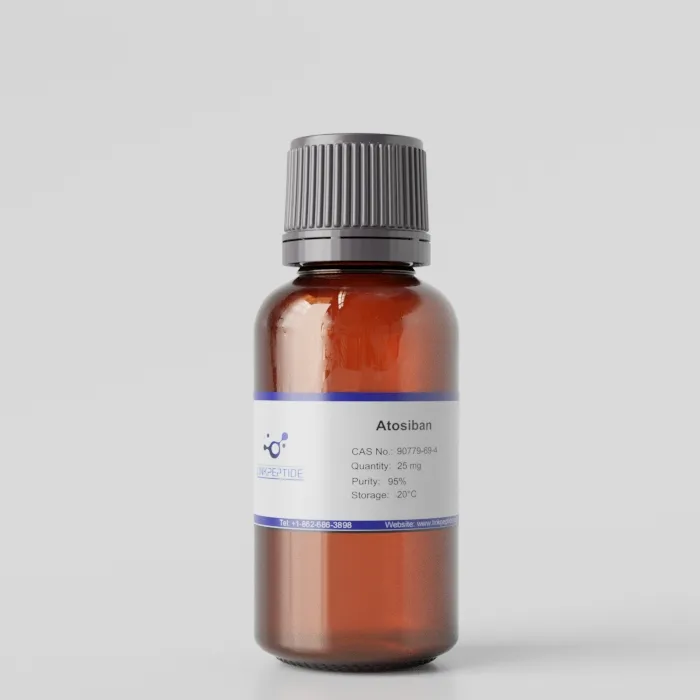
Product Name: Atosiban
Form: Free base
CAS No: 90779-69-4
Molar Mass: 994.19
Chemical Formula: C43H67N11O12S2
Synonyms: Antocin II, CAP 449, ORF 22164
Storage: Store at -20℃
Sequence: XYITNCPXG
Target: vasopressin/oxytocin receptor
Application:
Atosiban (CAS: 90779-69-4) is a synthetic peptide drug used as an oxytocin receptor antagonist. It exerts its pharmacological effects by competitively blocking the binding of oxytocin to its receptors on the smooth muscle cells of the uterus. This inhibition leads to the suppression of uterine contractions, making atosiban valuable in the management of preterm labor. By delaying labor, atosiban helps to prolong pregnancy and improve neonatal outcomes. In pharmaceutical chemistry, the development of atosiban represents a significant advancement in obstetric medicine, providing a targeted approach to prevent preterm birth and reduce associated complications. Its application in preterm labor management underscores its importance in improving maternal and fetal health outcomes. Additionally, ongoing research explores atosiban's potential in other conditions characterized by uterine hyperactivity, such as dysmenorrhea and uterine fibroids, highlighting its versatility in women's health therapeutics.
Current Research:
Atosiban is a synthetic peptide and selective oxytocin receptor antagonist used primarily in obstetrics to manage preterm labor. It works by inhibiting the action of oxytocin, a hormone that induces uterine contractions during labor. Atosiban is typically used to delay preterm labor, allowing time for other interventions, such as corticosteroid therapy to enhance fetal lung development, or to transfer the mother to a facility with better neonatal care. It provides a targeted approach to managing preterm labor compared to traditional tocolytics, which may have broader effects on the body.
Mechanism of Action
Atosiban functions by specifically blocking the oxytocin receptors in the uterine smooth muscle. Oxytocin, normally released in response to uterine stretching or cervical dilation, binds to these receptors to trigger contractions. By preventing oxytocin from binding, atosiban inhibits uterine contractions, effectively delaying labor. This action is more selective than that of other tocolytic agents, such as beta-agonists or calcium channel blockers, which affect multiple physiological processes. The selective inhibition of oxytocin receptors helps to control uterine contractions while minimizing side effects.
Indications and Uses
Atosiban is indicated for the management of preterm labor between 24 and 33 weeks of gestation. It is typically administered intravenously in a hospital setting under careful monitoring. Atosiban can be used to halt uterine contractions in patients who have a risk of preterm delivery but are not yet in active labor. The primary goal of treatment is to delay labor long enough to administer corticosteroids to accelerate fetal lung maturation or to allow for the transfer of the mother to a more specialized medical facility. Atosiban is generally considered when other tocolytics have not been effective or when their side effects are not tolerable.
Efficacy and Clinical Benefits
Clinical studies have shown that atosiban is effective at reducing uterine contractions and delaying preterm birth. Research indicates that atosiban can significantly extend the duration of pregnancy, which is crucial for the fetus’s development. Studies have also demonstrated that atosiban is associated with fewer maternal side effects compared to other tocolytic agents like beta-agonists, which can cause cardiovascular problems such as tachycardia and arrhythmias. By providing a more targeted action on uterine muscle, atosiban improves maternal comfort and reduces the risk of complications associated with other tocolytic therapies.
Safety and Tolerability
Atosiban is generally well tolerated, with a lower incidence of serious side effects compared to other tocolytic agents. The most common side effects include nausea, headache, dizziness, and gastrointestinal disturbances. Unlike beta-agonists, atosiban does not significantly affect maternal heart rate or blood pressure, making it a safer alternative for women at risk of cardiovascular side effects. Serious adverse effects are rare but may include an allergic reaction, which requires discontinuation of the drug. Close monitoring of maternal and fetal well-being is necessary during treatment, especially in the early stages of labor.
Advantages and Limitations
The primary advantage of atosiban over other tocolytic therapies is its selective mechanism of action, which focuses specifically on uterine contractions without causing widespread physiological changes. This allows for better control of preterm labor with fewer side effects, particularly in patients with contraindications to other tocolytics. However, atosiban is not effective for all patients, and its use is restricted to certain stages of preterm labor. The drug is also more expensive and may not be available in all regions, limiting its accessibility. Furthermore, its use does not eliminate the underlying causes of preterm labor, meaning additional interventions, such as corticosteroids, may still be necessary.
Future Directions
Research into atosiban continues, particularly in the context of improving its efficacy and expanding its use in other obstetric conditions. Ongoing studies are exploring its potential in combination with other therapies, such as progesterone or novel immune modulators, to prevent preterm labor in high-risk pregnancies. Further investigations are also looking into alternative delivery methods, such as oral formulations, to improve patient convenience and reduce the need for intravenous administration. Finally, studies are assessing its potential use in managing labor in other conditions, such as in women with specific medical comorbidities that may increase the risk of preterm birth.
Reference:
Tsatsaris, V., Carbonne, B., & Cabrol, D. (2004). Atosiban for preterm labour. Drugs, 64, 375-382.
Get a Quote


 LinkPeptide