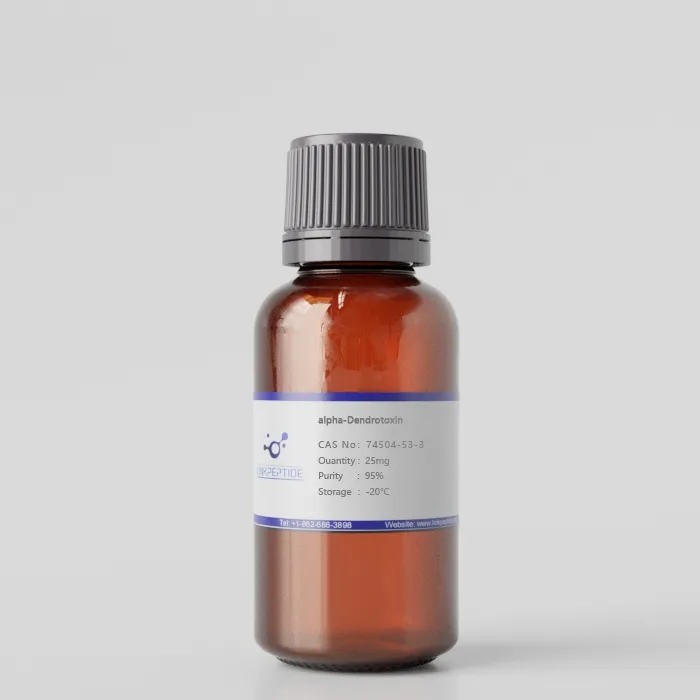
Product Name:alpha-Dendrotoxin
Synonyms:Toxin C13S2C3
CAS No:74504-53-3
Purity:95%
Molar Mass:7072
Chemical Formula:C305H480N98O85S6
Storage:Store at -20 degrees Celsius
Sequence:EPRRKLCILHRNPGRCYDKIPAFYYNQKKKQCERFDWSGCGGNSNRFKTIEECRRTCIG
Target:Kv channels
Application:
Alpha-Dendrotoxin is a neurotoxin from the venom of the green mamba snake (Dendroaspis angusticeps), known for its potent inhibitory effects on voltage-gated potassium channels (Kv channels) in neurons. By blocking these channels, it prevents the normal repolarization of the neuronal membrane, leading to prolonged excitability and excessive neurotransmitter release. This action can result in neuromuscular effects, such as convulsions and paralysis. Alpha-Dendrotoxin is a valuable tool in neurophysiological research, particularly in studying the role of potassium channels in neuronal signaling, synaptic transmission, and the pathophysiology of neurological disorders. Its specificity makes it crucial for advancing our understanding of Kv channel functions.
Current Research:
Alpha-Dendrotoxin, a peptide neurotoxin derived from the venom of the black mamba (Dendroaspis species), is a potent inhibitor of voltage-gated potassium (Kv) channels. Comprising 59 amino acids stabilized by disulfide bridges, this toxin plays a critical role in the study of neuronal excitability and synaptic transmission.
Mechanism of Action
Alpha-Dendrotoxin specifically targets Kv1 family channels, including Kv1.1, Kv1.2, and Kv1.6, by binding to their extracellular domains. This binding inhibits potassium ion conductance, prolonging action potential duration and increasing neuronal excitability. These effects make Alpha-Dendrotoxin a valuable tool for exploring the physiological roles of potassium channels in regulating membrane potential and neurotransmitter release.
Applications in Research
In neurophysiology, Alpha-Dendrotoxin is extensively used to dissect the contributions of Kv1 channels to synaptic function. By selectively inhibiting these channels, researchers can study their role in shaping action potential dynamics, neuronal firing patterns, and synaptic plasticity. This toxin has been instrumental in understanding diseases associated with Kv channel dysfunction, including epilepsy, multiple sclerosis, and certain neuropathies.
Alpha-Dendrotoxin is also utilized in electrophysiological studies to isolate specific ionic currents and investigate channel gating mechanisms. Its high specificity and potency make it an ideal probe for Kv1 channel research, offering insights into channel pharmacology and potential therapeutic targets.
Structural and Evolutionary Significance
The structure of Alpha-Dendrotoxin reflects the evolutionary adaptation of snake venoms to immobilize prey by disrupting neuronal signaling. Its well-defined disulfide-stabilized conformation enhances its stability and selectivity, making it a model for studying toxin-channel interactions.
Conclusion
Alpha-Dendrotoxin is a cornerstone in neurophysiological research, providing profound insights into the roles of Kv1 channels in health and disease. Its contributions to understanding neuronal excitability and synaptic regulation underscore its significance in advancing the fields of neurobiology and pharmacology.
Reference:
Get a Quote
 LinkPeptide