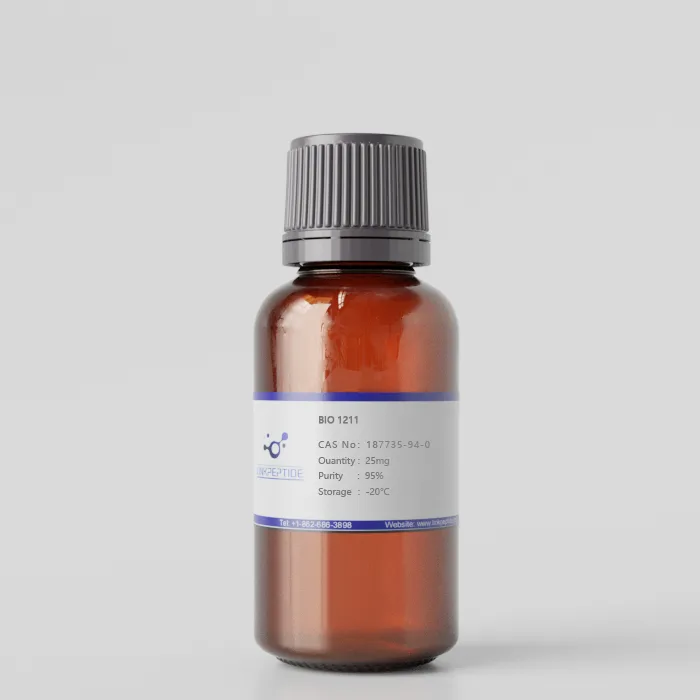
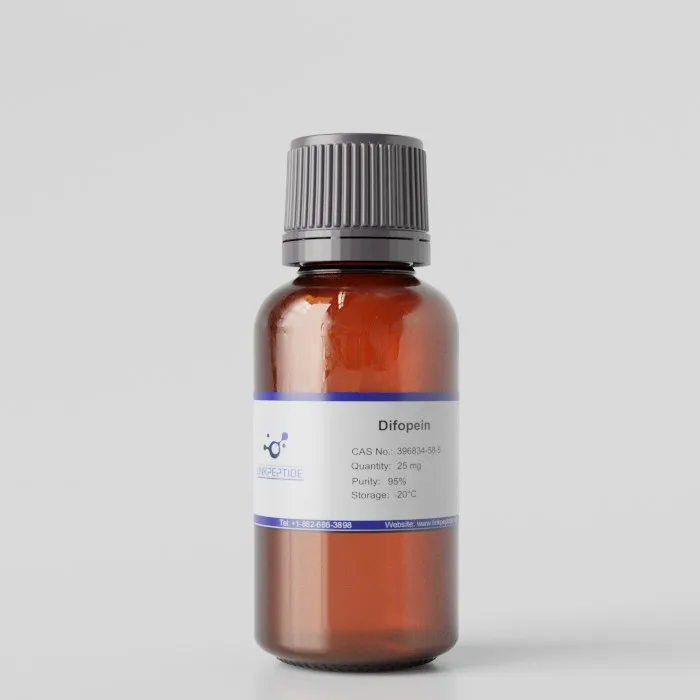
Product Name:BIO 1211
CAS No:187735-94-0
Purity:95%
Molar Mass:708.81
Chemical Formula:C36H48N6O9
Storage:Store at -20 degrees Celsius
Sequence:MPUPA-LDVP
Target:α4β1
Application:
BIO 1211 is a potent and selective antagonist of the α4β1 integrin (VLA-4), which plays a key role in the adhesion and migration of leukocytes. This compound is used primarily in research studies focused on autoimmune diseases, inflammation, and cancer, as VLA-4 is involved in immune cell trafficking and the pathophysiology of various immune-related disorders. By inhibiting VLA-4, BIO 1211 has been explored for its potential to block immune cell infiltration in conditions such as multiple sclerosis, rheumatoid arthritis, and inflammatory bowel disease. It is a valuable tool for investigating integrin-mediated signaling pathways and therapeutic strategies targeting immune cell migration.
Current Research:
BIO 1211 (CAS: 187735-94-0) is a highly potent and selective small-molecule inhibitor of integrin α4β1, also known as Very Late Antigen-4 (VLA-4). Integrin α4β1 is a critical mediator of leukocyte adhesion and migration, processes central to immune responses, inflammation, and autoimmune disease pathology. BIO 1211 demonstrates exceptional specificity, with an IC₅₀ of 4 nM for α4β1 and significantly weaker activity against α4β7 (IC₅₀: 2 μM) and other integrins, such as α5β1, α6β1, and αLβ2 (IC₅₀ > 100 μM).
In preclinical studies, BIO 1211 has shown promise in modulating immune responses by inhibiting leukocyte trafficking. It has been particularly effective in experimental autoimmune encephalomyelitis (EAE), a mouse model of multiple sclerosis. Oral administration of BIO 1211 led to a marked reduction in the expression of pro-inflammatory cytokines, including TNF-α, IL-17, and IFN-γ, and decreased infiltration of CD11b⁺ and CD45⁺ immune cells into the central nervous system. These effects highlight its therapeutic potential in treating neuroinflammatory and autoimmune conditions.
BIO 1211’s unique mechanism of action lies in its ability to disrupt α4β1-mediated interactions with vascular cell adhesion molecule-1 (VCAM-1) and fibronectin, effectively reducing leukocyte adhesion and migration. This mechanism positions BIO 1211 as a promising candidate for diseases driven by excessive immune cell trafficking, such as multiple sclerosis, inflammatory bowel disease, and certain types of cancer.
Its high selectivity and efficacy make BIO 1211 an invaluable tool in research, offering insights into the role of integrin α4β1 in disease mechanisms. Future clinical development may pave the way for targeted therapies that harness its immunomodulatory capabilities.
Reference:
Get a Quote
 LinkPeptide