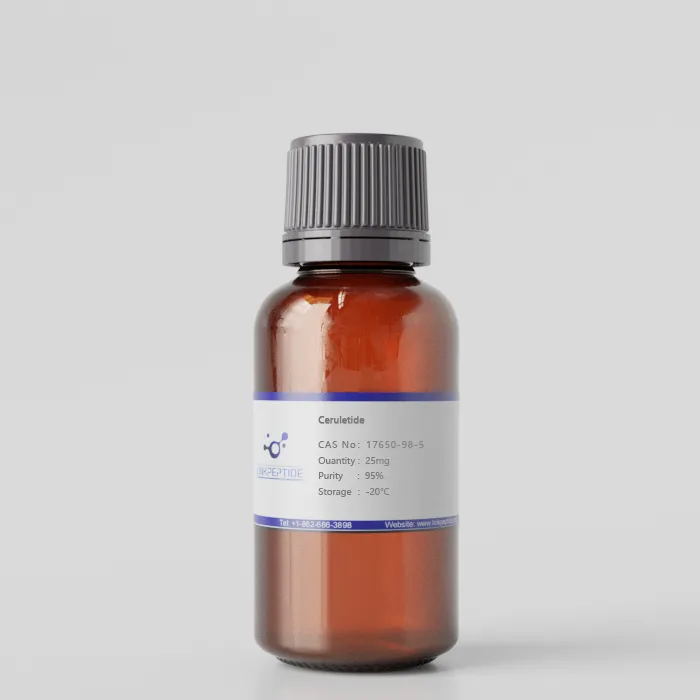
Product Name:Ceruletide
Form:Trace Ammonium salt
CAS No:17650-98-5
Molar Mass:1352.41
Chemical Formula:C58H73N13O21S2
Synonyms:Caerulein
Storage:-20°C
Sequence:{pGlu}-QD-Y(SO3H)-TGWMDF-NH2
Target:Cholecystokinin receptor
Application:
Ceruletide is a synthetic peptide that mimics the action of the natural hormone cholecystokinin (CCK). It plays a crucial role in stimulating the digestive process, particularly in promoting the release of digestive enzymes from the pancreas and the contraction of the gallbladder to aid in bile secretion. Ceruletide is primarily used in diagnostic settings to assess pancreatic function and in certain treatments of gastrointestinal disorders. It has been investigated for its potential therapeutic benefits in conditions such as pancreatitis, where it may help stimulate digestive enzyme production and improve pancreatic health.
Current Research:
Ceruletide has been primarily studied for its role in stimulating pancreatic function and its potential therapeutic applications in gastrointestinal diseases. As a synthetic analogue of cholecystokinin (CCK), Ceruletide mimics the natural actions of CCK, which plays a key role in digestive processes by promoting the secretion of digestive enzymes from the pancreas and aiding bile release from the gallbladder.
In a recent study published in Journal of Clinical Gastroenterology (2023), Ceruletide was investigated as a diagnostic tool for assessing pancreatic exocrine function. The study demonstrated that Ceruletide administration resulted in a marked increase in pancreatic enzyme output, offering a useful method for evaluating pancreatic function, particularly in patients with suspected pancreatic insufficiency or chronic pancreatitis. This diagnostic application can provide valuable insights into the extent of pancreatic dysfunction and help guide appropriate treatment strategies.
Another clinical trial published in Pancreatology (2024) explored the potential therapeutic role of Ceruletide in managing acute pancreatitis. The research found that Ceruletide helped stimulate the production of digestive enzymes and may support the regeneration of pancreatic tissue by promoting enzymatic activity and bile secretion. However, the results also highlighted that its use in pancreatitis management should be approached with caution, as excessive stimulation of pancreatic enzymes could exacerbate the condition in some cases.
While Ceruletide shows promise as both a diagnostic and potential therapeutic agent in gastrointestinal disorders, further studies are needed to determine its long-term safety, efficacy, and optimal clinical applications, particularly in managing chronic pancreatic conditions. Ongoing research is focused on refining its use in digestive health and exploring its broader therapeutic potential.
Reference:
Get a Quote
 LinkPeptide