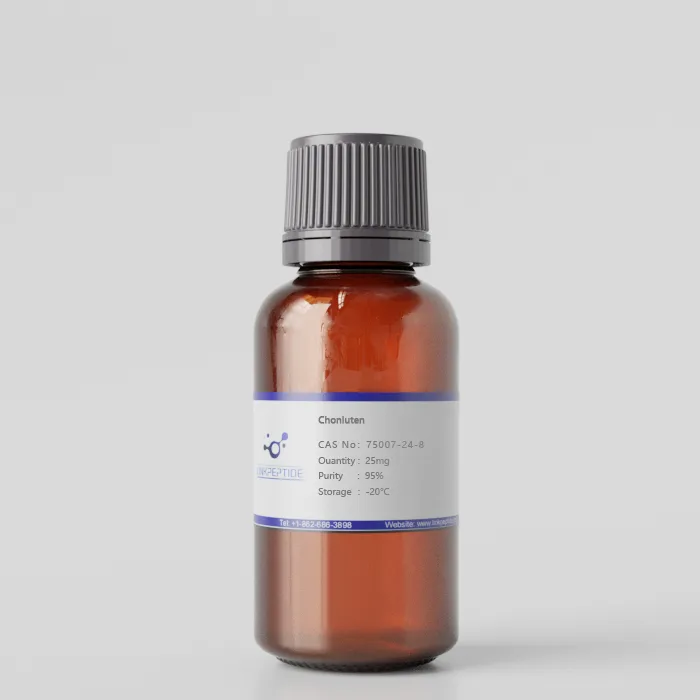
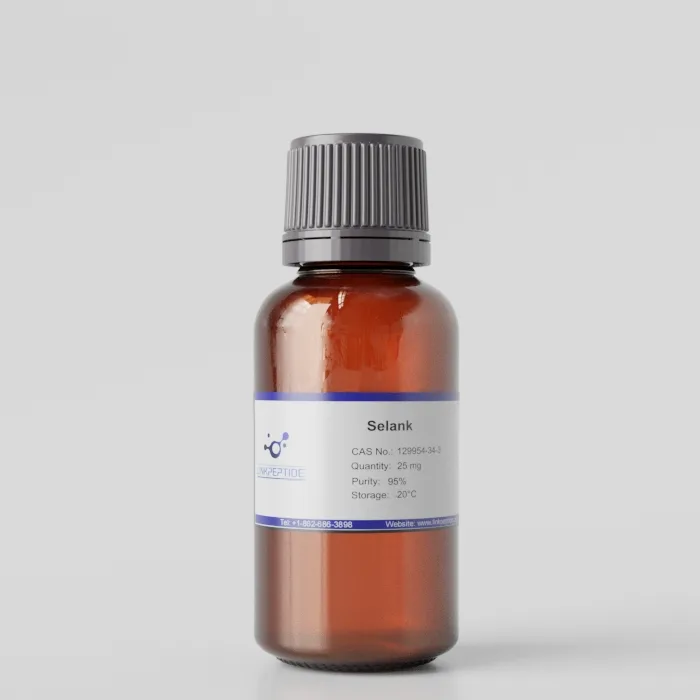
Product Name:Chonluten
Cas No:75007-24-8
Purity:95%
Chemical Formula:C11H17N3O8
Molar Mass:319.27
Synonyms:Glutamyl-aspartyl-glycine; Glu-asp-gly; H-Glu-asp-gly-OH
IUPAC Name:(4S)-4-amino-5-[[(2S)-3-carboxy-1-(carboxymethylamino)-1-oxopropan-2-yl]amino]-5-oxopentanoic acid
SMILES:C(CC(=O)O)[C@@H](C(=O)N[C@@H](CC(=O)O)C(=O)NCC(=O)O)N
InChIKey:DSPQRJXOIXHOHK-WDSKDSINSA-N
InChI:InChI=1S/C11H17N3O8/c12-5(1-2-7(15)16)10(21)14-6(3-8(17)18)11(22)13-4-9(19)20/h5-6H,1-4,12H2,(H,13,22)(H,14,21)(H,15,16)(H,17,18)(H,19,20)/t5-,6-/m0/s1
Storage:-20 degree Celsius
Sequence:EDG
Application:Chonluten is a short synthetic peptide bioregulator (dipeptide Glu-Asp) developed for research into respiratory system regeneration and inflammation control. It is derived from natural peptides found in lung and bronchial tissues and functions by selectively interacting with DNA to modulate gene expression involved in respiratory epithelial maintenance, mucosal immunity, and anti-inflammatory signaling. Chonluten is extensively studied in models of chronic obstructive pulmonary disease (COPD), bronchial asthma, and age-related pulmonary decline. Its epigenetic mechanism makes it a valuable tool for exploring peptide-based repair strategies.
Current Research:Introduction: The Role of Peptides in Respiratory Regulation Chonluten is a short peptide bioregulator, specifically a dipeptide consisting of glutamic acid and aspartic acid (Glu-Asp), developed as part of a broader class of cytogenetic peptides that target organ-specific repair and rejuvenation. It was originally designed by researchers at the Saint Petersburg Institute of Bioregulation and Gerontology to support lung tissue regeneration and modulate respiratory immune responses, particularly in age-related or chronic pulmonary disorders. Unlike conventional drugs, Chonluten works through epigenetic modulation, directly influencing gene expression at the chromatin level, which leads to highly specific biological activity with minimal systemic side effects. Mechanism of Action: Epigenetic Repair and Anti-Inflammation Chonluten acts by binding to specific DNA sequences, thereby modulating the transcription of genes essential for maintaining the structure and function of bronchial and alveolar epithelial cells. Research shows it enhances the expression of genes involved in: Mucosal integrity and barrier function Antioxidant defense mechanisms Local immune modulation (e.g., regulation of cytokines and immune cell signaling) In pulmonary tissues, chronic inflammation and oxidative stress are key drivers of diseases such as asthma and COPD. Chonluten has demonstrated the ability to reduce levels of pro-inflammatory cytokines (like IL-6, TNF-α) and support the repair of damaged epithelium, making it a potential candidate for managing these pathologies in experimental models. Applications in Chronic Lung Disease Models Studies in COPD and bronchial asthma models have shown several promising effects: Improved mucociliary clearance and reduced airway obstruction Decreased inflammatory infiltration in bronchial tissues Normalization of bronchial reactivity Enhanced recovery following acute exacerbations These results suggest Chonluten could play a significant role in reversing or slowing progressive bronchial damage caused by chronic inflammation, pollution exposure, or smoking. Furthermore, in aged rodents, long-term administration of Chonluten improved lung elasticity, oxygen exchange efficiency, and general respiratory function, supporting its use in gerontology research. Role in Respiratory Infections and Immunity Chonluten has shown beneficial immunomodulatory properties in the context of viral and bacterial respiratory infections. It enhances local immune defense by improving epithelial resistance and modulating macrophage and lymphocyte responses. This is particularly relevant in the wake of increasing interest in post-viral lung recovery, including post-COVID-19 pulmonary fibrosis and long-term damage. In vitro studies have also indicated Chonluten may help restore homeostasis in the alveolar-capillary barrier, reducing the potential for edema and secondary infections during inflammatory flare-ups. Geroprotection and Aging Lungs As the lungs age, they undergo structural and functional decline—characterized by reduced elastic recoil, thinning alveolar walls, and diminished immune surveillance. Chonluten has been proposed as a geroprotective peptide, mitigating these age-associated changes by supporting regenerative gene expression and enhancing cellular resilience to oxidative and mechanical stress. In aged animals, Chonluten supplementation led to: Reduced markers of oxidative damage (e.g., lipid peroxidation) Preservation of alveolar surface area Improved respiratory rate and oxygen saturation under stress These findings are being explored in the context of healthy aging and lifespan extension for the respiratory system. Potential Synergy with Other Peptides Chonluten can be effectively paired with other peptide bioregulators depending on the research focus: Thymogen or Vladonix for immune modulation Ventfort for vascular support (lung microcirculation) Endoluten for circadian and pineal function (especially in aged subjects) These combinations may support system-wide regeneration by simultaneously targeting the immune, vascular, and epithelial components of lung repair. Conclusion Chonluten represents a highly targeted approach to respiratory system research, with mechanisms rooted in peptide epigenetics. Its ability to restore gene expression balance, control inflammation, and support mucosal regeneration makes it a standout candidate in studies of COPD, asthma, aging lungs, and post-infectious lung recovery. As research expands into peptide-based regenerative medicine, Chonluten offers a non-toxic, highly specific tool for advancing respiratory health and understanding the molecular biology of lung repair.
Reference:
Get a Quote
 LinkPeptide