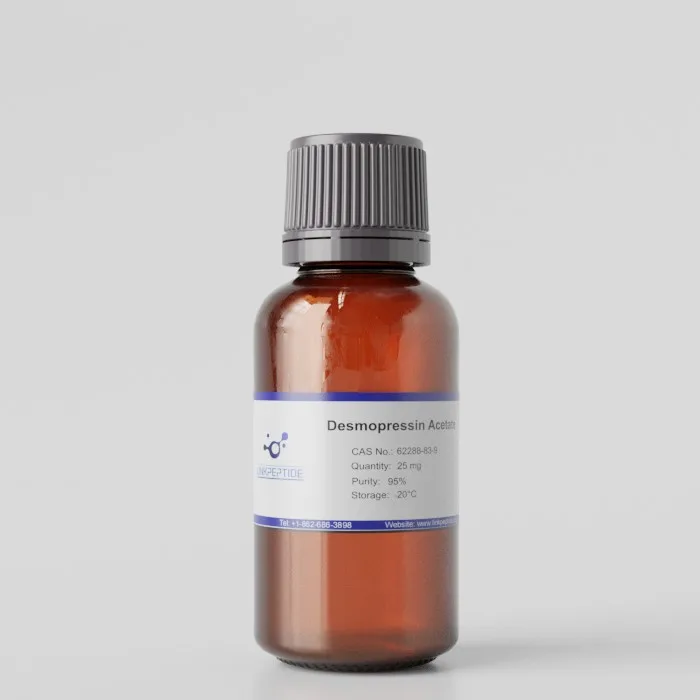
Product Name: Desmopressin Acetate
CAS No: 62288-83-9
Purity: 95%
Molar Mass: 1129.3
Chemical Formula: C46H64N14O12S2.C2H4O2
Synonyms: Emosint, Minirine
Storage: Store at -20 degrees Celsius
Sequence: XYFQNCPRG
Application:
Desmopressin Acetate is a synthetic analog of the natural hormone vasopressin, designed to selectively bind to V2 receptors in the kidneys. It promotes water reabsorption by increasing the permeability of renal collecting ducts, which concentrates urine and reduces urine output. This mechanism makes Desmopressin Acetate highly effective in treating conditions such as diabetes insipidus, nocturnal enuresis, and certain bleeding disorders like von Willebrand disease and mild hemophilia A. Its targeted action on renal receptors ensures minimal side effects, making it a preferred choice in managing fluid balance and associated disorders in clinical practice.
Current Research:
Desmopressin acetate, a synthetic analog of the natural hormone arginine vasopressin, has become an indispensable tool in the treatment of various disorders related to water balance and hemostasis. Engineered to have prolonged antidiuretic activity and reduced pressor effects, desmopressin is a selective agonist of the vasopressin V2 receptor, making it highly effective for specific therapeutic applications.
In clinical and research settings, desmopressin acetate is widely used in the management of central diabetes insipidus, a condition characterized by deficient vasopressin secretion. By enhancing water reabsorption in the renal collecting ducts, it helps restore fluid balance without the cardiovascular risks associated with native vasopressin. Additionally, desmopressin’s utility in nocturnal enuresis is well-documented, providing a safe and effective treatment for this common condition.
Desmopressin’s hemostatic properties have also gained prominence, particularly in patients with mild hemophilia A or von Willebrand disease. By stimulating the release of von Willebrand factor and factor VIII from endothelial cells, it improves clotting function, reducing the need for exogenous clotting factors in certain scenarios. This makes it a critical agent in preoperative or emergency management of bleeding disorders.
Research is extending desmopressin's utility into new areas, including its potential role in oncology. Emerging evidence suggests it may modulate tumor metastasis and angiogenesis through mechanisms involving platelet aggregation and endothelial cell interactions. These findings highlight its potential as an adjuvant therapy in cancer treatment.
Ongoing advancements aim to optimize desmopressin’s pharmacokinetics and delivery methods, including intranasal and sublingual formulations, to enhance patient compliance and efficacy.
For researchers in drug discovery, desmopressin acetate exemplifies the potential of peptide analogs in targeted therapies, offering a robust platform for innovation in treating endocrine, renal, and hemostatic disorders.
Reference:
Get a Quote
 LinkPeptide