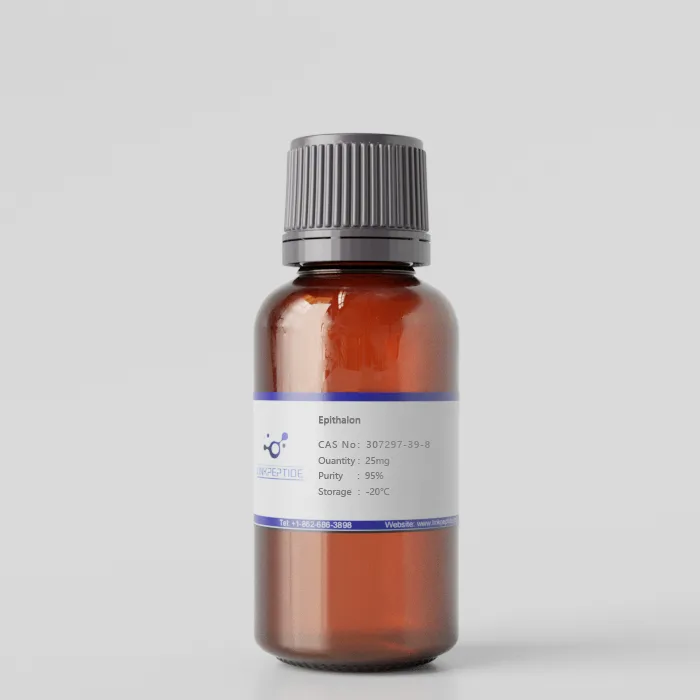
Product Name:Epithalon
Form:Acetate salt
Synonyms:BDM-E
CAS No:307297-39-8
Molar Mass:390.35
Chemical Formula:C14H22N4O9
Storage:Store at -20 degrees Celsius
Sequence:AEDG
Application:
Epithalon is a synthetic tetrapeptide with notable anti-aging and regenerative properties, composed of the amino acids Ala-Glu-Asp-Gly. It is derived from a naturally occurring peptide called Epithalamin, produced in the pineal gland. Epithalon is known for its ability to regulate the production of telomerase, an enzyme that extends the length of telomeres in DNA, thereby promoting cellular longevity and delaying the aging process. In addition to its potential anti-aging effects, Epithalon has been studied for its role in improving immune function, normalizing circadian rhythms, and enhancing overall physical health. Its applications extend to research in gerontology, oncology, and immunology, making Epithalon a promising candidate for further exploration in therapeutic interventions targeting age-related diseases and conditions.
Current Research:
Epithalon (also known as Epitalon or Epithalamin) is a synthetic tetrapeptide with the sequence Ala-Glu-Asp-Gly. It was first developed based on the natural peptide Epithalamin, which is produced by the pineal gland. Epithalon has garnered significant attention in biomedical research for its potential to modulate aging processes, regulate circadian rhythms, and influence cell proliferation and apoptosis.
Mechanism of Action
Epithalon acts by stimulating the activity of telomerase, an enzyme responsible for maintaining telomere length during DNA replication. By protecting telomeres from shortening, Epithalon has been shown to promote cellular longevity, a key factor in aging and age-associated diseases. Additionally, its ability to regulate melatonin production links it to circadian rhythm modulation, which plays a critical role in overall health and metabolic processes.
Research Applications
Aging Studies:
Epithalon has been extensively studied for its anti-aging properties. Research suggests that it may delay cellular senescence, improve immune function, and enhance overall longevity in model organisms.
Oncology Research:
Its ability to influence apoptosis and cell proliferation has made Epithalon a subject of interest in cancer research. Studies are investigating its potential as an adjunct therapy in controlling tumor growth and improving the efficacy of traditional treatments.
Neurodegenerative Disorders:
By modulating circadian rhythms and oxidative stress, Epithalon is being explored for its neuroprotective effects in conditions such as Alzheimer’s and Parkinson’s diseases.
Reproductive Health:
Epithalon has shown promise in regulating reproductive functions by influencing hormonal balance and improving ovarian function in aging models.
Conclusion
Epithalon represents a versatile research tool with applications spanning aging, oncology, and neuroprotection. Its ability to modulate telomerase activity and impact critical cellular processes makes it a compelling candidate for advancing therapeutic strategies and understanding aging biology.
Reference:
Get a Quote

 LinkPeptide