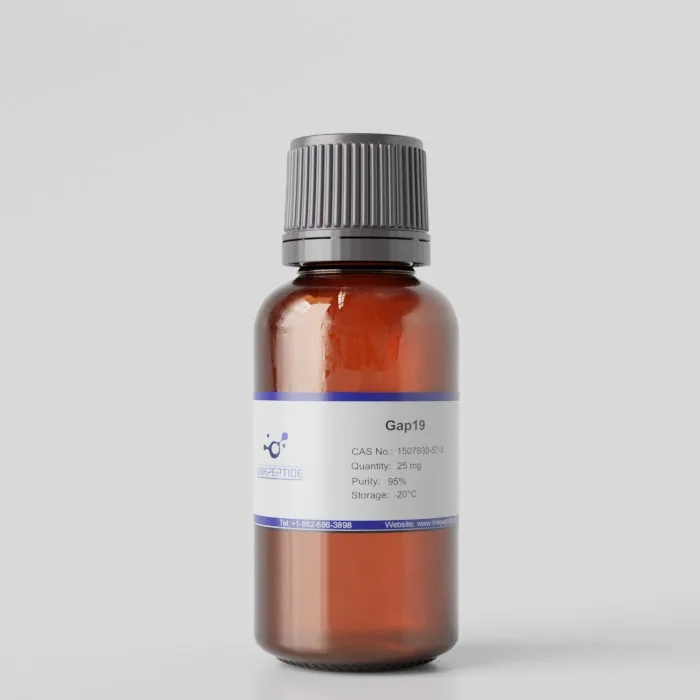
Product Name: Gap19
CAS No: 1507930-57-5
Purity: 95%
Molar Mass: 1161.4
Chemical Formula: C55H96N14O13
Storage: Store at -20 degree celsius
Sequence: KQIEIKKFK
Target: Cx43 Hemichannel
Application: Gap19 is a therapeutic peptide that targets connexin 43 (Cx43) hemichannels, inhibiting their activity without affecting gap junctions. By selectively blocking these hemichannels, Gap19 prevents the uncontrolled release of ATP and other signaling molecules, reducing inflammation and cellular damage. This peptide shows promise in treating conditions such as cardiac ischemia, neuroinflammation, and stroke by protecting tissues from injury and enhancing recovery. Its targeted mechanism of action makes it a valuable tool in cardiovascular and neurological research, offering potential therapeutic benefits while minimizing side effects associated with broader connexin inhibition.
Current Research:
Gap19 is a nonapeptide derived from the intracellular loop of connexin 43 (Cx43), specifically designed to selectively inhibit Cx43 hemichannels without affecting gap junction intercellular communication or other hemichannels such as Cx40 and pannexin-1. This specificity makes Gap19 a valuable tool in studying the distinct roles of Cx43 hemichannels in various physiological and pathological processes. Mechanism of Action Gap19 functions by preventing the interaction between the C-terminal (CT) and the cytoplasmic loop (CL) domains of Cx43, a molecular interaction crucial for hemichannel opening. By disrupting this intramolecular binding, Gap19 effectively inhibits the opening of Cx43 hemichannels, thereby modulating the flow of ions and small molecules across the cell membrane. Importantly, this inhibition does not interfere with the function of gap junction channels composed of Cx43, allowing for selective study of hemichannel activity. Applications in Research Neuroprotection: In models of cerebral ischemia/reperfusion injury, administration of Gap19 has been shown to reduce infarct size, neuronal damage, and neurological deficits. These neuroprotective effects are attributed to the inhibition of pathological hemichannel opening during ischemic events, which otherwise leads to detrimental cellular processes. Cardioprotection: Gap19 has demonstrated protective effects against myocardial ischemia/reperfusion injury. By inhibiting Cx43 hemichannels, Gap19 reduces mitochondrial potassium uptake and prevents cell death in cardiomyocytes, thereby preserving cardiac function following ischemic insults. Astrocyte Function: In primary astrocyte cultures, Gap19 effectively attenuates glutamate-triggered ATP release by inhibiting Cx43 hemichannels. This property is particularly useful in studying the role of astrocytic hemichannels in neuroglial interactions and their impact on neuronal activity and survival. Inflammatory Responses: Research indicates that Gap19 can modulate inflammatory processes by inhibiting hemichannel-mediated release of pro-inflammatory molecules. This has potential therapeutic implications in conditions characterized by excessive inflammation. Clinical Implications The selective inhibition of Cx43 hemichannels by Gap19 offers a promising therapeutic strategy for conditions where aberrant hemichannel activity contributes to disease pathology, such as stroke, cardiac ischemia, and certain neurodegenerative disorders. Ongoing research aims to further elucidate the therapeutic potential of Gap19 and its efficacy in clinical settings. Conclusion Gap19 serves as a potent and selective inhibitor of Cx43 hemichannels, providing researchers with a precise tool to dissect the roles of these channels in health and disease. Its application across various models has advanced our understanding of Cx43 hemichannel functions and opened new avenues for therapeutic intervention in diseases associated with their dysregulation.
Get a Quote
 LinkPeptide