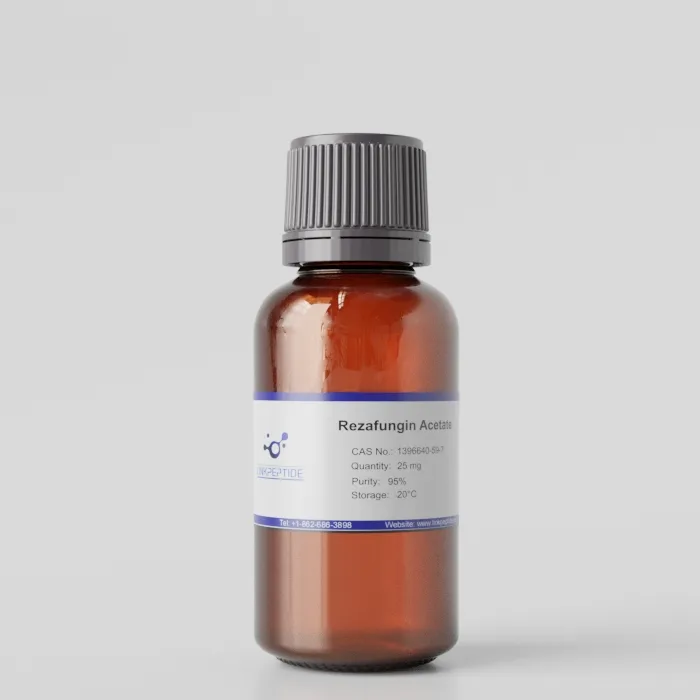
Product Name: Rezafungin Acetate
Form: Acetate salt
CAS No: 1396640-59-7
Molar Mass: 1285.44
Chemical Formula: C65H88N8O19
Synonyms: Biafungin
Storage: Store at -20℃
Target: antifungal
Application:
Rezafungin acetate (CAS: 1396640-59-7) is a novel echinocandin antifungal agent used in the treatment of invasive fungal infections, particularly those caused by Candida species. It functions by inhibiting the synthesis of β-(1,3)-D-glucan, an essential component of the fungal cell wall, leading to cell wall disruption and ultimately fungal cell death. Rezafungin exhibits broad-spectrum activity against Candida species, including fluconazole-resistant strains, as well as certain molds such as Aspergillus species. In pharmaceutical chemistry, rezafungin acetate's unique chemical structure and mechanism of action represent significant advancements in antifungal therapy, offering a potent and well-tolerated treatment option for serious fungal infections. Its application underscores its importance in infectious disease management and improving outcomes for patients at risk of invasive fungal diseases, particularly those with compromised immune systems. Ongoing research aims to further elucidate rezafungin's pharmacokinetics, efficacy, and safety profile, with the goal of expanding its clinical utility and addressing the growing challenge of antifungal resistance.
Current Research:
Rezafungin acetate is a novel, broad-spectrum echinocandin antifungal agent in development for the treatment of serious fungal infections, including candidiasis and aspergillosis. It is a second-generation echinocandin, a class of antifungals that inhibit the synthesis of beta-glucan, a crucial component of the fungal cell wall. Unlike other echinocandins, rezafungin acetate has a prolonged half-life, which allows for once-weekly dosing, making it a promising option for the treatment of invasive fungal infections, particularly in patients who are critically ill or immunocompromised. Rezafungin acetate is designed to overcome some of the limitations of existing antifungal treatments, such as the need for daily administration and susceptibility to drug resistance.
Mechanism of Action
Rezafungin acetate exerts its antifungal activity by inhibiting the enzyme 1,3-β-D-glucan synthase, which is responsible for the production of β-glucan, an essential component of the fungal cell wall. By blocking the synthesis of β-glucan, rezafungin causes structural damage to the cell wall, leading to cell lysis and death. This mechanism of action is effective against a broad spectrum of fungi, including Candida spp., Aspergillus spp., and other pathogenic molds. Rezafungin acetate's action is similar to other echinocandins but is distinguished by its enhanced pharmacokinetic profile, which allows for less frequent dosing and potentially improved efficacy in managing invasive fungal infections.
Indications and Uses
Rezafungin acetate is indicated for the treatment of serious invasive fungal infections, including candidemia, invasive candidiasis, and Aspergillus infections. It is primarily used in immunocompromised patients, such as those undergoing hematopoietic stem cell transplantation, chemotherapy, or those with advanced HIV infection, who are at heightened risk of developing life-threatening fungal infections. Rezafungin acetate is administered as an intravenous infusion and, due to its prolonged half-life, has been developed for once-weekly dosing, which could provide a more convenient option for long-term management of invasive fungal infections compared to daily treatments.
Efficacy and Clinical Benefits
Clinical studies of rezafungin acetate have demonstrated its efficacy in treating a range of invasive fungal infections. In a phase 2 clinical trial, patients with candidemia and invasive candidiasis showed significant improvement when treated with rezafungin acetate, with comparable outcomes to those receiving standard treatments such as fluconazole and micafungin. The drug’s once-weekly dosing regimen makes it particularly attractive for hospitalized patients who require long-term antifungal therapy, as it reduces the burden of daily infusions. Additionally, rezafungin acetate has shown potent activity against resistant strains of Candida, including those with resistance to azoles, which further expands its potential utility in treating difficult-to-manage infections.
Safety and Tolerability
Rezafungin acetate appears to have a favorable safety profile, with side effects generally being mild to moderate. The most common adverse effects include infusion-related reactions, such as fever, chills, and headache, which are typical for intravenous antifungal therapies. Some patients may also experience gastrointestinal issues, such as nausea or diarrhea, though these tend to resolve after treatment discontinuation. Rezafungin acetate is generally well tolerated, but like all antifungal therapies, it should be used with caution in patients with liver dysfunction due to potential hepatic metabolism. Additionally, because it is an intravenous agent, there is a risk of complications associated with the infusion process, such as thrombophlebitis or extravasation.
Advantages and Limitations
The primary advantage of rezafungin acetate is its once-weekly dosing regimen, which is particularly beneficial for patients requiring prolonged antifungal therapy, such as those with candidemia or invasive candidiasis. This dosing schedule may improve patient compliance and reduce the logistical burden of daily treatments. Furthermore, rezafungin acetate has a broad antifungal spectrum, making it an effective option against a wide range of fungal pathogens, including resistant strains. However, its use is currently limited to intravenous administration, which may not be suitable for all patients, especially those who are outpatient or have difficulty accessing intravenous treatment. Its potential for long-term safety and efficacy remains under further investigation, with additional clinical trials needed to confirm its role in the management of invasive fungal infections across diverse patient populations.
Future Directions
Research into rezafungin acetate is ongoing, with studies evaluating its use in various clinical settings and against different fungal pathogens. Future studies may focus on optimizing dosing regimens, exploring its potential in combination with other antifungal agents, and assessing its use in outpatient settings for easier patient management. Further trials will also provide more data on its long-term safety, particularly regarding liver function and infusion site reactions. Rezafungin acetate’s broad-spectrum activity and potential for once-weekly administration make it an attractive candidate for inclusion in treatment guidelines for invasive fungal infections, especially in the context of growing concerns about antifungal resistance.
Reference:
Get a Quote
 LinkPeptide