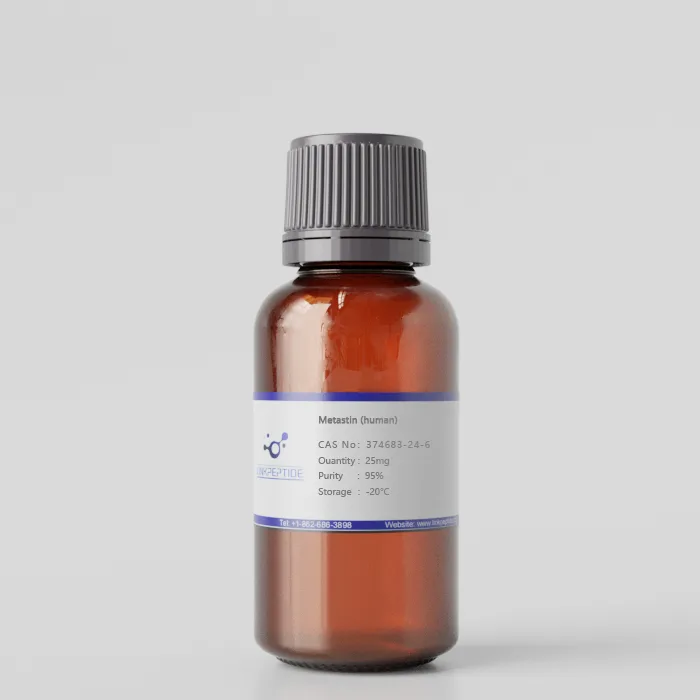
Product Name:Metastin (human)
CAS No:374683-24-6
Purity:95%
Molar Mass:5857
Chemical Formula:C258H401N79O78
Storage:Store at -20 degrees Celsius
Sequence:GXSLSPPPESSGSRQQPGLSAPHSRQXPAPQGAVLVQREKDLPNYNWNSFGLRF
Application:
Metastin (human), also known as Kisspeptin-54, is a peptide hormone that plays a critical role in regulating the reproductive system by stimulating the release of gonadotropin-releasing hormone (GnRH). This, in turn, influences the secretion of luteinizing hormone (LH) and follicle-stimulating hormone (FSH), which are essential for reproductive function. Metastin is derived from the KISS1 gene and has also been implicated in inhibiting metastasis in certain cancers, which is how it earned its name. Due to its involvement in both reproductive and cancer biology, Metastin (human) is a key focus in research related to fertility treatments, puberty disorders, and cancer therapy.
Current Research:
Metastin, also known as Kisspeptin-54, is a 54-amino acid peptide derived from the KISS1 gene. It is the precursor of shorter kisspeptins, including Kisspeptin-10, -13, and -14, which retain biological activity. Metastin binds to the G protein-coupled receptor GPR54 (KISS1R), exerting significant effects on cancer metastasis, reproduction, and endocrine regulation. Mechanism of Action Receptor Binding: Metastin is a high-affinity ligand for GPR54. Binding activates intracellular signaling pathways, including phospholipase C (PLC), inositol trisphosphate (IP3), and protein kinase C (PKC). These pathways lead to calcium mobilization and downstream gene expression. Anti-Metastatic Effects: Metastin inhibits cancer cell migration and invasion by downregulating matrix metalloproteinases (MMPs) and altering cytoskeletal organization, thereby suppressing metastasis. Reproductive Function: In the hypothalamus, metastin stimulates gonadotropin-releasing hormone (GnRH) secretion, regulating the hypothalamic-pituitary-gonadal (HPG) axis. This makes it crucial for puberty initiation and fertility. Physiological and Research Applications Cancer Research: Metastin's ability to suppress metastasis in cancers such as melanoma, breast, and prostate makes it a valuable tool in oncology research. Studies focus on its role in inhibiting tumor growth and its potential as a therapeutic agent for metastatic cancers. Reproductive Biology: It is pivotal in understanding puberty onset and reproductive disorders, including hypogonadotropic hypogonadism. Used in research on fertility treatments, as its stimulation of GnRH can restore reproductive function. Endocrinology: Metastin is involved in studying hormonal regulation and the feedback mechanisms of the HPG axis. Its effects on gonadotropin release are explored in conditions like polycystic ovary syndrome (PCOS) and delayed puberty. Neurobiology: Research investigates its neuromodulatory roles in stress, appetite, and energy balance. Handling and Storage Form: Typically provided as a lyophilized powder. Storage: Store at -20 degrees Celsius in a desiccated environment to maintain stability. Reconstitution: Reconstitute in sterile water or appropriate buffer for experimental use. Conclusion Human metastin is a multifunctional peptide with critical roles in cancer suppression and reproductive regulation. Its utility in research spans oncology, endocrinology, and neurobiology, contributing to advances in understanding metastasis, hormonal control, and potential therapeutic applications.
Reference:
Get a Quote

 LinkPeptide