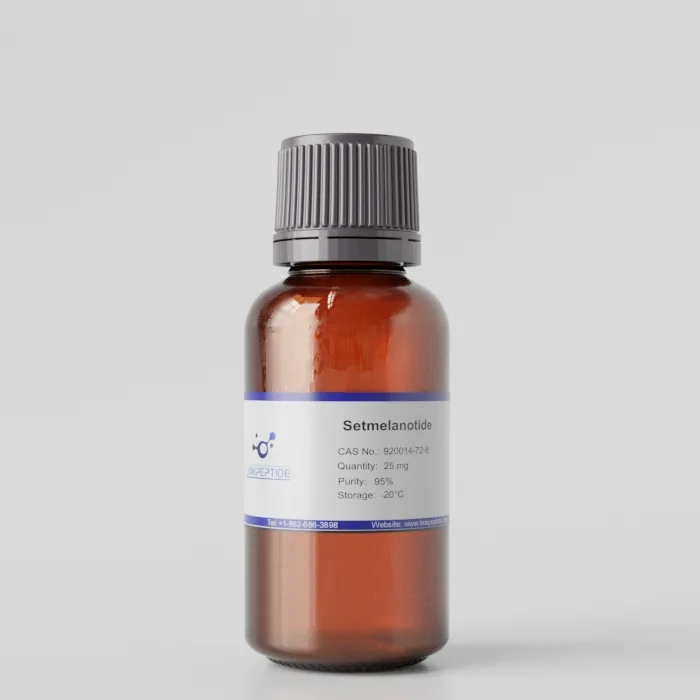
Product Name: Setmelanotide
Form: TFA salt
CAS No: 920014-72-8
Molar Mass: 1117.31
Chemical Formula: C49H68N18O9S2
Synonyms: Imcivree, RM 493, Setmelanotide
Storage: Store at -20℃
Sequence: RCAHFRWC
Target: MC4RA
Application:
Setmelanotide (CAS: 920014-72-8) emerges as a groundbreaking pharmaceutical compound with remarkable implications for the treatment of obesity-related disorders. As a melanocortin-4 receptor (MC4R) agonist, setmelanotide targets the central nervous system to regulate appetite and energy balance. By activating MC4R, it induces satiety and reduces food intake, making it a promising therapeutic option for individuals with rare genetic disorders associated with severe obesity. Setmelanotide's precision in addressing the genetic basis of obesity sets it apart, offering a targeted approach to a challenging health concern. This innovative compound showcases the potential of personalized medicine in combating obesity and related metabolic conditions, opening new avenues for tailored interventions and improved patient outcomes in the field of pharmaceuticals.
Current Research:
Setmelanotide is a melanocortin-4 receptor (MC4R) agonist developed for the treatment of rare genetic disorders that lead to obesity and related metabolic issues. Specifically, it is approved for the treatment of obesity caused by certain genetic conditions, including pro-opiomelanocortin (POMC) deficiency, leptin receptor (LEPR) deficiency, and Bardet-Biedl syndrome (BBS). These conditions involve disruptions in the melanocortin pathway, which regulates appetite and energy balance. Setmelanotide works by targeting the MC4R, a critical receptor involved in regulating hunger, energy expenditure, and fat storage.
Mechanism of Action
Setmelanotide binds to and activates the MC4R, a G-protein coupled receptor found in the hypothalamus, which is involved in regulating energy homeostasis. By activating the MC4R pathway, setmelanotide helps to restore the normal regulation of appetite and energy balance that is disrupted in patients with MC4R-related disorders. This leads to a reduction in hunger and an increase in energy expenditure, which helps to promote weight loss and mitigate the extreme obesity typically associated with these rare genetic conditions. The drug’s action on the melanocortin pathway is specifically targeted to correct the dysfunction caused by genetic mutations that impair this pathway.
Indications and Uses
Setmelanotide is primarily indicated for the treatment of patients with rare genetic syndromes associated with severe obesity. These conditions, such as POMC deficiency, LEPR deficiency, and BBS, are characterized by dysfunctions in the melanocortin pathway, leading to an inability to regulate hunger and energy metabolism properly. Setmelanotide has shown significant efficacy in reducing hunger and promoting weight loss in these patients, offering a new therapeutic option where few alternatives exist. By addressing the underlying genetic causes of obesity, setmelanotide provides a targeted approach to treating these otherwise difficult-to-manage conditions.
Weight Loss and Metabolic Improvement
The most significant effect of setmelanotide is its ability to promote weight loss in individuals with obesity due to melanocortin pathway defects. Clinical studies have demonstrated that setmelanotide can lead to a significant reduction in body weight and improvement in metabolic markers, such as insulin sensitivity. By reducing appetite and increasing energy expenditure, setmelanotide helps patients achieve a healthier weight, which can alleviate associated metabolic comorbidities like insulin resistance, diabetes, and cardiovascular issues. This weight loss is particularly important given the extreme obesity seen in these rare genetic conditions, which often leads to severe health complications.
Safety and Tolerability
Setmelanotide is generally well tolerated, though, like all medications, it carries some potential side effects. The most common side effects reported in clinical trials are related to changes in pigmentation, as melanocortin receptors are involved in skin and hair color regulation. Some patients may experience increased skin pigmentation, which is a known effect of MC4R activation. Other side effects may include injection site reactions, headaches, and gastrointestinal issues, though these are typically mild and transient. It is important to monitor for any signs of cardiovascular changes, as the drug’s effects on the melanocortin pathway can impact heart rate and blood pressure, particularly in those with preexisting heart conditions.
Future Applications
Beyond its current indications, setmelanotide is being studied for potential use in other disorders related to appetite regulation and metabolic disease. Researchers are exploring its potential in treating other forms of obesity, particularly those that involve dysfunctions in the melanocortin pathway that may not yet be fully characterized. Its ability to regulate hunger and energy balance could make it a promising candidate for broader obesity treatment, especially in patients who have not responded well to traditional therapies. Additionally, setmelanotide’s potential for improving metabolic health could extend to conditions like diabetes, though more research is needed in these areas.
Reference: Hussain, A., & Farzam, K. (2023). Setmelanotide. In StatPearls [Internet]. StatPearls Publishing.
Get a Quote



 LinkPeptide