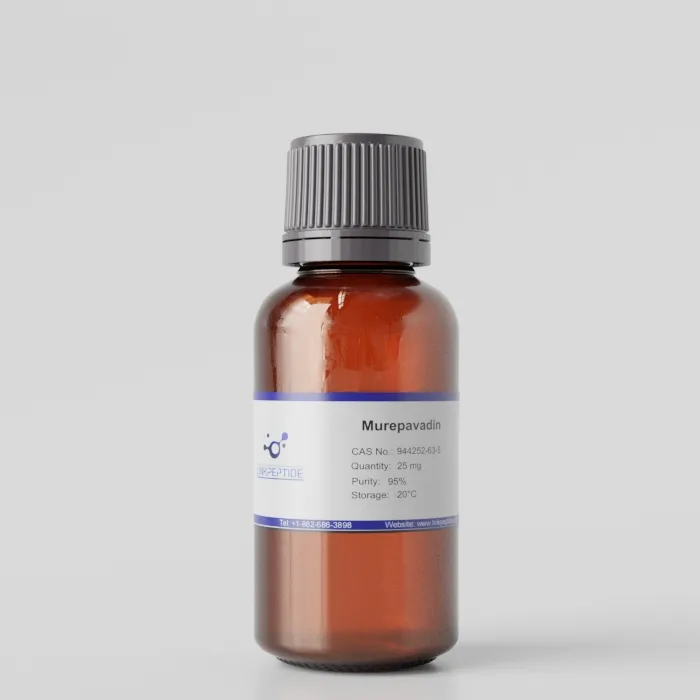
Product Name: Murepavadin
Form: TFA salt
CAS No: 944252-63-5
Molar Mass: 1553.81
Chemical Formula: C73H112N22O16
Synonyms: POL7080, RO7033877
Storage: Store at -20℃
Sequence: Cyclo(AS-{d-Pro}-PTWI-{Dab}-{Orn}-{d-Dab}-{Dab}-W-{Dab}-{Dab})
Target: antibiotic
Application:
Murepavadin (CAS: 944252-63-5) is a novel synthetic antibiotic that belongs to the class of outer membrane protein-targeting antibiotics known as polymyxins. It specifically targets and disrupts the outer membrane of Gram-negative bacteria, leading to cell death. Murepavadin exhibits potent activity against multidrug-resistant strains of Pseudomonas aeruginosa, including those that are resistant to commonly used antibiotics such as carbapenems. Due to its mechanism of action and specificity, murepavadin has the potential to address the growing threat of antibiotic resistance, particularly in hospital-acquired infections caused by Pseudomonas aeruginosa. Clinical trials have demonstrated the efficacy and safety of murepavadin in the treatment of ventilator-associated pneumonia and other infections caused by Pseudomonas aeruginosa. However, further research is needed to optimize dosing regimens, evaluate its efficacy in different patient populations, and assess the risk of resistance development. Murepavadin represents a promising addition to the antibiotic armamentarium, offering a new treatment option for serious infections caused by multidrug-resistant Gram-negative bacteria.
Current Research:
Murepavadin is a novel antimicrobial peptide that specifically targets Pseudomonas aeruginosa, a highly virulent Gram-negative bacterium responsible for a variety of hospital-acquired infections and chronic diseases, including cystic fibrosis, pneumonia, and diabetic foot infections. This peptide is distinctive in its ability to selectively disrupt bacterial cell wall synthesis without affecting human cells, making it a promising option for the treatment of resistant infections.
Mechanism of Action
Murepavadin acts by targeting a key component of the bacterial cell wall, specifically the lipopolysaccharide (LPS) and the outer membrane protein complex of Pseudomonas aeruginosa. The peptide binds to a unique component of the lipid A portion of the LPS, which is a crucial structural element in the bacterial outer membrane. By interacting with this component, murepavadin causes disruption of the outer membrane integrity, leading to membrane destabilization and eventually cell death.
What sets murepavadin apart from other antibiotics is its high specificity for Pseudomonas aeruginosa. Unlike broad-spectrum antibiotics that affect a wide range of bacteria, murepavadin selectively targets this pathogen, minimizing the risk of disrupting the beneficial microbiota or promoting antibiotic resistance in other bacterial species.
Clinical Applications
Murepavadin has been primarily developed to address infections caused by Pseudomonas aeruginosa, a pathogen notorious for its multidrug resistance. It is being investigated for the treatment of chronic lung infections, particularly in patients with cystic fibrosis, where Pseudomonas aeruginosa frequently forms biofilms in the airways, making it resistant to many conventional antibiotics.
In addition to lung infections, murepavadin is being explored for its potential in treating diabetic foot infections, wound infections, burns, and hospital-acquired pneumonia. These types of infections are often difficult to manage due to the bacteria's ability to form biofilms and evade the action of traditional antibiotics.
Murepavadin is currently being developed as both an intravenous (IV) and inhaled treatment option, depending on the type of infection and the affected organ. Inhalation therapy could be particularly useful for treating pulmonary infections in cystic fibrosis patients, allowing for direct delivery to the lungs.
Advantages Over Traditional Antibiotics
Selective Targeting of Pseudomonas aeruginosa: Murepavadin’s selective action against Pseudomonas aeruginosa makes it an attractive option for targeting infections caused by this pathogen, especially in cases where the bacteria are resistant to multiple antibiotics. Traditional broad-spectrum antibiotics may affect other microbiota or lead to further resistance in non-targeted organisms.
Low Risk of Cross-Resistance: The mechanism of action of murepavadin is unique compared to conventional antibiotics, which target bacterial enzymes or proteins. Because murepavadin targets the lipid A component of the bacterial outer membrane, there is a lower likelihood of cross-resistance between Pseudomonas aeruginosa and other bacteria. This is a significant advantage in the era of rising antibiotic resistance.
Biofilm Disruption: Pseudomonas aeruginosa is well known for forming biofilms, which make infections particularly difficult to treat. Murepavadin has demonstrated efficacy in disrupting biofilms, which helps to enhance the penetration of the peptide into infected tissues and improve treatment outcomes.
Targeted Therapy: Because murepavadin specifically targets Pseudomonas aeruginosa, it reduces the risk of disrupting the normal flora in the body, which is a common issue with broad-spectrum antibiotics. This specificity also minimizes the risk of side effects associated with the use of traditional antibiotics.
Potential for Combination Therapy: Murepavadin may be used in combination with other antibiotics or antimicrobial agents to treat mixed infections or multidrug-resistant (MDR) strains of Pseudomonas aeruginosa. The ability to combine murepavadin with other agents could further improve its clinical efficacy.
Clinical Trials and Efficacy
Murepavadin has undergone several clinical trials evaluating its safety and efficacy in treating Pseudomonas aeruginosa-related infections. A Phase 2 study demonstrated that murepavadin significantly reduced bacterial load in patients with Pseudomonas aeruginosa infections, including those with diabetic foot ulcers and chronic respiratory infections. In these trials, murepavadin showed promising results in terms of clinical outcomes and safety, with no major adverse effects reported in patients receiving treatment.
In addition to its efficacy in treating infections, murepavadin’s ability to disrupt biofilm formation is a critical feature, particularly in infections that are difficult to treat with traditional antibiotics. This ability has been confirmed in preclinical studies, which showed that murepavadin could effectively penetrate biofilms formed by Pseudomonas aeruginosa, leading to significant reductions in bacterial viability.
Safety and Tolerability
Murepavadin has been well-tolerated in early-stage clinical trials, with mild to moderate side effects being the most common. These included local reactions at the site of intravenous injection and mild gastrointestinal discomfort. There have been no significant signs of systemic toxicity or organ damage, which is a promising sign for its continued development as a treatment for serious infections.
Its low risk of side effects and targeted action make murepavadin a promising option for treating infections in vulnerable patient populations, such as those with cystic fibrosis, diabetes, and immunocompromised conditions.
Future Directions
The future of murepavadin lies in expanding its clinical indications and improving its delivery mechanisms. Research is ongoing into the use of murepavadin as an inhaled treatment for pulmonary infections in cystic fibrosis patients. Additionally, further studies will investigate its potential for combination therapy with other antimicrobial agents to treat mixed infections or resistant strains of Pseudomonas aeruginosa.
There is also interest in developing oral formulations of murepavadin for the treatment of systemic infections and exploring its use in preventative treatments, particularly in hospital settings where Pseudomonas aeruginosa is a common cause of nosocomial infections.
Conclusion
Murepavadin is a promising new antimicrobial agent specifically designed to target Pseudomonas aeruginosa, one of the most problematic pathogens in healthcare settings. Its unique mechanism of action, ability to disrupt biofilms, and low likelihood of cross-resistance make it an attractive alternative to traditional antibiotics, especially for infections that are difficult to treat with existing therapies. With ongoing clinical trials and further exploration of its potential applications, murepavadin may become an essential tool in the fight against multidrug-resistant infections.
Reference:
Get a Quote
 LinkPeptide