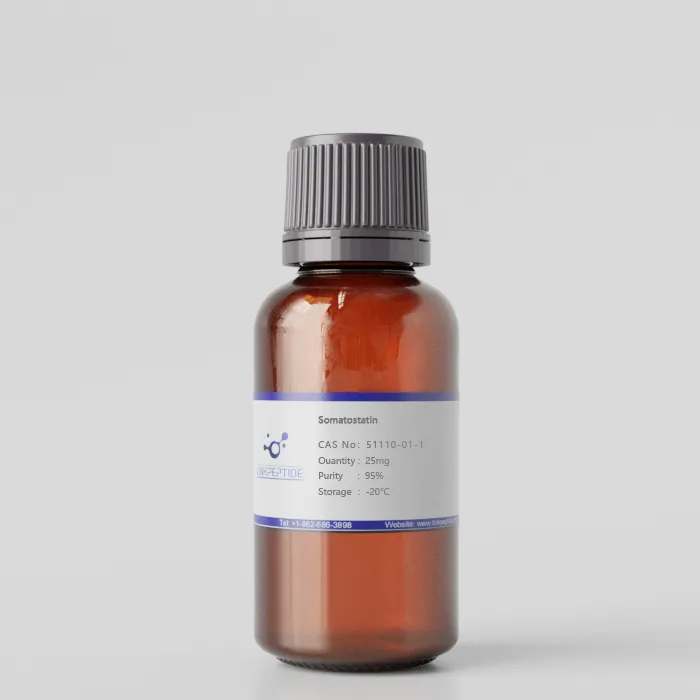
Product Name:Somatostatin
CAS No:51110-01-1
Purity:95%
Molar Mass:1637.9
Chemical Formula:C76H104N18O19S2
Storage:Store at -20 degrees Celsius
Sequence:AGCKNFFWKXFXSC
Application:
Somatostatin is a peptide hormone that plays a vital role in the regulation of the endocrine system and neurotransmission. It is produced in several tissues, including the hypothalamus, pancreas, and gastrointestinal tract. Somatostatin functions by inhibiting the release of various other hormones, such as growth hormone, insulin, and glucagon, making it a crucial regulator of hormone balance in the body. It also slows down gastrointestinal motility and reduces the secretion of digestive enzymes and gastric acid. Due to its wide range of effects, somatostatin is of significant interest in medical research, particularly in the treatment of hormone-secreting tumors, acromegaly, and certain gastrointestinal disorders. Synthetic analogs of somatostatin, like octreotide, are commonly used in clinical settings to manage these conditions.
Current Research:
Somatostatin, also known as growth hormone-inhibiting hormone (GHIH), is a 14- or 28-amino acid cyclic peptide hormone widely distributed in the central nervous system (CNS) and peripheral tissues. It is synthesized by neuroendocrine cells and acts as a key regulator of endocrine and exocrine functions.
Mechanism of Action
Somatostatin exerts its effects by binding to five specific G protein-coupled somatostatin receptor subtypes (SSTR1-5). Upon receptor activation, somatostatin inhibits adenylyl cyclase activity, reducing intracellular cyclic AMP (cAMP) levels, and modulates calcium and potassium ion channels. These actions result in the suppression of hormone secretion and cellular activity in target tissues.
Physiological Roles
Inhibition of Hormone Secretion:
Somatostatin inhibits the release of several hormones, including growth hormone (GH), insulin, glucagon, thyroid-stimulating hormone (TSH), and gastrin. This regulation is critical for maintaining homeostasis in metabolic and digestive processes.
Regulation of Digestive Function:
In the gastrointestinal tract, somatostatin reduces gastric acid secretion, pancreatic enzyme release, and intestinal motility. It also decreases nutrient absorption by slowing the release of digestive enzymes and bile.
Neurological Modulation:
In the CNS, somatostatin acts as a neurotransmitter and neuromodulator, influencing synaptic transmission, neuroprotection, and cognitive processes.
Research Applications
Somatostatin is widely studied for its role in various physiological and pathological states:
Endocrine Disorders: Somatostatin analogs are used to treat acromegaly and neuroendocrine tumors, as well as to manage symptoms like hormone hypersecretion.
Cancer Research: Its antiproliferative effects on tumor cells, particularly in neuroendocrine and gastrointestinal cancers, make it a target for therapeutic interventions.
Neurological Studies: Somatostatin's involvement in cognitive and neurodegenerative diseases, such as Alzheimer's disease, has led to research exploring its potential as a therapeutic target.
Conclusion
Somatostatin plays a critical role in regulating endocrine and nervous system functions. Its extensive physiological relevance and therapeutic potential make it a focal point in biomedical research and drug development.
Reference:
Get a Quote



 LinkPeptide