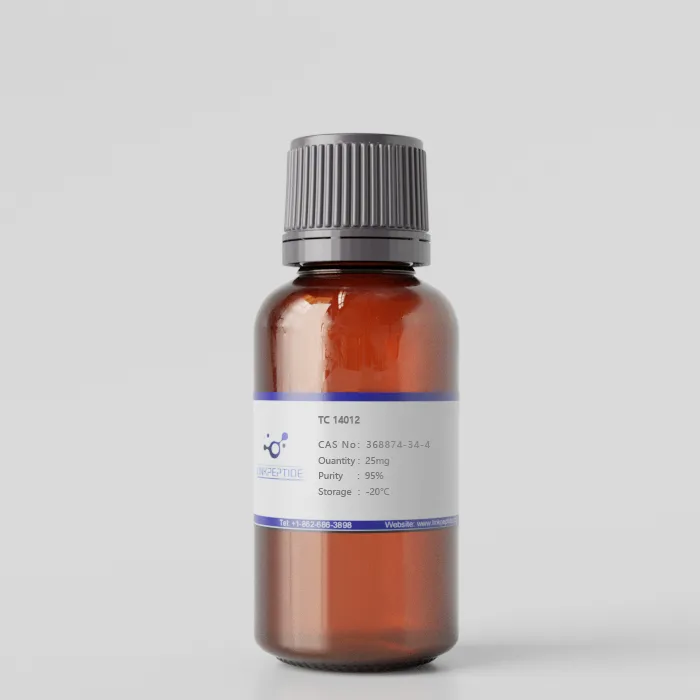
Product Name:TC 14012
CAS No:368874-34-4
Purity:95%
Molar Mass:2066.43
Chemical Formula:C90H140N34O19S2
Storage:Store at -20 degrees Celsius
Sequence:RRACYXKXPYRXCR
Target:CXCR4
Application:
TC 14012 is a potent and selective agonist of the CXCR4 receptor, which is a chemokine receptor involved in various biological processes, including immune cell trafficking, cancer metastasis, and HIV infection. CXCR4 plays a critical role in the interaction between stromal cell-derived factor-1 (SDF-1/CXCL12) and immune cells, as well as in the homing of hematopoietic stem cells. TC 14012 is commonly used in research to explore CXCR4-mediated signaling pathways and its role in diseases such as cancer, HIV, and autoimmune disorders. By modulating CXCR4 activity, TC 14012 helps advance the understanding of therapeutic interventions targeting this receptor.
Current Research:
TC 14012 (CAS: 368874-34-4) is a synthetic peptidomimetic compound recognized for its dual functionality as a CXCR4 antagonist and CXCR7 (ACKR3) agonist. Its unique properties have made it a valuable tool in biomedical research, particularly in studies related to cancer metastasis, HIV infection, and immune cell trafficking.
Pharmacological Profile
CXCR4 Antagonism: TC 14012 exhibits high affinity for the CXCR4 receptor, acting as an antagonist with an IC?? of approximately 19.3 nM. By inhibiting CXCR4, it effectively blocks the receptor's interaction with its natural ligand, CXCL12 (SDF-1), thereby modulating processes such as cell migration and HIV entry into host cells.
CXCR7 Agonism: In addition to its antagonistic effects on CXCR4, TC 14012 functions as an agonist for CXCR7, with an EC?? of about 350 nM. Activation of CXCR7 leads to the recruitment of ??-arrestin and subsequent intracellular signaling cascades, influencing cell adhesion, migration, and survival.
Biological Implications
Anti-HIV Activity: By antagonizing CXCR4, TC 14012 impedes the entry of HIV strains that utilize this receptor for cell infection. This mechanism positions TC 14012 as a potential candidate for antiretroviral strategies targeting CXCR4-tropic HIV variants.
Anti-Cancer Potential: The CXCR4/CXCL12 axis is critically involved in tumor cell metastasis and the tumor microenvironment. TC 14012's ability to disrupt this signaling pathway suggests its utility in inhibiting cancer cell migration and metastasis, offering a promising avenue for therapeutic development.
Research Applications
TC 14012 serves as a potent tool in the exploration of chemokine receptor biology. Its dual activity allows researchers to dissect the distinct and overlapping roles of CXCR4 and CXCR7 in various physiological and pathological contexts, including immune cell trafficking, development, and disease progression.
Conclusion
The dual functionality of TC 14012 as a CXCR4 antagonist and CXCR7 agonist, coupled with its high specificity and potency, underscores its significance in biomedical research. Its applications span from elucidating fundamental biological processes to the development of novel therapeutic strategies for diseases such as HIV and cancer.
Reference:
Get a Quote
 LinkPeptide