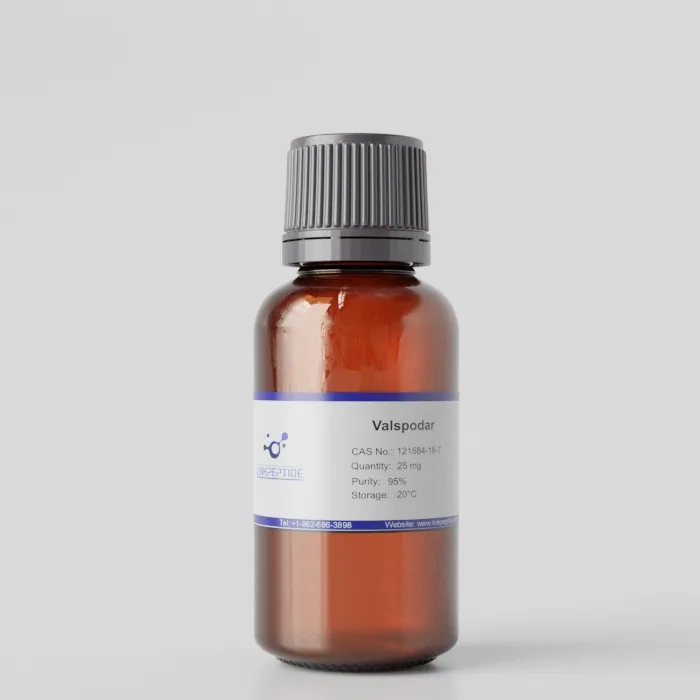
Product Name: Valspodar
Form: Free base
CAS No: 121584-18-7
Molar Mass: 1214.62
Chemical Formula: C63H111N11O12
Synonyms: Amdray, Psc 833
Storage: Store at -20℃
Target: P-glycoprotein
Application:
Valspodar (CAS: 121584-18-7) is a potent inhibitor of P-glycoprotein (P-gp), a membrane transporter protein that plays a crucial role in multidrug resistance (MDR) in cancer cells. By inhibiting P-gp, valspodar can enhance the intracellular accumulation of various chemotherapy drugs, such as doxorubicin and paclitaxel, thereby overcoming MDR and increasing the effectiveness of cancer treatment. Valspodar has been investigated in combination with chemotherapy in clinical trials for various types of cancer, including leukemia, breast cancer, and lung cancer. While initial studies showed promise in overcoming MDR and improving treatment outcomes, further research is needed to optimize dosing regimens and minimize potential side effects associated with valspodar, such as drug interactions and toxicity. Despite challenges, valspodar represents a valuable approach to addressing MDR in cancer therapy and continues to be of interest in oncology research.
Current Research:
Valspodar, also known as PSC 833, is a P-glycoprotein (P-gp) inhibitor that has been primarily investigated as an adjunctive treatment in cancer chemotherapy. P-glycoprotein is a membrane-bound efflux pump responsible for the multidrug resistance (MDR) phenomenon observed in many cancers. This protein actively transports a variety of chemotherapeutic agents out of cancer cells, reducing their intracellular concentration and effectiveness. By inhibiting P-gp, valspodar seeks to overcome MDR and enhance the efficacy of chemotherapy agents in resistant cancer cells.
Mechanism of Action
P-glycoprotein (encoded by the ABCB1 gene) is a membrane transporter protein found in various tissues, including the intestines, liver, kidneys, and blood-brain barrier. In cancer cells, it functions as a major mechanism of drug resistance by pumping chemotherapeutic agents out of the cell, limiting their therapeutic effects. This is particularly problematic in cancers that are treated with multidrug regimens, where resistance to one or more drugs can result in treatment failure.
Valspodar works by inhibiting the activity of P-glycoprotein, allowing chemotherapeutic drugs to accumulate inside the cancer cells at higher concentrations. This potentiation of chemotherapy efficacy can potentially reverse multidrug resistance, making tumors more sensitive to treatments that were previously ineffective.
Valspodar’s inhibition of P-glycoprotein is selective and can be used in combination with a variety of chemotherapy agents, including doxorubicin, vincristine, and paclitaxel, to improve their effectiveness in resistant cancers. The combination of valspodar with these agents may also reduce the incidence of tumor recurrence, which is often a problem in chemotherapy-resistant cancers.
Current Research and Development
Valspodar has been investigated in a variety of clinical settings, particularly in cancers that exhibit multidrug resistance, such as non-Hodgkin lymphoma, leukemia, breast cancer, and small-cell lung cancer. Early clinical trials demonstrated promising results, with patients experiencing increased sensitivity to chemotherapy when valspodar was used in combination with standard drugs.
However, despite these promising findings, the clinical use of valspodar has been limited due to concerns about its toxicity profile, especially in combination with certain chemotherapeutic agents. Adverse effects such as cardiotoxicity, neurotoxicity, and liver dysfunction have been observed in some patients, which has raised concerns about its safety in certain patient populations. These side effects are not uncommon among P-glycoprotein inhibitors, and further research is required to determine safe and effective dosing regimens.
Some clinical trials have focused on optimizing dosing schedules to reduce toxicity while still achieving therapeutic efficacy. Researchers have also been exploring the use of valspodar in combination with newer chemotherapeutic agents or in targeted therapy regimens to improve outcomes while minimizing side effects.
Advantages and Limitations
The main advantage of valspodar is its potential to reverse multidrug resistance (MDR), a common obstacle in the treatment of advanced cancers. By inhibiting P-glycoprotein, it enables chemotherapy agents to retain their cytotoxic effects inside cancer cells, improving tumor response rates and overall treatment outcomes. For cancers that have developed resistance to standard chemotherapy, valspodar provides a promising strategy to overcome that resistance.
However, there are several limitations to consider:
Toxicity: As mentioned earlier, the toxicity associated with valspodar, particularly cardiotoxicity and neurotoxicity, remains a significant concern. These side effects can limit its clinical use, particularly in patients who are already receiving aggressive chemotherapy regimens.
Drug Interactions: Since P-glycoprotein is involved in the metabolism and transport of a wide range of drugs, valspodar may interact with other medications, potentially leading to drug-drug interactions that can affect the efficacy or toxicity of concomitant treatments.
Limited Clinical Adoption: Despite early promise, valspodar has not become a standard part of cancer chemotherapy regimens. Ongoing research is needed to better understand how to integrate it into combination therapy protocols while minimizing adverse effects.
Resistance Mechanisms: While valspodar can block P-glycoprotein-mediated resistance, cancer cells may still develop resistance to valspodar itself, or to other components of chemotherapy. This means that long-term success in cancer treatment using valspodar may be limited without the development of new strategies to target multiple mechanisms of resistance.
Future Directions
Given the challenges associated with its toxicity and limited clinical adoption, future research into valspodar is likely to focus on:
Combination Therapies: Exploring safer combinations with newer chemotherapies or targeted therapies, such as immune checkpoint inhibitors, PARP inhibitors, and targeted kinase inhibitors, to enhance its efficacy while minimizing side effects.
Personalized Dosing Regimens: Developing personalized dosing strategies to reduce toxicity and maximize the therapeutic benefits of valspodar in specific cancer types and patient populations.
Development of New P-glycoprotein Inhibitors: Valspodar may serve as a template for the development of newer, more selective P-glycoprotein inhibitors that can bypass its limitations, offering an alternative to overcome multidrug resistance with fewer side effects.
Targeting Other Mechanisms of Resistance: Researchers are also looking at combination treatments that not only target P-glycoprotein but also other mechanisms involved in multidrug resistance, such as ABC transporters and cellular metabolic pathways.
Conclusion
Valspodar represents a promising approach to addressing the problem of multidrug resistance (MDR) in cancer therapy, particularly for cancers that are resistant to traditional chemotherapies. By inhibiting P-glycoprotein, it helps chemotherapy agents remain effective against resistant cancer cells, potentially improving patient outcomes. However, its clinical application has been limited by toxicity concerns, particularly cardiotoxicity and neurotoxicity, and the development of alternative or adjunctive therapies may help overcome these challenges. Ongoing research is needed to optimize its use in combination with other therapies and to explore novel, safer compounds with similar mechanisms of action.
Reference:
Get a Quote
 LinkPeptide