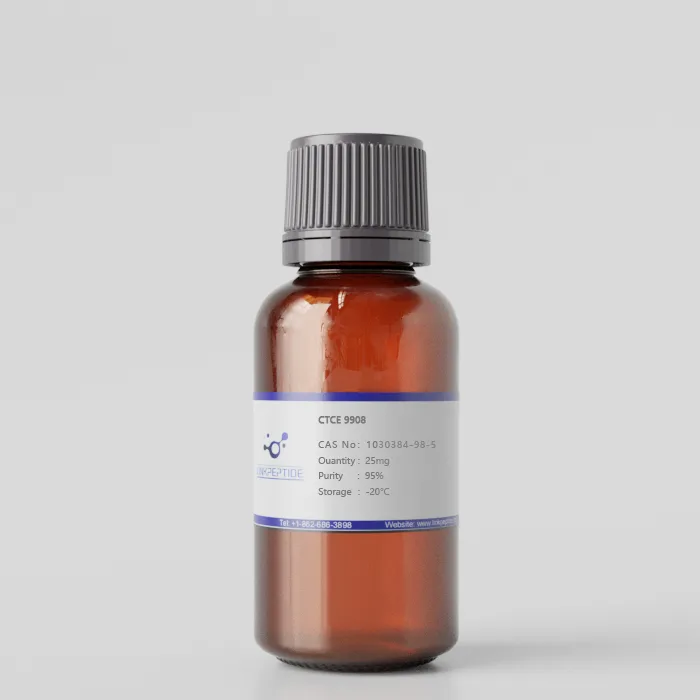
PNC-27

PNC-27

Lead Time: in stock(2-3 weeks for QC and delivery)

CAT.NO: P300145

Cas No:NA

Purity:95%

Molar Mass:4031.7

Chemical Formula:C188H293N53O44S

Categories: , , ,

Inquiry
Description

Product Name:PNC-27

Cas No:NA

Purity:95%

Chemical Formula:C188H293N53O44S

Molar Mass:4031.7

Storage:-20 degree Celsius

Application:PNC-27 is a synthetic peptide engineered to target and destroy cancer cells selectively, without affecting healthy tissue. It incorporates the HDM-2 binding domain of the tumor suppressor protein p53, fused with a cell-penetrating leader sequence. PNC-27 binds to HDM-2 overexpressed on tumor cell membranes, forming membrane pores that lead to rapid lysis and apoptosis. It has demonstrated potent anticancer activity in models of pancreatic, breast, melanoma, and leukemia cancers. PNC-27 is a valuable research tool in oncology, offering insight into targeted, non-genotoxic peptide therapies for drug-resistant and p53-deficient tumors.

Current Research:

Introduction: What Is PNC-27?

Introduction: What Is PNC-27?
PNC-27 is a novel anti-cancer peptide designed to mimic and leverage the tumor-suppressive activity of p53, specifically targeting cancer cells via a unique mechanism independent of p53's transcriptional role. It was created by fusing:

The HDM-2 binding domain of p53 (residues 12–26)

A membrane-penetrating peptide derived from a leader sequence (e.g., from penetratin)

This dual-action design allows PNC-27 to target tumor cells overexpressing HDM-2, a common trait in malignancies, and induce selective membrane disruption, leading to rapid tumor cell death.

Mechanism of Action: HDM-2 Binding and Membrane Lysis
Unlike traditional chemotherapeutics or p53 gene therapies, PNC-27 acts extracellularly and independently of nuclear p53 function. Its mechanism involves:

Specific binding to HDM-2 (also called MDM2), which is abnormally expressed on the surface of many tumor cells

Integration into the tumor cell membrane

Formation of transmembrane pores, which compromise membrane integrity

Induction of oncotic lysis and apoptosis

Importantly, HDM-2 is typically not present on the membranes of healthy cells, which helps explain PNC-27’s tumor-selective cytotoxicity and minimal off-target effects.

Selectivity and Tumor Specificity
PNC-27 has demonstrated high selectivity for cancer cells, including those with:

p53 deletions or mutations

Chemotherapy resistance

High proliferative indices

Normal, non-transformed cells with low HDM-2 membrane expression show no significant toxicity, suggesting PNC-27's activity is biomarker-driven rather than indiscriminate, a major advance in targeted peptide oncology.

In Vitro and In Vivo Anticancer Efficacy
In studies on a wide range of cancer types—melanoma, pancreatic, leukemia, breast, and colon—PNC-27 demonstrated:

Rapid cytotoxic effects in tumor cultures

Disruption of tumor cell membrane potential

Reduced tumor volume and cell viability in mouse xenograft models

Minimal damage to healthy tissue or immune cells

PNC-27 also exhibited synergy with conventional therapies, such as:

Doxorubicin, enhancing apoptotic responses

Radiation, improving radiosensitization in resistant tumors

These findings suggest PNC-27 could be used as a standalone agent or as part of combination regimens in future translational oncology protocols.

Resistance and Immunogenicity Profile
Because PNC-27 acts through physical membrane disruption rather than intracellular signaling cascades or receptor blockade, the likelihood of resistance development appears significantly reduced compared to receptor-targeting monoclonal antibodies or kinase inhibitors.

Additionally, early studies indicate a low immunogenicity profile, owing to its use of human-derived p53 sequence elements, which limits peptide recognition as foreign. This is encouraging for long-term or repeated use in immunocompetent models.

Current Research Status and Future Directions
Although PNC-27 is still in preclinical or early-phase research, ongoing studies are exploring:

Nanoparticle or liposomal delivery systems for enhanced tumor targeting

PEGylated variants to extend systemic half-life

Use in multi-drug resistant tumor models

Application in liquid tumors (e.g., leukemia, lymphoma)

Its unique mechanism makes it suitable for refractory cancers, particularly those with p53 inactivation, which account for over half of all human cancers.

Conclusion: A Breakthrough in Targeted Peptide Oncology
PNC-27 represents a novel class of tumor-selective peptides that combines membrane targeting, apoptosis induction, and p53 pathway mimicry without the complications of gene therapy. With its demonstrated selectivity, safety profile, and fast-acting cytolytic mechanism, it holds promise as a future candidate for non-genotoxic cancer therapy in aggressive or treatment-resistant cancers.

Reference:

Sookraj, K. A., Bowne, W. B., Adler, V., Sarafraz-Yazdi, E., Michl, J., & Pincus, M. R. (2010). The anti-cancer peptide, PNC-27, induces tumor cell lysis as the intact peptide. Cancer chemotherapy and pharmacology, 66, 325-331.


Get a Quote

No products in the cart.