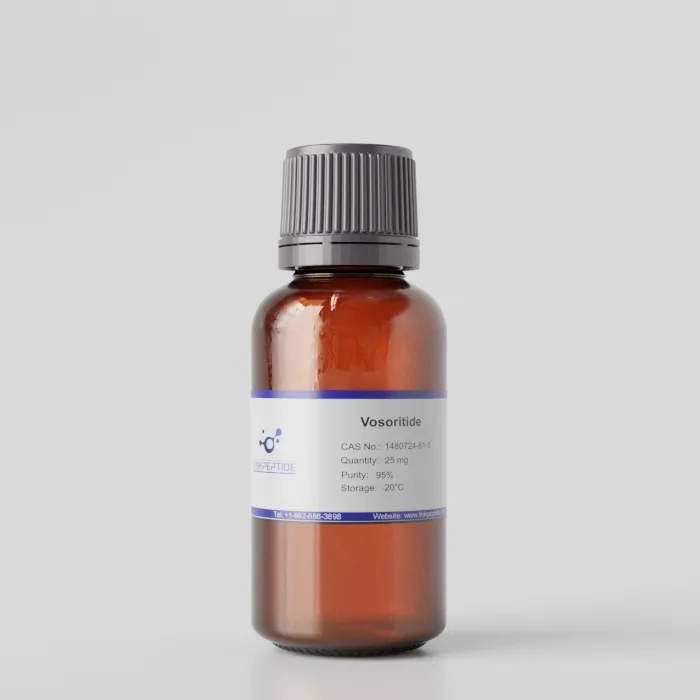
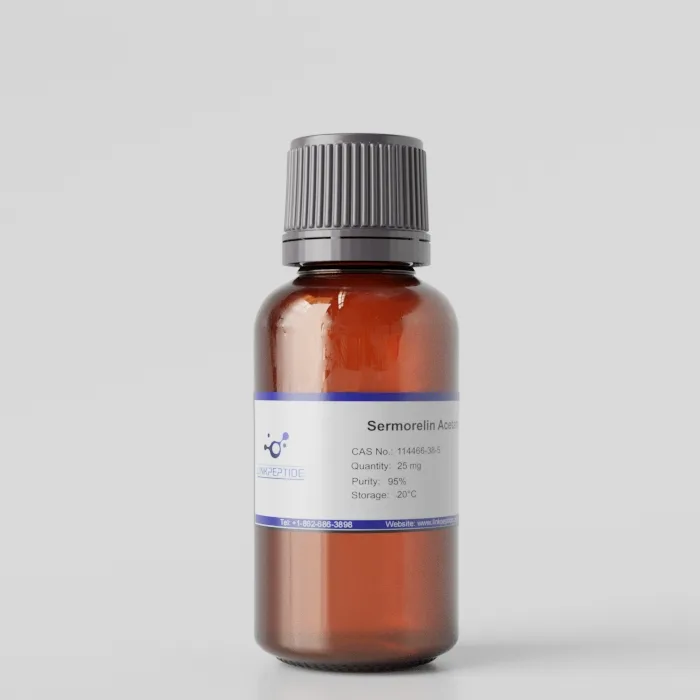
Product Name: Vosoritide
Form: Free base
CAS No: 1480724-61-5
Molar Mass: 4102.73
Chemical Formula: C176H290N56O51S3
Synonyms: BMN 111
Storage: Store at -20℃
Sequence: PGQEHPNARK YKGANKKGLS KGCFGLKLDR IGSMSGLGC
Target: NPR-B
Application:
Vosoritide (CAS: 1480724-61-5) is a pharmaceutical agent designed to address skeletal growth disorders, specifically achondroplasia. As a C-type natriuretic peptide (CNP) analog, vosoritide acts by activating the CNP receptor, playing a crucial role in regulating bone growth. Its mechanism involves promoting chondrocyte proliferation and inhibiting hypertrophy in the growth plates of bones, ultimately contributing to increased longitudinal bone growth. Vosoritide's targeted approach addresses the underlying molecular pathway associated with achondroplasia, the most common form of dwarfism. This makes vosoritide a groundbreaking intervention in the pharmaceutical landscape, offering a specific and promising solution to enhance growth in individuals affected by this skeletal disorder.
Current Research:
Vosoritide is a synthetic peptide analog of C-type natriuretic peptide (CNP), designed for the treatment of achondroplasia, the most common form of disproportionate short stature. Achondroplasia is caused by mutations in the FGFR3 gene, which leads to abnormal bone growth, resulting in characteristic features such as short limbs and a larger head size. Vosoritide works by stimulating the natriuretic peptide receptor 2 (NPR2), which regulates growth plate cartilage proliferation in the bones. By enhancing bone growth, vosoritide helps increase the growth rate in children with achondroplasia, providing an important therapeutic option for managing this genetic disorder and its associated complications.
Mechanism of Action
Vosoritide functions as an agonist of the natriuretic peptide receptor 2 (NPR2), which plays a critical role in regulating growth plate chondrocyte function. CNP, the endogenous ligand of NPR2, activates the receptor to promote the production of cyclic guanosine monophosphate (cGMP), which in turn stimulates the proliferation and differentiation of chondrocytes in the growth plate. This process is essential for bone growth, particularly during childhood. In achondroplasia, the overactivity of the FGFR3 receptor inhibits this normal growth process. Vosoritide’s action counteracts the inhibitory effects of FGFR3 signaling, thereby promoting bone growth and improving linear growth rates in children with achondroplasia.
Indications and Uses
Vosoritide is approved for the treatment of children aged 2 years and older with achondroplasia. The drug is administered via subcutaneous injection, typically once daily, and its dosage is based on the patient's weight. Vosoritide has been shown to increase growth velocity in children with achondroplasia, particularly during the early years of treatment. While it does not cure achondroplasia or reverse the genetic mutation causing the disorder, it provides a significant improvement in growth, offering children the potential for a greater height trajectory. It is typically used as part of a comprehensive management plan for achondroplasia, alongside other medical interventions to address associated complications such as spinal stenosis or joint issues.
Efficacy and Clinical Benefits
Clinical studies have demonstrated that vosoritide significantly increases growth velocity in children with achondroplasia, particularly in those aged 2 to 5 years. In one pivotal trial, children receiving vosoritide showed a notable improvement in their annualized growth rate compared to those receiving placebo. The treatment has been shown to increase bone growth and improve height outcomes, offering significant benefits in terms of physical development. The clinical benefits extend beyond linear growth, as patients may experience a reduction in the risk of some skeletal complications associated with achondroplasia, such as spinal cord compression and joint issues, due to better growth and development of bones.
Safety and Tolerability
Vosoritide is generally well tolerated, though, like any medication, it may cause side effects. The most common adverse events include injection site reactions, such as redness, swelling, or pain. Other potential side effects may include headache, fever, and mild gastrointestinal issues. Serious adverse effects are rare but may include an elevated risk of infections, particularly upper respiratory tract infections. Long-term safety data on vosoritide is still being gathered, but early reports suggest that the drug is safe when used in the approved patient population. Routine monitoring of growth rates and any potential side effects is recommended during treatment.
Advantages and Limitations
The primary advantage of vosoritide is its ability to promote increased growth velocity in children with achondroplasia, which can lead to improved height outcomes and reduced risk of associated complications. It offers a novel treatment approach that targets the underlying biological mechanisms of bone growth impairment in achondroplasia. However, vosoritide is not a cure for the disorder and does not correct the genetic mutation causing achondroplasia. The treatment is also limited to children, with ongoing research necessary to assess its potential benefits in older individuals. Additionally, the requirement for daily subcutaneous injections may affect patient adherence.
Future Directions
Ongoing research is focused on assessing the long-term effects of vosoritide, particularly in terms of its impact on adult height and bone development. Studies are also exploring the potential use of vosoritide in other skeletal dysplasias and disorders characterized by impaired bone growth. Further clinical trials are examining the benefits of combining vosoritide with other treatments to enhance outcomes for children with achondroplasia. Additionally, alternative formulations or methods of administration, such as oral delivery, are being explored to improve patient convenience and adherence.
Reference:
Duggan, S. (2021). Vosoritide: first approval. Drugs, 81(17), 2057-2062.
Get a Quote
 LinkPeptide