 LinkPeptide
Beyond Collagen: How Peptides Are Rewriting the Rules of Youthful Skin
Blog 219
Abstract
The science of anti-aging skincare is undergoing a revolution powered by bioactive peptides and proteins. As collagen and elastin naturally decline with age, these smart biomolecules offer targeted ways to restore firmness, elasticity, and radiance from within. Recent advances in peptide synthesis, nanotechnology, and AI-driven formulation design have transformed peptides into potent, stable, and deeply penetrating agents capable of rejuvenating skin at the cellular level. From widely used actives such as Matrixyl and Argireline to next-generation personalized formulations guided by genetic profiling and molecular skin mapping, peptide research is reshaping both clinical and consumer skincare. At the same time, the industry’s shift toward sustainable, plant-based peptides and eco-friendly production reflects a growing commitment to ethical innovation. Together, these breakthroughs signal a new era in dermatological science—one that merges performance, personalization, and responsibility for truly intelligent skin rejuvenation.
The Science of Aging Skin: The Collagen–Elastin Connection
Skin aging is more than a cosmetic concern—it is a biological process that unfolds at the cellular level. As the body’s largest organ, the skin forms a protective barrier against external stressors while maintaining hydration and temperature balance. Over time, both intrinsic factors—such as genetics, hormonal shifts, and cellular senescence—and extrinsic factors like UV exposure, pollution, and lifestyle habits gradually undermine this barrier. The result is the familiar signature of aging: wrinkles, sagging, dryness, and uneven tone.
Two key proteins define youthful, resilient skin: collagen and elastin. Collagen provides firmness and structure, while elastin ensures flexibility and bounce. Yet, research shows that collagen levels can fall by 50–60% and elastin by up to 70% between the ages of 20 and 70. This decline is compounded by oxidative stress and slower cell turnover, which weaken the extracellular matrix and diminish the skin’s ability to renew itself.
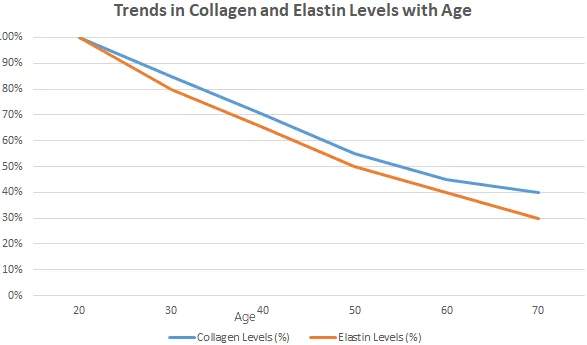
Environmental damage accelerates this process. Ultraviolet (UV) radiation activates matrix metalloproteinases (MMPs)—enzymes that break down collagen fibers—while free radicals from pollution further damage cellular components. The combined effect is thinner, less elastic skin that struggles to repair itself.
Traditional actives such as retinoids and hyaluronic acid offer visible improvements but often with irritation or limited longevity. Today, scientists are turning to a new generation of bioactive molecules—proteins, peptides, and peptide derivatives—that target skin aging at its molecular roots, restoring collagen balance and cellular vitality from within.
Peptides in Focus: Small Molecules, Big Anti-Aging Impact
Peptides have rapidly emerged as the most promising frontier in modern anti-aging research. These short chains of amino acids act as biological messengers that instruct skin cells to repair damage, boost collagen synthesis, and strengthen the skin barrier. Unlike older actives that focus on symptom relief, peptides communicate directly with the skin’s regenerative machinery, triggering renewal at the molecular level.
Different peptide families serve distinct functions. Signal peptides, such as palmitoyl pentapeptide-4 (Matrixyl), stimulate collagen and elastin production, improving skin firmness and reducing fine lines. Neurotransmitter-inhibiting peptides, such as acetyl hexapeptide-8 (Argireline), relax facial tension and smooth expression wrinkles—clinical studies report up to a 27% reduction in wrinkle depth within 30 days. Carrier peptides, including copper tripeptides, deliver essential trace minerals to the skin, enhancing repair and antioxidant defense.
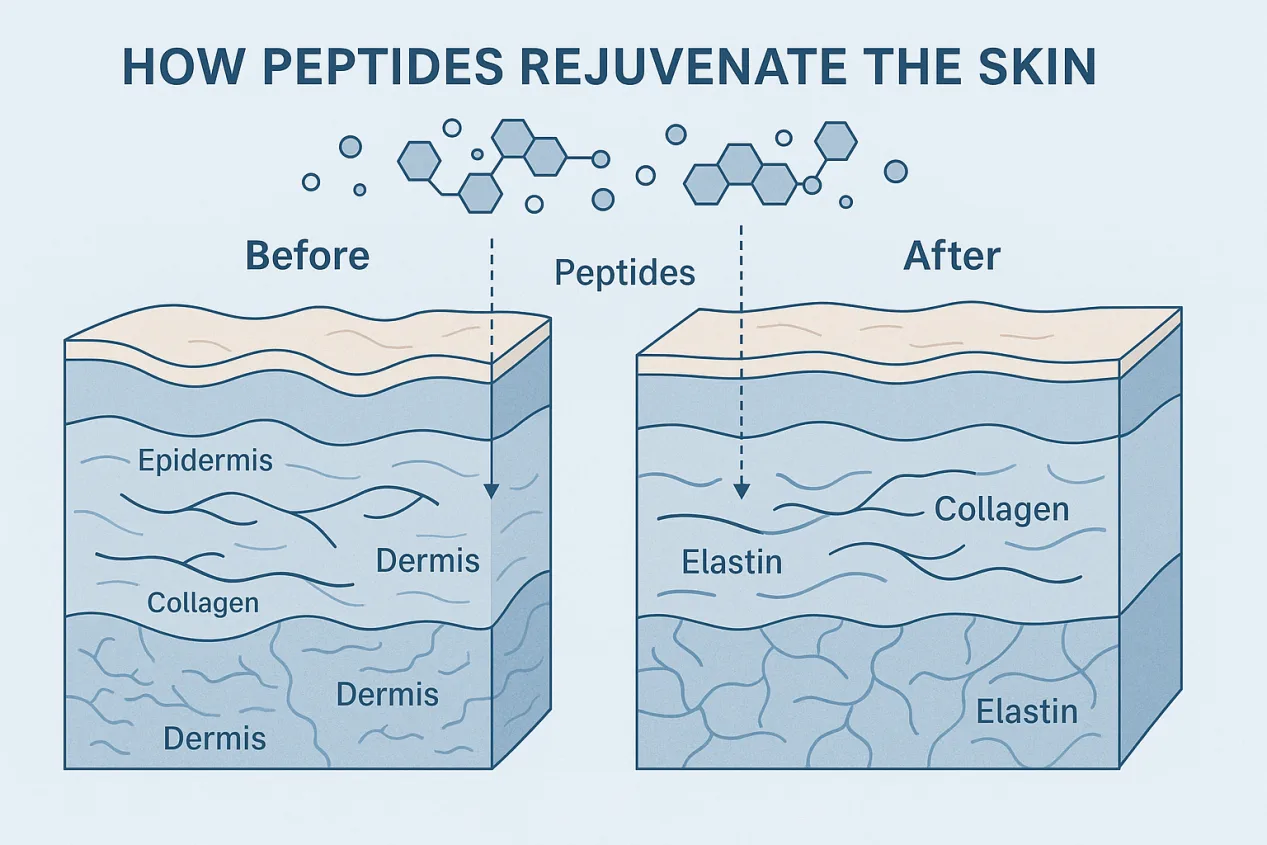
What makes peptides so transformative is their multi-target approach. They don’t merely hydrate or exfoliate—they help rebuild the skin’s structural foundation. In comparison to retinoids, which can cause redness and peeling, peptides offer gentle efficacy with minimal irritation, making them suitable for sensitive or mature skin types.
Furthermore, ongoing innovations in peptide chemistry have enhanced their stability and penetration, ensuring that these molecules remain active until they reach deeper layers of the skin. The result is not just younger-looking skin, but healthier, stronger, and more resilient skin capable of defending itself against time and environmental stress.
Smart Delivery, Real Results: The Technology Behind Peptide Skincare
The rise of peptide-based skincare has been fueled by remarkable advances in delivery science and formulation technology. While early peptides were limited by instability and poor absorption, today’s innovations ensure these molecules reach deeper skin layers intact—where they can truly make a difference.
One major breakthrough is Solid-Phase Peptide Synthesis (SPPS), a precise laboratory method that allows scientists to create peptides of high purity and consistency. SPPS has made it possible to produce complex peptides like palmitoyl pentapeptide-4 (Matrixyl) at scale, driving their inclusion in mainstream skincare formulations.
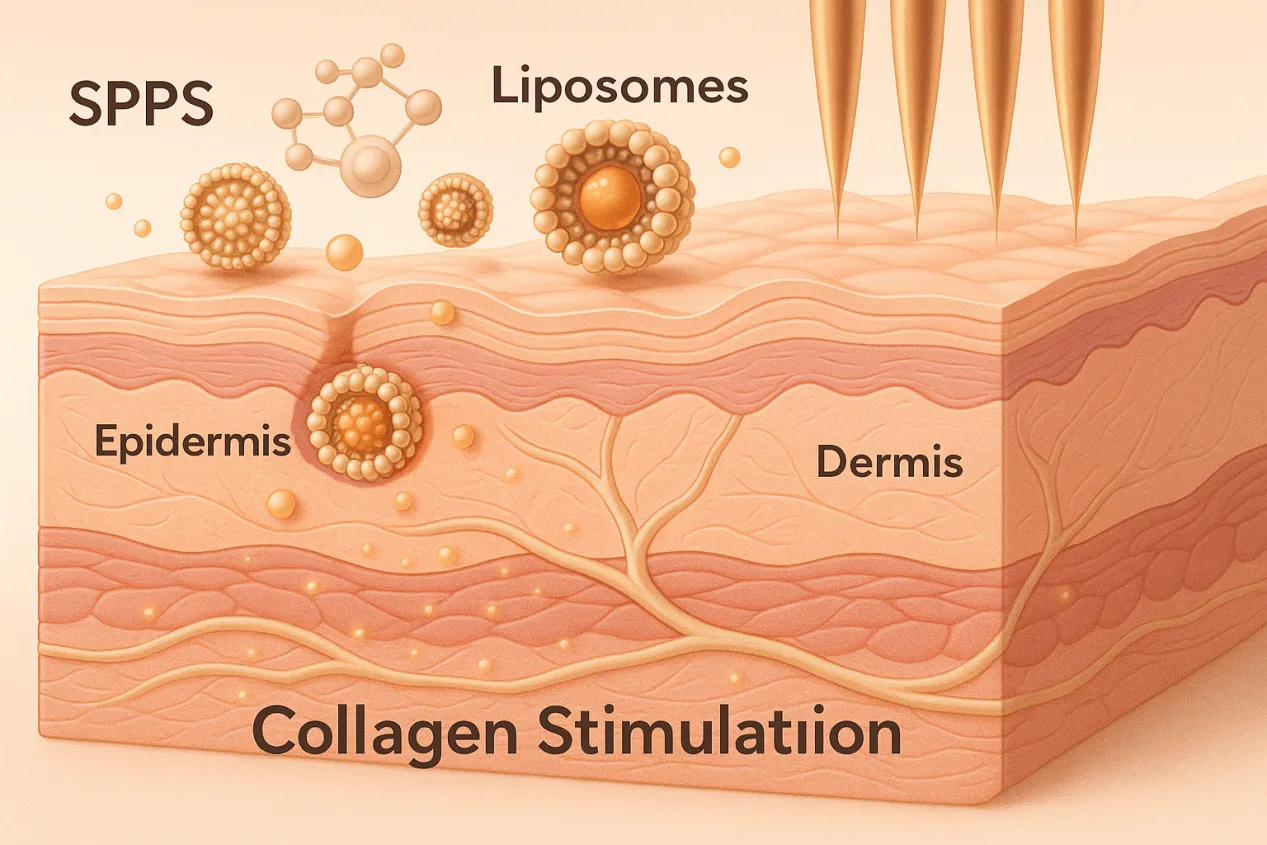
Equally transformative is the use of nanotechnology-based delivery systems—including liposomes, microneedles, and nanosomes—which improve the penetration and stability of peptide actives. Studies show that microneedle-assisted delivery can increase dermal absorption by more than 60%, enhancing visible results without invasive procedures.
These scientific strides are now visible in popular consumer products. Olay Regenerist, powered by Matrixyl, improves skin elasticity within four weeks. The Ordinary’s “Buffet” serum, combining Matrixyl 3000 and Argireline, targets multiple aging pathways simultaneously. Meanwhile, SkinMedica’s TNS Essential Serum uses growth-factor peptides to smooth skin texture and reduce fine lines by up to 25% in 12 weeks.
Together, these innovations mark a shift from surface-level skincare to cellular rejuvenation technology. By pairing cutting-edge synthesis with intelligent delivery, modern peptide formulations blur the boundary between dermatology and biotechnology—making professional-grade results achievable in everyday skincare routines.
Personalized Beauty: How AI and Genomics Are Powering the Future of Peptides
The future of skincare is becoming unmistakably personalized, powered by data, biotechnology, and artificial intelligence. Peptides lie at the center of this evolution—flexible, programmable molecules that can be customized to match an individual’s genetic, molecular, and lifestyle profile.
Recent advances in AI-driven peptide design have transformed how new ingredients are discovered. Companies such as Insilico Medicine and Atolla use machine learning to identify peptide sequences with superior stability and collagen-boosting activity. One AI-developed peptide reportedly enhanced collagen production by 30% more than conventional analogs in preclinical testing, showcasing the power of computational innovation in cosmetic science.
Meanwhile, genetic profiling and molecular skin mapping are ushering in the era of true personalization. Tests offered by brands like SkinDNA and Geneu analyze genes linked to collagen integrity, antioxidant capacity, and sun sensitivity, allowing formulations to be tailored to each individual’s biological tendencies. Devices like L’Oréal’s Perso even generate on-demand creams and serums optimized for a user’s skin condition and environment.
Complementing this trend is the fusion of peptides with other frontier technologies. When paired with stem cell extracts, microbiome-supporting peptides, or antioxidants such as vitamin C, these molecules deliver synergistic results—enhancing elasticity, brightening tone, and strengthening barrier function.
This convergence of AI, genomics, and bioactive peptides signals a new skincare paradigm: intelligent formulations that adapt to you, merging science and self-care in the most personalized way imaginable.
Beyond Beauty: Building a Sustainable and Ethical Future for Skincare
As peptide science drives the next era of anti-aging skincare, a parallel movement is reshaping how these innovations are developed: the shift toward sustainability and ethical responsibility. Today’s consumers and researchers alike recognize that advanced performance must go hand in hand with environmental and social consciousness.
Traditional skincare ingredients often rely on animal-derived or nonrenewable sources, but a new generation of plant-based and lab-synthesized peptides is changing that. Brands such as Biossance have replaced shark-derived squalane with sugarcane alternatives, while others are pioneering biotechnological peptide production that eliminates the need for animal testing altogether. These sustainable approaches not only reduce ecological impact but also align with growing consumer demand for cruelty-free and vegan formulations.
Environmental sustainability extends beyond the lab bench. Many leading companies are adopting green chemistry principles to minimize waste and energy use, achieving up to a 40% reduction in carbon footprint during peptide synthesis. Packaging innovations—such as biodegradable containers, refillable systems, and recyclable materials—are further helping the beauty industry transition toward a circular economy.
At the regulatory level, the rise of AI-designed peptides and nanotechnology-based delivery systems has prompted calls for clearer global safety standards, ensuring innovation proceeds responsibly.
Ultimately, the future of skincare will balance biological efficacy with ethical integrity. By combining science, sustainability, and compassion, peptide-based technologies are redefining not only how we preserve youthful skin but also how we care for the planet that sustains it.
Reference
Mao, Z. (2025). Frontiers in Skin Rejuvenation: Recent Advances in Anti-Aging Skincare Technologies Based on Proteins, Peptides, and Peptide Derivatives. Modern Health Science, 8(1), p69-p69.
https://doi.org/10.30560/mhs.v8n1p69
Rattan, S. I., Kryzch, V., Schnebert, S., Perrier, E., & Nizard, C. (2013). Hormesis-based anti-aging products: a case study of a novel cosmetic. Dose-Response, 11(1), dose-response.
https://doi.org/10.2203/dose-response.11-054.Rattan
Kang, S. M., Joun, Y. S., Lee, K. Y., Kang, H., & Lee, S. G. (2021). Synthesis of tetrapeptide derived from skin structural protein sequence and identification of skin anti-aging effect. Biomedical Science Letters, 27(4), 231-238.
https://doi.org/10.15616/BSL.2021.27.4.231
Carrillo-Norte, J. A., García-Mir, B., Quintana, L., Buracchio, B., & Guerrero-Bonmatty, R. (2024). Anti-aging effects of low-molecular-weight collagen peptide supplementation on facial wrinkles and skin hydration: Outcomes from a six-week randomized, double-blind, placebo-controlled trial. Cosmetics, 11(4), 137.