 LinkPeptide
Peptides in Nutrition: The Tiny Nutrients Transforming Health and Wellness
Blog 177
Abstract
Peptides, the tiny chains of amino acids that make up proteins, are emerging as powerful allies in everyday health. Unlike regular protein, which mainly provides building blocks for the body, peptides act like targeted messengers that support metabolism, muscle strength, joint health, and even mental well-being. Recent research highlights their ability to regulate appetite, enhance energy use, reduce joint pain, and promote faster recovery when combined with exercise. Collagen peptides, in particular, have shown remarkable effects in improving muscle mass, tendon strength, and overall mobility. Other food-derived peptides influence hormones like GLP-1, which help control hunger and may even shift taste preferences, offering exciting potential for weight management and personalized nutrition. With growing scientific evidence, peptides are quickly becoming the future of smarter, more effective dietary support — helping people stay active, age gracefully, and feel better from the inside out.
Peptides: The Tiny Nutrients with Big Health Benefits
When it comes to nutrition, protein usually takes center stage. It fuels workouts, supports recovery, and keeps us strong. But the real stars may be the tiny fragments protein breaks down into — peptides. These short chains of amino acids act like “mini-proteins,” each with highly targeted effects in the body.
Unlike whole proteins, which mainly provide building blocks and energy, peptides work more like messengers. They can signal your body to perform specific tasks: regulating appetite, strengthening joints, supporting muscle growth, or even influencing mood and taste perception. In other words, these small molecules deliver big health benefits.
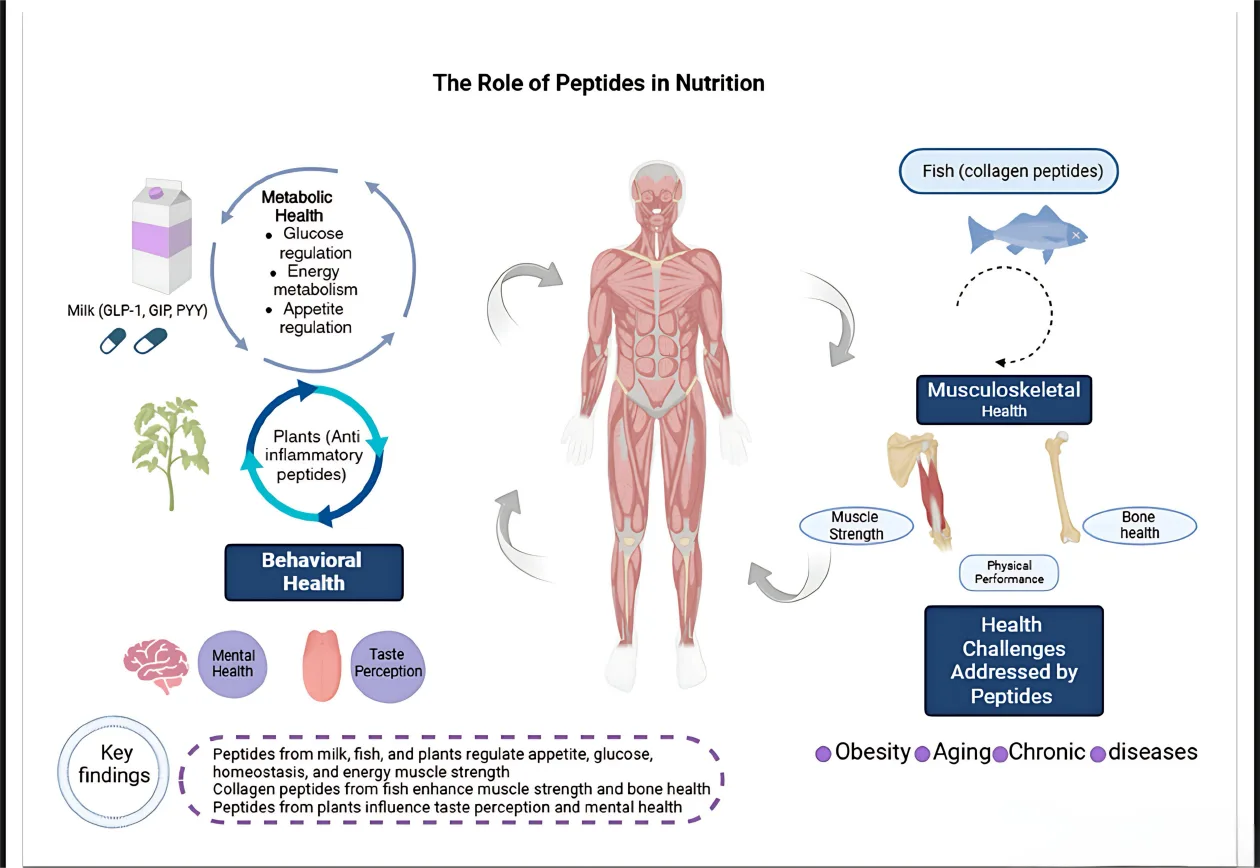
Cutting-edge research shows that food-derived peptides — from milk, fish, plants, and collagen — play powerful roles in metabolism, musculoskeletal strength, and overall well-being. Scientists now see them not just as nutrients, but as tools to help manage weight, protect against chronic disease, and improve quality of life.
In this blog, we’ll explore how these “mini-proteins” are reshaping the way we think about food, fitness, and everyday health.
Fueling Metabolism: How Peptides Support Energy and Weight Balance
One of the most exciting discoveries in peptide research is their role in metabolism — the complex system that controls how your body uses energy. Certain peptides act almost like natural regulators, helping you balance appetite, maintain steady energy levels, and even support healthy weight management.
A key player here is glucagon-like peptide-1 (GLP-1), a hormone influenced by food-derived peptides. In recent clinical studies, when protein hydrolysates (broken-down proteins) were combined with calcium-rich milk minerals, GLP-1 levels rose dramatically. What does that mean in practical terms? Participants felt fuller for longer, ate less, and burned more calories — all without drastic diet changes. The same combination also produced improvements in blood pressure, pointing to benefits for both weight and cardiovascular health.
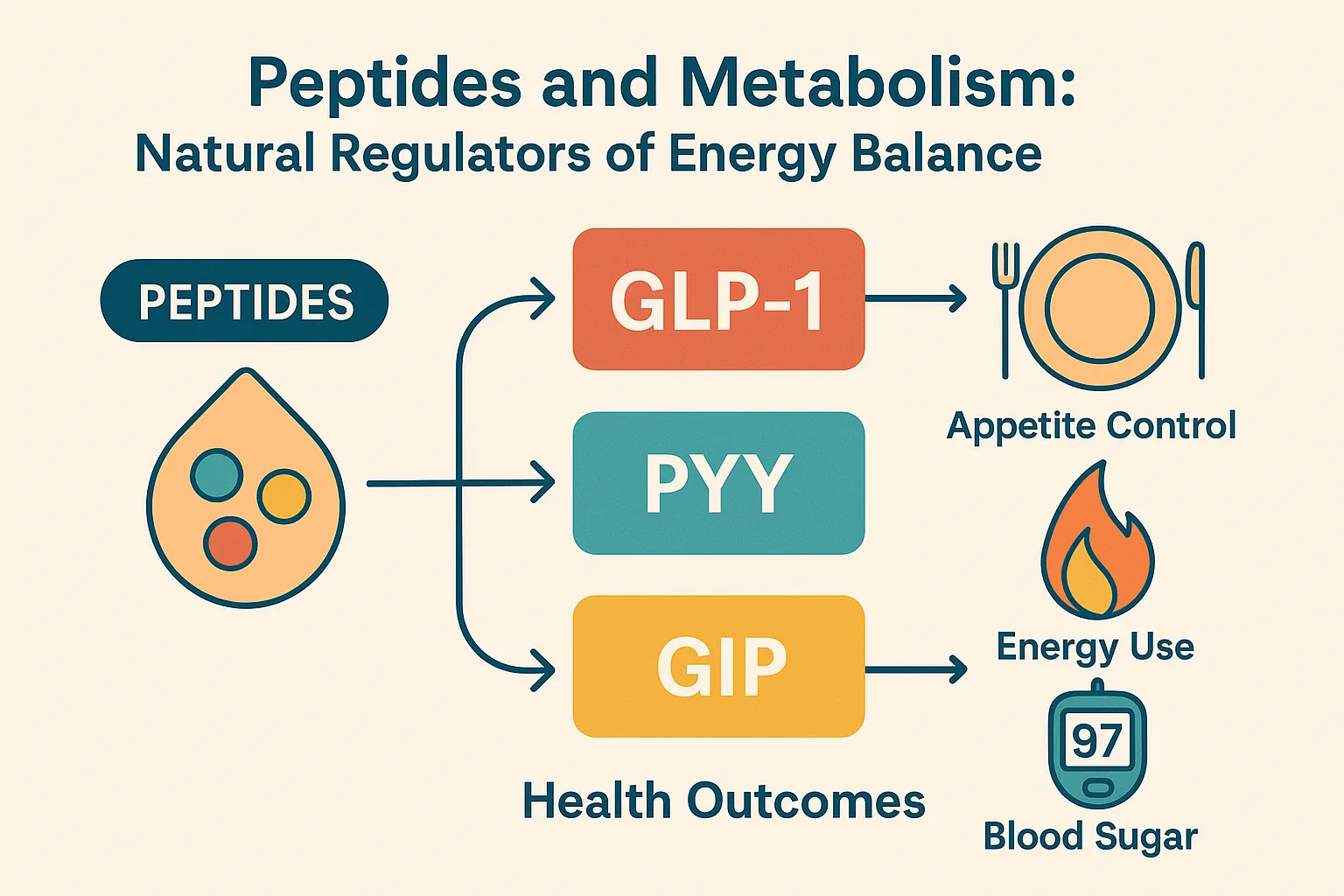
Peptides can also affect other gut hormones, like PYY and GIP, which help regulate hunger and blood sugar. Together, these signals work behind the scenes to keep energy intake and expenditure in balance. For someone looking to manage cravings, support blood sugar stability, or reduce the risk of metabolic conditions like diabetes, this is big news.
What makes peptides so appealing is their natural origin. Instead of relying only on medications, incorporating food-based peptides through diet or supplementation may offer a gentler, more holistic way to support metabolism. Scientists are still exploring how best to use them, but the evidence is clear: peptides are emerging as valuable allies in the fight against overeating, energy dips, and metabolic stress.
In short, peptides don’t just fuel your body — they help it make smarter choices about how to use that fuel.
Building Strength from Within: Peptides for Muscles and Joints
If metabolism is about fueling your body, musculoskeletal health is about keeping it moving. Here, peptides — especially collagen peptides — have shown remarkable benefits for muscles, joints, and connective tissues.
Collagen is the most abundant protein in your body, forming the framework for skin, bones, tendons, and ligaments. As we age, natural collagen levels decline, leading to weaker joints, slower recovery, and muscle loss. That’s where collagen peptides come in. These short chains of amino acids send targeted signals that encourage the body to rebuild and strengthen connective tissue.
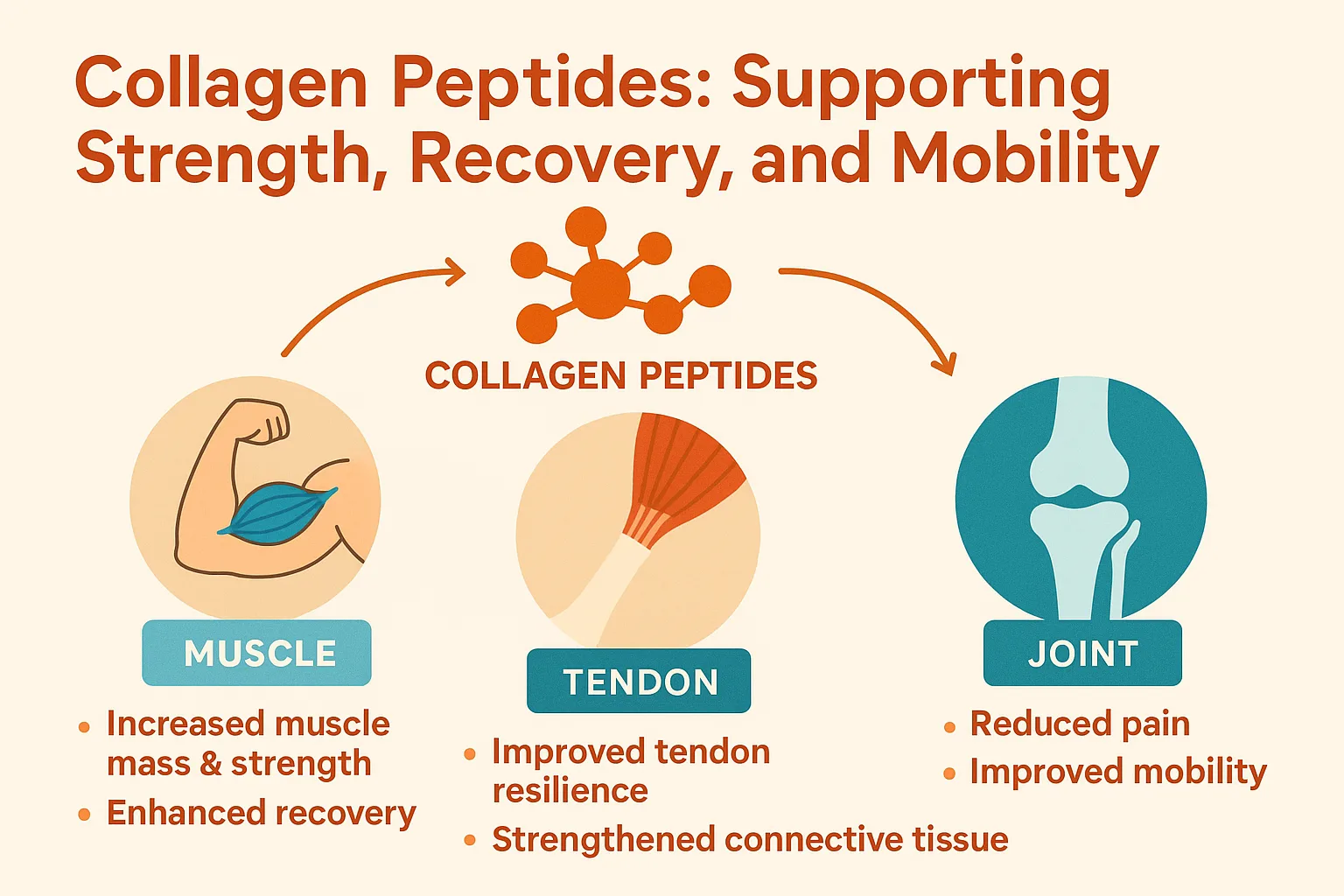
Recent clinical studies put this to the test. In one trial, men who took daily collagen peptides while doing resistance training gained more muscle mass, lost more fat, and improved their strength compared to those who trained without supplementation. Another study showed that collagen peptides helped increase the thickness and resilience of tendons, essentially reinforcing the body’s “cables and ropes” that make movement possible.
The benefits aren’t just for athletes. People with joint pain or early cartilage issues experienced less pain and better mobility after several weeks of collagen peptide supplementation. For everyday life, that translates into easier movement, fewer aches, and a greater ability to stay active.
What’s especially exciting is the dual effect: collagen peptides not only support muscle performance for those who exercise, but also promote joint comfort and function for people looking to maintain mobility as they age. Whether you’re aiming to recover faster after workouts or simply keep up with daily activities pain-free, collagen peptides provide a natural and effective option.
In short, collagen peptides act like a repair signal, reminding your body to strengthen the structures that keep you moving. With regular use, they can be a game-changer for both performance and long-term musculoskeletal health.
Mind–Body Connection: Peptides and Everyday Well-Being
Peptides don’t just shape the body — they can also influence the mind. Emerging research shows that certain peptides affect mental well-being, daily living, and even taste perception, opening the door to exciting new possibilities in nutrition.
In several long-term studies, participants who supplemented with collagen peptides reported less pain, better physical function, and improvements in mental health scores. These benefits were especially noticeable in people who exercised regularly, suggesting that peptides may enhance not only physical recovery but also the motivation and energy needed to stay active. When pain and stiffness are reduced, daily activities become easier — and quality of life improves.
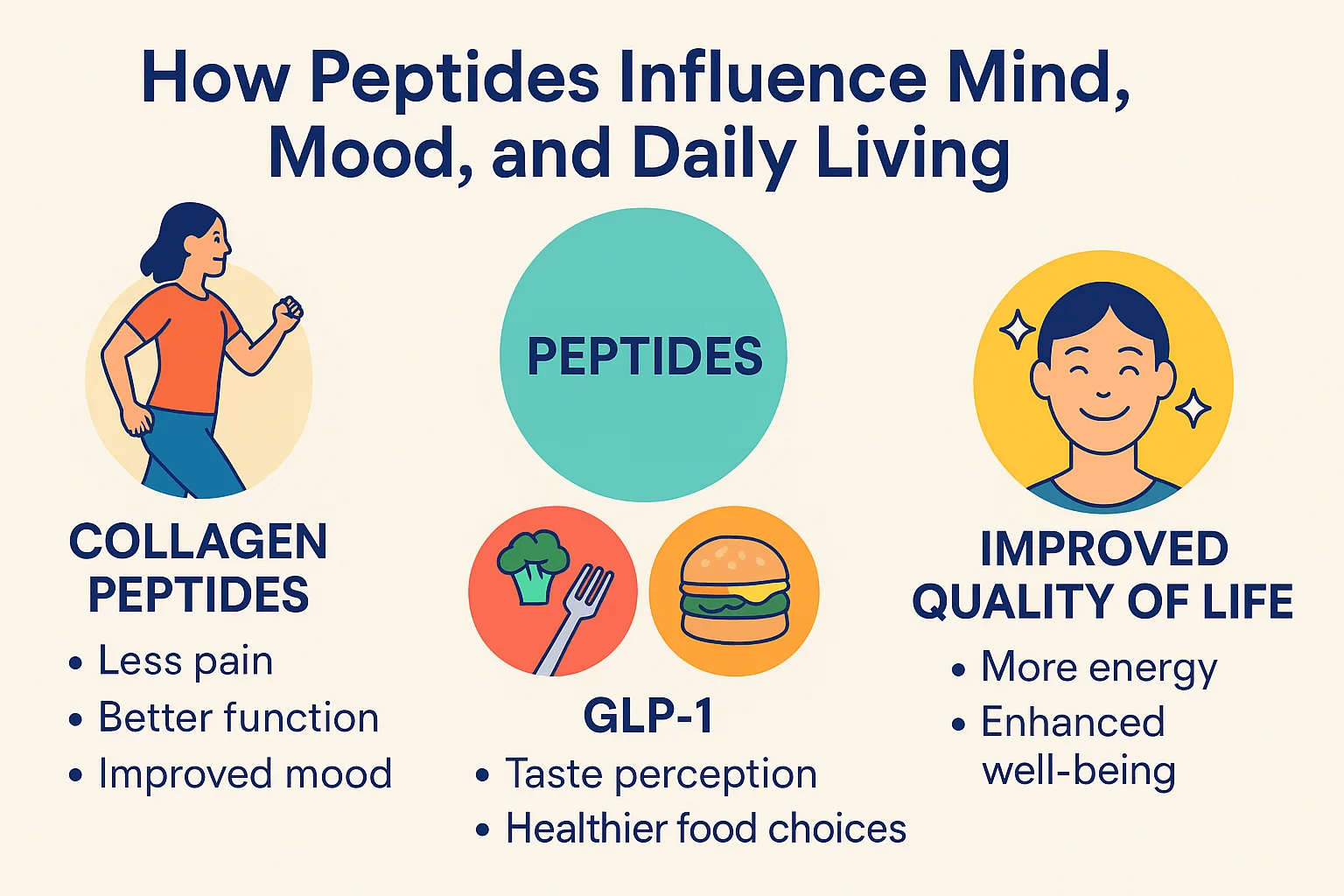
Other research has looked at how peptides interact with appetite-related hormones. For example, GLP-1 infusions were found to influence taste preferences, particularly in women, who experienced stronger shifts in food perception. This suggests that peptides could one day play a role in helping people make healthier food choices naturally, by subtly reshaping how foods taste and how satisfying they feel.
While this area of study is still new, it highlights an important point: peptides don’t act in isolation. They connect physical and mental health, bridging the gap between how we feel in our bodies and how we experience food and daily life.
In other words, peptides may hold the key not just to stronger muscles and better metabolism, but also to a healthier, more positive relationship with food and well-being.
The Future of Nutrition: Why Peptides Belong in Your Routine
The science is clear: peptides are much more than nutritional buzzwords. They’re powerful messengers that help the body regulate metabolism, build strength, protect joints, and even shape how we feel about food. For customers, this means that peptide-based nutrition isn’t some distant concept — it’s already here, and it’s already making a difference.
Collagen powders, peptide-enriched protein blends, and specialized supplements are easy ways to add these benefits to your daily routine. Whether your goal is to maintain a healthy weight, recover faster from workouts, reduce joint discomfort, or simply support long-term vitality, peptides offer a safe and natural option. Unlike many quick-fix solutions, they work in harmony with the body’s own processes, enhancing what your system is already designed to do.
Looking ahead, researchers are working to improve how peptides are delivered and absorbed, making future supplements even more effective. There’s also growing interest in personalized peptide nutrition — tailoring peptide types and doses to an individual’s age, activity level, and health goals.
For now, the takeaway is simple: by incorporating food-derived peptides into your diet, you’re giving your body precise tools to perform better, feel stronger, and age more gracefully. Peptides aren’t just the future of nutrition — they’re a smarter way to take care of your health today.
Reference
Zakir, S. K., Jawed, B., Esposito, J. E., Kanwal, R., Pulcini, R., Martinotti, R., … & Martinotti, S. (2025). The Role of Peptides in Nutrition: Insights into Metabolic, Musculoskeletal, and Behavioral Health: A Systematic Review. International Journal of Molecular Sciences, 26(13), 6043.
https://doi.org/10.3390/ijms26136043
Alt, K. W., Al-Ahmad, A., & Woelber, J. P. (2022). Nutrition and health in human evolution–past to present. Nutrients, 14(17), 3594.
https://doi.org/10.3390/nu14173594
Qiu, W., Wang, Z., Liu, Q., Du, Q., Zeng, X., Wu, Z., … & Tu, M. (2024). Structure and regulatory mechanisms of food‐derived peptides in inflammatory bowel disease: A review. Food Science & Nutrition, 12(9), 6055-6069.
https://doi.org/10.1002/fsn3.4228
Rossino, G., Marchese, E., Galli, G., Verde, F., Finizio, M., Serra, M., … & Collina, S. (2023). Peptides as therapeutic agents: challenges and opportunities in the green transition era. Molecules, 28(20), 7165.