 LinkPeptide
Beyond Cosmetics: Oligopeptides as Targeted Therapeutics in Cutaneous Science
Blog 200
Abstract
Oligopeptides are short-chain amino acid sequences known for their high biocompatibility, excellent skin permeability, and diverse biological functions. In the context of dermatological science, they have gained attention for their ability to regulate key cellular processes involved in skin aging, such as collagen degradation, oxidative stress, and pigment overproduction. These peptides function by modulating extracellular matrix remodeling, enhancing antioxidant defenses, and suppressing melanogenesis through well-defined molecular pathways. Structural modifications—including lipid conjugation, acetylation, and peptide cyclization—improve their stability, bioavailability, and target specificity. Moreover, advanced delivery systems such as emulsions and microneedles enhance their dermal absorption. Emerging research also highlights the synergistic potential of multi-peptide formulations to achieve compounded therapeutic effects. Despite these advancements, further investigation into sequence-function relationships and intracellular signaling mechanisms is essential. Oligopeptides represent a promising frontier in skin regeneration and anti-aging therapy, bridging cosmetic outcomes with molecular precision.
Reframing Skin Aging: The Emergence of Oligopeptides as Molecular Interventions
Skin aging is a complex, multifactorial process marked by structural deterioration and functional decline of both the epidermis and dermis. Clinically, this is reflected in thinning skin, diminished elasticity, increased wrinkling, delayed wound healing, and irregular pigmentation. These manifestations arise from cumulative intrinsic and extrinsic factors, including stem cell depletion, oxidative stress, UV-induced photoaging, and extracellular matrix (ECM) breakdown.
Conventional anti-aging agents—such as retinoids, antioxidants, and emollients—offer limited and often superficial benefits due to poor skin penetration, instability, or adverse effects. In contrast, oligopeptides, defined as short chains of 2–10 amino acids, have gained prominence for their ability to modulate key cellular pathways involved in skin repair and regeneration. With molecular weights typically below 500 Da, oligopeptides demonstrate excellent skin permeability, biocompatibility, and target specificity.
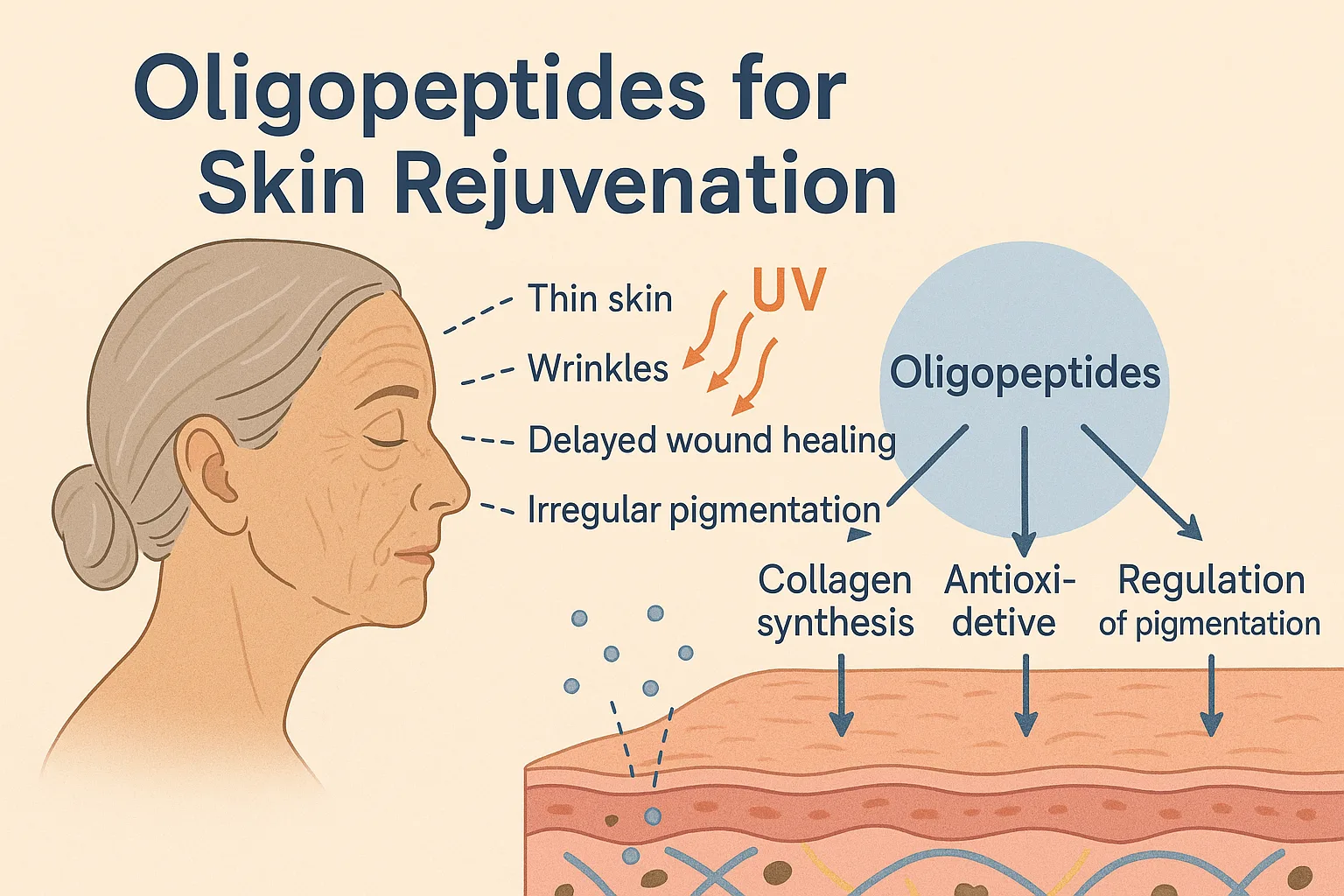
The review by He et al. (2025) provides a comprehensive exploration of oligopeptides in dermatological science, highlighting their structural properties, bioactivities, and therapeutic potential. This blog synthesizes those insights to examine how oligopeptides are reshaping the landscape of skin rejuvenation—from enhancing collagen synthesis and antioxidative defense to regulating pigmentation—positioning them as a next-generation modality in both cosmetic and regenerative dermatology.
The Molecular Architecture and Dermatological Functions of Oligopeptides
Oligopeptides represent a structurally versatile and functionally diverse class of bioactive molecules. Their small size (2–10 amino acids) allows for chemical modification, selective receptor binding, and superior skin permeability. They originate from a wide range of sources, including natural extracts (e.g., marine organisms, milk, fish collagen), enzymatic hydrolysates, and recombinant production. In addition, solid-phase and liquid-phase synthetic methods enable precise control over peptide sequence, conformation, and functional group incorporation.
Over 300 oligopeptides are listed in the International Nomenclature of Cosmetic Ingredients (INCI), with approximately 120 used in commercial skincare formulations. These peptides fulfill key cosmetic functions—anti-aging, whitening, anti-wrinkling, and barrier repair—by targeting biological processes such as collagen synthesis, melanogenesis, and oxidative stress modulation.
Among the most studied examples is Tripeptide-1 (GHK), a fragment of collagen I known to promote ECM regeneration, fibroblast proliferation, and angiogenesis. Its copper-bound form (GHK-Cu) exhibits enhanced wound healing, antioxidant activity, and reduced skin irritation. Another widely used peptide is Palmitoyl Pentapeptide-4 (KTTKS), which stimulates collagen and fibronectin production and is stabilized through lipid conjugation for improved skin retention.
Argireline (Acetyl Hexapeptide-8) mimics the SNARE complex involved in neurotransmitter release, offering botulinum toxin-like effects without injection. Decapeptide-12 (YRSRKYSSWT) serves as a potent tyrosinase inhibitor, promoting skin brightening and photoprotection.
To enhance their efficacy, oligopeptides are often conjugated with hydrophobic moieties (e.g., palmitoyl, myristoyl), antioxidants (e.g., ascorbyl, lipoic acid), or polyethylene glycol (PEG) for improved stability, permeability, and bioavailability. These structural modifications are essential for optimizing cutaneous delivery and biological performance.
Together, these peptides illustrate the broad applicability of oligopeptides in skin therapeutics and set the stage for mechanism-driven innovation in peptide-based dermatology.
Cellular and Molecular Mechanisms Underpinning Oligopeptide Bioactivity
The efficacy of oligopeptides in skin regeneration and rejuvenation is rooted in their ability to interact with cellular and molecular pathways central to dermal homeostasis. These peptides do not merely serve as passive moisturizers or structural mimics; instead, they function as active modulators of gene expression, signal transduction, and extracellular matrix (ECM) dynamics.
A key mechanism involves collagen biosynthesis and ECM remodeling. Peptides such as GHK-Cu and Palmitoyl Pentapeptide-4 (KTTKS) upregulate collagen I, heparan sulfate, and dermatan sulfate, while concurrently stimulating fibroblast proliferation and migration. GHK-Cu also activates matrix metalloproteinase-2 (MMP-2) and its inhibitors (TIMP-1, TIMP-2), facilitating ECM turnover and structural renewal. These effects are mediated through enhanced integrin expression and VEGF/bFGF signaling in dermal cells.
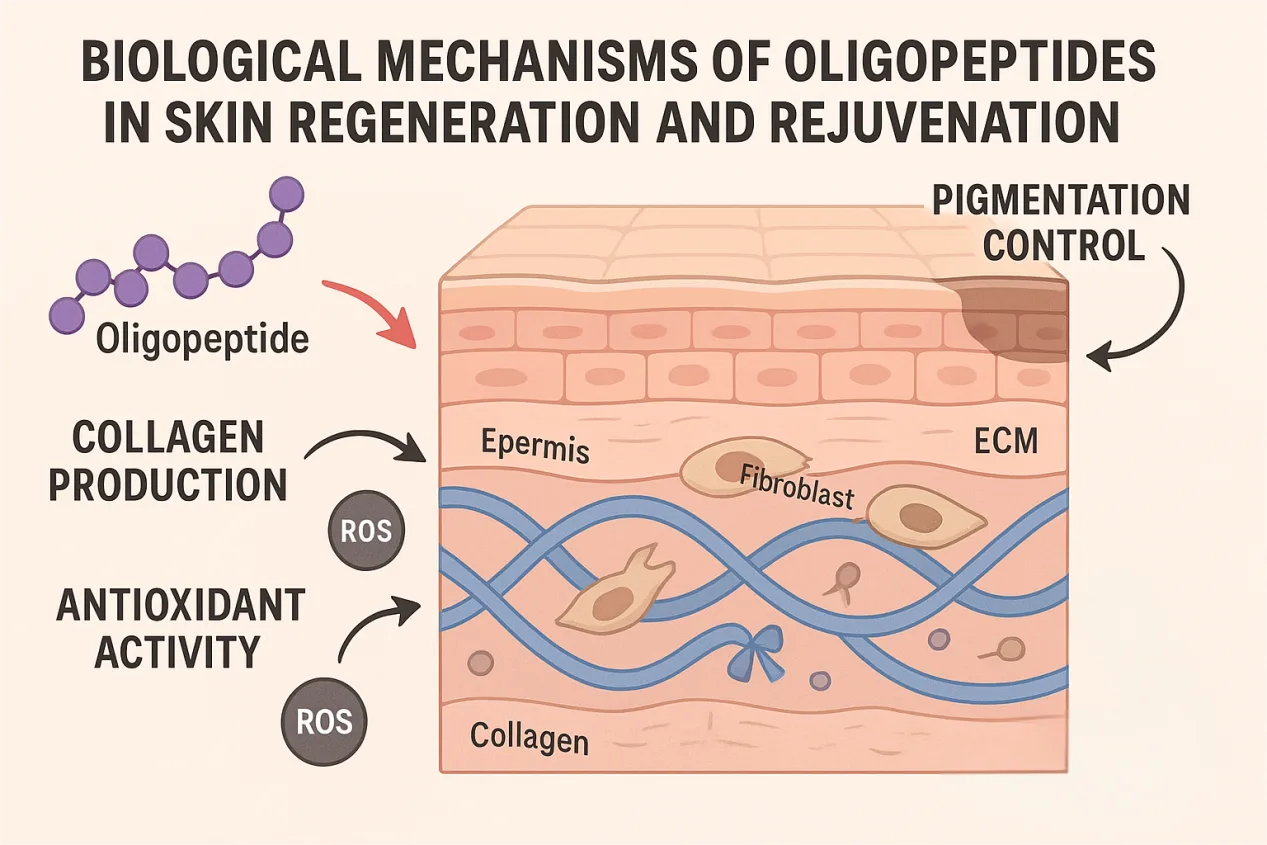
Antioxidant activity is another central function. Oligopeptides like G-(2-thiohis)-K, GMCCSR, and Hexapeptide-11 (FVAPFP) neutralize reactive oxygen species (ROS), elevate cellular antioxidant enzymes (e.g., SOD, CAT, GSH-Px), and improve nuclear translocation of Nrf2, a key transcription factor in redox regulation. This antioxidant capacity helps counteract UV-induced damage and cellular senescence.
In the context of pigmentation control, peptides such as Decapeptide-12, RCY, and CRY inhibit tyrosinase and downregulate melanogenic markers like MITF and TYRP-1. Some oligopeptides function as substrate analogs or disrupt melanosome biogenesis, offering a molecular rationale for their skin-brightening properties.
Delivery-enhancing strategies also contribute mechanistically. Lipid conjugation increases skin penetration, while formulations like W/O/W emulsions and microneedle-assisted transdermal systems improve bioavailability and targeted peptide deposition.
Together, these mechanisms underscore oligopeptides’ capacity to exert multifaceted biological effects, bridging cosmetic performance with therapeutic relevance in cutaneous science.
Emerging Peptides, Advanced Delivery Systems, and Synergistic Formulations
Beyond the extensively studied oligopeptides already integrated into cosmetic formulations, recent advances have identified a new generation of bioactive peptides with promising dermatological applications. Many of these are derived from natural sources such as fish collagen (e.g., Gly–Pro–Hyp-rich peptides), Spirulina platensis (e.g., GMCCSR), and Lingzhi (e.g., VLTCGF and PVRSSNCA). These peptides have demonstrated anti-photoaging, antioxidant, and whitening effects by modulating molecular markers like malondialdehyde (MDA), Rab29, and tyrosinase.
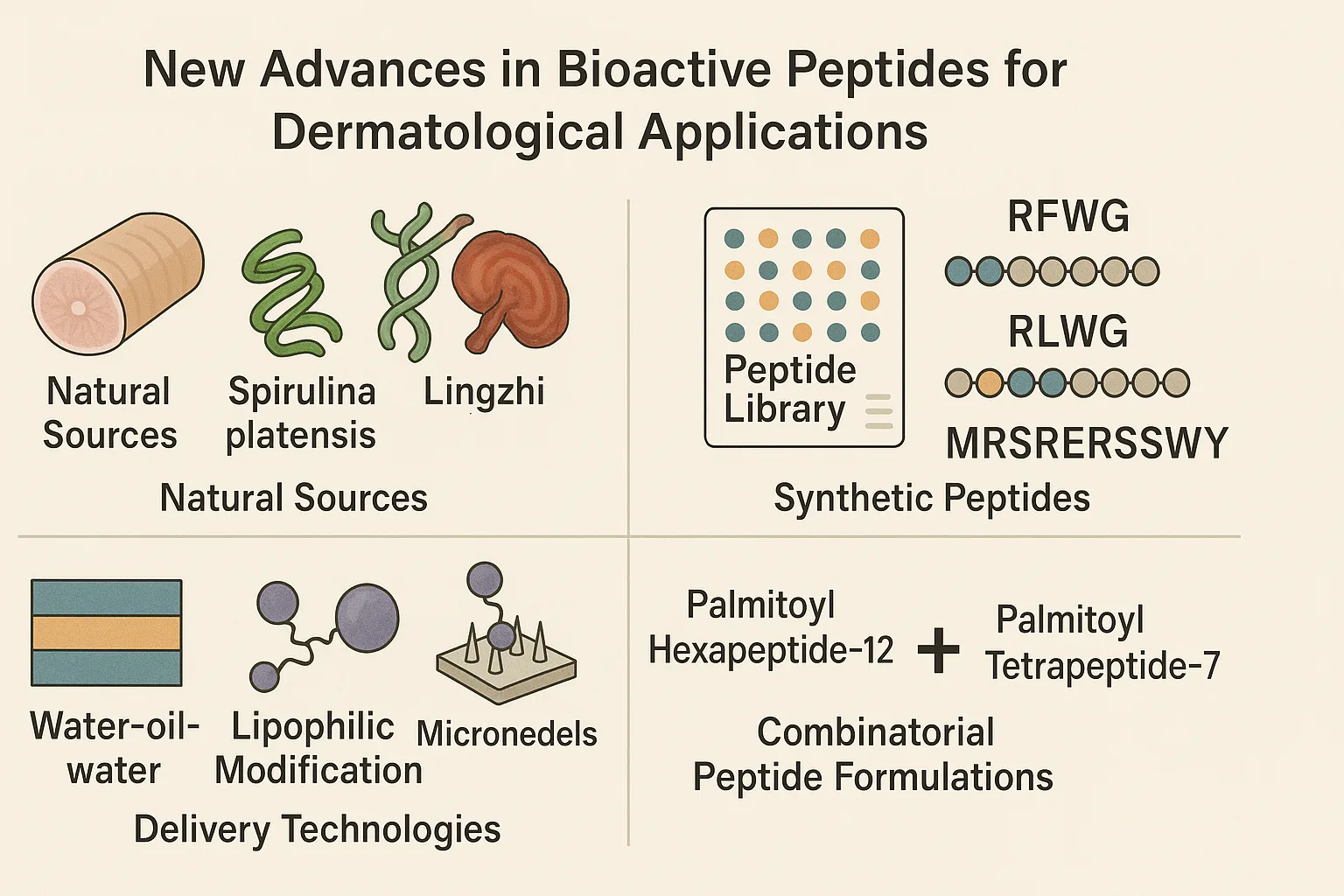
In parallel, synthetic peptide libraries—engineered via positional scanning or bioinformatics—are expanding the functional repertoire of oligopeptides. Examples include RFWG and RLWG, which exhibit potent anti-melanogenic activity, and MRSRERSSWY, a decapeptide that acts as a substrate analog to inhibit tyrosinase by binding at the active site. Peptides mimicking α-MSH or incorporating Nrf2 activation motifs (e.g., DEETGEF) add further functional sophistication.
Advancements in delivery technologies have also enhanced the transdermal performance of oligopeptides. While short peptides inherently penetrate the stratum corneum more efficiently, their delivery can be significantly improved through emulsions (e.g., water-oil-water), lipophilic modifications, or microneedle systems. These approaches enable site-specific deposition, sustained release, and higher skin bioavailability.
Additionally, combinatorial peptide formulations are gaining traction. Synergistic blends—such as Palmitoyl Hexapeptide-12 with Palmitoyl Tetrapeptide-7, or cocktails including Argireline, GHK, and Acetyl Tetrapeptide-5—have shown superior efficacy in stimulating ECM synthesis, enhancing antioxidant defenses, and reducing visible signs of aging.
Collectively, these innovations signify a shift toward multifunctional, mechanism-based peptide therapeutics in dermatology and cosmetic science.
Bridging Knowledge Gaps: Challenges and Future Directions in Oligopeptide-Based Skin Therapy
Despite growing enthusiasm for oligopeptide-based therapeutics, several critical knowledge gaps remain. Most current studies focus on functional outcomes—such as collagen upregulation or pigment reduction—without fully elucidating the underlying molecular mechanisms. Detailed mapping of signaling pathways, receptor interactions, and downstream transcriptional effects is urgently needed to support rational peptide design and therapeutic optimization.
Equally important is clarifying the sequence-function relationship. While some structural motifs—such as C-terminal tyrosine in whitening peptides or palmitoyl modifications in penetration enhancers—have been characterized, a systematic framework for predicting bioactivity from sequence remains elusive.
Future research should also explore the influence of secondary structure, chemical modifications (e.g., cyclization, phosphorylation), and charge-hydrophobicity profiles on peptide stability and target specificity. Additionally, the development of synergistic multi-peptide systems, informed by omics technologies and systems biology, may enable the creation of next-generation cosmeceuticals with precise, multi-modal effects.
In sum, oligopeptides offer immense promise—but realizing their full potential will require deeper mechanistic insight and interdisciplinary innovation.
Reference
He, Q., Liao, Y., Wu, Y., Zhang, H., Long, X., & Zhang, Y. (2025). Bioactive oligopeptides and the application in skin regeneration and rejuvenation. Journal of Applied Biomaterials & Functional Materials, 23, 22808000251330974.
https://doi.org/10.1177/22808000251330974
Negahdaripour, M., Owji, H., Eslami, M., Zamani, M., Vakili, B., Sabetian, S., … & Ghasemi, Y. (2019). Selected application of peptide molecules as pharmaceutical agents and in cosmeceuticals. Expert opinion on biological therapy, 19(12), 1275-1287.
https://doi.org/10.1080/14712598.2019.1652592
Jenny, K. A., Ruggles, E. L., Liptak, M. D., Masterson, D. S., & Hondal, R. J. (2021). Ergothioneine in a peptide: Substitution of histidine with 2‐thiohistidine in bioactive peptides. Journal of Peptide Science, 27(10), e3339.
https://doi.org/10.1002/psc.3339
Blanes‐Mira, C., Clemente, J., Jodas, G., Gil, A., Fernández‐Ballester, G., Ponsati, B., … & Ferrer‐Montiel, A. (2002). A synthetic hexapeptide (Argireline) with antiwrinkle activity. International journal of cosmetic science, 24(5), 303-310.