 LinkPeptide
Smart, Sustainable, and Skin-Deep: Peptides and the Future of Beauty
Blog 173
Abstract
As the demand for effective, non-invasive anti-aging solutions surges, peptides have emerged as frontrunners in next-generation skincare. This blog explores how proteins, peptides, and their derivatives are redefining skin rejuvenation by targeting aging at the molecular level—stimulating collagen, restoring elasticity, and enhancing hydration. Backed by clinical evidence and fueled by biotechnology, peptides outperform many traditional ingredients with fewer side effects. From smart delivery systems like nanocarriers and microneedles to personalized formulations driven by genetic profiling and AI, the integration of science and skincare is transforming consumer expectations. Ethical considerations, including plant-based sourcing and sustainable packaging, further elevate peptides as the gold standard for future-focused beauty. Whether found in serums, creams, or advanced injectables, these biomolecules are unlocking new possibilities in skin health, wellness, and cosmetic innovation.
New Face of Aging: What Happens Beneath the Skin
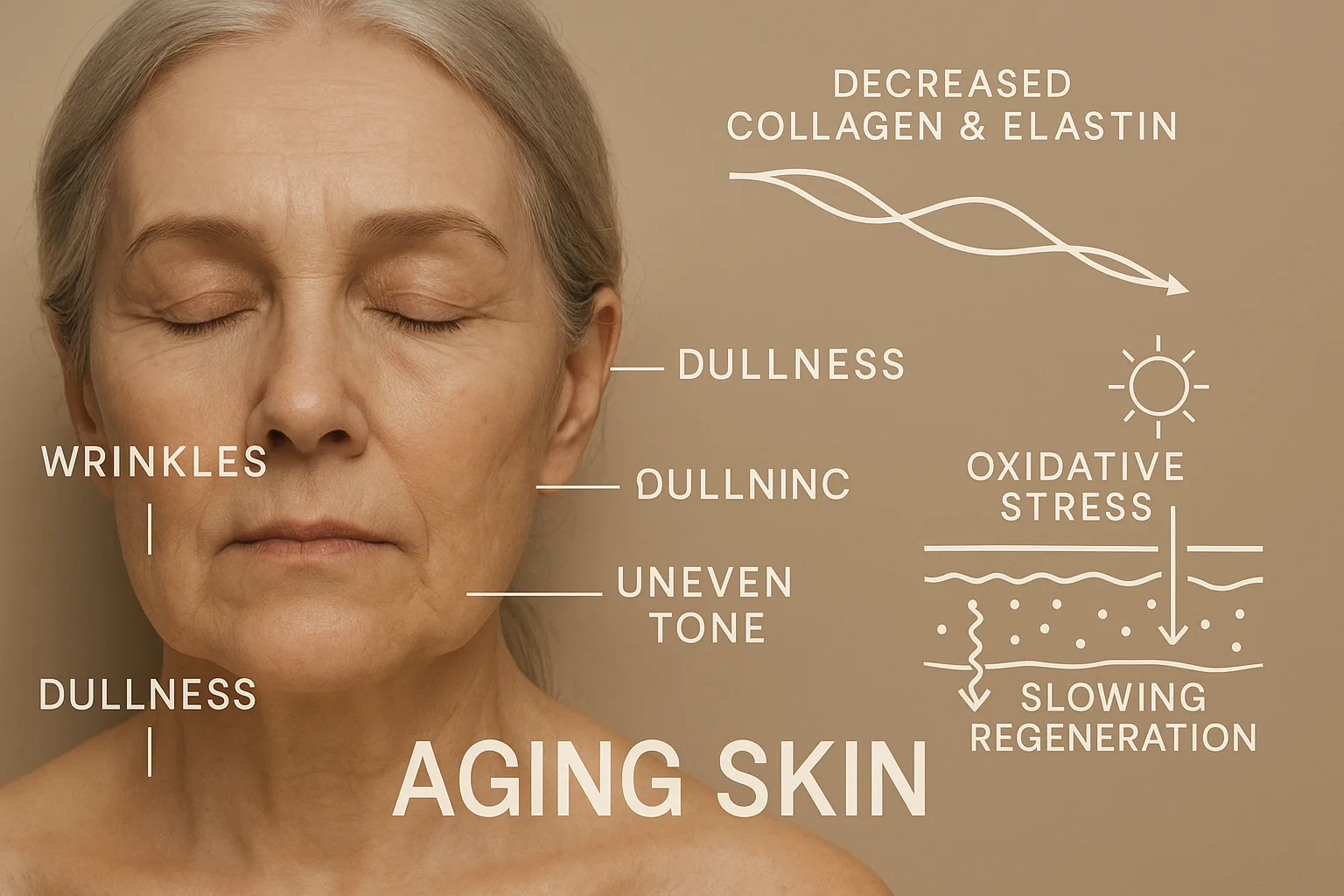
Aging is inevitable—but how it manifests on our skin can feel anything but welcome. Wrinkles, sagging, dullness, and uneven tone are among the most visible signs of time’s passage, and they’re rooted in complex biological processes. As we age, the skin’s ability to repair and regenerate slows dramatically. Levels of collagen and elastin—two key structural proteins responsible for firmness and elasticity—decline steadily. Simultaneously, cellular turnover decreases, and oxidative stress from UV radiation and pollution accelerates tissue breakdown.
These changes don’t just impact how we look—they affect how our skin functions. As the body’s largest organ, skin is our first line of defense against environmental stressors. When its structural integrity weakens and regeneration slows, it becomes more prone to damage, dryness, and inflammation. The result is not just visible aging, but a measurable decline in skin health and resilience.
It’s no wonder, then, that anti-aging skincare has become one of the fastest-growing sectors in the beauty and wellness industry. According to recent projections, the global market is set to reach an astonishing $421.4 billion by 2030. Today’s consumers are no longer satisfied with superficial fixes. They’re seeking evidence-based solutions—technologies and ingredients that can truly rejuvenate skin from within.
Yet many conventional approaches fall short. Retinoids, while effective, often cause irritation. Hyaluronic acid offers hydration but doesn’t rebuild lost structure. This has opened the door to a new generation of bioactive ingredients—specifically proteins, peptides, and peptide derivatives—that go beyond surface treatment to target the fundamental causes of skin aging at the molecular level.
Meet the Molecules: How Proteins and Peptides Rebuild Youthful Skin
At the heart of the anti-aging skincare revolution lies a class of ingredients that are as biologically powerful as they are scientifically sophisticated: proteins and peptides. These biomolecules don’t just sit on the skin’s surface—they interact with its biology to restore structure, stimulate regeneration, and enhance resilience from within.
Understanding the Building Blocks of Youthful Skin
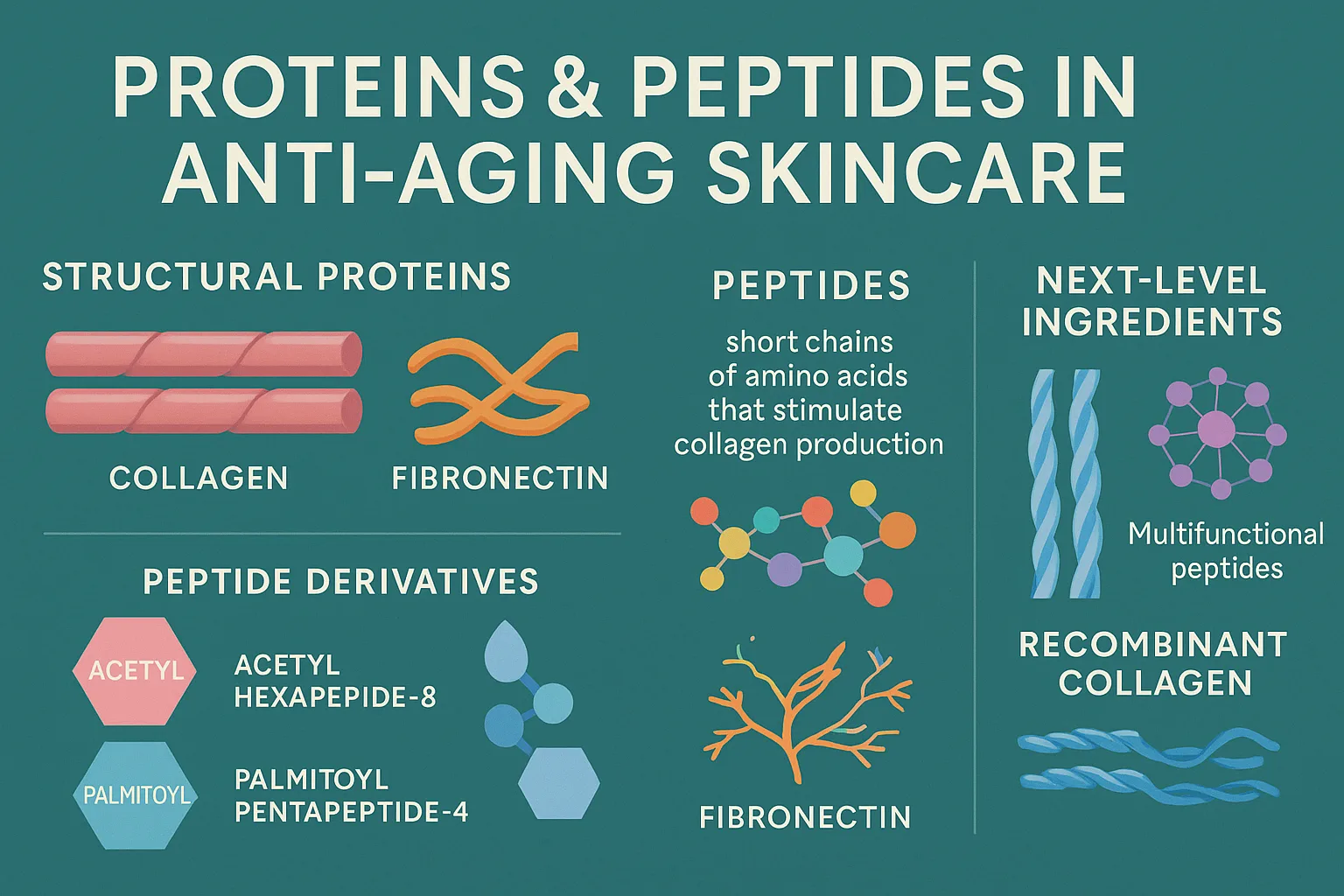
Proteins like collagen, elastin, and fibronectin are the scaffolding of healthy, youthful skin. Collagen provides strength and density; elastin gives skin its bounce and ability to stretch; fibronectin supports tissue repair and cell adhesion. But starting in our twenties, the natural production of these proteins begins to decline. By the age of 70, collagen levels can drop by up to 60%, and elastin by as much as 70%—a key reason why aging skin loses firmness, elasticity, and volume.
Enter peptides—short chains of amino acids that act as molecular messengers. These small but mighty compounds can trigger the skin’s own repair processes, instructing cells to boost collagen production, enhance hydration, and reduce inflammation. What makes them especially valuable is their targeted functionality: unlike many traditional ingredients, peptides can be tailored to deliver specific effects, from wrinkle reduction to barrier repair.
Peptide Derivatives: Smart, Potent, and Clinically Proven
Among the most celebrated peptide derivatives are acetyl hexapeptide-8 (Argireline) and palmitoyl pentapeptide-4 (Matrixyl). Argireline works by reducing the intensity of facial muscle contractions—essentially mimicking the effects of Botox, but without needles or downtime. In clinical studies, it has been shown to reduce wrinkle depth by 27% in just 30 days.
Matrixyl, on the other hand, stimulates collagen synthesis and supports tissue remodeling. It has demonstrated up to 20% improvements in skin elasticity and 15% reductions in fine lines within 8 to 12 weeks of use. These results aren’t just promising—they’re transformative, especially for those seeking visible yet non-invasive solutions.
Next-Level Ingredients: Recombinant Proteins and Multifunctional Peptides
In addition to naturally occurring peptides, biotechnology has enabled the development of recombinant collagen—a lab-engineered version of the protein that offers higher purity and better skin compatibility than animal-derived forms. These biomaterials are increasingly being used in dermal fillers and regenerative skincare for their superior bioavailability and ethical sourcing.
Meanwhile, newer classes of peptides, such as cyclic peptides and globular peptides, offer enhanced stability and deeper hydration. Research shows cyclic peptides can boost collagen production by 25%, while globular peptides have improved skin moisture retention by 20% in clinical trials.
From Science Lab to Skincare Shelf: How Tech Supercharges Peptides
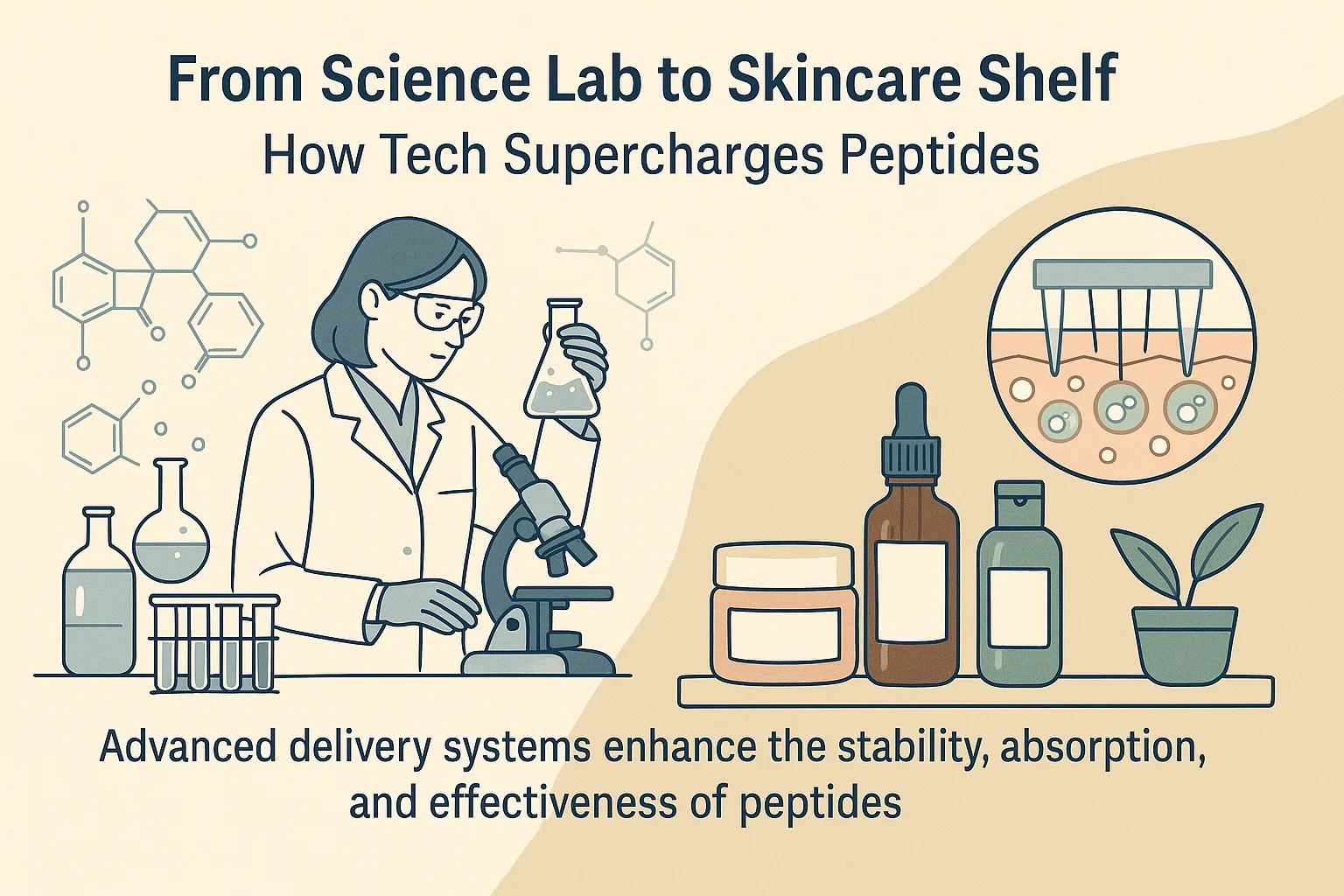
While peptides offer impressive biological benefits, their full potential hinges on how well they reach their target. This is where delivery technology comes into play. Advanced methods are transforming how peptides interact with the skin—making them more stable, more absorbable, and more effective.
Modern Delivery Systems: From Lab to Dermis
Traditional skincare often struggles with skin penetration. Peptides, being relatively large molecules, need assistance getting past the skin barrier. Innovations like nanocarriers, microneedles, and liposomes are solving this challenge. For example, nanocarrier systems—tiny lipid-based spheres—can protect peptides from degradation and enhance skin absorption by up to 60%. Similarly, microneedle patches create micro-channels in the skin, allowing for deeper and more controlled peptide delivery.
Peptide synthesis has also advanced. Solid-phase peptide synthesis (SPPS) now allows for high-precision manufacturing at scale, making once-expensive peptides more accessible for everyday skincare.
Real-World Formulas That Deliver
These technologies aren’t just confined to research labs—they’re powering some of today’s most successful skincare products.
- Olay Regenerist Micro-Sculpting Cream, enriched with Matrixyl (palmitoyl pentapeptide-4), has shown a 20% boost in skin elasticity and 15% wrinkle reduction in just four weeks.
- The Ordinary “Buffet” Serum blends Matrixyl 3000 and Argireline to hydrate, smooth, and firm the skin. Users often report noticeable improvements in texture and tone within a month.
- SkinMedica TNS Essential Serum goes a step further, combining peptides with growth factors to improve smoothness and reduce fine lines by up to 30% in 12 weeks.
These products underscore a new era in skincare—where clinical science and cosmetic elegance merge to deliver visible results.
Beyond Generic: The Rise of Personalized and Ethical Peptide Skincare
Peptides aren’t just powering today’s skincare—they’re shaping the future of beauty. As science advances, we’re entering a new era of personalized, ethical, and high-tech skincare, where treatments are tailored to individual biology and powered by innovation.
Personalized Skincare: The Genetic Revolution
One-size-fits-all skincare is quickly becoming a thing of the past. Thanks to genetic profiling and molecular skin mapping, brands can now customize products based on a person’s unique skin traits—like collagen breakdown, oxidative stress susceptibility, and UV sensitivity.
For example, companies like SkinDNA and Geneu analyze over a dozen skin-aging genes to generate bespoke peptide-based regimens. In a 2020 study, individuals following genetically tailored skincare routines saw 25% greater improvements in elasticity compared to those using generic products.
Meanwhile, devices like L’Oréal’s Perso and La Roche-Posay’s My Skin Track UV use AI and wearable sensors to assess skin condition and environmental exposure in real time, offering hyper-personalized peptide solutions on demand.
Smart Combinations: Peptides Meet Stem Cells and the Microbiome
Peptides are also being fused with other breakthrough technologies. Stem cell-derived exosomes combined with peptides enhance regeneration, while microbiome-friendly peptides help balance skin flora and reduce inflammation. These hybrid products are showing remarkable results—like 40% improvements in skin barrier function among eczema patients.
Sustainable and Ethical Innovation
Consumers are also demanding more transparency and sustainability. Brands are shifting to plant-based peptides, cruelty-free sourcing, and biodegradable packaging. Some, like The Ordinary, are even working toward a 50% reduction in carbon footprint by 2030.
With this convergence of science, ethics, and personalization, peptides are not just transforming skin—they’re redefining what modern skincare can be.
The Future Is Peptides: Smarter, Kinder, and Scientifically Backed
The science is clear: peptides are no longer just trendy ingredients—they’re the cornerstone of next-generation anti-aging skincare. Backed by clinical evidence and driven by biotechnology, they offer something rare in the beauty world—real, measurable results with minimal irritation.
From boosting collagen and smoothing fine lines to restoring hydration and strengthening the skin barrier, peptides do more than mask aging—they intervene at the molecular level to reverse it. And with the rise of AI-powered personalization, sustainable production, and hybrid technologies like peptide-stem cell formulations, their potential is only just beginning to unfold.
For skincare brands and consumers alike, embracing peptides isn’t just about following innovation—it’s about leading it. As we move toward a future where beauty meets biotechnology, peptides will remain at the forefront: smart, ethical, and truly transformative.
Reference
Mao, Z. (2025). Frontiers in Skin Rejuvenation: Recent Advances in Anti-Aging Skincare Technologies Based on Proteins, Peptides, and Peptide Derivatives. Modern Health Science, 8(1), p69-p69.
https://doi.org/10.30560/mhs.v8n1p69
Kim, J. K., Lee, J. H., Yang, M. S., Seo, D. B., & Lee, S. J. (2009). Beneficial effect of collagen peptide supplement on anti-aging against photodamage. Korean Journal of Food Science and Technology, 41(4), 441-445.
https://koreascience.kr/article/JAKO200928038435262.page
Li, F., Chen, H., Chen, D., Zhang, B., Shi, Q., He, X., … & Wang, F. (2023). Clinical evidence of the efficacy and safety of a new multi‐peptide anti‐aging topical eye serum. Journal of Cosmetic Dermatology, 22(12), 3340-3346.
https://doi.org/10.1111/jocd.15849
Imbert, I., Botto, J. M., Farra, C. D., & Domloge, N. (2012). Modulation of telomere binding proteins: a future area of research for skin protection and anti‐aging target. Journal of Cosmetic Dermatology, 11(2), 162-166.