 LinkPeptide
The Power of Peptides: How Bioactive Molecules Are Transforming Skincare
Blog 295
Abstract
Bioactive peptides have emerged as high-performance ingredients in modern skincare, offering multifunctional benefits such as anti-aging, antioxidant, anti-inflammatory, and skin-repairing effects. Derived from natural sources like plants, animals, marine organisms, and even insects, these short amino acid chains interact directly with skin cells to stimulate collagen production, reduce inflammation, and improve hydration. This blog explores the four key categories of cosmetic peptides—signal, carrier, neurotransmitter-inhibitory, and enzyme-inhibitory—along with their mechanisms of action and real-world efficacy. It also examines the safety, regulatory limits, and formulation challenges involved in their use. As cosmetic science advances and consumer demand for clean, effective ingredients grows, bioactive peptides represent a promising bridge between natural skincare and high-tech dermatology. Whether incorporated into serums or creams, these peptides are poised to become core elements of the next generation of evidence-based, results-driven skincare.
The Rise of Peptides: Why Skincare Is Getting Smarter
Skincare today is smarter, cleaner, and more science-driven than ever before. As consumers shift toward products that deliver real, lasting results, bioactive peptides have emerged as one of the most powerful innovations in cosmetic science.
These small yet potent molecules—short chains of amino acids—are revolutionizing how we approach skin health. Found in a growing range of serums, creams, and anti-aging treatments, peptides offer a precise, biologically active way to stimulate collagen production, enhance hydration, reduce inflammation, and support skin repair at the cellular level.
Unlike harsher actives, peptides are often derived from natural sources and are well tolerated by sensitive skin. Their ability to communicate with skin cells makes them uniquely effective in targeting concerns like fine lines, dullness, and loss of elasticity—without irritation or downtime.
In this blog, we’ll dive into the science behind bioactive peptides, explore how they work, where they come from, and why they’re quickly becoming essential ingredients in the next generation of skincare.
What Are Bioactive Peptides? The Science Behind the Hype
Bioactive peptides are rapidly becoming the heroes of next-generation skincare—and for good reason. These short chains of amino acids, typically composed of 2 to 50 residues, function as powerful biological messengers that can profoundly influence how your skin behaves, repairs, and ages. Unlike proteins, which are longer and more complex, peptides are compact yet potent, easily absorbed, and able to interact with cellular receptors to trigger specific actions.
In the world of cosmetics, these peptides are known for their multitasking capabilities. They can stimulate collagen production, improve hydration, fight free radicals, suppress inflammation, and even ward off harmful microbes. That means a single peptide-infused serum can simultaneously combat wrinkles, brighten dullness, calm irritation, and support your skin’s defense system.
But what truly sets bioactive peptides apart is their safety and efficiency. Because many of them mimic natural components already present in the human body, they tend to be hypoallergenic and non-irritating—a significant advantage over harsher actives like retinoids or acids. They are also well-suited to sustainable, cost-effective production, whether derived from plants, marine organisms, or synthetically crafted in labs.
Some peptides have already made headlines in the skincare industry. Palmitoyl pentapeptide-3 (often marketed as Matrixyl) boosts collagen synthesis and reduces fine lines. Copper peptide Cu-GHK supports wound healing and DNA repair. Acetyl hexapeptide-3, better known as Argireline®, acts as a topical alternative to Botox, smoothing expression lines without needles.
In short, peptides are not just a trend—they represent a science-driven shift toward smarter, targeted, and biologically harmonious skincare. As research continues to expand, we are only beginning to unlock their full cosmetic potential.
How Peptides Work: 4 Powerful Ways They Transform Your Skin
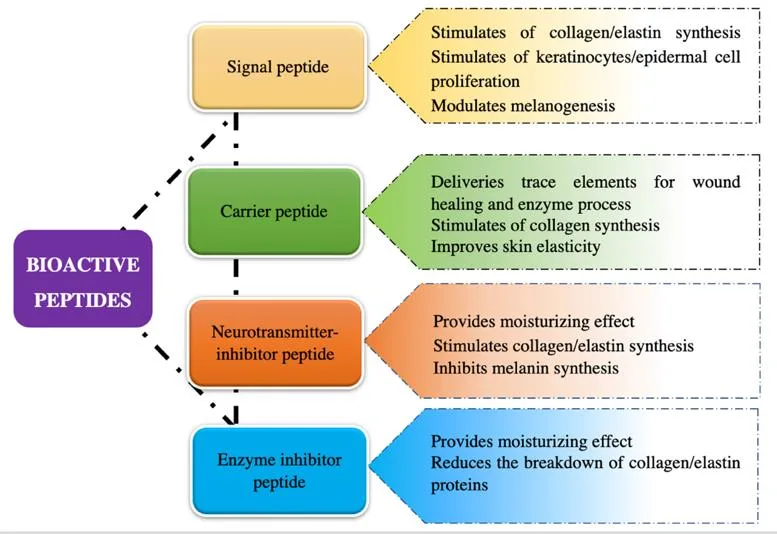
Bioactive peptides do more than just sit on your skin—they actively communicate with skin cells, triggering biological processes that support regeneration, structure, and resilience. Scientists classify these peptides into four main types, each with distinct roles and benefits in skincare:
Signal Peptides
These peptides “signal” skin cells—particularly fibroblasts—to produce vital structural proteins like collagen, elastin, and fibronectin. For example, palmitoyl tripeptide-5 mimics the effects of thrombospondin, activating TGF-β (a key growth factor) to boost collagen synthesis. Clinical trials show improved skin texture and reduced wrinkles with consistent use.
Carrier Peptides
Carrier peptides help deliver essential minerals, such as copper and manganese, deep into the skin. A well-known example, Cu-GHK, delivers copper ions that promote healing, reduce inflammation, and enhance the production of antioxidants like superoxide dismutase. These peptides support tissue repair and DNA protection, making them ideal for anti-aging and post-procedure care.
Neurotransmitter-Inhibitory Peptides
These peptides function similarly to Botox, relaxing facial muscles by interfering with acetylcholine release at neuromuscular junctions. Acetyl hexapeptide-3 (Argireline®) is a standout in this class—it mimics part of the SNAP-25 protein and helps soften expression lines. Studies have shown it can reduce wrinkle depth by up to 59% in just 30 days.
Enzyme-Inhibitory Peptides
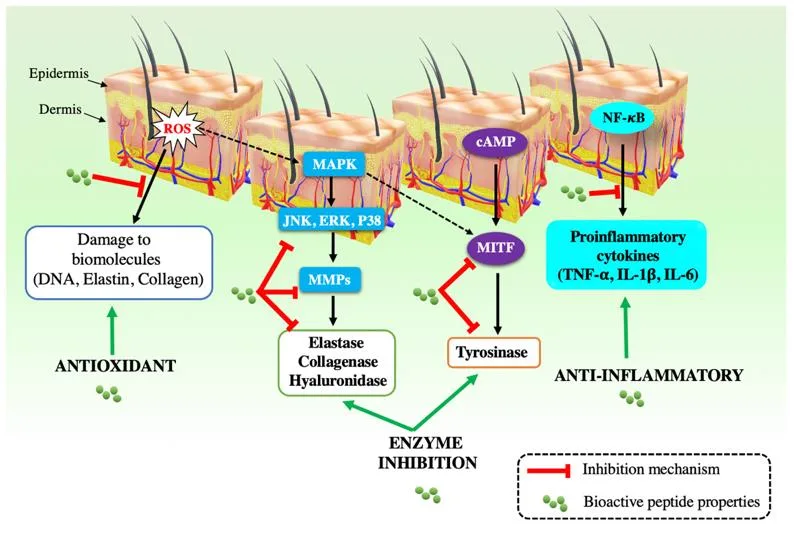
To prevent skin degradation, enzyme-inhibitory peptides block enzymes like MMPs, tyrosinase, and elastase, which break down collagen and contribute to pigmentation and sagging. Peptides derived from soy, rice, and silk fibroin have shown promising results in slowing these processes and preserving skin firmness and brightness.
Together, these functional peptides address a broad spectrum of skin concerns—working beneath the surface to restore structure, reduce signs of aging, and enhance overall skin vitality.
From Soil to Sea: Natural Sources of Skincare Peptides
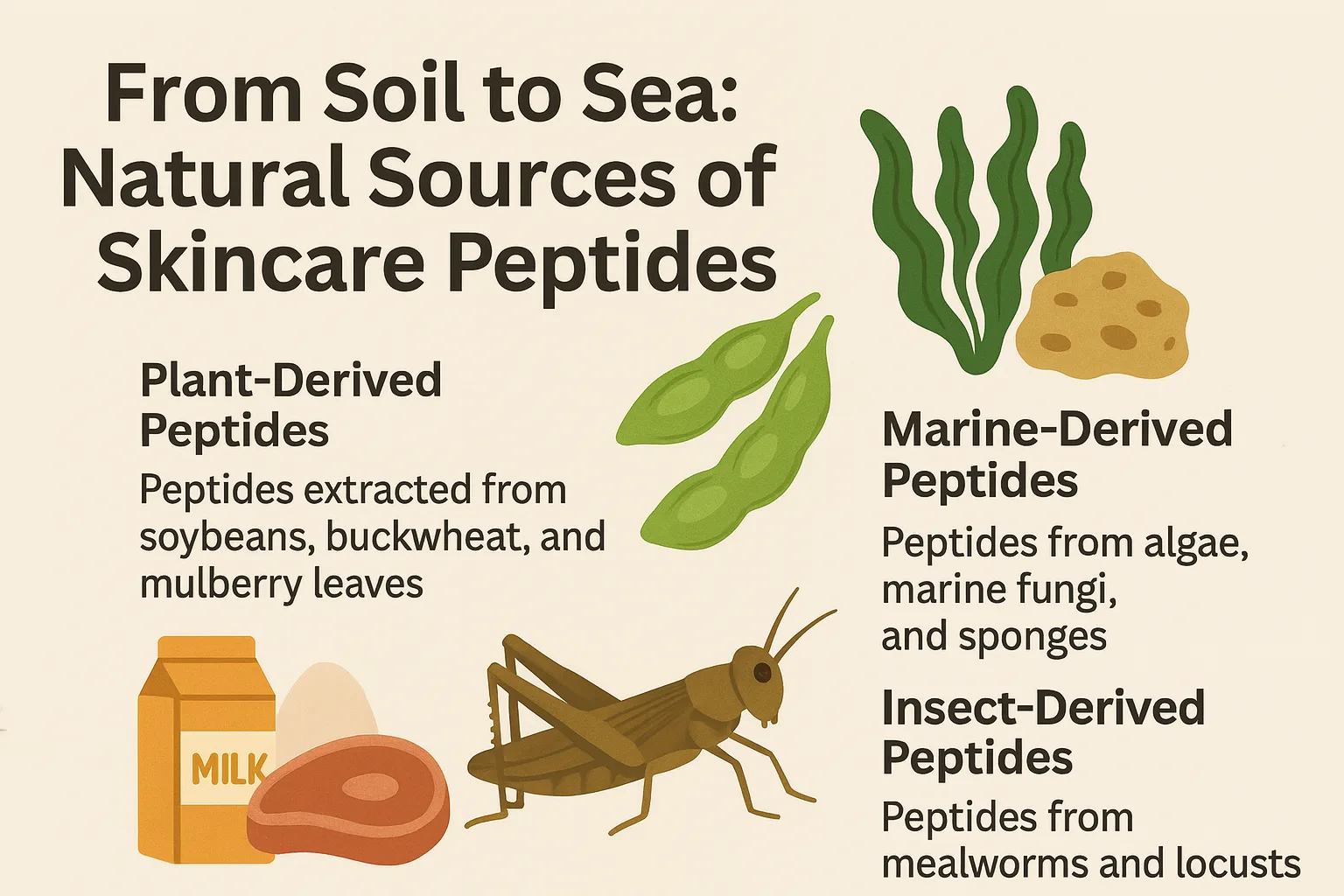
One of the most exciting aspects of bioactive peptides is their diverse natural origins. While synthetic peptides are widely used, many of the most effective cosmetic peptides are derived from plants, animals, marine organisms, and even insects. These sources not only offer functionality but align with the rising consumer demand for clean, nature-inspired formulations.
Plant-Derived Peptides
Plants are rich in proteins and bioactive compounds. Peptides extracted from soybeans, buckwheat, and mulberry leaves show strong antioxidant, anti-inflammatory, and skin-whitening properties. For instance, soybean-derived peptides can neutralize free radicals and even enhance skin brightness by inhibiting melanin production.
Animal-Based Peptides
Milk, eggs, and meat are common animal sources. Peptides from buffalo milk lactoferrin have been shown to boost antioxidant enzyme activity, aiding in skin repair. Enzymatically hydrolyzed egg proteins offer not just nutritional value but potent antioxidant and anti-aging benefits. Even meat-derived peptides from chicken or duck have demonstrated anti-inflammatory and skin-rejuvenating effects.
Marine-Derived Peptides
The marine environment is a treasure trove of bioactivity. Peptides from algae like Porphyra dioica and organisms such as marine fungi or sponges are known for their anti-aging, moisturizing, and antimicrobial properties. These peptides have evolved to withstand harsh environments, making them incredibly resilient and effective in skincare formulations.
Insect-Derived Peptides
Though still emerging, peptides from insects like mealworms and locusts have demonstrated antioxidant and anti-inflammatory effects. They also offer sustainable sourcing options for eco-conscious brands.
From the soil to the sea—and even the sky—nature provides an abundant and functional pharmacy of peptides ready to enhance modern skincare.
Safe and Effective—But Not So Simple: Peptides in Practice
Despite their promising benefits, bioactive peptides are not without formulation and regulatory challenges. While generally well tolerated and regarded as safe, peptides must meet specific standards in terms of concentration, stability, and delivery.
Safety in Use
Most cosmetic peptides are used in very low concentrations, typically between 1 and 30 ppm, to ensure efficacy without triggering irritation. Ingredients like palmitoyl pentapeptide-4 and acetyl hexapeptide-8 are widely used in products such as eye creams and facial serums, and clinical data confirms their low allergenicity and minimal side effects. However, high concentrations—especially above 100 ppm—may cause mild irritation in sensitive users.
Formulation Challenges
Peptides are structurally delicate. They are sensitive to pH changes, oxidation, and high temperatures, which can degrade their activity. Moreover, many peptides have low skin permeability due to their molecular weight and hydrophilic nature. This makes delivery systems—such as encapsulation in liposomes or nanocarriers—essential for effectiveness.
Cost and Production
While synthetic peptides are highly pure, they are often costly to manufacture. Using low concentrations helps reduce cost, but detecting and stabilizing such tiny amounts within complex formulations remains a technical hurdle.
In summary, peptides are powerful but complex ingredients. With continued innovation in delivery technology and ingredient stability, their use in cosmetics is set to expand even further.
Peptides Are the Future of Skincare—And the Future Is Now
Bioactive peptides are redefining the standards of modern skincare. With their ability to stimulate collagen, repair damaged tissue, calm inflammation, and protect against aging, these multifunctional molecules have earned their place among the most promising cosmetic ingredients available today.
Sourced from nature and refined by science, peptides offer a powerful yet gentle alternative to traditional actives—ideal for consumers seeking both efficacy and safety. From topical serums to future oral supplements, their applications are expanding rapidly.
Still, like all cutting-edge ingredients, peptides come with formulation and delivery challenges that require continued research and innovation. But with the growing momentum in peptide science, we’re entering a new era where skincare doesn’t just treat the surface—it communicates with the skin, promoting real biological change.
As consumers become more ingredient-savvy, one thing is clear: peptides are no longer just a trend—they’re the future of functional skincare.
Reference
Ngoc, L. T. N., Moon, J. Y., & Lee, Y. C. (2023). Insights into bioactive peptides in cosmetics. Cosmetics, 10(4), 111.
https://doi.org/10.3390/cosmetics10040111
Lima, T. N., & Pedriali Moraes, C. A. (2018). Bioactive peptides: applications and relevance for cosmeceuticals. Cosmetics, 5(1), 21.
https://doi.org/10.3390/cosmetics5010021
Bégin, P., Callum, J., Jamula, E., Cook, R., Heddle, N. M., Tinmouth, A., … & Arnold, D. M. (2021). Convalescent plasma for hospitalized patients with COVID-19: an open-label, randomized controlled trial. Nature medicine, 27(11), 2012-2024.
https://doi.org/10.1038/s41591-021-01488-2
Ruiz Martínez, M. A., Clares Naveros, B., Morales Hernández, M. E., & Gallardo Lara, V. (2010). Evaluation of the anti-wrinkle efficacy of cosmetic formulations with an anti-aging peptide (Argireline®).