 LinkPeptide
Collagen, Scars, and Skin Revival: The Medical Rise of Microneedling
Blog 253
Abstract
Microneedling, traditionally viewed as a cosmetic procedure, is now emerging as a powerful therapeutic tool in dermatology. By creating controlled micro-injuries in the skin, it triggers collagen and elastin production while enhancing the delivery of topical agents into deeper layers. This review-based blog explores microneedling’s expanding clinical applications, including treatment of acne scars, androgenetic alopecia, melasma, actinic keratoses, and more. It compares microneedling favorably against other modalities such as lasers and chemical peels, particularly in patients with darker skin types due to its lower risk of pigmentation changes. Although results are promising, limitations like small study sizes and lack of standardization persist. Ongoing research is essential to optimize protocols and validate microneedling as a first-line therapy in dermatologic care. With growing clinical support and broad patient appeal, microneedling is rapidly redefining modern skin treatment.
From Cosmetic Trend to Clinical Tool
Once known primarily as a cosmetic fix, microneedling (MN) is now making waves in clinical dermatology. Also called collagen induction therapy, this minimally invasive procedure uses tiny, sterilized needles to create controlled micro-injuries in the skin. In response, the body activates its natural wound-healing process—boosting collagen and elastin production, which are essential for firm, resilient skin.
Initially embraced for improving skin texture and reducing fine lines, MN has expanded far beyond aesthetics. Today, it’s being actively explored as a treatment for acne scars, hair loss, melasma, actinic keratoses, and other dermatologic concerns. Its standout advantage lies in its ability to enhance the penetration of topical medications by forming temporary microchannels through the skin’s surface.
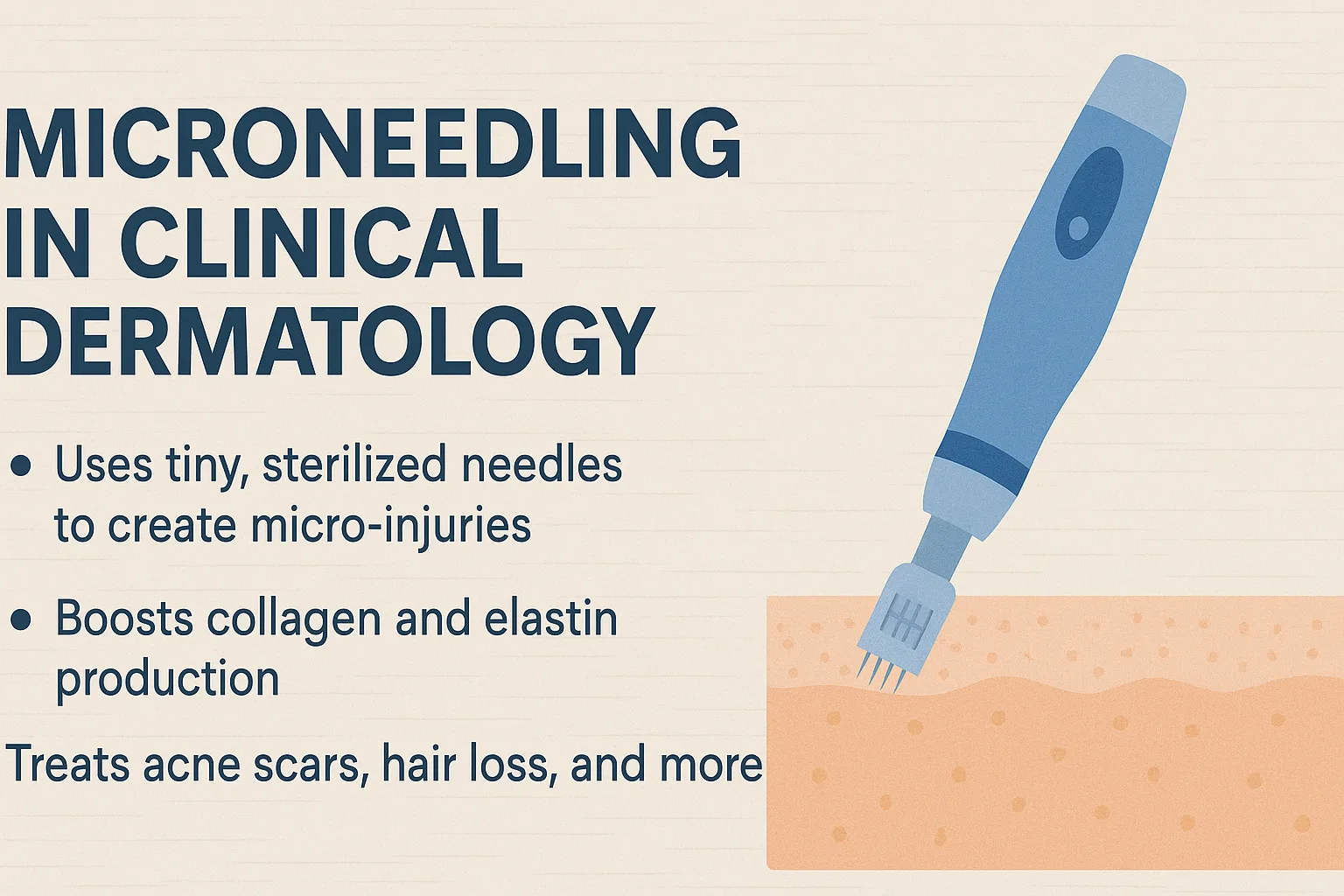
What makes microneedling especially appealing is its safety, affordability, and suitability for all skin types—including darker tones, where lasers may pose a higher risk of pigmentation changes.
In this blog, we’ll take a closer look at how microneedling is evolving into a clinically validated therapy, offering new hope for patients and dermatologists alike.
The Science Behind the Pinpricks
At the heart of microneedling’s effectiveness is a simple yet powerful mechanism: precision-controlled skin injury. By using devices equipped with fine needles—such as the widely recognized Dermaroller® or the pen-style Dermapen®—microneedling creates micro-punctures in the epidermis. These tiny channels are just enough to trigger the skin’s wound-healing cascade without causing significant damage to the outermost layer.
This process stimulates the release of growth factors like TGF-β and PDGF, which activate fibroblasts to produce new collagen and elastin in the dermis. Over time, this results in firmer, smoother, and more youthful-looking skin. Beyond aesthetics, these micro-injuries also improve blood circulation and facilitate the delivery of topical drugs directly into deeper skin layers—making MN a valuable tool in therapeutic dermatology.
Technology has since advanced beyond manual rollers. Modern devices include electrically powered pens that offer more consistent needle depth and frequency, as well as radiofrequency and LED-integrated models for enhanced results. Additionally, microneedling is being combined with other techniques like microdermabrasion, photodynamic therapy, and transdermal drug systems to extend its applications even further.
What’s truly remarkable is microneedling’s versatility. It delivers clinically meaningful results with minimal downtime, a low risk of adverse effects, and suitability across all skin types—positioning it as a frontline option in both cosmetic and medical skin care.
Real Results Across Conditions
Microneedling is no longer confined to beauty clinics—it’s carving out a space in evidence-based dermatology. From stubborn acne scars to hair loss and pigmentation disorders, its clinical applications are growing rapidly.
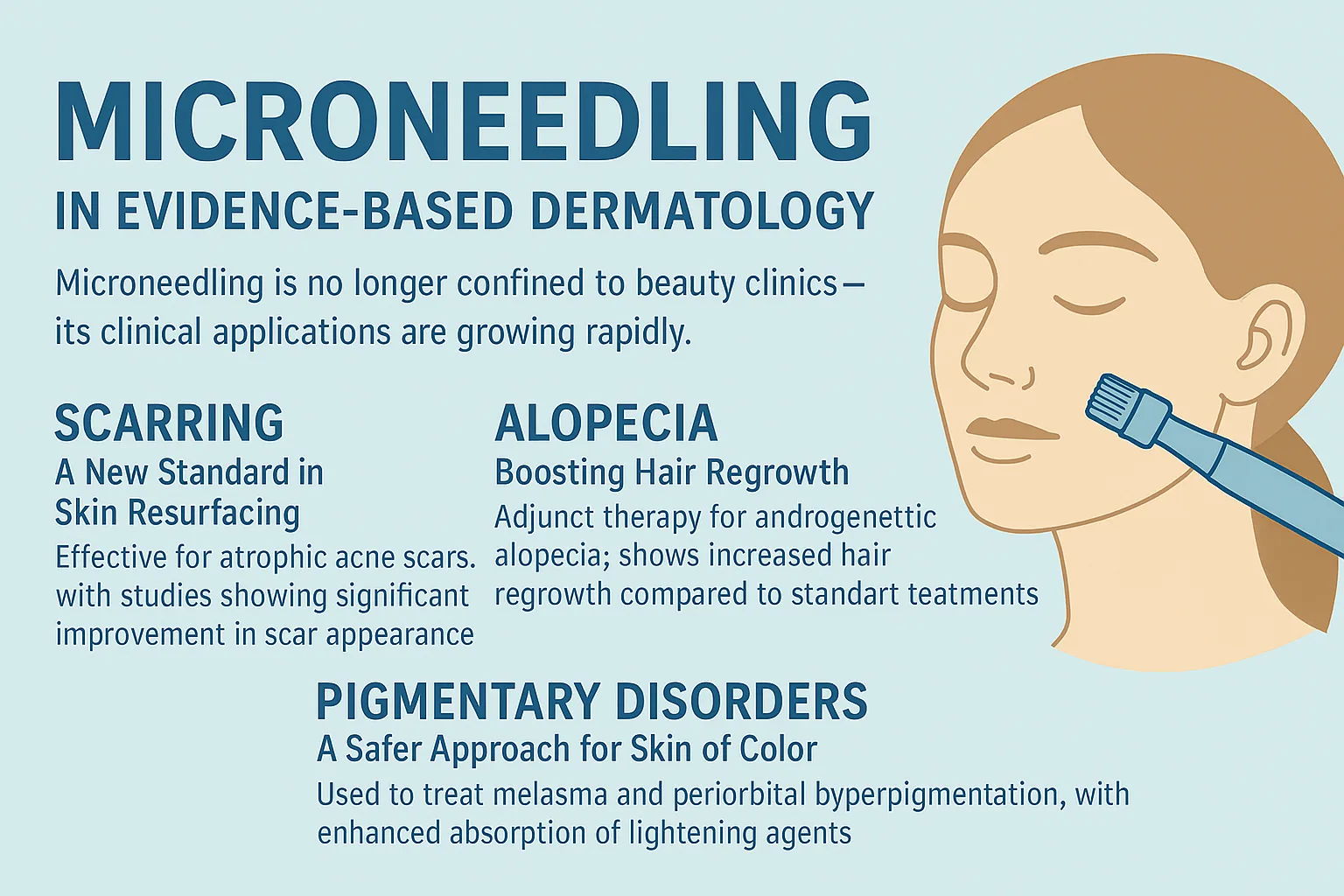
a. Scarring: A New Standard in Skin Resurfacing
Among microneedling’s most well-studied uses is the treatment of atrophic acne scars. Clinical trials have shown significant improvements in both scar texture and depth. In one study, patients experienced a 51–60% reduction in scar appearance and high satisfaction after just six sessions. Histological analysis confirmed increased collagen types I, III, and VII with minimal adverse effects.
Compared to fractional lasers, MN delivers similar efficacy with fewer side effects, such as post-inflammatory hyperpigmentation (PIH)—making it safer for patients with darker skin tones. It’s also being used for hypertrophic and surgical scars, especially when combined with topical agents like vitamins A and C to enhance collagen synthesis.
b. Alopecia: Boosting Hair Regrowth
Microneedling has shown promise as an adjunct therapy in androgenetic alopecia (AGA). In a randomized trial, men treated with both MN and 5% minoxidil experienced significantly greater hair regrowth compared to minoxidil alone. Notably, 82% of patients reported over 50% improvement, compared to just 4.5% in the control group.
Its mechanism? MN may stimulate stem cells in hair follicles and improve drug absorption. Early studies also suggest benefits for alopecia areata when combined with topical corticosteroids—offering a less painful alternative to injections.
c. Pigmentary Disorders: A Safer Approach for Skin of Color
MN’s ability to increase the absorption of skin-lightening agents has led to its use in treating melasma and periorbital hyperpigmentation. One trial comparing tranexamic acid with and without MN found a significantly greater improvement when microneedling was added. Patients using MN with a depigmentation serum also reported enhanced brightness and a more even tone.
Periorbital melanosis, often resistant to topical treatments, responded well to MN combined with anti-aging serums or trichloroacetic acid (TCA) peels. Most patients noted visible improvements with minimal irritation.
However, results for vitiligo have been less encouraging. Studies found no significant difference in repigmentation when MN was added to standard therapies like narrowband UVB and topical latanoprost—indicating that more research is needed in this area.
d. Other Uses: From Warts to Precancerous Lesions
Microneedling has even been applied to conditions like verruca plantaris (plantar warts). In one small case series, MN combined with topical bleomycin achieved 100% clearance with minimal discomfort—avoiding the tissue damage often seen with intralesional injections.
For actinic keratoses (AK), MN is showing potential as an adjuvant to photodynamic therapy (PDT). Studies found that pre-treatment with MN led to greater lesion clearance and improved cosmetic outcomes compared to PDT alone.
Microneedling’s adaptability across such diverse conditions highlights its emerging role not just as a cosmetic enhancer, but as a true clinical intervention.
What We Know and What We Don’t
Microneedling offers a rare combination of simplicity, versatility, and clinical value. Its minimally invasive nature makes it accessible in outpatient settings, while its broad compatibility with other treatments enhances therapeutic outcomes. From acne scars and melasma to alopecia and actinic keratoses, MN has proven beneficial across both cosmetic and medical dermatology.
One of its key advantages is safety across skin types—especially in individuals with darker complexions who are more prone to post-procedural pigmentation changes with lasers or chemical peels. MN also causes fewer long-term side effects and requires little to no downtime, making it an appealing option for patients seeking results without disruption to daily life.
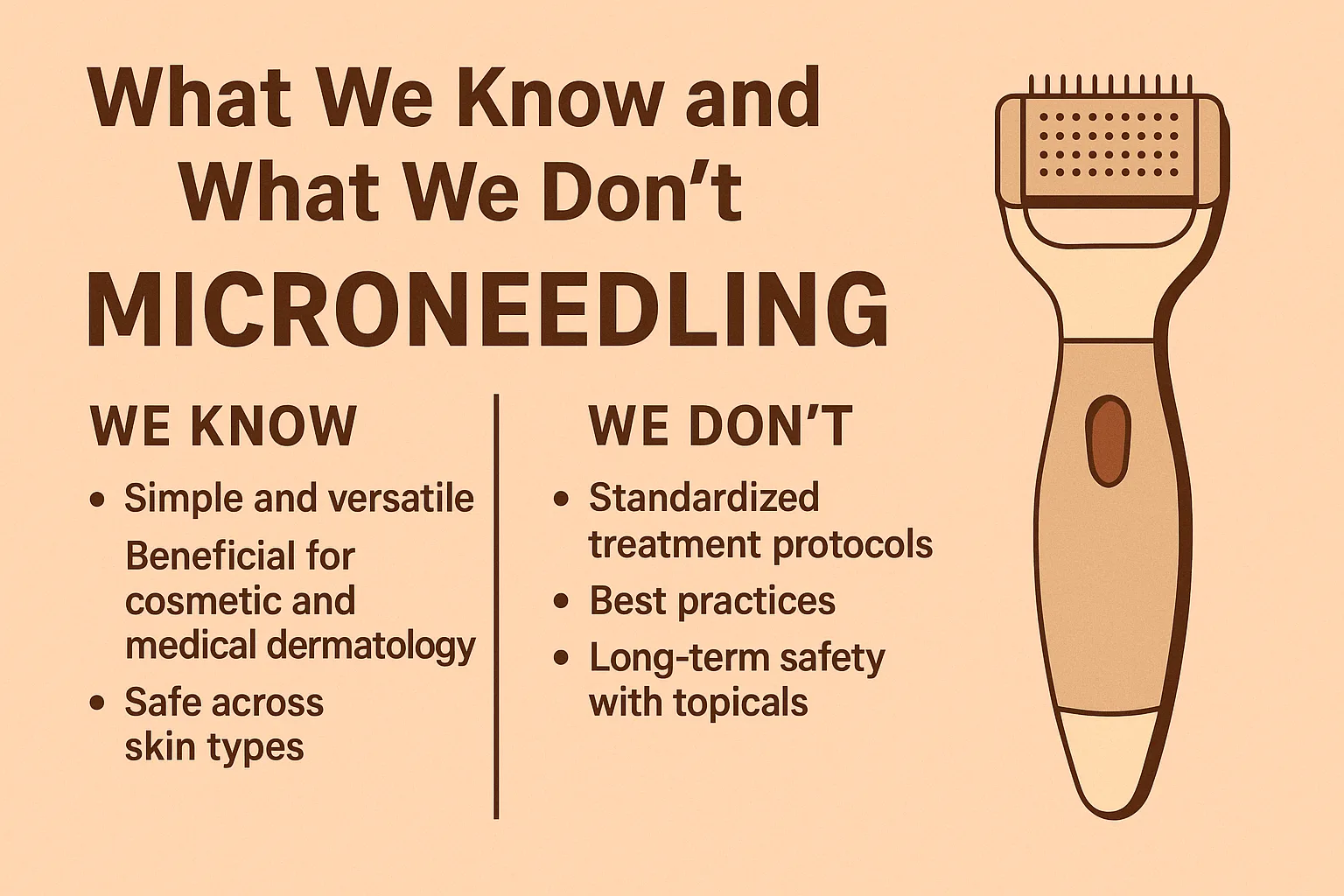
However, limitations remain. Many clinical studies to date have small sample sizes or lack standardization in treatment protocols. Variables such as needle length, treatment intervals, number of sessions, and combination therapies differ widely across trials, making it difficult to establish best practices. Furthermore, while MN enhances transdermal delivery, it also poses risks if used with non-sterile or unapproved topicals, potentially leading to infection or granulomatous reactions.
Looking ahead, the field needs larger, controlled clinical trials to solidify microneedling’s role in therapeutic dermatology. A deeper understanding of its underlying mechanisms—particularly in conditions like alopecia and pigmentary disorders—will be key to unlocking its full potential.
In short, microneedling has opened the door to a new generation of skin treatments—but the science is still catching up to the hype.
A Sharper Future for Skin Health
Microneedling is redefining the boundaries between cosmetic enhancement and clinical dermatology. Once seen as a simple skin-rejuvenation technique, it is now gaining credibility as a therapeutic tool for a variety of skin conditions—scarring, pigmentation, hair loss, and even precancerous lesions.
Its strengths lie in versatility, safety, and synergy with topical agents, especially in patients with skin of color or sensitivity to more aggressive treatments. As device technology and clinical evidence continue to evolve, microneedling is poised to become a mainstream component of dermatologic care.
Yet, to fully unlock its potential, the field must move toward standardized protocols and deeper clinical validation. With continued research, microneedling may well transition from promising adjunct to first-line therapy in many dermatologic settings.
Reference
Iriarte, C., Awosika, O., Rengifo-Pardo, M., & Ehrlich, A. (2017). Review of applications of microneedling in dermatology. Clinical, cosmetic and investigational dermatology, 289-298.
https://doi.org/10.2147/CCID.S142450
Orentreich, D. S., & Orentreich, N. (1995). Subcutaneous incisionless (subcision) surgery for the correction of depressed scars and wrinkles. Dermatologic Surgery, 21(6), 543-549.
https://doi.org/10.1111/j.1524-4725.1995.tb00259.x
Moro, P. L., Harrington, T., Shimabukuro, T., Cano, M., Museru, O. I., Menschik, D., & Broder, K. (2013). Adverse events after Fluzone® Intradermal vaccine reported to the Vaccine Adverse Event Reporting System (VAERS), 2011–2013. Vaccine, 31(43), 4984-4987.
https://doi.org/10.1016/j.vaccine.2013.08.001
Bencini, P. L., Galimberti, M. G., Pellacani, G., & Longo, C. (2012). Application of photodynamic therapy combined with pre‐illumination microneedling in the treatment of actinic keratosis in organ transplant recipients. British Journal of Dermatology, 167(5), 1193-1194.