 LinkPeptide
Bioactive Peptides: Unveiling Their Therapeutic Potential and Multidisciplinary Applications
Blog 239
Abstract
Bioactive peptides are short chains of amino acids that possess significant biological activities, making them valuable in a variety of applications, particularly in healthcare, food, and agriculture. These peptides are derived from natural sources such as plants, animals, and microorganisms, and exhibit various health-promoting effects, including antimicrobial, antihypertensive, anticancer, and antioxidant activities. In healthcare, bioactive peptides have been explored for their potential to treat chronic diseases such as hypertension, diabetes, and cancer by interacting with specific receptors, enzymes, or other cellular targets. In the food industry, these peptides enhance nutritional value and act as functional ingredients with added health benefits, such as promoting digestion and reducing oxidative stress. Furthermore, their use in agriculture as natural alternatives to chemical pesticides offers a sustainable solution for pest control and crop protection. Continued research into the synthesis, sources, and applications of bioactive peptides will further expand their impact across multiple industries.
Unlocking the Power of Bioactive Peptides: An Introduction
Bioactive peptides, short chains of amino acids, have attracted significant attention in scientific research due to their versatile biological functions. These peptides, often derived from natural sources such as food proteins, animals, and microorganisms, possess unique properties that make them valuable in a variety of applications, ranging from health to industry[1]. Researchers are increasingly exploring bioactive peptides for their potential therapeutic properties, including antimicrobial, antioxidant, and anti-inflammatory activities. Moreover, these peptides have shown promise in drug design, food science, and even agriculture, making them a highly interdisciplinary area of study.
The importance of bioactive peptides lies not only in their biological roles but also in their wide-ranging potential for improving human health and well-being. As an alternative to traditional pharmaceuticals, bioactive peptides offer a more targeted and often safer approach to treatment[2,3]. This blog will delve into the fascinating world of bioactive peptides by exploring their synthesis, sources, applications, and the mechanisms through which they exert their biological effects. Through this exploration, we aim to highlight both the current advancements and the future directions of research in this emerging field.
Understanding Bioactive Peptides: Definition and Characteristics
Bioactive peptides are short chains of amino acids that have significant biological activities in living organisms. These peptides, typically consisting of 2 to 50 amino acids, can be either naturally occurring or synthetically produced and exhibit a wide range of physiological functions[4]. Unlike other peptides, bioactive peptides are not merely byproducts of protein metabolism but are bioactive molecules that exert direct effects on biological processes. Their ability to interact with specific receptors or enzymes often triggers beneficial outcomes in health, making them a subject of growing interest in biomedical research.
In terms of classification, bioactive peptides can be categorized into two broad groups: endogenous and exogenous. Endogenous peptides are produced naturally within the body, often from larger precursor proteins, and are involved in crucial regulatory functions such as immune modulation, blood pressure regulation, and metabolic control[5]. Exogenous bioactive peptides, on the other hand, are derived from external sources like food, microorganisms, or plants and are particularly recognized for their potential health benefits. Many bioactive peptides are characterized by their ability to act as antioxidants, antimicrobial agents, or antihypertensive compounds.
Their impact on human health extends across several domains, including the prevention and treatment of chronic diseases such as cancer, hypertension, and diabetes. Through binding to specific receptors or influencing various signaling pathways, bioactive peptides can modulate the immune system, reduce oxidative stress, and regulate metabolic pathways, thereby contributing to disease management and health promotion.
Synthesis of Bioactive Peptides: Methods and Challenges
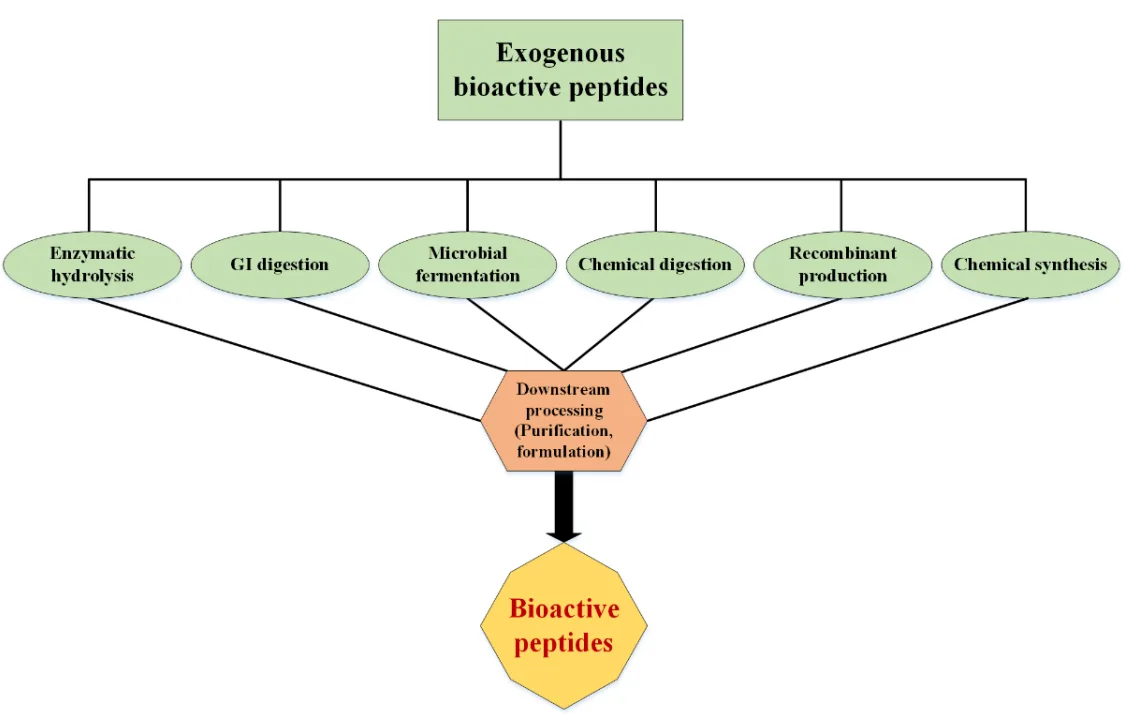
The synthesis of bioactive peptides can be achieved through several methods, each suited to specific types of peptides and their intended applications. The two most common techniques for peptide synthesis are chemical synthesis and biosynthesis. Both methods have distinct advantages and challenges, and recent advances continue to improve their efficiency, scalability, and cost-effectiveness.
Chemical Synthesis
Chemical synthesis, often referred to as solid-phase peptide synthesis (SPPS), is the most widely used technique for producing short peptides in the laboratory. This method involves the stepwise addition of amino acids to a solid support, typically a resin, allowing the peptide chain to elongate in a controlled manner. After synthesis, the peptide is cleaved from the resin and purified[6]. This approach is highly effective for producing peptides with a specific sequence and has been instrumental in generating peptides for research and therapeutic purposes. However, the process can be expensive and may face difficulties when attempting to synthesize larger peptides or those with complex structures.
One of the main challenges of chemical synthesis is ensuring the correct folding of the peptide, especially for larger peptides or those requiring specific conformations. Incorrect folding can lead to a loss of biological activity or stability, which is particularly critical for peptides intended for therapeutic applications.
Biosynthesis
Biosynthesis involves the use of biological systems, such as microorganisms or genetically modified cells, to produce peptides. This method can be more sustainable and cost-effective, especially for the production of larger peptides or peptides with complex modifications. Recombinant DNA technology is commonly employed to express bioactive peptides in microorganisms like E. coli or yeast, where the gene encoding the peptide is inserted into the host organism’s genome. The microorganism then synthesizes the peptide, which can be harvested and purified. This approach is particularly advantageous for the large-scale production of peptides with consistent quality.
In addition to recombinant systems, enzymatic synthesis has also emerged as a promising technique[7]. Enzymatic synthesis allows the targeted production of bioactive peptides by using specific enzymes to cleave precursor proteins or peptides. This method is highly efficient for generating peptides with post-translational modifications, such as phosphorylation or glycosylation, which are often required for biological activity.
Challenges and Advances in Peptide Synthesis
While peptide synthesis methods have made significant strides, challenges still remain, particularly when it comes to the scalability and cost-effectiveness of producing bioactive peptides on a large scale. New technologies, such as microfluidic systems and automated peptide synthesizers, are being developed to address these challenges. These advancements aim to make peptide synthesis faster, more efficient, and cheaper, which will likely lead to broader applications in both research and industry.
Furthermore, the synthesis of peptides that require specific modifications or complex folding patterns remains a challenging task. Research is ongoing into new methodologies for overcoming these obstacles, such as improved folding techniques and novel catalysts for enzymatic reactions. With these innovations, the potential for bioactive peptides in therapeutic and industrial applications will continue to expand.
Exploring the Sources of Bioactive Peptides: From Nature to Biotechnology
Bioactive peptides are naturally derived from various biological sources, including plants, animals, and microorganisms. Each source offers unique peptides with distinct biological activities and applications. The extraction and identification of these peptides have become a significant focus of research, as natural peptides provide a promising and sustainable alternative to synthetic drugs in many applications, ranging from healthcare to food industries. Below, we explore some of the primary sources of bioactive peptides and their potential contributions to human health.

Animal Sources
Animal-based bioactive peptides are commonly found in dairy products, meat, fish, and eggs. These peptides are often released during the digestion or fermentation of proteins and can exhibit a range of beneficial effects, including antimicrobial, antihypertensive, and antioxidant activities. One well-known example is casein-derived peptides from milk, which have been shown to possess antimicrobial properties, as well as peptides from fish proteins that exhibit antioxidant and anti-inflammatory effects.
Peptides obtained from fish are particularly important in the field of health promotion, as fish is a rich source of omega-3 fatty acids and other essential nutrients. Fish-derived peptides, such as those from salmon or cod, are often linked to cardiovascular health benefits, including reducing blood pressure and cholesterol levels.
Another important source of bioactive peptides is eggs, which contain high-quality proteins that, when broken down, can release peptides with various biological activities. Research on egg-derived peptides is growing, with studies showing potential applications in the treatment of chronic diseases such as hypertension and diabetes.
Plant Sources
Plants are an excellent source of bioactive peptides, particularly from seeds, grains, legumes, and fruits. Plant-derived peptides are often associated with antioxidant, anti-inflammatory, and antimicrobial properties. Soybeans, for example, are rich in bioactive peptides that have been shown to exhibit anticancer and antihypertensive effects. Other legumes, such as lentils and chickpeas, also provide peptides that are beneficial for health, especially in modulating metabolic conditions and improving digestion.
Fruits such as apples and grapes, as well as vegetables like spinach and kale, contain bioactive peptides that are linked to anti-inflammatory and immunomodulatory effects. These peptides are often involved in the regulation of oxidative stress and act as natural antioxidants, which can help in reducing the risk of chronic diseases such as cancer and heart disease.
Furthermore, bioactive peptides derived from cereal grains like wheat and rice also show promise in improving human health. These peptides can provide benefits such as lowering blood sugar levels and enhancing immune function, making them particularly valuable in the prevention and management of type 2 diabetes and other metabolic disorders.
Microbial Sources
Microorganisms, including bacteria, fungi, and yeasts, are another rich source of bioactive peptides. Microbial peptides often exhibit potent antimicrobial, antiviral, and antioxidant properties, which make them useful in both medicine and food preservation. Lactobacillus and Bifidobacterium species, for example, are well-known probiotic microorganisms that produce peptides with antimicrobial effects. These peptides can act against harmful pathogens in the gut, promoting a healthy microbiome and improving digestive health.
Fungi and yeasts, such as Aspergillus and Saccharomyces cerevisiae, also produce bioactive peptides that are studied for their immunomodulatory effects and their role in enhancing metabolic processes. These peptides have potential therapeutic applications in treating infections, enhancing immune responses, and improving overall health.
Biotechnological Production of Bioactive Peptides
In addition to natural sources, advances in biotechnology have enabled the production of bioactive peptides through recombinant DNA technology and fermentation processes. By inserting the gene encoding a bioactive peptide into microorganisms like E. coli or Bacillus, researchers can produce large quantities of peptides that can be used for industrial and therapeutic purposes. This biotechnological approach is highly scalable and offers a cost-effective means of producing bioactive peptides for widespread applications.
Moreover, the use of enzymes to release peptides from plant or animal proteins has become an important technique in the food industry. Enzymatic hydrolysis, which involves breaking down proteins into smaller peptides, is used to enhance the bioactivity of food products, making them functional and beneficial for health.
Wide-Ranging Applications of Bioactive Peptides: Medicine, Food, and Beyond
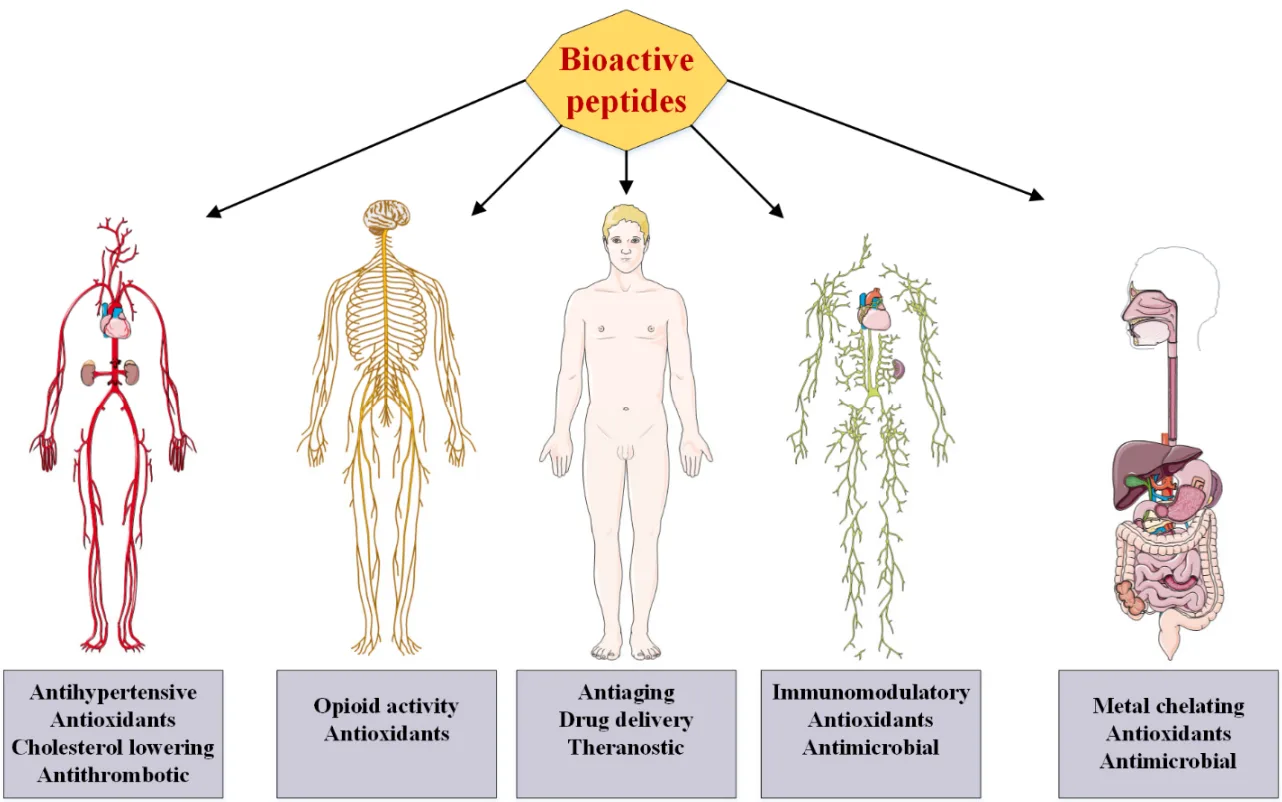
Bioactive peptides have found applications across various industries due to their versatile biological functions. From health and medicine to food, cosmetics, and agriculture, these peptides are gaining traction as natural and potent agents for improving human well-being and addressing various global challenges[8]. The growing body of research highlights the diverse therapeutic potential of bioactive peptides, which are increasingly seen as valuable tools in modern science and technology.
Health and Medicine
In healthcare, bioactive peptides are widely recognized for their therapeutic properties, including antimicrobial, antihypertensive, anticancer, and anti-inflammatory effects. One of the most well-known applications of bioactive peptides is in the treatment of hypertension. Peptides derived from dairy products, such as lactotripeptides, have been shown to lower blood pressure by inhibiting the angiotensin-converting enzyme (ACE), which plays a crucial role in regulating blood pressure. These peptides offer a promising alternative to synthetic antihypertensive drugs, with fewer side effects and enhanced safety profiles.
Bioactive peptides also have significant potential in the treatment and prevention of cancer. Certain peptides derived from food proteins, such as those found in soy and fish, possess anticancer properties by inducing apoptosis (programmed cell death) in cancer cells, inhibiting tumor growth, and suppressing metastasis. Moreover, peptides like piscidin and lactoferrin have demonstrated antimicrobial and anticancer activities, making them potential candidates for use as adjuncts in cancer therapy.
Additionally, bioactive peptides are gaining recognition for their role in modulating the immune system. Peptides derived from natural sources, such as spirulina, exhibit immune-enhancing effects by stimulating the production of cytokines and activating immune cells. These peptides are also being studied for their ability to combat chronic diseases like diabetes, metabolic syndrome, and obesity, which have become increasingly prevalent worldwide.
Food Industry
In the food industry, bioactive peptides are considered valuable functional ingredients due to their health-promoting properties. These peptides are typically generated during the digestion or fermentation of proteins and have the potential to improve the nutritional value of food products. For example, peptides derived from milk proteins, such as casein and whey protein, have been shown to support immune function, enhance gut health, and promote muscle recovery.
In addition to improving the nutritional profile of foods, bioactive peptides are used for their antimicrobial properties, helping to preserve food and extend shelf life. Certain peptides exhibit antimicrobial activities against a broad range of pathogens, including bacteria, fungi, and viruses, making them effective natural preservatives in food processing. This has led to the development of “bioactive foods,” which are products enriched with bioactive peptides that offer additional health benefits beyond basic nutrition.
Bioactive peptides are also used in the formulation of functional foods and beverages aimed at addressing specific health issues. For example, peptides with antihypertensive effects can be incorporated into beverages or supplements targeting individuals with high blood pressure, while antioxidant peptides may be added to foods aimed at promoting overall health and longevity.
Cosmetic Industry
The cosmetic industry has embraced bioactive peptides for their ability to improve skin health, reduce the visible signs of aging, and enhance skin elasticity. Peptides such as palmitoyl pentapeptide and copper peptides are widely used in anti-aging creams and serums due to their ability to stimulate collagen production, reduce the appearance of fine lines and wrinkles, and promote skin regeneration. These peptides also play a role in skin hydration and wound healing, making them popular ingredients in skincare products.
Moreover, bioactive peptides are used in treatments designed to enhance skin protection, particularly in shielding the skin from UV radiation and environmental pollutants. Certain peptides act as antioxidants, neutralizing free radicals that cause oxidative damage to skin cells, which is a key factor in skin aging and the development of skin disorders.
The incorporation of bioactive peptides into cosmetic formulations is a growing trend, with research showing that these peptides are not only effective but also provide a safer and more sustainable alternative to chemical-based ingredients commonly used in the industry.
Agriculture
Bioactive peptides are also being explored for their potential applications in agriculture. These peptides can act as natural pesticides, offering an environmentally friendly alternative to synthetic chemicals used for pest control. For example, insecticidal peptides derived from plants, insects, and microorganisms have shown the ability to target specific pests without affecting non-target organisms or the environment.
In addition to pest control, bioactive peptides are being studied for their ability to promote plant growth and protect crops from pathogens. Certain peptides have demonstrated antifungal and antibacterial properties, making them useful in preventing plant diseases and promoting healthy crop growth. By enhancing plant immunity, bioactive peptides could play a crucial role in sustainable farming practices, contributing to higher crop yields and reducing the reliance on harmful chemical pesticides.
Furthermore, peptides are being investigated for their role in improving soil health and increasing nutrient uptake in plants, offering new avenues for sustainable agriculture.
The Future of Bioactive Peptides: A Promising Horizon for Health and Industry
Bioactive peptides represent a promising and diverse class of molecules with significant potential across various industries. In healthcare, these peptides have demonstrated valuable therapeutic properties, including antimicrobial, antihypertensive, and anticancer effects. Their ability to interact with specific biological targets, such as receptors and enzymes, makes them highly effective in the treatment and prevention of diseases. Furthermore, bioactive peptides offer a safer, more targeted alternative to traditional pharmaceuticals, with fewer side effects and greater specificity.
In the food industry, bioactive peptides are becoming increasingly popular for their health-promoting properties, leading to the development of functional foods that go beyond basic nutrition. Similarly, the cosmetic industry has embraced these peptides for their anti-aging and skin-regenerative capabilities, contributing to a growing market for peptide-based skincare products. In agriculture, bioactive peptides provide an eco-friendly alternative to chemical pesticides and promote plant health, making them valuable in sustainable farming practices.
With continued research into their mechanisms of action and the development of more efficient production methods, bioactive peptides are poised to play a crucial role in improving health, sustainability, and quality of life in the future.
Reference
- Aguilar-Toalá, J. E., Hernández-Mendoza, A., González-Córdova, A. F., Vallejo-Cordoba, B., & Liceaga, A. M. (2019). Potential role of natural bioactive peptides for development of cosmeceutical skin products. Peptides, 122, 170170. DOI
- Zhang, L., & Falla, T. J. (2009). Cosmeceuticals and peptides. Clinics in Dermatology, 27(5), 485–494. DOI
- Lima, T. N., & Pedriali Moraes, C. A. (2018). Bioactive peptides: applications and relevance for cosmeceuticals. Cosmetics, 5(1), 21. DOI
- Pai, V. V., Bhandari, P., & Shukla, P. (2017). Topical peptides as cosmeceuticals. Indian Journal of Dermatology, Venereology and Leprology, 83, 9. DOI
- Siméon, A., Emonard, H., Hornebeck, W., & Maquart, F. X. (2000). The tripeptide-copper complex glycyl-L-histidyl-L-lysine-Cu²⁺ stimulates matrix metalloproteinase-2 expression by fibroblast cultures. Life Sciences, 67(18), 2257–2265. DOI
- Fields, K., Falla, T. J., Rodan, K., & Bush, L. (2009). Bioactive peptides: signaling the future. Journal of Cosmetic Dermatology, 8(1), 8–13. DOI
- Borrajo, P., Pateiro, M., Barba, F. J., Mora, L., Franco, D., Toldrá, F., & Lorenzo, J. M. (2019). Antioxidant and antimicrobial activity of peptides extracted from meat by-products: a review. Food Analytical Methods, 12, 2401–2415. Link
- Kim, S. K., & Wijesekara, I. (2010). Development and biological activities of marine-derived bioactive peptides: A review. Journal of Functional Foods, 2(1), 1–9. DOI
- Labouta, H. I., & Schneider, M. (2013). Interaction of inorganic nanoparticles with the skin barrier: current status and critical review. Nanomedicine: Nanotechnology, Biology and Medicine, 9(1), 39–54. DOI
- Martins, J., & Vasconcelos, V. (2015). Cyanobactins from cyanobacteria: Current genetic and chemical state of knowledge. Marine Drugs, 13(11), 6910–6946. DOI
- Adessi, C., & Soto, C. (2002). Converting a peptide into a drug: strategies to improve stability and bioavailability. Current Medicinal Chemistry, 9(9), 963–978. DOI
- Ngoc, L. T. N., Moon, J. Y., & Lee, Y. C. (2023). Insights into bioactive peptides in cosmetics. Cosmetics, 10(4), 111. DOI
- Danquah, M. K., & Agyei, D. (2012). Pharmaceutical applications of bioactive peptides. DOI