 LinkPeptide
Cosmetic Peptides Explained: Why They Matter and What’s Holding Them Back
Blog 345
Abstract
Cosmetic peptides are emerging as some of the most promising ingredients in modern skincare, celebrated for their biocompatibility, safety, and ability to target multiple aspects of skin health. From stimulating collagen production and delivering vital minerals to relaxing wrinkles and protecting against protein degradation, peptides offer unparalleled versatility. However, their path to commercialization is hindered by significant barriers, including poor skin permeability, susceptibility to enzymatic degradation, instability in formulations, and high manufacturing costs. Regulatory demands further slow their adoption, making the transition from lab to market challenging. To overcome these hurdles, researchers are turning to chemical modifications, advanced delivery systems, and targeted design strategies that improve stability and efficacy. Meanwhile, computational approaches and AI-driven models are accelerating peptide discovery and optimization. Together, these innovations are paving the way for next-generation peptide-based cosmetics that promise safer, more effective, and scientifically optimized skincare solutions.
Introduction: The Rising Power of Peptides in Skincare
The modern skincare industry is evolving rapidly, driven by consumers who expect products to be not only safe but also backed by solid science. Among the most promising innovations are cosmetic peptides—short chains of amino acids that can communicate with skin cells and influence key biological functions. Their natural biocompatibility, low risk of immune reactions, and proven efficacy make them stand out as next-generation ingredients in beauty formulations.
What makes peptides so exciting is their versatility. Signal peptides stimulate the production of collagen, elastin, and other structural proteins, helping to restore firmness and resilience. Carrier peptides transport vital minerals such as copper and manganese, which are essential for enzymatic processes that slow down skin aging. Neurotransmitter-inhibitor peptides work like a topical alternative to Botox by softening expression lines through reduced muscle contractions. Meanwhile, enzyme inhibitor peptides help preserve the skin’s foundation by protecting collagen from enzymatic breakdown. Together, these peptide classes target nearly every aspect of skin health—from wrinkle reduction and hydration to pigmentation control and repair.
Yet despite their remarkable potential, peptides face significant hurdles before they can be fully commercialized. Stability, skin penetration, large-scale production, and regulatory approval all remain critical challenges on the road to unlocking their widespread use in cosmetics.
Why Peptides Struggle to Reach the Market
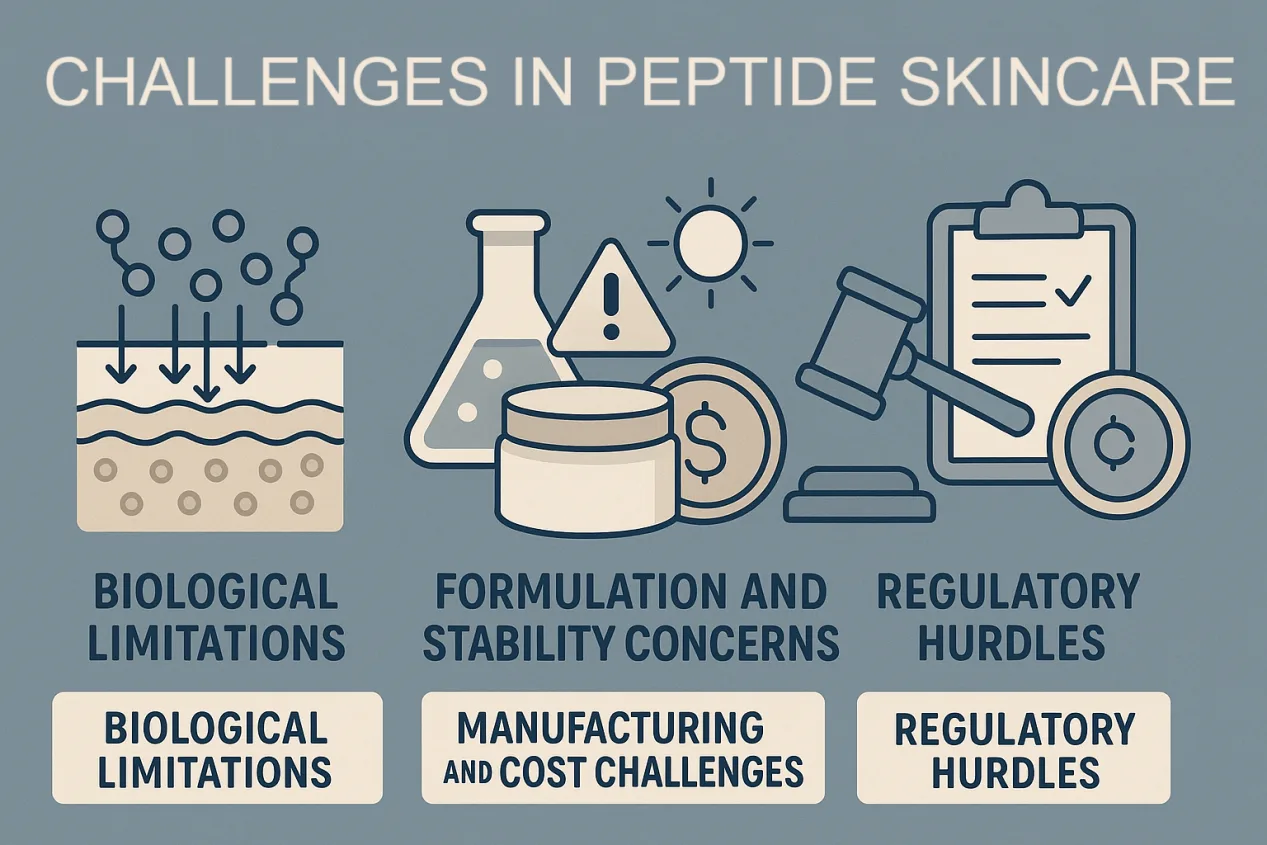
While cosmetic peptides hold immense promise, turning them into widely available skincare solutions is far from simple. Their journey from the lab bench to consumer shelves is hindered by a set of intertwined biological, formulation, economic, and regulatory challenges.
1. Biological limitations
The foremost barrier is poor skin permeability. Most peptides are hydrophilic molecules, meaning they struggle to pass through the skin’s protective lipid-rich barrier, the stratum corneum. Even when they do penetrate, they are highly vulnerable to enzymatic degradation, breaking down before they can exert meaningful effects. This results in low bioavailability and reduced efficacy in real-world use.
2. Formulation and stability concerns
Peptides are often incorporated into creams, gels, and serums, but these environments pose challenges. They can interact with other ingredients, destabilizing the formulation, or degrade under conditions of heat, light, or pH variation. Ensuring that peptides remain stable and active throughout a product’s shelf life is a major technical obstacle.
3. Manufacturing and cost challenges
Producing synthetic peptides at scale is complex and expensive. High-purity synthesis requires advanced technology, and yields are often low. Since cosmetic formulations typically contain peptides in small concentrations, accurate testing and quality control become difficult, adding to production costs.
4. Regulatory hurdles
Finally, cosmetics must meet strict regulatory standards for safety, stability, and efficacy. Demonstrating that peptides can deliver measurable benefits, without side effects, requires extensive data. This process is time-consuming, resource-intensive, and can delay commercialization.
In short, while the scientific potential of peptides is undeniable, the combination of biological fragility, formulation issues, high costs, and regulatory scrutiny creates a steep uphill battle for manufacturers aiming to bring peptide-based products to market.
Smart Solutions: How Science Is Breaking the Barriers
Despite the obstacles, researchers and formulators are developing creative solutions to unlock the full potential of cosmetic peptides. These strategies combine chemistry, advanced delivery systems, and targeted design to improve stability, bioavailability, and overall effectiveness.
1. Chemical modification
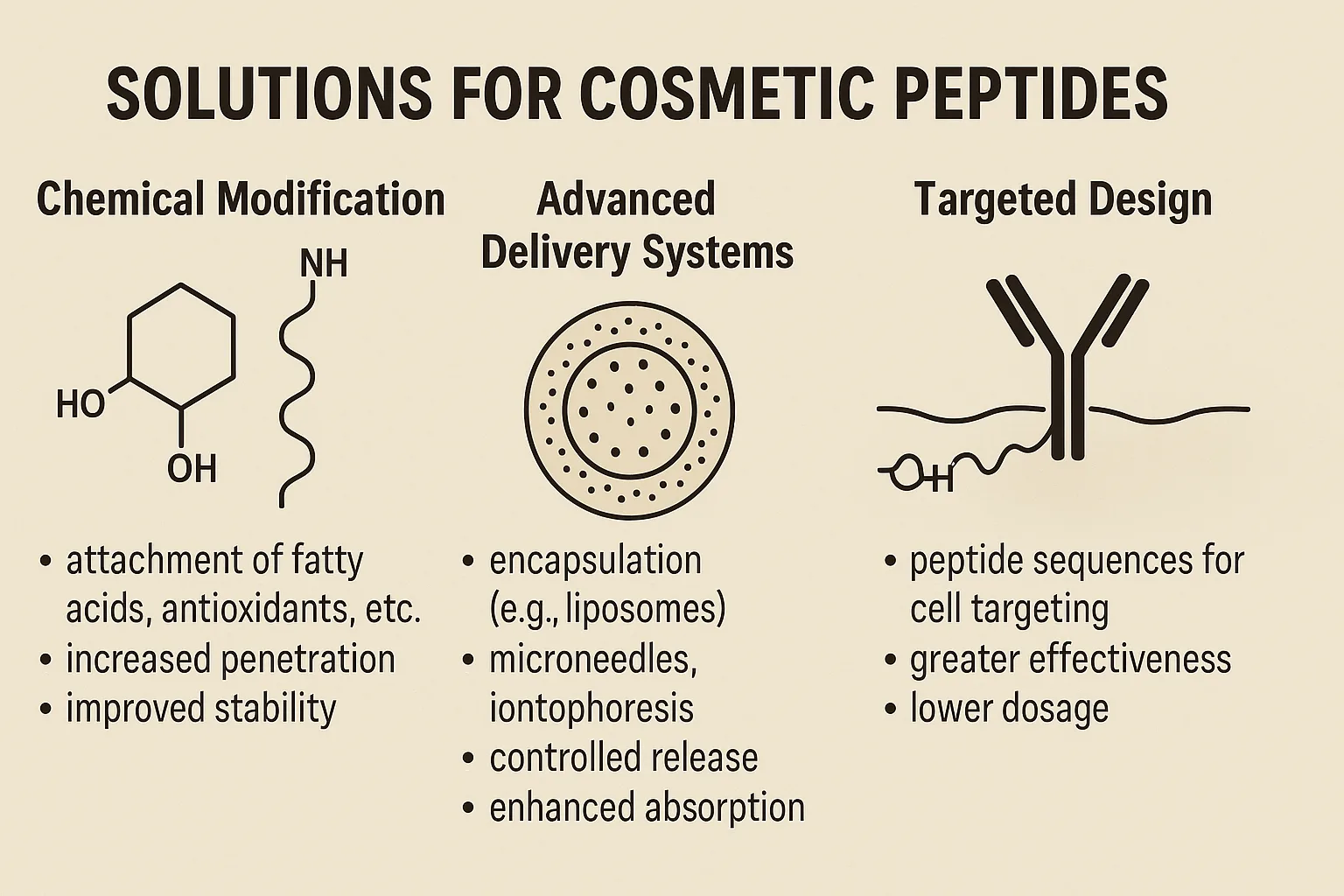
One of the most widely used approaches is chemical modification of peptide structures. By attaching fatty acids such as palmitic acid, hydrophilic peptides become more lipophilic, enabling them to better penetrate the skin barrier. Similarly, shorter fatty acid chains (like C8–C12) have been shown to enhance permeability even more effectively than traditional palmitoylation. Beyond fatty acids, peptides can also be linked to antioxidants or cell-penetrating moieties, which not only improve stability but also boost biological activity. However, modification is not without trade-offs—sometimes the altered peptides lose part of their original activity or risk becoming trapped in the skin’s lipid matrix.
2. Advanced delivery systems
Formulation science is another powerful tool. Encapsulation techniques such as liposomes, transferosomes, microemulsions, and nanoparticles shield peptides from degradation while improving absorption. Hydrogels and liquid crystal systems provide controlled release, ensuring peptides remain active longer on the skin. Physical enhancement methods, including microneedles and iontophoresis, are also being explored to bypass the skin barrier entirely and deliver peptides directly into deeper layers.
3. Targeted design
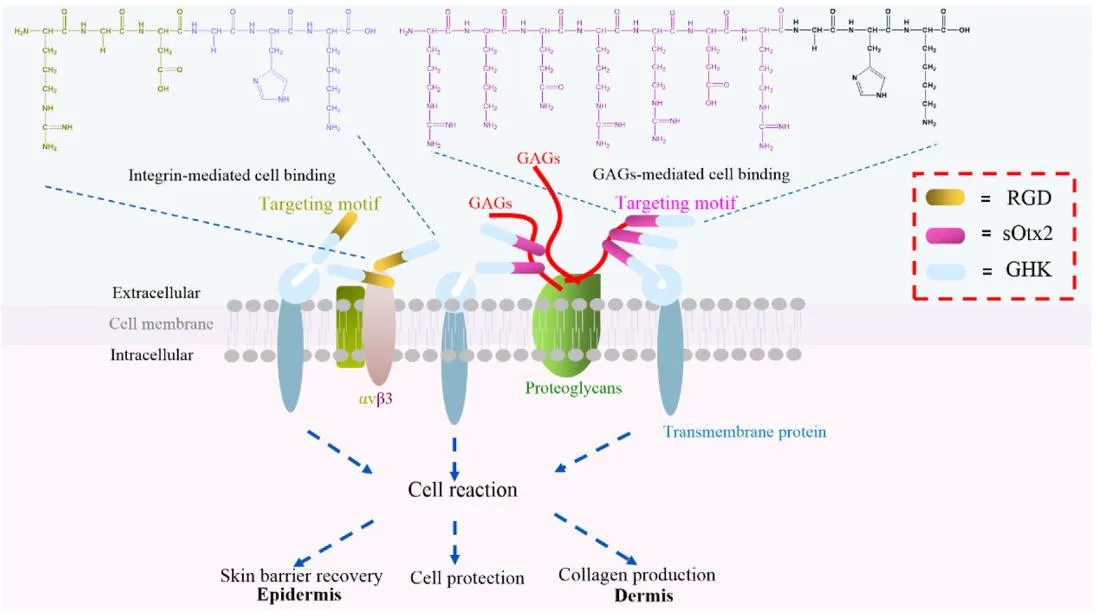
A newer frontier involves attaching peptides to cell-targeting moieties. For example, integrating sequences that bind to integrin receptors or chondroitin sulfate on skin cells helps concentrate peptides exactly where they are needed. This precision not only improves effectiveness but also reduces the required dosage, cutting costs and minimizing side effects.
Together, these strategies represent a multi-pronged effort to address the main weaknesses of cosmetic peptides. By combining structural modifications with innovative delivery technologies and molecular targeting, scientists are steadily moving closer to creating peptide-based cosmetics that are both potent and commercially viable.
Digital Discovery: The Role of AI and In Silico Design
While chemical and formulation-based strategies are essential, they can be costly and time-intensive. This is where computational methods, often referred to as in silico approaches, are transforming the landscape of cosmetic peptide development. By simulating molecular behavior and predicting biological interactions, these tools allow researchers to design and optimize peptides before moving to expensive laboratory experiments.
Techniques such as molecular dynamics simulations, quantitative structure–activity relationship (QSAR) models, and virtual peptide libraries help scientists identify promising candidates with improved stability, permeability, and activity. Machine learning algorithms add another layer of precision, analyzing large datasets to reveal which structural features influence performance. For example, AI-driven models can predict skin permeability by correlating chemical descriptors—such as lipophilicity, hydrogen bonding potential, and molecular weight—with experimental absorption data. This reduces the trial-and-error cycle that typically slows peptide innovation.
In the field of skin-lightening, in silico research is already showing results. Computational models have been used to design peptides that inhibit tyrosinase, the key enzyme responsible for melanin production. These designer peptides show potential as safer alternatives to traditional agents like hydroquinone, which often carry unwanted side effects.
Looking ahead, the integration of AI and computational modeling could become a cornerstone of cosmetic peptide development. By accelerating discovery, lowering costs, and predicting outcomes more reliably, in silico tools pave the way for faster commercialization and more effective products tailored to consumer needs.
Conclusion: Paving the Way for Next-Gen Cosmetic Peptides
Cosmetic peptides embody the perfect blend of science and beauty. They can stimulate collagen, deliver essential minerals, soften wrinkles, and protect the skin from degradation—making them some of the most versatile tools in modern skincare. Yet, as promising as they are, their path to commercialization is anything but straightforward. Biological fragility, poor permeability, instability, manufacturing costs, and strict regulations remain significant hurdles that must be overcome.
The good news is that progress is being made. Chemical modifications enhance penetration, innovative delivery systems protect and prolong activity, and cell-targeting strategies increase precision and effectiveness. At the same time, computational tools and AI-driven models are accelerating discovery, helping researchers design smarter peptides at a fraction of the time and cost.
The future of cosmetic peptides lies in this convergence of biology, chemistry, and technology. As these strategies mature, consumers can look forward to a new generation of skincare products that are not only effective but also scientifically optimized for real results. In short, the commercialization of cosmetic peptides is no longer a distant vision—it’s a rapidly approaching reality.
Reference
Mortazavi, S. M., & Moghimi, H. R. Barriers to Commercialization of Cosmetic Peptides: Barriers to Commercialization of Cosmetic Peptides. Trends in Peptide and Protein Sciences, 10(1), 1-5.
https://doi.org/10.22037/tpps.v10i1.47781
Frediansyah, A., Straetener, J., Brötz-Oesterhelt, H., & Gross, H. (2021). Massiliamide, a cyclic tetrapeptide with potent tyrosinase inhibitory properties from the Gram-negative bacterium Massilia albidiflava DSM 17472T. The Journal of Antibiotics, 74(4), 269-272.
https://doi.org/10.1038/s41429-020-00394-y
Pintea, A., Manea, A., Pintea, C., Vlad, R. A., Bîrsan, M., Antonoaea, P., … & Ciurba, A. (2025). Peptides: Emerging candidates for the prevention and treatment of skin senescence: A review. Biomolecules, 15(1), 88.
https://doi.org/10.3390/biom15010088
Hashemi, S., Vosough, P., Taghizadeh, S., & Savardashtaki, A. (2024). Therapeutic peptide development revolutionized: Harnessing the power of artificial intelligence for drug discovery. Heliyon, 10(22).