 LinkPeptide
Engineering the Future of Skincare: How Advanced Peptide Science Is Transforming Cosmetic R&D
Blog 297
Abstract
Peptides have emerged as one of the most influential technology drivers in modern cosmetic research and development. Originally developed within pharmaceutical science, peptides now offer cosmetic formulators unparalleled precision in targeting biological pathways linked to aging, pigmentation, hydration, repair, and microbiome balance. Recent advances in synthesis—including SPPS, LPPS, enzymatic catalysis, and recombinant production—have significantly improved scalability, sustainability, and structural design flexibility. These innovations enable the creation of highly stable, multifunctional peptides with enhanced bioavailability and targeted delivery. Yet challenges remain: stability, penetration, formulation compatibility, regulatory compliance, and clinical substantiation continue to shape development strategies. Looking ahead, AI-assisted peptide design, smart delivery systems, recombinant biomaterials, and green chemistry will accelerate the next generation of peptide-based cosmetic actives. This blog provides R&D teams with an integrated overview of technological progress, mechanistic insights, formulation constraints, and emerging trends defining the future of cosmetic peptides.
Peptides at the Forefront: Why They’re Redefining Cosmetic R&D
Peptides have rapidly progressed from niche cosmetic additives to some of the most strategically important actives in modern skincare R&D. Their rise is driven by three converging forces: consumer demand for high-performance, biomimetic ingredients; powerful advances in peptide engineering originating from pharmaceuticals; and tightening global regulations that demand robust evidence of safety and efficacy.
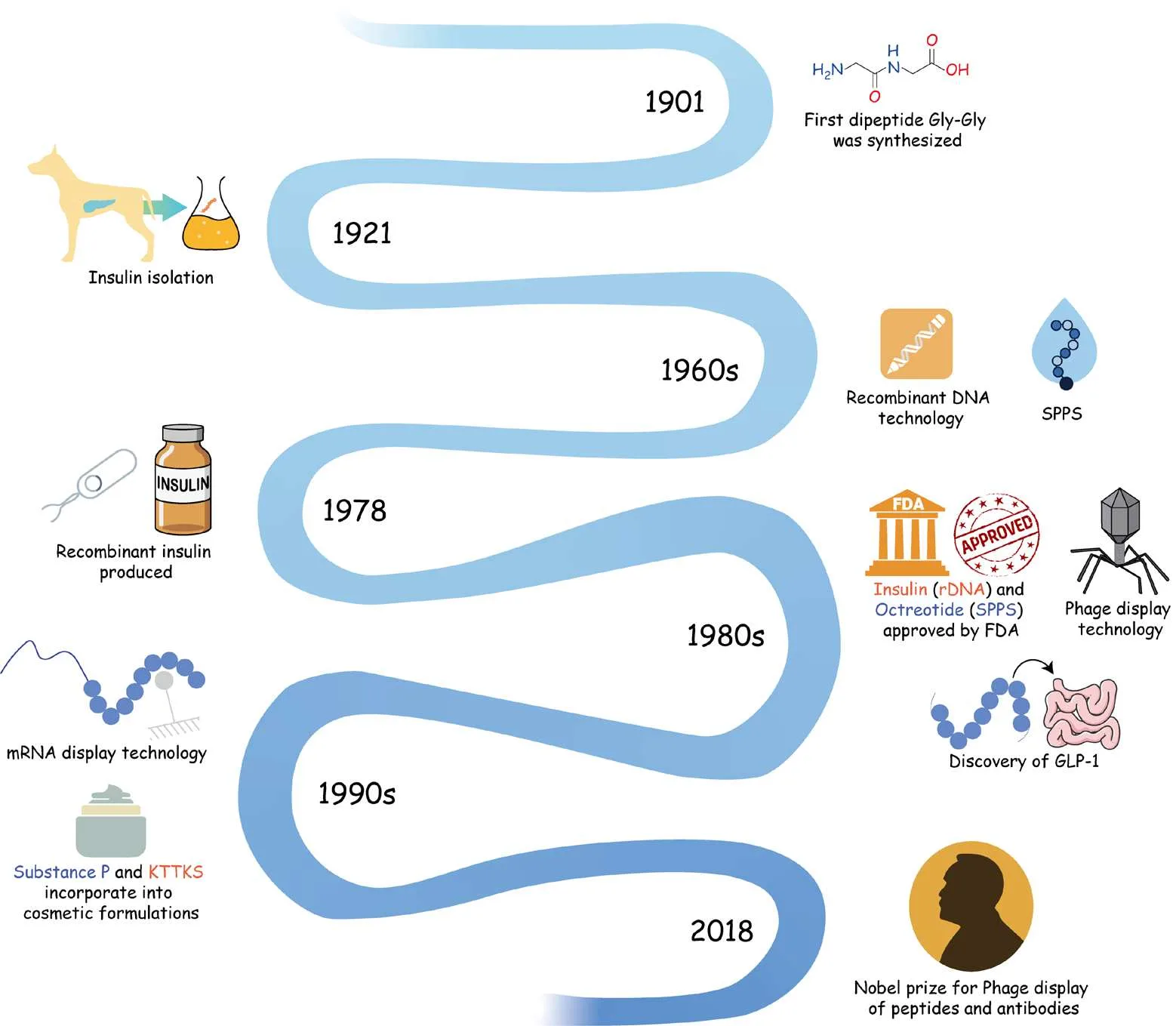
For cosmetic researchers, peptides are a rare class of ingredients that are both mechanistically precise and biologically versatile. Unlike conventional extracts or broad-spectrum actives, they can be rationally designed to interact with defined receptors, signaling cascades, and cellular processes. This enables formulations built around clear biological endpoints—such as increased collagen synthesis, reduced melanin production, improved barrier repair, or dampened inflammatory signaling—rather than vague “anti-aging” or “brightening” claims.
At the same time, frameworks such as the Modernization of Cosmetics Regulation Act (MoCRA) in the U.S. and EU Regulation 1223/2009 are pushing the industry toward pharma-like rigor in ingredient characterization, safety substantiation, and documentation. Peptides, with their well-defined structures, tunable properties, and increasingly efficient, scalable synthesis routes, are uniquely well suited to this evidence-driven environment.
This blog will explore how recent advances in peptide technology and skin biology are reshaping cosmetic innovation, and what R&D teams need to consider when designing the next generation of peptide-based formulations.
From Bench Chemistry to Industrial Scale: How Modern Peptide Synthesis Is Shaping Innovation
Peptide innovation in cosmetics is deeply intertwined with the technological breakthroughs that originated in pharmaceutical science. For R&D teams, understanding these synthesis platforms is essential—not only for assessing ingredient feasibility, but also for anticipating cost, purity, stability, and regulatory implications.
The foundation was laid with Solid-Phase Peptide Synthesis (SPPS), a transformative method introduced in the 1960s that enabled precise, step-wise peptide assembly on an insoluble resin. SPPS remains the dominant method for high-value peptides because it delivers excellent sequence control and allows easy incorporation of non-natural amino acids. Automated SPPS systems now produce complex peptides at multi-kilogram scales, making them suitable for premium cosmetic actives such as Pal-KTTKS or Hexapeptide-9.
However, SPPS is solvent-intensive and costly for large-volume applications. This limitation drove the emergence of Liquid-Phase Peptide Synthesis (LPPS), which blends the control of classical chemistry with the scalability of solution processes. LPPS reduces solvent waste and improves sustainability, making it ideal for peptides used in bulk—such as GHK, moisturizing oligopeptides, or certain antimicrobial peptides. New innovations, like fluorous tagging and membrane-enhanced purification, further streamline production and reduce environmental impact.
In parallel, enzymatic synthesis has opened a new path for “green” peptide production. Proteases and lipases can catalyze peptide bond formation under mild conditions without extensive protection-deprotection cycles. This approach is gaining traction for short, bioactive peptides where cost efficiency and environmental compatibility are priorities.
At the frontier of peptide engineering, recombinant DNA technology enables the biosynthesis of peptides and proteins that are difficult or inefficient to produce chemically. Recombinant human collagen, collagen fragments, and bioactive tripeptides like GHK are increasingly produced in microbial hosts such as E. coli, Pichia pastoris, and even engineered plants. These biotechnological routes offer higher purity, improved safety profiles, and excellent alignment with global sustainability initiatives.
The newest wave of innovation includes ynamide-based coupling chemistry, macrocyclization strategies, and D-peptide engineering, all designed to enhance stability and resist enzymatic degradation—major pain points in topical delivery. These techniques were originally pioneered for drug candidates but are now directly influencing next-generation cosmetic peptide design.
Together, these synthesis technologies are reshaping what is possible in cosmetic R&D. They allow formulators to access more stable, potent, and cost-efficient peptides, ultimately expanding the palette of ingredients that can be incorporated into high-performance skincare.
Decoding Peptide Bioactivity: Mechanistic Pathways Driving Next-Generation Skincare
For cosmetic R&D teams, the true value of peptides lies in their ability to target specific biochemical pathways in the skin. Unlike traditional actives, which often exert broad or nonspecific effects, peptides can be engineered to interact with defined receptors, enzymes, or structural proteins. This mechanistic precision allows researchers to design formulations that deliver quantifiable biological outcomes. Below are the five core functional categories that dominate peptide use in modern skincare—and the molecular mechanisms that underlie their performance.
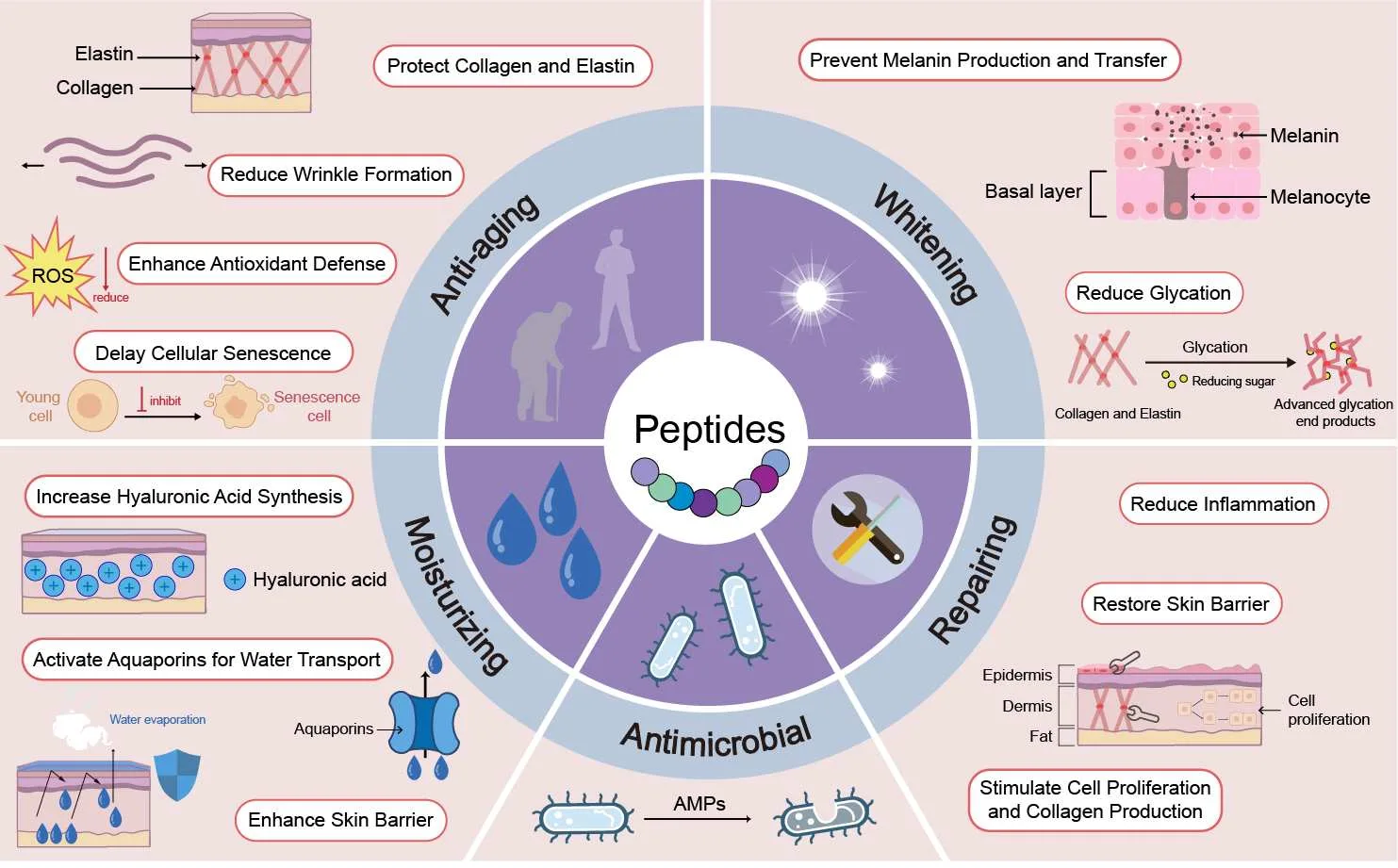
A. Anti-Aging Peptides: Rebuilding the Skin’s Structural Matrix
The largest and most mature category, anti-aging peptides work primarily by restoring extracellular matrix (ECM) homeostasis.
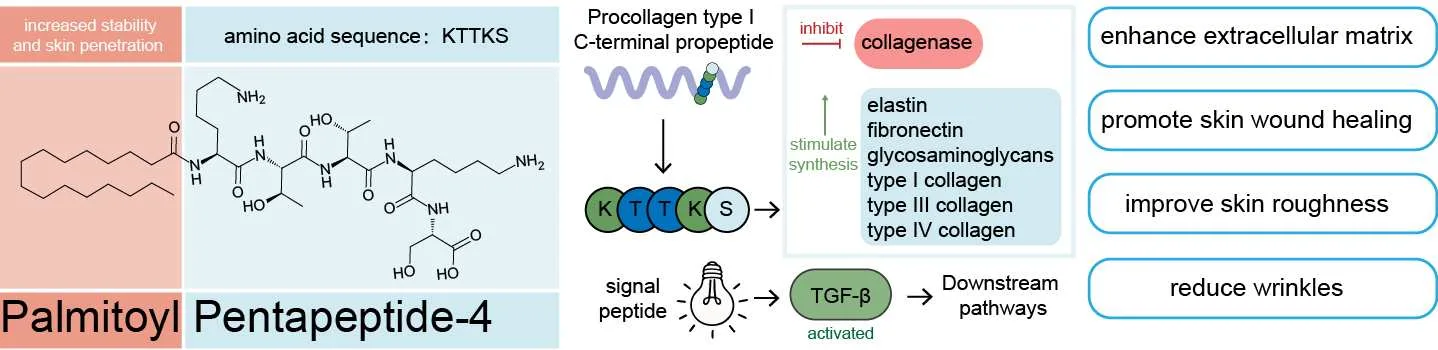
1. Matrix-stimulating peptides (signal peptides)
Peptides like Palmitoyl Pentapeptide-4 (Pal-KTTKS) and Hexapeptide-9 are derived from sections of human collagen. When applied topically, they act as “fragment signals,” triggering fibroblasts to upregulate Type I and III collagen, elastin, fibronectin, and other ECM components. These peptides also support wound healing and dermal regeneration—critical for visibly improving firmness and wrinkle depth.
2. Neurotransmitter-inhibiting peptides
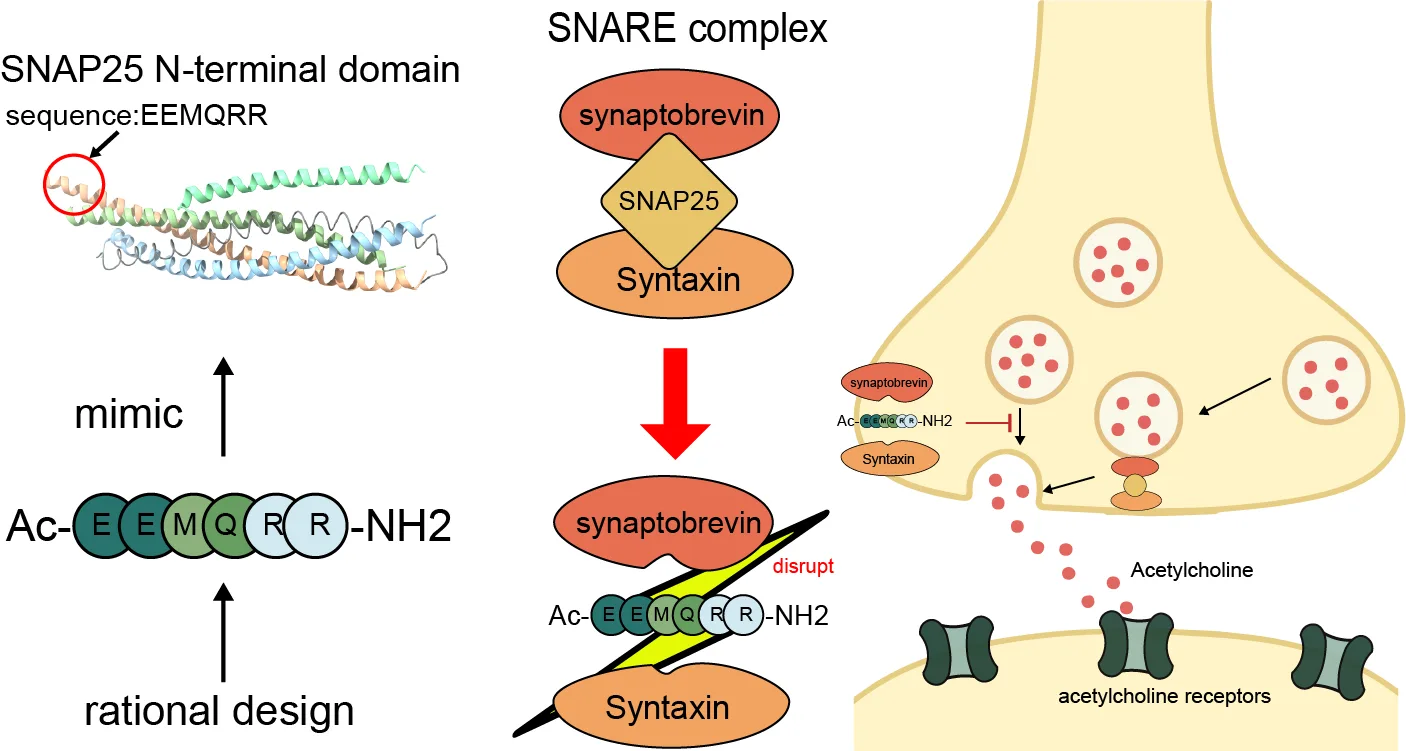
Compounds such as Acetyl Hexapeptide-8 (Argireline) and Pentapeptide-18 modulate the SNARE complex involved in acetylcholine release. By reducing muscle contraction intensity, they soften expression lines and offer a non-invasive alternative to botulinum toxin for dynamic wrinkles.
3. Antioxidant and anti-glycation peptides
Peptides like Glutathione and Carnosine neutralize ROS and reactive carbonyl species generated by UV exposure. By slowing protein oxidation and collagen glycation, they help maintain elasticity and reduce photoaging markers.
4. Mitochondria-derived peptides
Bioactive peptides such as Humanin and MOTS-c help maintain mitochondrial function and reduce senescence-associated stress signaling. Their inclusion reflects a broader shift toward cellular longevity science in skincare.
B. Whitening and Pigmentation-Control Peptides
Melanogenesis is a tightly regulated cascade involving α-MSH, MC1R, cAMP, MITF, and tyrosinase. Whitening peptides intervene at multiple levels of this pathway.
1. α-MSH/MC1R antagonists
Peptides such as Tetrapeptide-30 and Hexapeptide-2 block α-MSH from binding MC1R, reducing downstream activation of MITF and tyrosinase. This directly lowers melanin synthesis.
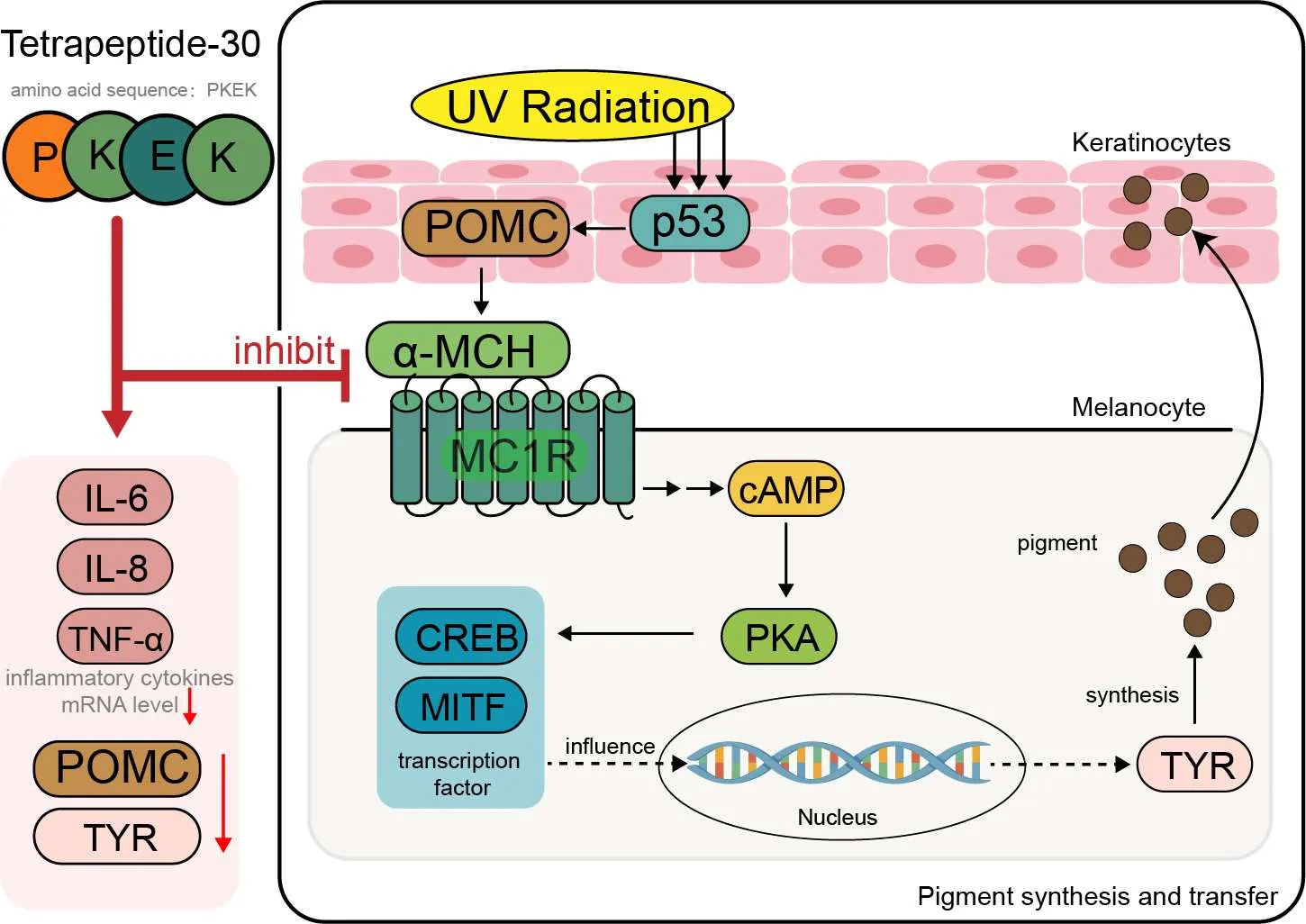
2. Anti-inflammatory and UV-response modulators
Some peptides reduce the expression of UV-induced cytokines (IL-6, IL-8, TNF-α) and suppress POMC transcription—thus indirectly reducing α-MSH production and pigmentation.
3. Peptides enhancing melanosome turnover
Novel peptide mixtures have been shown to inhibit PAR-2–mediated melanosome uptake by keratinocytes and activate autophagy, accelerating melanosome degradation.
Together, these mechanisms create a multi-layered whitening effect that is both potent and well tolerated.
C. Moisturizing Peptides: Enhancing Hydration Pathways
Hydration-focused peptides address three key biological levers:
1. HA-stimulating peptides
Peptides such as Syn-Hycan boost the expression of hyaluronan synthases, driving higher hyaluronic acid production and improving skin plumpness.
2. Aquaporin-activating peptides
Some peptides upregulate Aquaporin-3, enhancing intracellular water transport and promoting uniform hydration across epidermal layers.
3. Film-forming and NMF-supporting peptides
Collagen-derived short peptides bind water and help reinforce the skin barrier by reducing transepidermal water loss (TEWL).
D. Repair and Barrier-Strengthening Peptides
Peptides with restorative functions are essential for sensitive skin, aging skin, and post-procedure care.
1. GHK-Cu and tripeptide-based regenerators
Copper-binding peptides modulate gene expression linked to collagen, elastin, integrins, and growth factors while simultaneously suppressing pro-inflammatory markers like TNF-α and IL-6.
2. Anti-inflammatory tetrapeptides
Peptides such as Tetrapeptide-7 help rebalance the skin’s inflammatory profile, reducing redness, irritation, and impaired barrier function.
3. ECM-stimulating repair peptides
Peptides like Tripeptide-1 enhance fibroblast proliferation and promote faster tissue regeneration.
E. Antimicrobial Peptides (AMPs): A New Frontier for Acne and Sensitive Skin
Short-chain AMPs (<20 amino acids) are increasingly relevant for microbiome-focused formulations.
- They disrupt microbial membranes of Staphylococcus aureus, Cutibacterium acnes, and Candida species.
- Engineered AMPs improve specificity, reduce cytotoxicity, and enhance stability.
- They represent promising actives for acne-prone, compromised, or post-procedure skin.
Taken together, these categories illustrate why peptides have become central to next-generation cosmetic R&D. Their targeted mechanisms offer formulators unprecedented precision in designing treatments that are both biologically meaningful and consumer-visible.
Formulation Realities: Key Obstacles in Developing Stable, Effective Peptide-Based Cosmetics
Despite their scientific appeal, peptides present a unique set of challenges that cosmetic R&D teams must navigate to bring stable, efficacious, and regulatory-compliant products to market. Understanding these limitations early in the formulation process is essential for minimizing development risk and optimizing performance.
A. Stability: The First Major Barrier
Peptides are inherently fragile molecules. They are vulnerable to oxidation, hydrolysis, enzymatic degradation, deamidation, and pH-driven structural changes. Even short sequences can lose activity in the presence of light, heat, heavy metals, or surfactants commonly found in cosmetic formulas.
For formulators, this means:
- Careful pH control—most peptides function best between pH 4.5–6.5
- Avoidance of destabilizing excipients
- Strategic use of chelators, antioxidants, and protective delivery systems
- Compatibility testing with emulsifiers and preservatives
Stability is often the limiting factor—not the peptide’s intrinsic bioactivity.
B. Penetration and Delivery: Reaching the Target Site
The stratum corneum remains the most significant barrier to peptide efficacy. Unmodified peptides are often too large, too hydrophilic, or too charged to efficiently penetrate the epidermis.
To improve delivery, R&D teams rely on:
- Lipidation (e.g., palmitoylation) to increase lipophilicity
- Encapsulation systems such as liposomes, nanoemulsions, and polymeric nanoparticles
- Cell-penetrating peptides
- Penetration enhancers and biomimetic carriers
Optimizing penetration is critical for peptides designed to act at the dermal level, such as collagen-stimulating or anti-wrinkle peptides.
C. Formulation Compatibility and Product Stability
Peptides can interact unpredictably with formulation matrices. Anionic surfactants may denature them; cationic polymers may bind and inactivate them; metals may catalyze breakdown.
These risks require:
- Comprehensive compatibility mapping
- Stress testing under elevated temperature and humidity
- Monitoring for aggregation, color changes, and potency loss
- Early selection of formulation types best suited for the peptide (serums, essences, aqueous gels, anhydrous systems, etc.)
Peptide-friendly formulation design is increasingly a specialized skill within cosmetic R&D.
D. Cost and Scalability Constraints
Although synthesis technologies are advancing rapidly, peptides—especially longer or modified ones—remain expensive to produce. SPPS routes require costly reagents and generate solvent waste, while recombinant expression demands specialized infrastructure.
Key cost considerations include:
- Peptide length and sequence complexity
- Required purity level
- Necessary modifications (acetylation, palmitoylation, cyclization, etc.)
- Scale of production and manufacturing throughput
Brands seeking mass-market peptide products must carefully select sequences that are scalable and economically feasible.
E. Regulatory Expectations: Pharma-Level Scrutiny in Cosmetics
Global regulations are increasingly pushing cosmetics toward evidence-based evaluation.
- MoCRA (U.S.) requires safety substantiation, adverse event monitoring, and facility registration.
- EU Regulation 1223/2009 requires detailed toxicological profiles, stability data, and maintenance of a Product Information File (PIF).
- Animal testing restrictions drive the need for validated in vitro and in silico safety models.
For peptides, this means R&D teams must generate:
- Stability data under realistic usage conditions
- Allergenicity and sensitization assessments
- In vitro efficacy and mechanistic data
- Transparent documentation of synthesis, impurities, and purity levels
The regulatory bar is rising—and peptides must meet it.
F. The Need for Clinical Validation
Consumers now expect “clinical-grade” performance from cosmetic peptides. In vitro fibroblast studies are no longer sufficient; brands must invest in controlled human trials that demonstrate statistically meaningful improvements in wrinkles, pigmentation, elasticity, or hydration.
This requires:
- Robust study design
- Reproducible biomarkers and imaging endpoints
- Long-term stability and performance monitoring
As peptides move closer to the pharma–cosmetic boundary, clinical evidence becomes a key differentiator.
Overall, while peptides offer extraordinary potential, they also introduce complexity. Successful development depends on integrating peptide chemistry, formulation design, biological testing, regulatory compliance, and consumer insights into a unified R&D strategy.
The Next Wave: Emerging Technologies and Breakthrough Directions in Cosmetic Peptides
As peptide science continues to advance, cosmetic R&D is entering a new era—one defined by precision engineering, sustainable production, and increasingly sophisticated biological targets. The next decade will not simply expand the catalogue of cosmetic peptides; it will fundamentally reshape how formulations are designed, validated, and delivered to consumers.
A. AI-Driven Peptide Discovery and Predictive Modeling
Artificial intelligence is accelerating peptide innovation beyond traditional trial-and-error experimentation. Machine learning algorithms can now:
- Predict binding affinity and structural stability
- Optimize amino acid sequences for specific receptors
- Identify peptides with high skin permeability and low degradation risk
- Simulate peptide–skin interactions before synthesis
For R&D teams, this drastically reduces development cycles and allows exploration of peptide spaces that were previously inaccessible.
B. Multifunctional Peptides for Next-Generation Formulations
Future cosmetic peptides are moving away from single-target approaches. New designs focus on:
- Simultaneously increasing collagen synthesis and reducing inflammation
- Combining whitening effects with antioxidant protection
- Enhancing hydration while supporting barrier repair
Such multifunctional peptides allow formulators to create streamlined, high-performance products with fewer actives and cleaner INCI lists—aligning with both consumer preferences and regulatory efficiency.
C. Smart Delivery Systems and Penetration Technologies
One of the most transformative shifts ahead will involve delivery systems engineered specifically for peptides. Innovations include:
- Nanocarriers optimized for controlled release
- Cell-penetrating peptides fused with functional sequences
- Biomimetic vesicles that improve dermal targeting
- Peptide-coated nanoparticles for enhanced stability and penetration
These technologies will enable deeper, more precise delivery of actives while minimizing irritation and dosage waste.
D. Expansion of Recombinant Biomaterials
Recombinant human collagen, elastin fragments, growth factor mimetics, and engineered peptide polymers are rapidly becoming more accessible. These materials offer:
- High purity and batch consistency
- Lower immunogenic risk
- The ability to design structures not found in nature
- Strong alignment with sustainability and cruelty-free standards
R&D teams will increasingly rely on recombinant platforms to deliver performance levels comparable to medical-grade biomaterials.
E. Sustainability and Green Chemistry as Core Development Drivers
Environmental responsibility is no longer optional. Future peptide innovation will prioritize:
- Low-solvent, energy-efficient synthesis routes
- Enzymatic and microbial production
- Biodegradable peptide architectures
- Circular manufacturing pipelines
Brands that integrate sustainability from the earliest stages of peptide design will gain a decisive competitive edge in global markets.
F. Toward a New Class of “Cosmeceutical-Grade” Peptides
The convergence of pharmaceutical methodology and cosmetic application is already blurring traditional boundaries. We are heading toward a landscape where peptides will:
- Be validated with clinical biomarkers
- Target intracellular pathways previously considered out of reach
- Offer performance close to prescription-grade actives
- Enable personalized skincare based on genetic and proteomic profiles
This evolution will elevate peptides from “cosmetic ingredients” to scientifically grounded bioactive agents capable of delivering real, quantifiable improvements in skin health.
Conclusion
Peptides have moved far beyond their origins as simple fragments of skin proteins. They now represent a sophisticated class of bioengineered actives that bring pharmaceutical precision and biological intelligence to cosmetic formulations. For R&D teams, mastering peptide science—from synthesis and stability to delivery and regulatory compliance—is no longer a competitive advantage; it is becoming a baseline requirement for innovation.
As technology accelerates, the most successful brands will be those that embrace cross-disciplinary collaboration, leverage AI-driven design, adopt sustainable production methods, and invest in clinical validation. The future of cosmetic peptides is not just promising—it is transformative.
Reference
Tang, Y., Nie, T., Zhang, L., Liu, X., & Deng, H. (2025). Peptides in Cosmetics: From Pharmaceutical Breakthroughs to Skincare Innovations. Cosmetics, 12(3), 107.
https://doi.org/10.3390/cosmetics12030107
Erak, M., Bellmann-Sickert, K., Els-Heindl, S., & Beck-Sickinger, A. G. (2018). Peptide chemistry toolbox–Transforming natural peptides into peptide therapeutics. Bioorganic & medicinal chemistry, 26(10), 2759-2765.
https://doi.org/10.1016/j.bmc.2018.01.012
Ngoc, L. T. N., Moon, J. Y., & Lee, Y. C. (2023). Insights into bioactive peptides in cosmetics. Cosmetics, 10(4), 111.
https://doi.org/10.3390/cosmetics10040111
Akbarian, M., Khani, A., Eghbalpour, S., & Uversky, V. N. (2022). Bioactive peptides: Synthesis, sources, applications, and proposed mechanisms of action. International journal of molecular sciences, 23(3), 1445.