 LinkPeptide
Experimental Studies of Growth Hormone Axis Regulation
The growth hormone axis is one of the most studied endocrine networks because it connects brain signaling, pituitary hormone pulses, and tissue-level responses that influence metabolism, growth, and repair. In modern labs, growth hormone regulation is explored through controlled experiments that map how the hypothalamus and pituitary communicate, how peripheral tissues respond via IGF-1 signaling, and how new peptide tools, such as a GHRH analog, can be used to probe mechanisms with precision.
The growth hormone axis in one clear picture
When researchers say “growth hormone axis,” they usually mean a coordinated circuit that begins in the hypothalamus and reaches peripheral tissues:
- The hypothalamus coordinates upstream signals that shape pituitary output.
- The pituitary releases growth hormone in pulses.
- Peripheral tissues respond through receptor pathways and downstream mediators, including IGF-1.
A more formal term for this integrated circuit is the hypothalamic-pituitary-growth hormone (HPGH) axis. In experimental work, thinking in “axis” terms is useful because it reminds you that changing one node can shift the behavior of the entire system.
What does “growth hormone regulation” mean experimentally
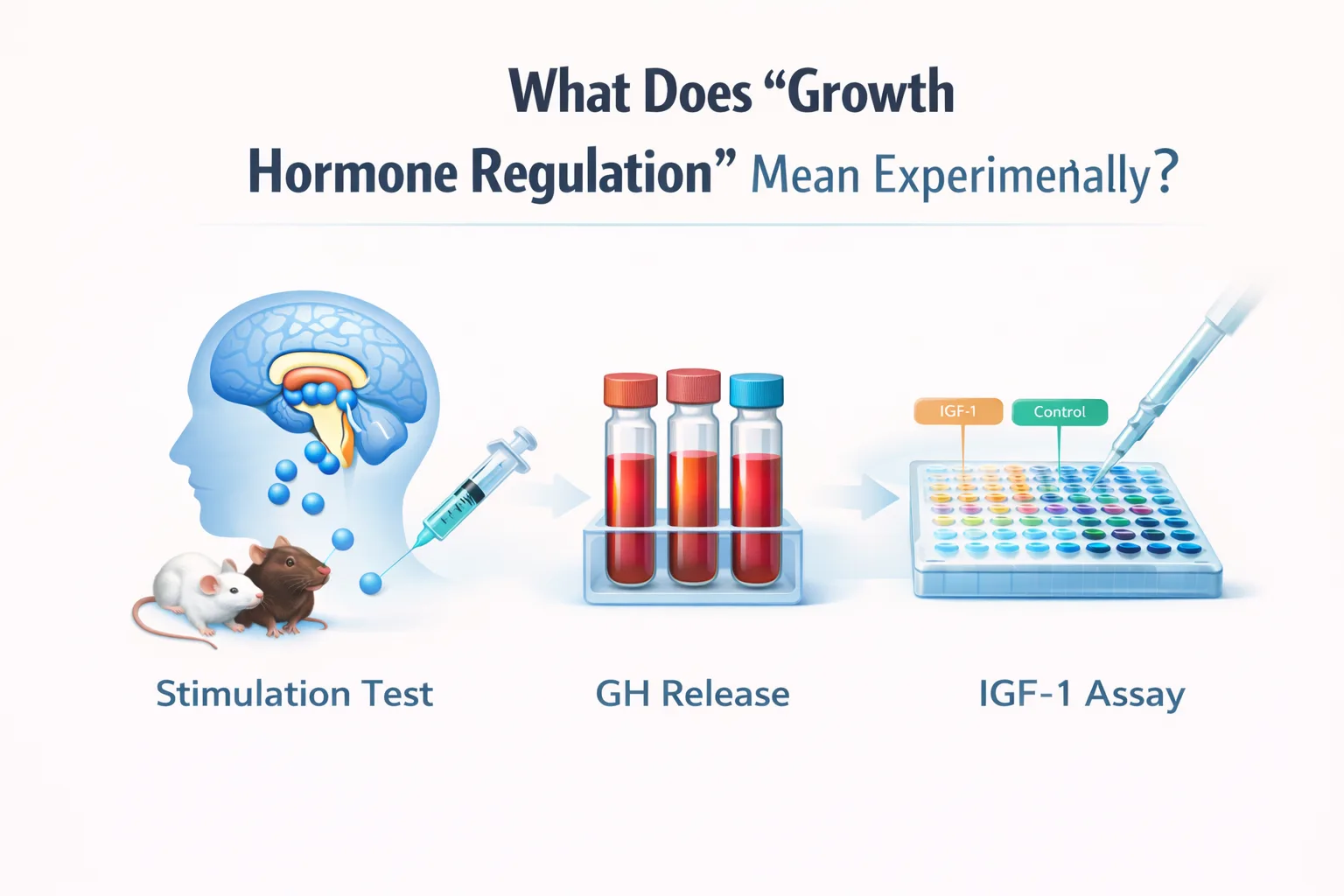
In a lab setting, growth hormone regulation is not one single switch. It’s a layered pattern that includes:
- pulse frequency and amplitude
- feedback loops through tissue-derived signals
- receptor sensitivity and signaling strength
- time-of-day and nutritional state effects
That’s why experimental studies often combine endocrine readouts (GH, IGF-1) with molecular readouts (pathway activation, transcript changes) to capture both the hormone signal and the tissue response.
Core experimental strategies used in preclinical research
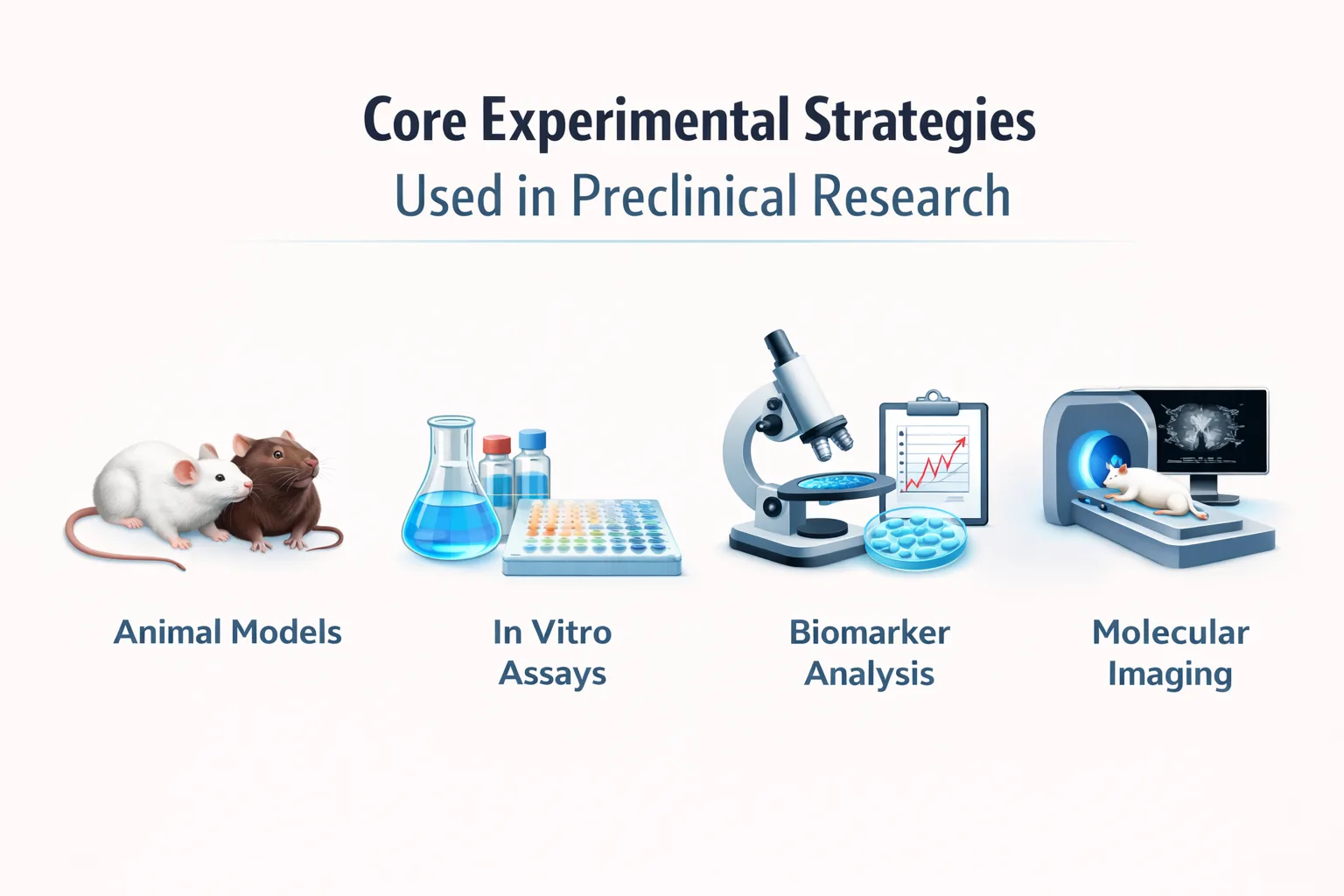
1) Pharmacology-driven probing with peptide tools
One of the most direct ways to explore the growth hormone axis is to use peptide ligands that target specific nodes. A GHRH analog can be used in experimental setups to examine how hypothalamic-like stimulation influences pituitary output under defined conditions.
In preclinical research, pharmacology-style experiments often focus on:
- dose-response curves
- time-course profiling (minutes to hours)
- Repeated dosing paradigms (days to weeks)
- tolerance or sensitization patterns
This approach is powerful because it can separate “signal availability” from “signal responsiveness.”
2) Genetic or pathway perturbation models
Experimental models can also involve targeted perturbations that shift receptor expression or downstream signaling capacity. These designs help answer questions like:
- What happens to the axis when receptor sensitivity changes?
- How does altered feedback reshape pituitary pulsatility?
- Which tissues contribute most to circulating IGF-1 under specific conditions?
When paired with peptide probes, perturbation models provide especially clean mechanistic insight.
3) Physiological challenge models
Many labs study the growth hormone axis under defined “challenge” conditions that highlight regulatory dynamics, such as:
- fasting or controlled feeding
- exercise-like stimulation paradigms
- sleep/circadian timing windows
- stress-minimized handling protocols
These are practical because they resemble real biological contexts while staying experimentally controlled.
Choosing experimental models that answer the right question
Which experimental models are best for studying the growth hormone axis?
The most useful answer is: the model should match the biological level you want to explain.
In vitro experimental models
In vitro systems can help isolate receptor-level and intracellular effects:
- receptor-expressing cell lines for pathway mapping
- primary cells for tissue-specific signaling
- reporter assays for quick screening
In vitro work is excellent for dissecting IGF-1 signaling components and identifying pathway cross-talk.
Ex vivo and tissue-based models
Ex vivo methods sit between in vitro simplicity and in vivo complexity:
- pituitary slices or enriched cultures (when feasible)
- tissue explants for downstream response studies
- perfusion or stimulation setups to control timing
These approaches can reveal how real tissue architecture shapes signaling strength and kinetics.
In vivo preclinical research models
In vivo designs are essential when you care about pulsatility, feedback, and whole-body coordination. Typical endpoints include:
- circulating GH and IGF-1 profiles
- tissue gene expression signatures
- growth/metabolic phenotypes
- receptor pathway activation markers
Because in vivo work includes more variables, strong controls and clean sampling plans become especially valuable.
Measuring axis function: endpoints that create confident conclusions
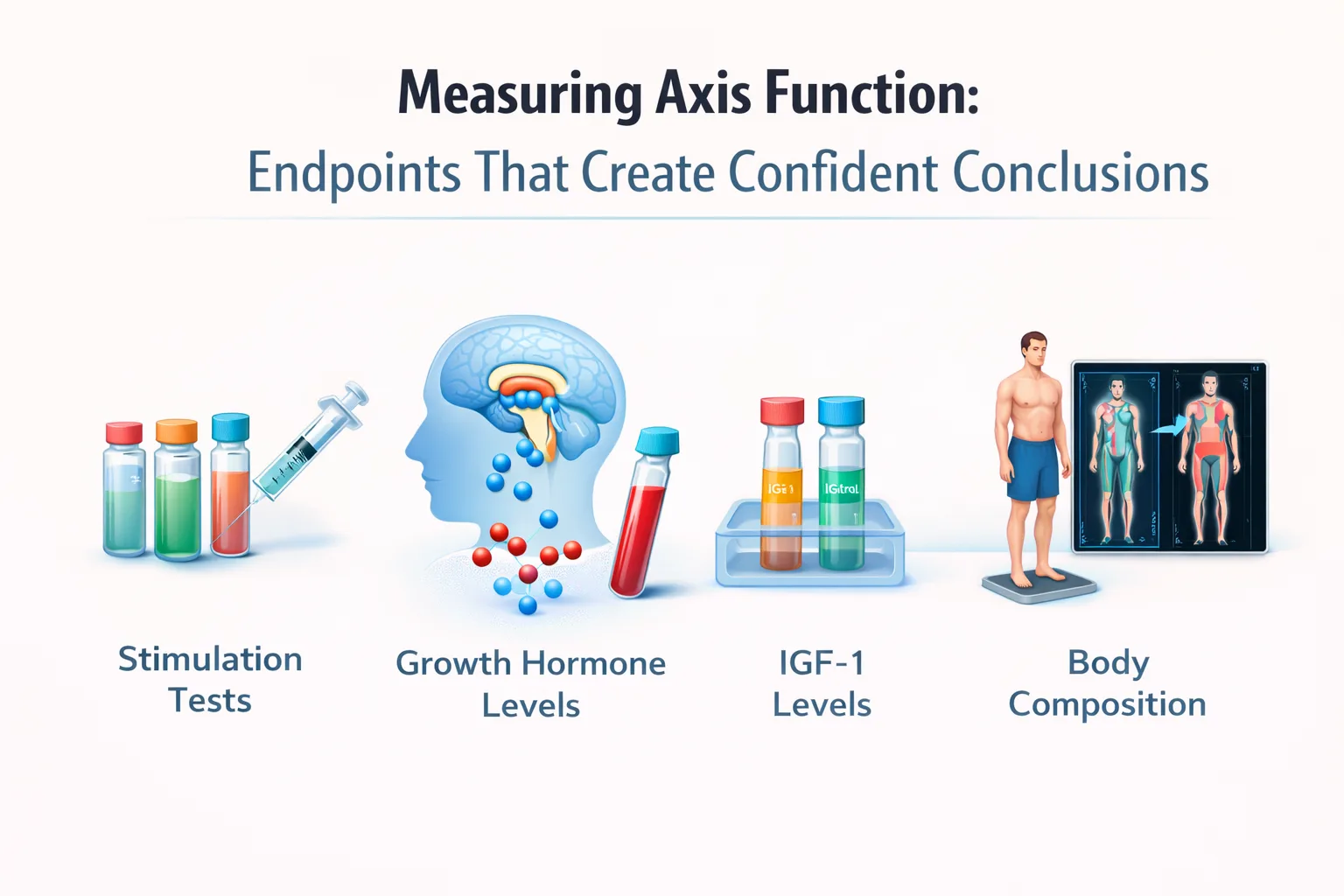
GH release patterns and sampling plans
GH is pulsatile, so that single-time-point sampling can miss meaningful dynamics. Many experimental studies use:
- Repeated sampling schedules
- standardized timing windows
- consistent handling to reduce variability
Even simple improvements such as identical sampling times of day and consistent fasting status—can make GH datasets much easier to interpret.
IGF-1 signaling as a downstream readout
IGF-1 signaling offers a useful downstream perspective because it reflects tissue-level response and integrates feedback behavior over time. Researchers often pair:
- circulating IGF-1 measurements
- tissue pathway markers (activation signatures)
- gene expression changes linked to IGF-1 response
This pairing connects endocrine signals to functional biology.
Designing peptide-based experiments: practical best practices
If you’re using a GHRH analog or related peptide tools in experimental studies, a few habits support clean data.
Use clear specifications and documentation.
Peptide identity and purity profiles matter for reproducibility. When experiments are repeated across weeks or across teams, consistent lots and traceable documentation help reduce re-optimization.
Build controls that answer “what changed?”
Simple controls strengthen conclusions:
- vehicle controls matched to formulation
- baseline profiling before dosing
- time-matched sampling controls
Match dosing schedules to biology
Because endocrine axes can adapt, dose spacing and study length should be chosen with the regulatory pattern in mind. Time-course studies often provide the fastest clarity.
Conclusion
Experimental studies of the growth hormone axis work best when the model matches the question and the readouts capture both endocrine signals and tissue responses. By combining thoughtful experimental models, careful sampling, and peptide tools like a GHRH analog, researchers can map growth hormone regulation with strong mechanistic clarity. When endocrine endpoints are paired with downstream biology, especially IGF-lr3 signaling the full picture of the hypothalamic–pituitary–growth hormone (HPGH) axis becomes easier to interpret in preclinical research.
How LinkPeptide supports growth hormone axis studies
LinkPeptide provides research peptides and peptide services that fit early-stage discovery and structured experimental programs. For projects studying growth hormone regulation, our focus is on dependable peptide supply, clear specifications, and customization options that align with preclinical workflows. If your team is building a panel of peptide probes, refining stimulation paradigms, or exploring downstream readouts like IGF-1 signaling, choosing peptide tools with consistent quality can help keep the biology in focus.
FAQs
What is the growth hormone axis?
The growth hormone axis is a coordinated endocrine network linking hypothalamic signaling,
pituitary GH release, and peripheral tissue responses, including downstream mediators such as
IGF-1.
Why is pulsatility important in growth hormone regulation?
GH is released in pulses, so repeated sampling and standardized timing often provide more
informative datasets than single time points.
What does a GHRH analog help researchers study?
A GHRH analog can be used as a controlled experimental tool to probe pituitary responsiveness
and map regulatory dynamics under defined conditions.
What are common endpoints in preclinical research on the HPGH axis?
Common endpoints include circulating GH/IGF-1 profiles, tissue signaling markers, gene
expression signatures, and phenotype-level outcomes aligned with the study design.