 LinkPeptide
Mechanistic Comparison of Tesamorelin and Ipamorelin in Growth Hormone Regulation Research
Blog 209
In growth hormone science, peptides are often used as precise “switches” to understand how endocrine pathways behave under controlled conditions. Two names that frequently appear in research discussions are Tesamorelin and Ipamorelin. While they are both used in growth hormone (GH) regulation research, they sit in different mechanistic lanes, meaning their receptor specificity, signaling context, and experimental readouts can look quite different.
Tesamorelin vs Ipamorelin
Tesamorelin vs Ipamorelin is best understood as a comparison between two peptide tools that can influence GH-related pathways through different receptor contexts.
- Tesamorelin is commonly discussed as a GHRH-related peptide tool used to probe pituitary stimulation patterns.
- Ipamorelin is commonly discussed as a ghrelin receptor pathway peptide used to explore GH secretagogue signaling.
Because the receptor “entry point” differs, their experimental behaviors, timing, magnitude, and downstream effects can also differ.
Mechanistic foundation: why receptor entry point matters
In GH regulation research, the upstream receptor target shapes everything downstream:
- Receptor specificity determines which cell types respond most directly.
- The signaling pathway sets the kinetics (fast vs sustained dynamics).
- The feedback environment influences how the axis stabilizes over time.
This is why two peptides can both be used in GH research but still produce distinct experimental patterns.
Structural differences: what researchers mean (and why it affects function)
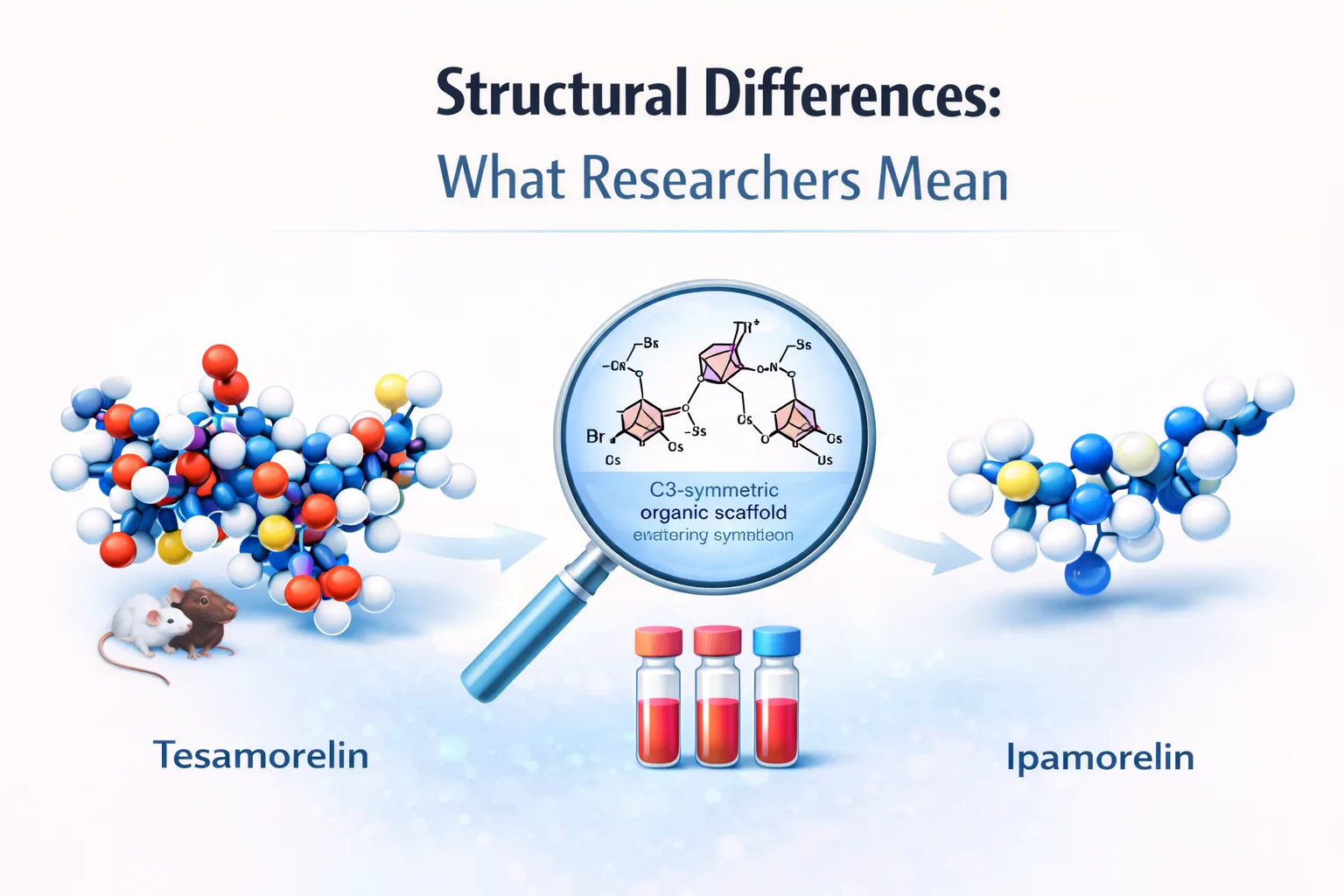
The phrase “structural differences” doesn’t mean “the sequences are different.” In peptide research, structure also reflects:
- peptide length and backbone conformation
- stability in solution (and how it is handled)
- how the peptide presents key residues to its target receptor
In practical terms, structural features can influence receptor engagement efficiency, signaling duration, and the degree to which an experimental response tracks with dosing.
A research tip for structure-focused studies
If your project is explicitly about structure-function relationships, consider pairing peptide work with:
- receptor binding assays or functional reporter systems
- time-course sampling to capture kinetic signatures
- consistent handling conditions across peptides to reduce technical variability
These steps make structure-related conclusions more confident.
Receptor specificity: the main mechanistic divider
What is the biggest mechanistic difference between Tesamorelin and Ipamorelin?
For many experimental designs, the biggest divider is receptor specificity, the primary receptor pathway each peptide is used to probe.
Tesamorelin (research context)
In GH regulation studies, Tesamorelin is often used to model hypothalamic-like stimulation patterns to examine pituitary responsiveness and downstream endocrine behavior.
Researchers often investigate:
- responsiveness across different baseline states
- pulse-like dynamics and time-of-day windows
- downstream endocrine integration, including IGF-1 readouts
Ipamorelin (research context)
In GH-regulation studies, Ipamorelin is often used as a peptide tool to explore ghrelin receptor–mediated GH secretagogue signaling.
Researchers often investigate:
- ceptor-mediated stimulation under defined conditions
- kinetics of GH response over short and intermediate time windows
- interaction with nutritional state or experimental challenge paradigms
Because the receptor entry point differs, Ipamorelin can be used to study a signaling lane that may not mirror GHRH-like stimulation patterns.
Experimental patterns: GH kinetics and IGF-1 interpretation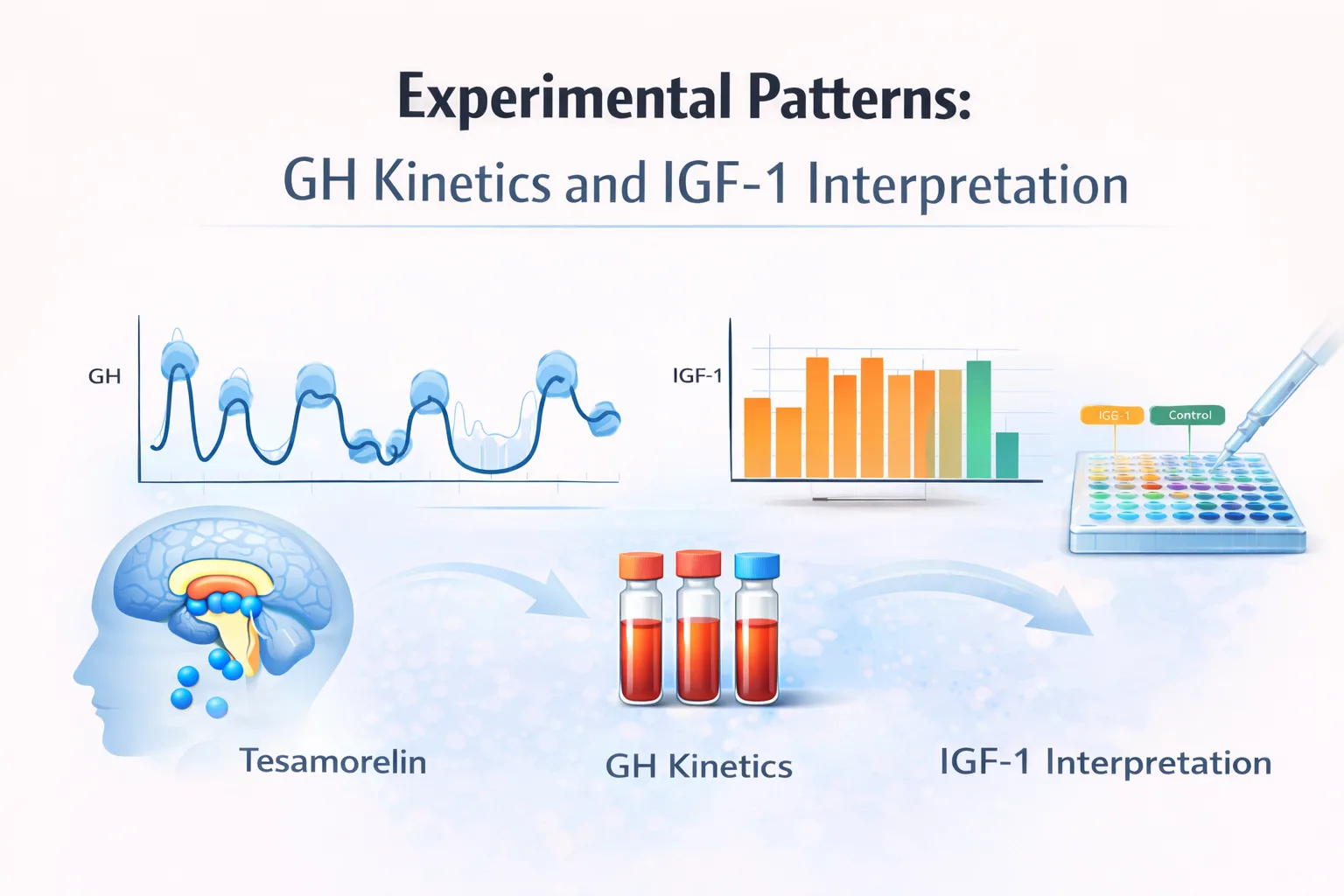
Growth hormone (GH) readouts
GH is naturally pulsatile, so sampling design matters. Many labs improve interpretability by:
- using repeated sampling schedules
- standardizing time-of-day and handling
- including baseline profiles before intervention
When comparing Tesamorelin vs Ipamorelin, the most informative datasets typically come from time-course experiments rather than single time points.
IGF-1 as a downstream integrator
IGF-1 is often treated as a downstream integrator of GH signaling. In many experimental models, IGF-1 readouts can:
- Complement the GH pulse data
- reflect tissue-level response over time
- support comparisons across dosing regimens
Because GH and IGF-1 can differ in timing and integration, pairing both endpoints often gives a clearer mechanistic picture.
How to choose between Tesamorelin and Ipamorelin for a study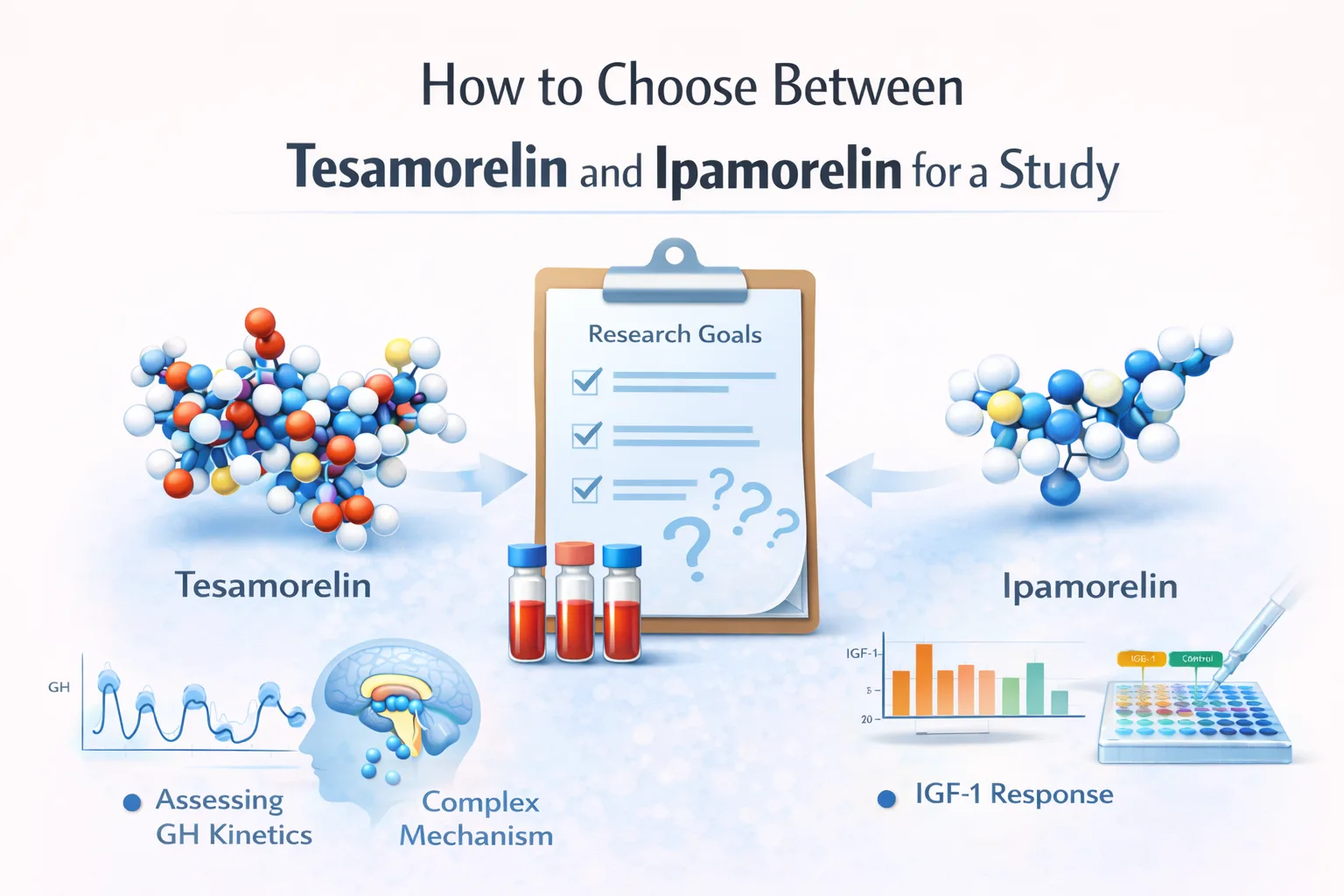
Choose Tesamorelin when your hypothesis is about hypothalamic-like stimulation logic.
Tesamorelin may fit well when your experimental question involves:
- modeling upstream stimulation patterns
- pituitary response profiling under controlled baselines
- linking stimulation dynamics to downstream endocrine integration (including IGF-1)
Choose Ipamorelin when your hypothesis is about ghrelin-receptor secretagogue signaling.
Ipamorelin may fit well when your experimental question involves:
- mapping GH secretagogue signaling pathways
- exploring receptor-linked kinetics under defined challenges
- comparing secretagogue-like stimulation to other regulatory inputs
Consider using both when you want a mechanistic contrast.
Some of the cleanest GH regulation studies use both peptides as complementary probes. A side-by-side design can highlight:
- pathway-specific kinetics
- differences in response sensitivity
- How does downstream IGF-1 integrate across different stimulation lanes
Best practices for clean, reproducible comparisons
Keep peptide quality and documentation consistent.
A fair comparison requires consistent peptide identity and purity expectations across lots. Clear specifications help ensure that the experimental differences you observe are biological—not technical.
Standardize formulation and handling.
Small handling differences can shift outcomes. Standardizing reconstitution, storage, and dosing prep supports smoother datasets.
Use matched controls and a shared sampling plan.
When comparing Tesamorelin vs Ipamorelin, align:
- vehicle controls
- sampling time points
- baseline profiling
- endpoint assays (GH and IGF-1)
A shared plan improves interpretability and strengthens mechanistic claims.
Conclusion
A mechanistic comparison of Tesamorelin and Ipamorelin is most powerful when you frame each peptide as a receptor-pathway probe. Their structural differences and, more importantly, their receptor specificity shape the GH regulation patterns you observe and the way downstream endpoints like IGF-1 integrate over time. By choosing the peptide that matches your hypothesis or by designing a thoughtful Tesamorelin vs Ipamorelin contrast study, you can generate clearer endocrine datasets and more confident mechanistic conclusions.
How LinkPeptide supports GH regulation research
At LinkPeptide, we provide research peptides and custom peptide services designed for experimental reliability. Whether your work focuses on Tesamorelin, Ipamorelin, or comparative endocrine studies that measure growth hormone (GH) and downstream IGF-1, our goal is to support:
- consistent peptide supply
- clear specifications
- practical customization for study needs
FAQs
What is the main difference between Tesamorelin and Ipamorelin in research?
In many GH regulation designs, the main difference is the receptor pathway each peptide targets, which shapes response kinetics and downstream integration.
Why should I measure both GH and IGF-1?
GH can be pulsatile and time-sensitive, while IGF-1 often reflects downstream integration. Measuring both can provide a fuller picture of pathway behavior.
Do structural differences really matter?
Yes. Structural features influence receptor engagement and signaling behavior, which can affect experimental patterns and interpretability.