 LinkPeptide
From Wrinkles to Radiance: How Bioactive Peptides Renew Your Skin
Blog 208
Abstract
Aging skin is one of the most common concerns among customers today, with fine lines, loss of firmness, and uneven tone often linked to declining collagen and environmental stress. Modern science has introduced a powerful solution: bioactive oligopeptides. These tiny chains of amino acids penetrate deeply into the skin, signaling cells to regenerate, repair, and defend themselves. Unlike traditional creams that simply mask symptoms, oligopeptides target the root causes of aging by boosting collagen and elastin, reducing oxidative stress, balancing pigmentation, and supporting skin recovery. Key peptides such as GHK-Cu, Matrixyl, Argireline, Lumixyl, and elastin-based sequences have shown impressive results in clinical and cosmetic applications. With innovations in peptide complexes and advanced delivery systems, these molecules are shaping the future of skincare. This blog explores how oligopeptides work, the hero peptides to know, and why they represent the next generation of anti-aging solutions.
The Real Story Behind Aging Skin
No matter how carefully we care for our skin, the signs of aging eventually make themselves known. Fine lines appear, firmness fades, and that youthful glow gradually diminishes. These visible changes aren’t only tied to time—they’re accelerated by daily factors such as UV exposure, pollution, stress, and the natural slowdown of the skin’s renewal processes. Over the years, collagen and elastin levels decline, hydration decreases, and the protective skin barrier weakens, leading to wrinkles, uneven tone, and loss of vitality.
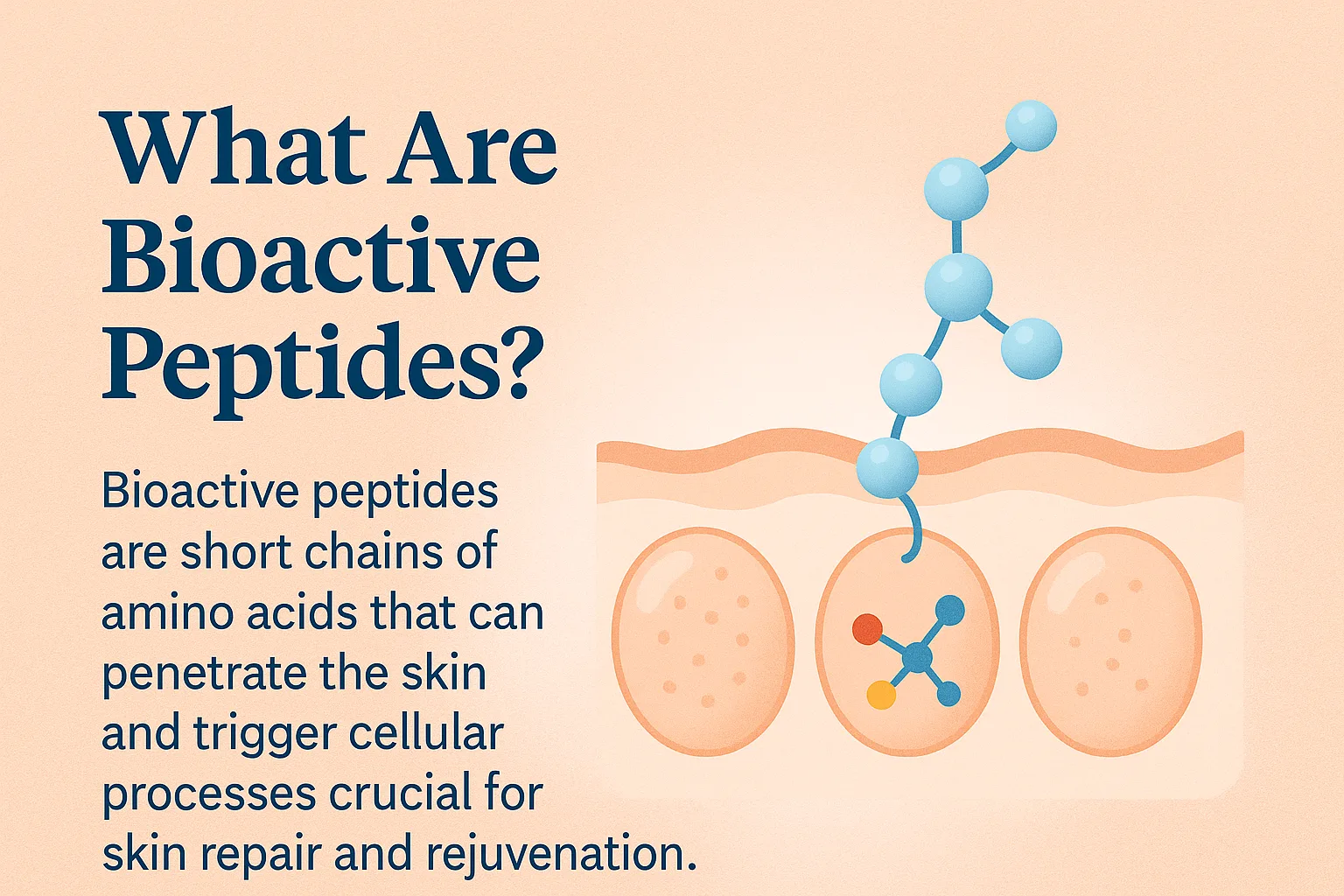
For decades, most skincare solutions offered only temporary relief—hydrating creams that mask dryness or makeup that conceals imperfections. But now, science is providing a smarter way forward. Bioactive oligopeptides—tiny fragments of proteins naturally present in the body and found in nature—are emerging as breakthrough ingredients in advanced skincare. Unlike surface-level fixes, these peptides work at the cellular level, signaling the skin to regenerate, repair, and defend itself. The result is not just the appearance of healthier skin, but the genuine restoration of its youthful function and resilience.
Oligopeptides 101: Tiny Molecules, Big Skincare Benefits
At their core, oligopeptides are short chains of amino acids—the same building blocks that make up proteins in our bodies. Think of them as tiny “messengers” made of just 2 to 10 amino acids. Because they are so small, they can pass through the skin’s outer barrier much more easily than larger molecules, reaching the deeper layers where real skin repair happens.
What makes them exciting is their versatility. Some oligopeptides signal your skin to produce more collagen and elastin, which keeps skin firm and smooth. Others act as antioxidants, defending against environmental damage, while certain types can regulate melanin production for a brighter, more even tone. In short, these peptides don’t just sit on the surface—they actively communicate with your skin cells to trigger positive changes from within.
Oligopeptides can come from many sources. Some are naturally found in plants, marine life, and even our own skin, while others are carefully designed in laboratories to maximize their stability and effectiveness. Both natural and synthetic peptides are widely used in modern skincare formulas.
Unlike traditional creams that simply hydrate or temporarily plump the skin, oligopeptides address the root causes of aging by stimulating the skin’s natural repair systems. That’s why they are often called the next generation of active ingredients in skincare—combining the safety of naturally inspired molecules with the precision of modern science.
For customers, this means that choosing products enriched with oligopeptides isn’t just about looking younger—it’s about investing in smarter skincare that works in harmony with your body to restore resilience, radiance, and long-term skin health.
Meet the Hero Peptides Transforming Skincare
The beauty of oligopeptides lies in their variety. Different peptides deliver different benefits, which is why you’ll often see multiple types blended together in advanced skincare formulas. Let’s meet some of the most talked-about “hero peptides” and the roles they play in skin rejuvenation:
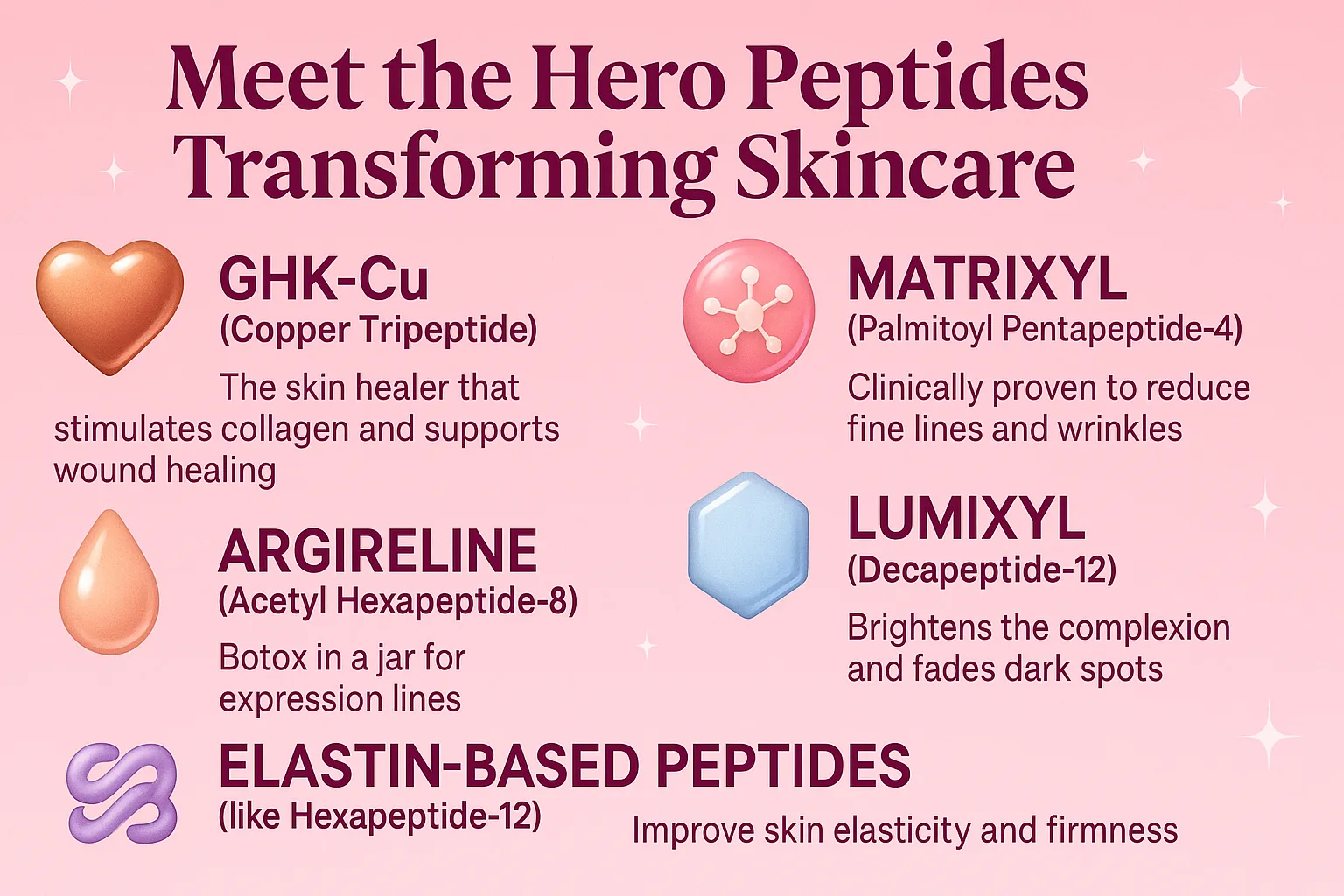
1. GHK-Cu (Copper Tripeptide)
Often called the skin healer, this peptide is naturally present in the body and binds with copper, an essential mineral for tissue repair. Together, they stimulate collagen production, improve elasticity, and support wound healing. The result? Skin that looks firmer, healthier, and more resilient.
2. Matrixyl (Palmitoyl Pentapeptide-4)
Known as one of the most clinically proven anti-aging peptides, Matrixyl encourages the skin to produce new collagen, visibly reducing fine lines and wrinkles. In studies, regular use has shown significant improvements in smoothness and firmness, making it a staple in many anti-aging serums.
3. Argireline (Acetyl Hexapeptide-8)
Nicknamed “Botox in a jar”, Argireline targets expression lines caused by repeated facial movements. By gently relaxing these micro-muscles, it softens the look of crow’s feet and forehead lines—without needles or injections.
4. Lumixyl (Decapeptide-12)
Uneven skin tone and dark spots can be just as aging as wrinkles. Lumixyl works by reducing excess melanin production, helping to brighten the complexion and fade hyperpigmentation. It’s often recommended for tackling melasma or sun-induced spots.
5. Elastin-based Peptides (like Hexapeptide-12)
These peptides mimic fragments of elastin, the protein that gives skin its spring and bounce. By encouraging fibroblasts to produce more elastin fibers, they improve skin elasticity and help restore youthful suppleness.
Together, these peptides form a powerful toolkit for skin renewal—addressing wrinkles, sagging, dullness, and uneven tone at the same time. When combined in a well-formulated product, they can deliver results that go beyond what a single ingredient can achieve, giving your skin a multi-dimensional boost.
From Within and Without: How Peptides Restore Your Skin
What sets oligopeptides apart is not just what they are, but how they interact with your skin. Instead of acting like a surface-level moisturizer, these smart molecules communicate directly with skin cells, encouraging them to perform better. Here’s how they make a difference in your daily routine:
1. Boosting Collagen and Elastin
As we age, collagen and elastin—the proteins that keep skin firm and bouncy—naturally decline. Oligopeptides act as signals that “wake up” your fibroblasts (the skin’s repair cells), prompting them to produce more collagen and elastin. This results in smoother texture, fewer wrinkles, and improved resilience.
2. Fighting Oxidative Stress
Pollution, UV rays, and stress all generate free radicals that accelerate skin aging. Certain peptides act as antioxidants, neutralizing these harmful molecules and protecting your skin from premature damage.
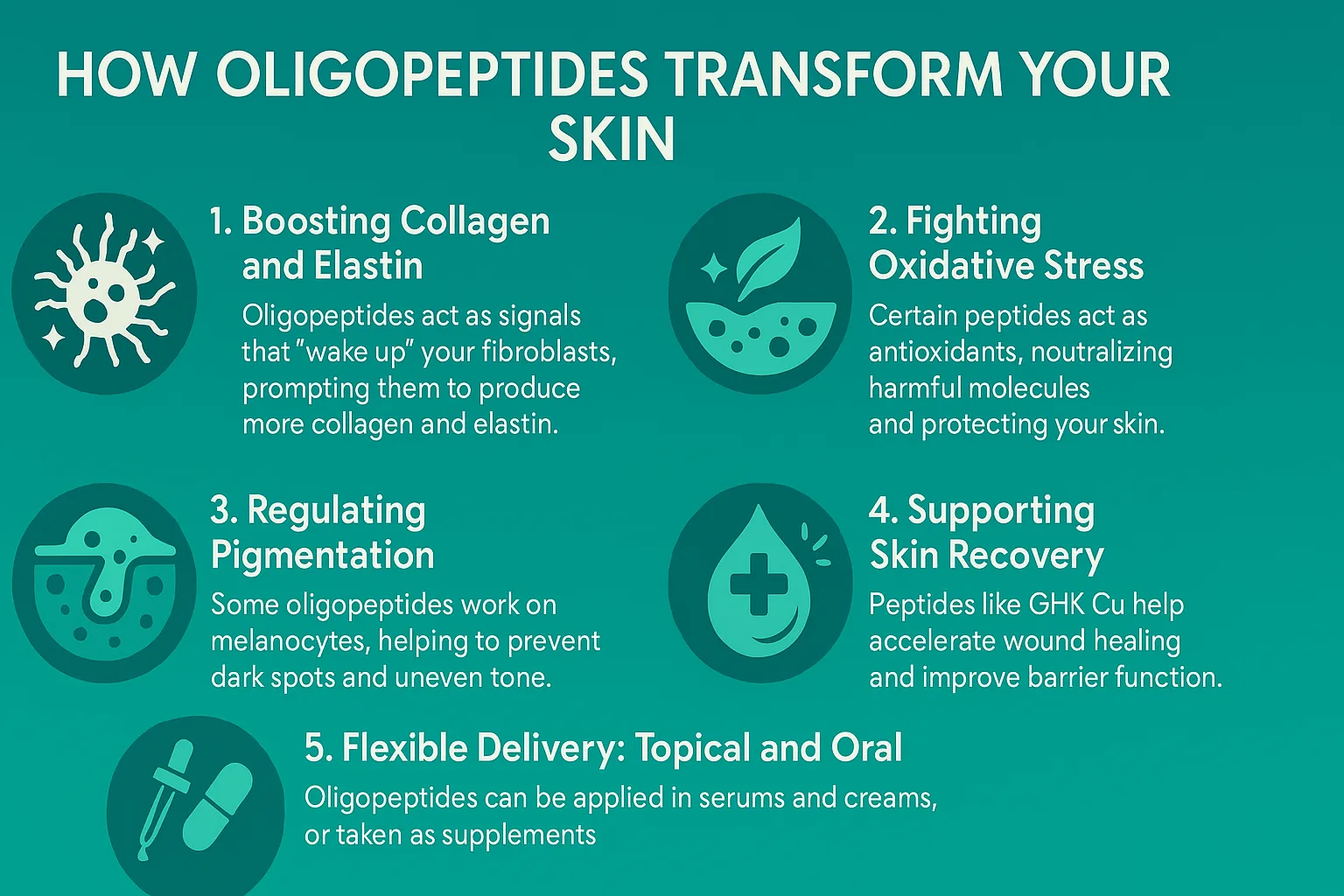
3. Regulating Pigmentation
Some oligopeptides work on melanocytes, the cells that produce pigment, helping to prevent dark spots and uneven tone. This makes them valuable allies for anyone seeking brighter, more even-looking skin.
4. Supporting Skin Recovery
Peptides like GHK-Cu go one step further, accelerating wound healing and improving barrier function. This means skin can recover more quickly from irritation, environmental stress, or cosmetic procedures.
5. Flexible Delivery: Topical and Oral
Oligopeptides can be applied directly in serums and creams, or taken orally in supplement form. Topical peptides target the outer and deeper skin layers, while oral peptides work from within, supporting hydration and overall skin quality.
In short, oligopeptides don’t just cover up problems—they train your skin to act younger, healthier, and stronger, giving you visible results and long-term benefits.
The Next Generation of Anti-Aging: What’s Ahead for Peptides
The science of oligopeptides is only just beginning to unfold, and the future looks promising. Researchers are constantly discovering new sequences of amino acids that deliver targeted benefits—from peptides that shield against pollution to those that enhance hydration or even calm inflammation. As our understanding of how specific peptide structures influence skin cells grows, skincare formulas are becoming smarter and more effective.
One exciting direction is the development of multi-functional peptide complexes. Instead of relying on a single peptide, brands are combining several that work in synergy—smoothing wrinkles, brightening tone, and boosting elasticity all at once. This means customers no longer have to layer multiple products; one advanced formula can do the job of many.
Delivery methods are also evolving. Microneedle patches, encapsulated peptides, and advanced emulsions are making it possible for these actives to penetrate deeper and act longer, maximizing visible results. Oral peptide supplements are gaining traction too, supporting skin health from the inside out and complementing topical care.
For customers, this translates into skincare that’s not only more powerful, but also more convenient and accessible. Oligopeptides are not just a fleeting trend—they represent the next generation of anti-aging and regenerative skincare, combining safety, innovation, and real science. The future of youthful, radiant skin may very well be written in these tiny but mighty molecules.
Reference
He, Q., Liao, Y., Wu, Y., Zhang, H., Long, X., & Zhang, Y. (2025). Bioactive oligopeptides and the application in skin regeneration and rejuvenation. Journal of Applied Biomaterials & Functional Materials, 23, 22808000251330974.
https://doi.org/10.1177/22808000251330974
Negahdaripour, M., Owji, H., Eslami, M., Zamani, M., Vakili, B., Sabetian, S., … & Ghasemi, Y. (2019). Selected application of peptide molecules as pharmaceutical agents and in cosmeceuticals. Expert opinion on biological therapy, 19(12), 1275-1287.
https://doi.org/10.1080/14712598.2019.1652592
Schagen, S. K. (2017). Topical peptide treatments with effective anti-aging results. Cosmetics, 4(2), 16.
https://doi.org/10.3390/cosmetics4020016
Lu, C., Kim, B. M., Lee, D., Lee, M. H., Kim, J. H., Pyo, H. B., & Chai, K. Y. (2013). Synthesis of lipoic acid–peptide conjugates and their effect on collagen and melanogenesis. European journal of medicinal chemistry, 69, 449-454.